Demographics of Falls Church City County
Affluence Level in Falls Church City County
An upper-middle-class area. Household wealth, education levels, and homeownership run ahead of national benchmarks.
People of Falls Church City County
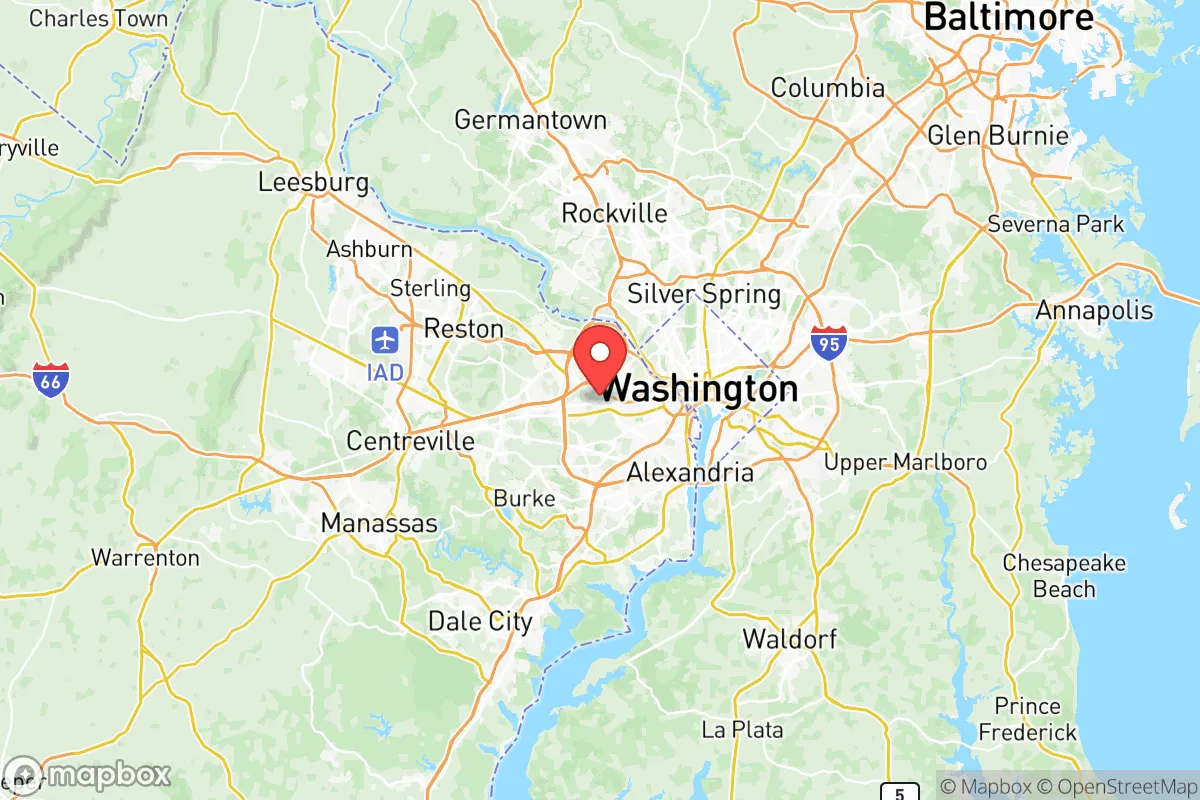
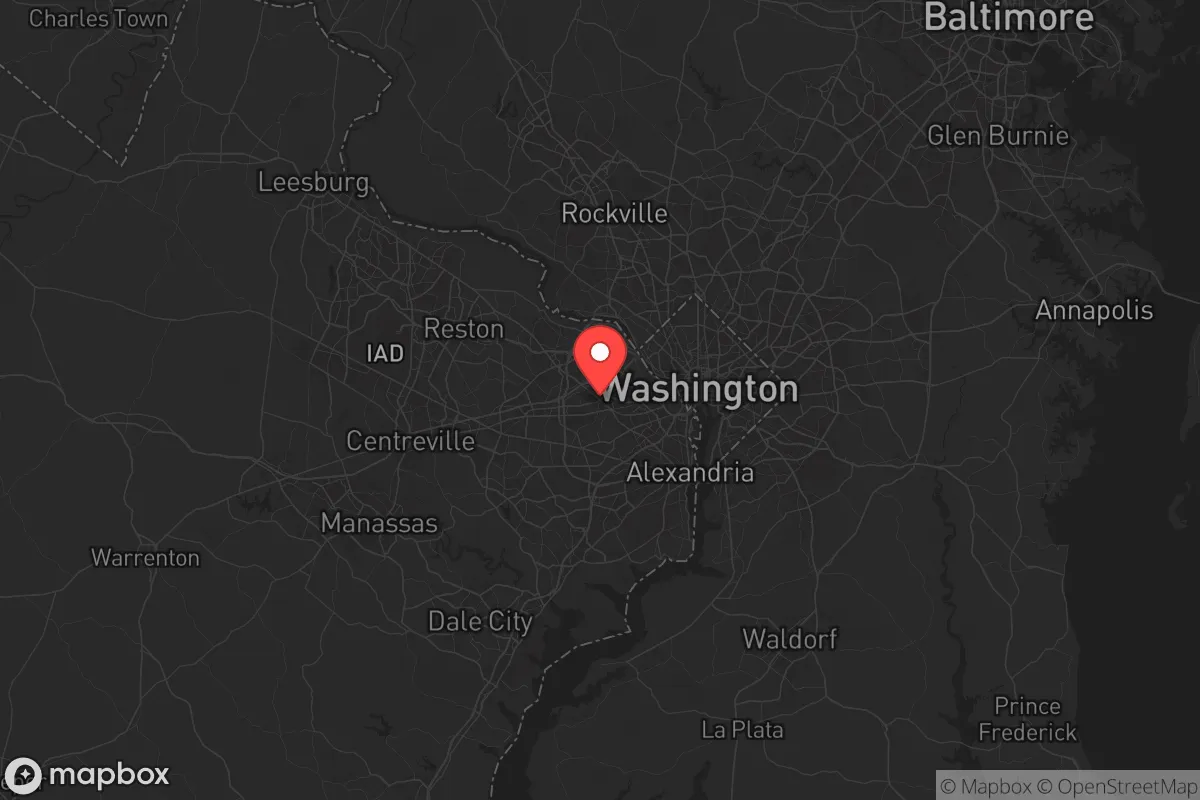
Falls Church City County, Virginia, is a small, densely populated independent city of roughly 14,600 residents that functions as a highly educated, affluent, and politically moderate-to-liberal enclave within the Washington, D.C. metropolitan area. With nearly 80% of adults holding a college degree and a foreign-born population of just under 5%, the city is notably less diverse than its neighboring suburbs in Fairfax and Arlington counties, yet it retains a distinct, walkable, small-town character. Its population today is predominantly white (68.5%), with significant Hispanic (10.7%), East/Southeast Asian (6.4%), Black (4.8%), and Indian-subcontinent (2.7%) communities, reflecting the city’s evolution from a historic crossroads into a modern bedroom community for federal employees, tech professionals, and military-affiliated families.
Settlement & growth (pre-1960)
Long before European settlement, the area now known as Falls Church City County was part of the ancestral homeland of the Algonquian-speaking Doeg and Tauxenent peoples, who lived along the Potomac River and its tributaries, including Four Mile Run and Pimmit Run. These groups practiced seasonal agriculture, fishing, and hunting, and their trails later became the routes for colonial roads. By the early 1700s, English colonists from the Tidewater region had pushed westward, and the Virginia House of Burgesses began granting large tracts of land in what was then Stafford County (later Fairfax County) to wealthy planters and speculators.
The city’s name derives from The Falls Church, an Anglican parish established in 1734 to serve the scattered settlers along the fall line of the Potomac. The original wooden church, built near the intersection of what is now Broad Street (Route 7) and Washington Street, became the nucleus of a small crossroads community. During the colonial and early federal periods, the population remained sparse, composed primarily of English and Scots-Irish yeoman farmers, with a small number of enslaved African Americans working on tobacco plantations. The area was not a major destination for immigrants; rather, it was a rural waypoint on the road from Alexandria to the Shenandoah Valley.
The 19th century brought little change. Falls Church remained a tiny hamlet until the Civil War, when Union forces occupied the area and built fortifications, including Fort Buffalo and Fort Ramsay, to defend Washington. After the war, the population slowly grew as freedmen and white farmers alike sought land. The arrival of the Washington & Old Dominion Railroad in the 1870s spurred modest suburban development, with streetcar suburbs emerging along the line. By 1900, the community had a few hundred residents, mostly native-born whites and a small Black population centered around the Gallows Road and Lee Highway corridors. The town was formally incorporated as the City of Falls Church in 1948, separating from Fairfax County to gain local control over zoning and schools.
Through the 1950s, Falls Church remained a quiet, predominantly white, middle-class suburb. The post-World War II baby boom and the expansion of the federal government under the Eisenhower administration brought an influx of young families, many of them veterans and civil servants, who were drawn by affordable housing and proximity to Washington. The city’s population grew from about 3,500 in 1950 to over 10,000 by 1960, but the demographic profile was still overwhelmingly native-born white, with a small Black community concentrated in the East Falls Church neighborhood near the Washington Boulevard corridor.
Modern era (post-1965)
The 1965 Hart-Cellar Immigration Act, which abolished national-origin quotas, had a delayed but noticeable effect on Falls Church. Unlike neighboring Arlington or Annandale, Falls Church did not become a primary landing point for new immigrants. Instead, the city’s demographic shifts in the late 20th century were driven more by domestic migration and the expansion of the D.C. metro area’s technology and defense sectors. The completion of the I-66 corridor and the Orange Line of the Washington Metro (which opened a station at East Falls Church in 1986) transformed the city into a commuter hub, attracting highly educated professionals from across the country.
The most significant change came in the 1990s and 2000s, as the region’s booming economy drew a wave of domestic migrants from the Northeast, Midwest, and California. These newcomers were disproportionately white and Asian, with advanced degrees in law, medicine, engineering, and information technology. The city’s Hispanic population also grew, rising from a negligible share in 1980 to about 10.7% today, with many families settling in the West Falls Church area and along the Annandale Road corridor. The East/Southeast Asian community, now 6.4% of the population, is concentrated near the Seven Corners and Bailey’s Crossroads edges, though many families live throughout the city. The Indian-subcontinent population (2.7%) is more dispersed, with no single enclave, reflecting the high-income, professional profile of many Indian-origin residents who work in tech and government contracting.
Notably, the Black population in Falls Church has declined as a share of the total, from roughly 10% in 1970 to 4.8% today, as many African American families moved to more affordable suburbs in Prince George’s County or farther out in Loudoun County. The city’s small size and high housing costs—median home values exceed $900,000—have made it increasingly exclusive, filtering for residents with high incomes and advanced degrees. The foreign-born share (4.9%) is low by D.C. suburban standards, reflecting the city’s limited rental housing stock and lack of a major immigrant gateway neighborhood.
The future
Falls Church City County is likely to become slightly more diverse over the next decade, but the pace of change will be slow. The city’s housing stock is almost entirely single-family homes with little new development, and zoning restrictions limit multifamily construction. As a result, the population is aging—the median age is over 40—and younger families are increasingly priced out, moving to Falls Church City’s own school system is excellent, but the cost of entry is high. The Hispanic and East/Southeast Asian shares are expected to grow modestly, driven by second-generation residents and a trickle of new arrivals in the professional class, but the city will remain predominantly white and highly educated. The Indian-subcontinent population may also increase slightly, as tech and biotech sectors expand in the broader D.C. region.
Culturally, Falls Church is becoming more secular and politically liberal, mirroring trends in inner-ring suburbs nationwide. The city’s identity as a historic, walkable, small-town alternative to the sprawl of Fairfax County will likely persist, but the demographic profile will continue to skew toward upper-income professionals. The next 10-20 years will see little change in the city’s racial or ethnic composition unless zoning reforms allow for more diverse housing types, which remains politically contentious.
For someone moving in now, Falls Church City County offers a stable, highly educated, and safe community with top-tier schools and easy access to Washington, D.C. The population is not growing rapidly, and the city’s character as a quiet, leafy, predominantly white enclave is likely to endure. New residents should expect a place where neighbors are likely to be lawyers, consultants, or federal employees, and where the biggest demographic story is not diversity but density—or the lack thereof.

* Values derived from national, state, county, city and local statistics and may differ in a specific area. Last updated: 2026-06-17T22:01:31.000Z
Narrative content on this page is AI-generated and may contain mistakes. Verify any details that matter before acting on them.
ReloMaps may earn a commission from affiliate links at no extra cost to you.

