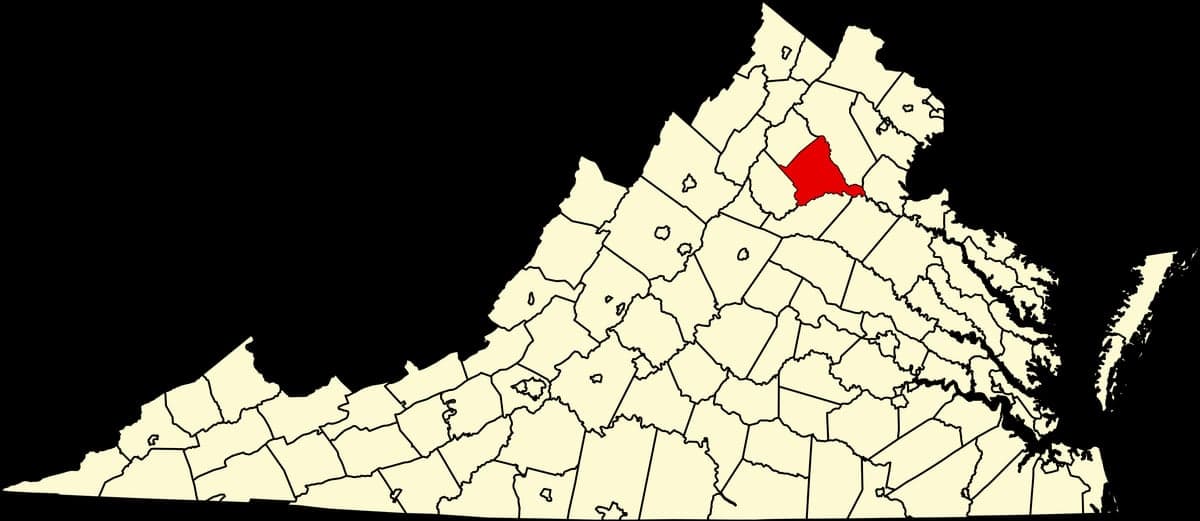
Photo: Wikipedia
Quality of Life in Culpeper County
A livable area that tracks near national norms for affordability, walkability, and neighborhood health.
What does Quality of Life tell us?
Quality of Life measures an area by evaluating factors like cost of living, nearby amenities, country club access, airport proximity, socioeconomic signals and neighborhood character. For large states, this is a general average — quality of life can vary dramatically between metro areas, suburbs, and rural communities within the same state.
What does this tell us?
Quality of Life measures an area by evaluating factors like cost of living, nearby amenities, country club access, airport proximity, socioeconomic signals and neighborhood character. For large states, this is a general average — quality of life can vary dramatically between metro areas, suburbs, and rural communities within the same state.
Cost of Living
28% above national average
87%
The Real Cost of Living in Culpeper County for 2026
| Tier | Individual | Family (4) |
|---|---|---|
| Survival | $23k | $43k |
| Comfortable | $75k | $110k |
| Luxury | $145k+ | $224k+ |
| Elite (Top 5%) | $170k+ | $264k+ |
Quality-of-Life Analysis
Culpeper County offers a distinct quality-of-life spectrum that ranges from the historic, walkable core of its county seat to quiet crossroads communities and sprawling farmlands, drawing everyone from Washington D.C. commuters to agricultural families. The county’s character is defined by this contrast: the Town of Culpeper provides concentrated amenities and a higher cost of living, while outlying areas like Brandy Station, Lignum, and Richardsville offer lower-density living and a slower pace. With a cost of living index of 128 (100 being the U.S. average) and a median home value of $386,400, the county sits above the national average but well below the Northern Virginia suburbs, making it a practical middle ground for those seeking space without total isolation.
Largest town(s) & population centers
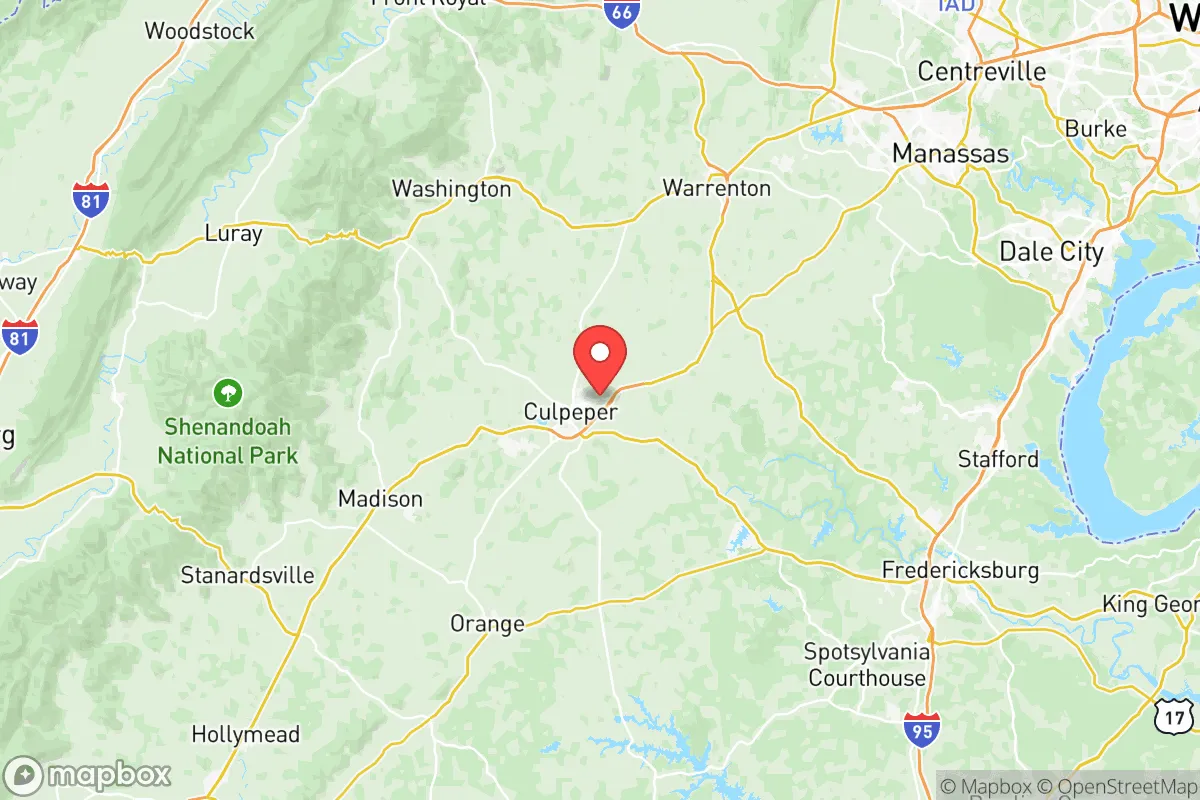
The Town of Culpeper is the county’s undisputed hub, home to roughly 20,000 residents and the vast majority of retail, dining, and employment. Daily life here centers around the historic downtown district along Davis Street, where locally owned shops, restaurants, and the Culpeper County Courthouse anchor a pedestrian-friendly environment. The town also contains the county’s primary grocery stores, the Culpeper Regional Hospital, and the Culpeper Amtrak station, which offers direct service to Washington D.C. in about 90 minutes. For families, the town provides access to Culpeper County Public Schools’ highest-rated elementary schools, such as Pearl Sample Elementary, and a range of after-school programs at the Culpeper County Parks and Recreation Department. The average commute of 37.2 minutes reflects the significant number of residents who drive north on U.S. 29 or take the train to jobs in Fairfax, Prince William, or D.C., making the town a practical base for hybrid or in-office workers.
Smaller towns & rural pockets
Outside the town, the county is dotted with unincorporated communities that each offer a distinct flavor. Brandy Station, located about 10 miles northeast of Culpeper, is best known for the Brandy Station Battlefield and a tight-knit population of fewer than 500 residents; life here revolves around equestrian properties, Civil War history, and the Brandy Station Volunteer Fire Department. Lignum, to the south, is a rural crossroads with a post office and a handful of homes on large lots, appealing to those who want absolute quiet and land for gardening or small-scale farming. Richardsville, near the Rappahannock River, offers riverfront properties and a deeply rural character, with no commercial services and the nearest grocery store a 20-minute drive away. Rixeyville, west of the town, is a small cluster of homes and a church, where residents often commute to Culpeper or Warrenton for work. These areas lack sidewalks, streetlights, and public water in many cases, but they provide privacy and space that the town cannot match.
Cost & lifestyle range
The cost of living and amenities vary sharply across the county. At the high end, the Town of Culpeper and its immediate suburbs—such as the Lake Pelham area and the newer developments off Route 3—command median home values near the county’s $386,400 mark, with some new-construction homes exceeding $500,000. Renters in these areas pay a median of $1,417 per month, though units near downtown or with modern finishes often run $1,600–$1,800. At the low end, rural properties in Brandy Station, Lignum, and Richardsville can be found for under $300,000, especially older farmhouses or fixer-uppers on acreage. However, lower purchase prices come with trade-offs: longer drives to grocery stores, no public transit, and higher transportation costs. The county’s overall COL index of 128 is driven largely by housing and transportation; utilities and healthcare are closer to the national average. For example, a family renting a two-bedroom apartment in the town might pay $1,500, while a similar family in a rural rental on a well and septic might pay $1,200 but spend $200 more monthly on vehicle fuel.
Those who thrive in Culpeper County are typically comfortable with trade-offs. The county works well for commuters who want a historic downtown and train access but accept a 37-minute average drive, for families who value good public schools and a range of housing options, and for rural residents who prioritize land and privacy over convenience. It is less suited for those seeking urban nightlife, extensive public transit, or a low cost of living by national standards. The county’s strength lies in offering a genuine choice—from the walkable town to the quiet crossroads—within a single, manageable geography.

Crime in Culpeper County
Generally safer than 60% of comparable U.S. locations.
Violent CrimeViolent Crime Analysis
Property CrimeProperty Crime Analysis
Crime Analysis
Culpeper County, Virginia, reports a violent crime rate of 209 incidents per 100,000 residents and a property crime rate of 1,389.4 per 100,000, according to the most recent data. These figures place the county in a middle tier of safety within the state, with crime levels modestly exceeding the national averages in certain categories. The overall safety picture is shaped largely by activity within the Town of Culpeper, the county’s sole incorporated municipality, while surrounding rural areas and smaller communities like Boston, Brandy Station, and Rixeyville experience fewer incidents. Residents report a generally safe daily environment, though property crime—particularly vehicle break-ins and thefts from sheds and garages—remains a consistent concern across the county.
Crime in context
When compared to Virginia’s statewide violent crime average of roughly 200 per 100,000, Culpeper County’s rate is slightly elevated, while its property crime rate exceeds the state average of about 1,200 per 100,000. The county’s figures also surpass the national violent crime average of 380 per 100,000 but sit below the national property crime baseline. The primary driver of elevated numbers is the Town of Culpeper, which contains the majority of the county’s population and commercial density. Communities such as Jeffersonton and Lignum, by contrast, report near-zero violent crime in most years, with property thefts limited mainly to isolated rural structures. The county sheriff’s office handles unincorporated areas, while the Culpeper Police Department oversees the town—two distinct jurisdictions that produce different local safety profiles. Statewide, Virginia’s property crime rate has trended downward since 2020, but Culpeper County has not fully mirrored that decline, particularly in vehicle-related thefts near the Route 29 corridor.
What residents experience
For most Culpeper County residents, the most likely encounter with crime involves a non-violent property offense. Larceny-from-vehicle incidents account for roughly 30% of all property crimes, often targeting unlocked cars in driveways, commuter lots near the Town of Culpeper, and parking areas near Monticello Forest or Lake Pelham. Burglary rates are moderate, with seasonal upticks in warmer months when rural properties and vacation homes in areas like Stevensburg and Elkwood are left unattended. Violent crime is rare in everyday life—most incidents are concentrated within specific blocks of the Town of Culpeper, particularly along the East Street corridor and near the Route 29 commercial strip. The county’s progressive prosecutor, elected in 2023, has introduced diversion programs for non-violent offenders and reduced bond requests for certain theft and drug cases. Residents in the rural western portions of the county, around Little Fork and Winston, often express concern that these judicial policies may encourage property crime spillover from the town, though data to date shows no clear increase in rural offenses.
Neighborhood-level variation is significant. Gated communities and subdivisions such as those around Lake Pelham and the Rolling Hills countryside report crime rates 40-60% lower than the county average. Unincorporated villages like Richardsville and Rapidan experience near-zero property crime. In contrast, rental-heavy areas in central Culpeper and the older sections of town near Oaklawn Drive and Sunset Lane see higher rates—particularly theft and vandalism. The county’s district court handles most lower-level cases, with a conviction rate for property crimes hovering near 65%, but the district attorney’s office prioritizes restorative justice for first-time offenders, a policy that has drawn both praise for reducing recidivism and criticism from residents who feel it undermines deterrence. For families moving to Culpeper County, choosing a subdivision with active homeowners’ associations or a rural lot with visible neighbors remains the most straightforward way to minimize crime risk, given the uneven enforcement landscape.
* Values derived from national, state, county, city and local statistics and may differ in a specific area. Last updated: 2026-06-25T08:00:13.000Z
Narrative content on this page is AI-generated and may contain mistakes. Verify any details that matter before acting on them.
ReloMaps may earn a commission from affiliate links at no extra cost to you.

