Quality of Life in Chesapeake City County
A livable area that tracks near national norms for affordability, walkability, and neighborhood health.
What does Quality of Life tell us?
Quality of Life measures an area by evaluating factors like cost of living, nearby amenities, country club access, airport proximity, socioeconomic signals and neighborhood character. For large states, this is a general average — quality of life can vary dramatically between metro areas, suburbs, and rural communities within the same state.
What does this tell us?
Quality of Life measures an area by evaluating factors like cost of living, nearby amenities, country club access, airport proximity, socioeconomic signals and neighborhood character. For large states, this is a general average — quality of life can vary dramatically between metro areas, suburbs, and rural communities within the same state.
Cost of Living
30% above national average
92%
The Real Cost of Living in Chesapeake City County for 2026
| Tier | Individual | Family (4) |
|---|---|---|
| Survival | $24k | $46k |
| Comfortable | $70k | $103k |
| Luxury | $146k+ | $226k+ |
| Elite (Top 5%) | $171k+ | $266k+ |
Quality-of-Life Analysis
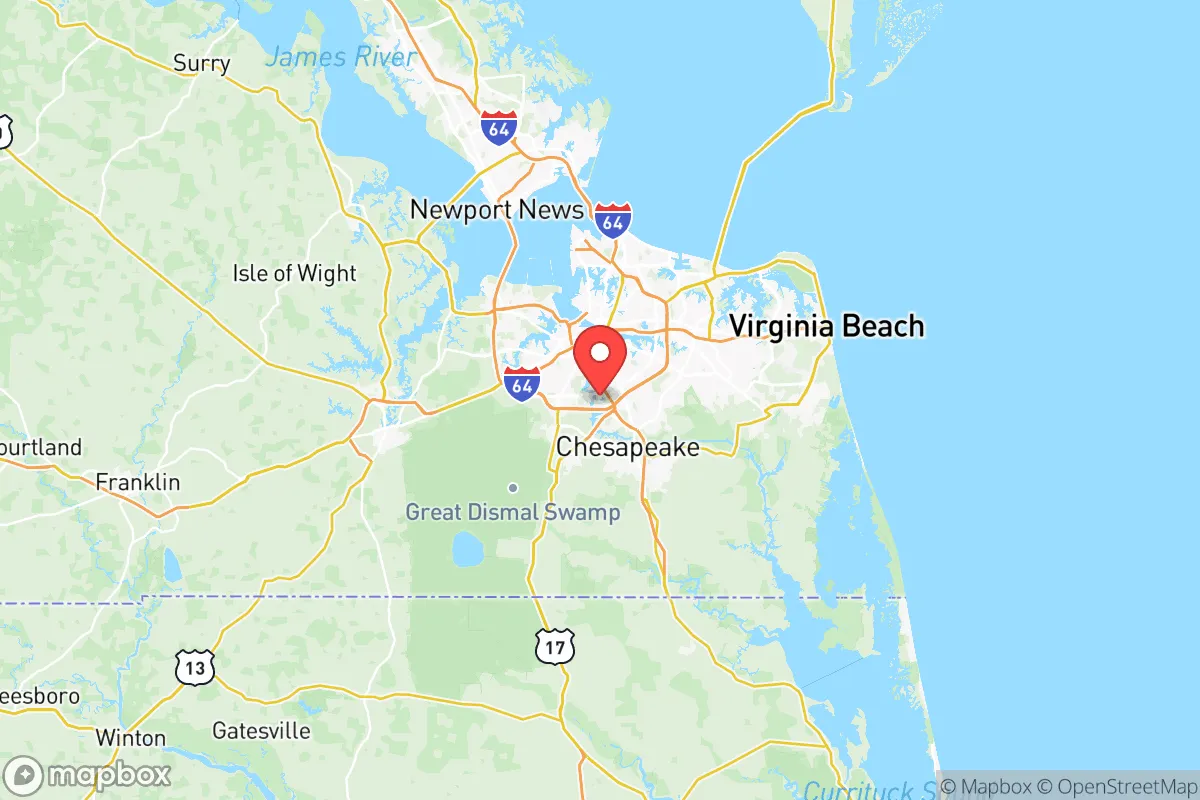
Chesapeake City County, Virginia, is a unique independent city that functions with the geographic scale and diversity of a county, offering a broad spectrum of quality-of-life options that range from dense, suburban-style neighborhoods to quiet, agricultural riverfronts. This duality attracts a mix of residents: young professionals and military families drawn to the convenience of its larger commercial corridors, alongside long-time locals and rural enthusiasts who value the privacy and space found in its southern and eastern reaches. The county’s character is defined by this contrast, where a 20-minute drive can shift from a bustling retail hub to a farm-lined country road.
Largest town(s) & population centers
The primary population centers in Chesapeake are not incorporated towns but distinct, high-density areas centered around major thoroughfares. The Great Bridge area, anchored by the intersection of Battlefield Boulevard and Hanbury Road, is the de facto downtown, featuring the Chesapeake City Hall, the central library, and the Great Bridge Shopping Center. Daily life here is car-dependent but highly convenient, with a dense concentration of big-box retailers, chain restaurants, and medical offices. Further east, the Greenbrier area, centered around Greenbrier Parkway and Volvo Parkway, is the county’s commercial and retail powerhouse, home to the Greenbrier Mall, numerous hotels, and the Chesapeake Conference Center. This area offers the most urban feel in the county, with apartment complexes, townhome developments, and heavy traffic during peak hours. A third significant node is Deep Creek, located along George Washington Highway, which provides a more established, older suburban feel with its own set of local shops and a strong sense of community identity.
Smaller towns & rural pockets
Beyond these commercial corridors, Chesapeake retains significant rural character, particularly in its southern half. The unincorporated community of Hickory, centered around the intersection of Battlefield Boulevard and Mount Pleasant Road, is a rapidly growing area that still features large-lot homes, horse farms, and agricultural land, though new subdivisions are steadily encroaching. Further south, the Mossy Bottom area along the North Carolina border offers deep rural living, with expansive properties, creeks, and a distinctly quiet, isolated atmosphere. Along the Albemarle and Chesapeake Canal, communities like Fentress and Bunch Walnuts are sparsely populated, with homes set back from narrow, winding roads, offering a lifestyle centered on boating, fishing, and privacy. The Northwest River area, near the border with Camden County, NC, is another key rural pocket, characterized by dense forests, the Northwest River Park, and a complete absence of commercial development.
Cost & lifestyle range
The cost of living and lifestyle options vary dramatically across Chesapeake. The county’s overall cost of living index is 130, well above the national average of 100, driven largely by housing. The median home value is $359,100, and median rent is $1,523. At the higher end of the spectrum, the Great Bridge and Greenbrier areas command premium prices, with newer single-family homes in subdivisions like River Walk or Edinburgh frequently exceeding $500,000. These areas offer the shortest commutes to Norfolk and Virginia Beach, averaging 25.5 minutes, and provide the most amenities within walking distance. At the lower end, older homes in Deep Creek or smaller ranch-style houses in South Norfolk (the county’s historic, more industrial waterfront) can be found for under $300,000, though these areas may have older infrastructure and fewer immediate retail options. The most affordable land is in the rural southern pockets like Hickory and Mossy Bottom, where buyers can find acreage for a lower price per square foot, but must accept longer drives—often 30-40 minutes—to reach grocery stores and employment centers.
This county is best suited for residents who value space and a mix of suburban convenience and rural privacy, but who are prepared for a car-dependent lifestyle and a higher-than-average housing market. Families seeking good schools and a safe environment thrive in the Great Bridge and Hickory areas, while those who prioritize land, quiet, and outdoor recreation will find their niche in the southern rural communities. Professionals working in Norfolk or Virginia Beach will appreciate the reasonable commute times from the northern corridors, but should be aware that traffic on Battlefield Boulevard and I-64 can be significant during peak hours. Ultimately, Chesapeake offers a rare blend of urban accessibility and genuine rural escape, making it a versatile choice for a wide range of lifestyles.

Crime in Chesapeake City County
Generally safer than 60% of comparable U.S. locations.
Violent CrimeViolent Crime Analysis
Property CrimeProperty Crime Analysis
Crime Analysis
Chesapeake City County, the third-largest city in Virginia by land area, reports a violent crime rate of 209.3 per 100,000 residents and a property crime rate of 1,392 per 100,000. These figures place Chesapeake in a middle tier for safety within the Hampton Roads region, significantly safer than neighboring Norfolk and Portsmouth but notably more dangerous than the city of Virginia Beach. The overall safety picture is one of moderate risk, with property crime being the more prevalent concern for most residents.
Crime in context
When compared to national averages, Chesapeake's violent crime rate of 209.3 per 100,000 is roughly 40% lower than the U.S. national average of approximately 380 per 100,000. Property crime, however, tells a different story. At 1,392 per 100,000, Chesapeake's property crime rate is about 15% higher than the national average and notably above the Virginia state average of roughly 1,200 per 100,000. This disparity is common in cities that serve as regional commercial hubs; the concentration of retail centers along the Battlefield Boulevard corridor and near the Greenbrier Mall creates more opportunities for theft and vehicle break-ins. The city's violent crime rate is comparable to that of Suffolk and is roughly half the rate seen in Norfolk (which exceeds 400 per 100,000), but it is nearly double the rate in Virginia Beach (approximately 110 per 100,000).
What residents experience
For daily life in Chesapeake, the most common crime encounters involve property offenses. Larceny-theft accounts for the majority of property crimes, followed by motor vehicle theft and burglary. Residents in the Great Bridge and Hickory areas generally report fewer incidents than those in the more densely developed sections of South Norfolk and the Deep Creek area. The city's police department has maintained a proactive community policing strategy, but the sheer geographic size of Chesapeake—over 350 square miles—means response times can vary significantly between the urbanized northern edge near Norfolk and the rural southern reaches near the North Carolina border. Progressive judicial policies in the broader Hampton Roads region, particularly in Norfolk's courts, have led to concerns about revolving-door justice for property offenders, as repeat theft and larceny offenders often receive lenient sentences or diversion programs, which frustrates victims and undermines deterrence. This regional dynamic means that property crime in Chesapeake is not solely a local issue but is influenced by the policies of neighboring jurisdictions.
Neighborhood-level variation
Safety in Chesapeake is highly neighborhood-dependent. The Greenbrier East and South Norfolk areas see the highest concentrations of both violent and property crime, driven by density, commercial activity, and proximity to higher-crime areas of Norfolk. In contrast, the Hickory Ridge and Great Bridge neighborhoods consistently report the lowest crime rates in the city, with violent crime incidents being rare. The rural communities along the Albemarle and Chesapeake Canal, such as the area around the Dismal Swamp Canal Trail, experience very low crime but also have limited police coverage. For families and professionals, the Western Branch area offers a strong middle ground with crime rates below the city average and good access to schools and amenities. Prospective residents should examine block-level data, as even within the same ZIP code, a subdivision with a homeowners' association and private security can have dramatically different outcomes than a nearby apartment complex. The city's annexation history has created a patchwork of older, denser neighborhoods near the Norfolk line and newer, sprawling subdivisions to the south, and this physical layout directly correlates with crime distribution.
* Values derived from national, state, county, city and local statistics and may differ in a specific area. Last updated: 2026-07-16T05:54:36.000Z
Narrative content on this page is AI-generated and may contain mistakes. Verify any details that matter before acting on them.
ReloMaps may earn a commission from affiliate links at no extra cost to you.

