Demographics of Chesapeake City County
Affluence Level in Chesapeake City County
A middle-class area roughly in line with national averages across income, home values, education, and employment.
People of Chesapeake City County
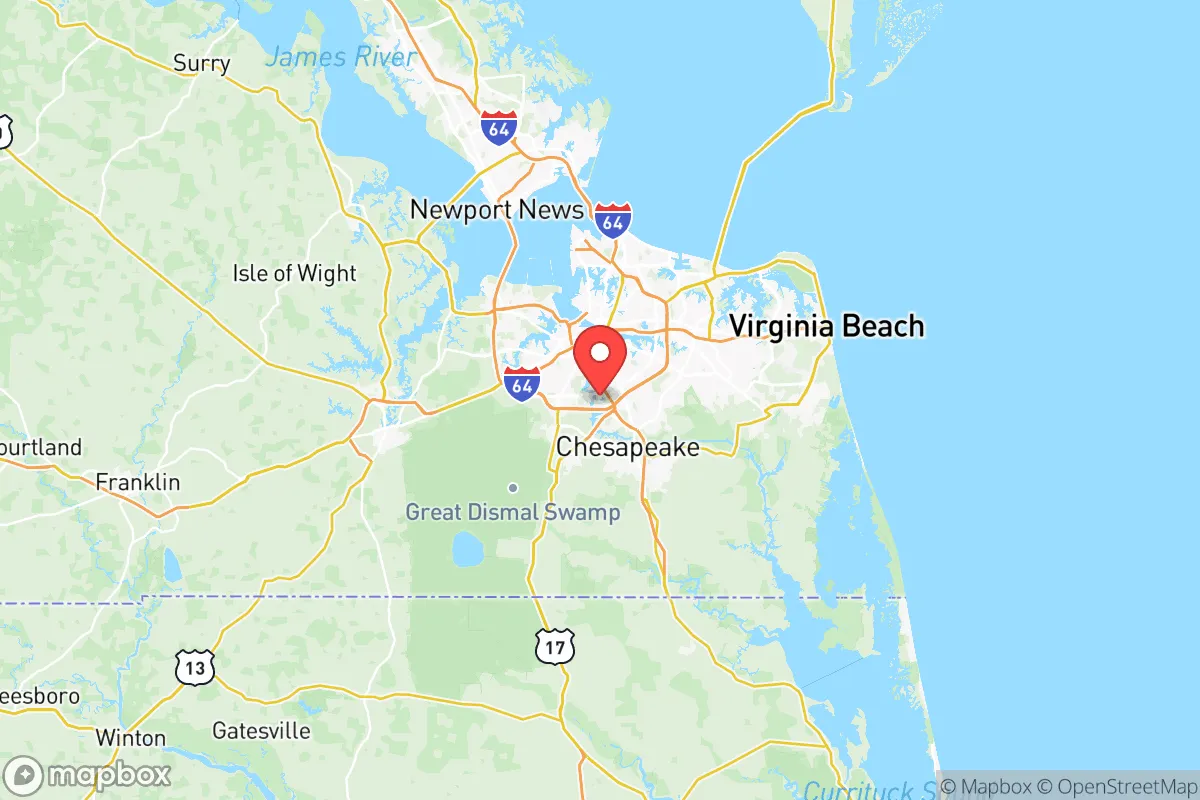
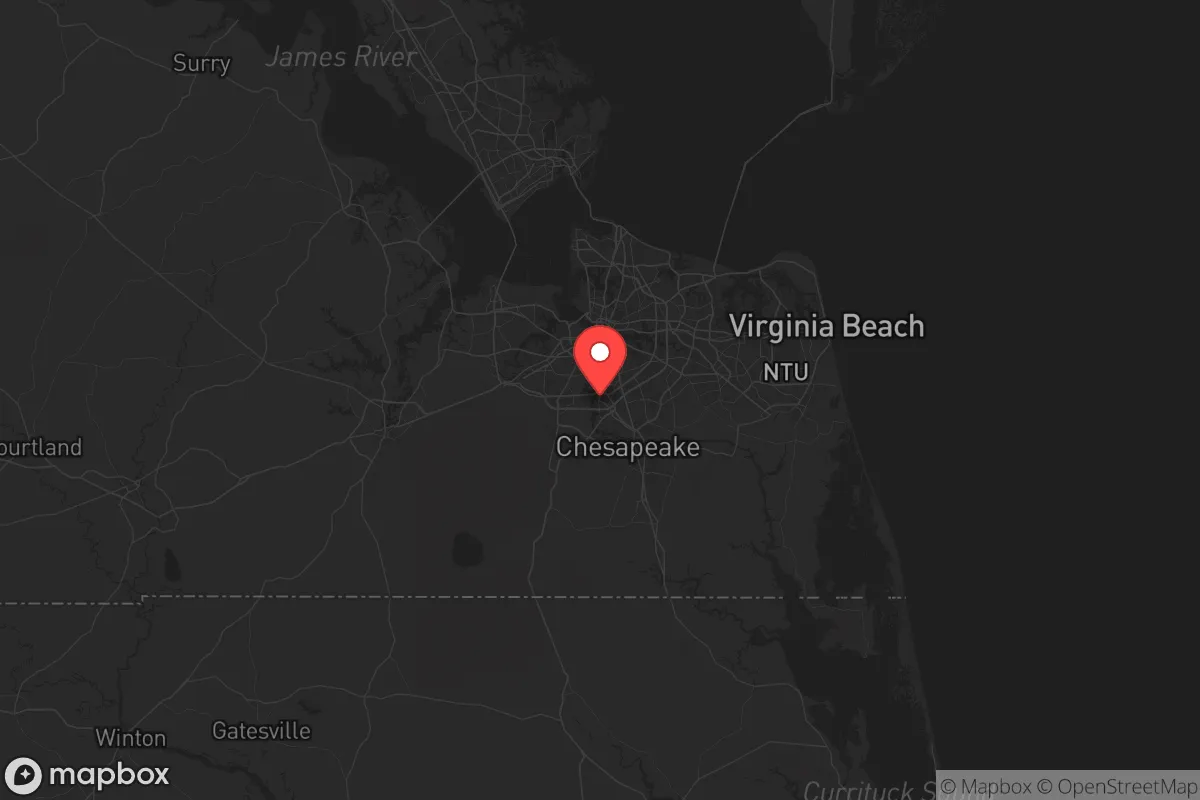
The people of Chesapeake City County, Virginia, today number 251,153, forming a community that blends deep Tidewater roots with steady suburban growth. The city is notably more diverse than the surrounding Hampton Roads region, with a population that is 54.4% White, 28.5% Black, 7.4% Hispanic, and 3.2% East and Southeast Asian, yet it remains one of the least foreign-born cities in Virginia at just 2.3%. This demographic profile reflects a history of domestic migration, military influence, and agricultural settlement rather than the international immigration waves that reshaped other parts of the state. Chesapeake’s identity is defined by its dual character: a sprawling, car-dependent suburb of Norfolk and Virginia Beach that still retains pockets of rural, waterfront living along the Intracoastal Waterway and the Dismal Swamp Canal.
Settlement & growth (pre-1960)
Long before European settlement, the area now known as Chesapeake was inhabited by the Chesapeake people, an Algonquian-speaking tribe whose name likely meant "great shellfish bay." The tribe was decimated by disease and conflict with English colonists in the early 1600s, and by 1646, the land was largely absorbed into the Virginia Colony. The region remained sparsely populated through the colonial period, with small tobacco plantations and farms dotting the banks of the Elizabeth River and its tributaries.
The modern story of Chesapeake’s population begins in the late 18th and early 19th centuries, when English and Scots-Irish farmers moved south from the Virginia Piedmont into what was then Norfolk County. These settlers established small agricultural communities in places like Deep Creek, Great Bridge, and Hickory, growing corn, wheat, and timber. The Dismal Swamp Canal, completed in 1805, connected the area to North Carolina and spurred a modest timber and shingle industry, drawing a small number of free Black laborers and enslaved workers to the swamp’s edge.
After the Civil War, the region’s Black population grew significantly as freedmen settled in rural enclaves, particularly around Bunch Walnuts and Fentress, where they established independent farming communities and churches. The late 19th and early 20th centuries saw little new immigration; the area remained a quiet, agricultural corner of South Hampton Roads. The biggest demographic shift came with World War II, when the Norfolk Naval Shipyard and nearby military bases in Portsmouth and Norfolk drew thousands of workers from across the rural South. Many of these newcomers—both White and Black—settled in the unincorporated areas of Norfolk County, including South Norfolk and Western Branch, creating the first significant suburban clusters. By 1950, the county’s population had grown to roughly 50,000, still overwhelmingly native-born and Protestant, with a strong Southern cultural identity.
Modern era (post-1965)
The 1963 consolidation of Norfolk County and the city of South Norfolk created the independent city of Chesapeake, a move driven by the need to manage rapid suburbanization. The post-1965 era in Chesapeake was shaped not by the Hart-Cellar Act’s immigration reforms—which had minimal local impact—but by domestic migration from the Rust Belt and the broader Sun Belt boom. From the 1970s through the 1990s, Chesapeake absorbed thousands of families moving from the Northeast and Midwest, drawn by the region’s lower cost of living, military employment, and the expanding shipbuilding and logistics industries at the Port of Virginia.
This wave of domestic migration was predominantly White and Black, reinforcing the city’s existing racial binary. The Hispanic population, now 7.4%, began to grow in the 1990s and 2000s, driven by Puerto Rican families moving from the Northeast and a smaller number of Mexican and Central American workers recruited for construction, landscaping, and poultry processing. The Hispanic community is dispersed rather than concentrated, with small clusters in Great Bridge and Greenbrier. The East and Southeast Asian population, at 3.2%, includes a notable Filipino community tied to the U.S. Navy, with families settling near Naval Support Activity Hampton Roads and in the Greenbrier area. The Indian subcontinent population remains very small at 0.5%, with no distinct enclave.
Suburbanization reshaped Chesapeake’s geography dramatically. The Greenbrier area, once farmland, became the city’s commercial and residential hub, with sprawling subdivisions, shopping centers, and office parks. Great Bridge evolved into a dense, family-oriented suburb, while Deep Creek and Hickory retained more rural character. The city’s Black population, historically concentrated in older neighborhoods like South Norfolk and Bunch Walnuts, has dispersed into newer subdivisions in Western Branch and Camelot, reflecting broader patterns of middle-class suburbanization. The foreign-born share, at just 2.3%, is among the lowest for any Virginia city of comparable size, underscoring that Chesapeake’s growth has been overwhelmingly driven by native-born Americans moving within the country.
The future
Chesapeake’s population is projected to continue growing slowly, reaching roughly 270,000 by 2040, driven by natural increase and continued domestic migration from higher-cost areas in the Northeast and California. The city is becoming slightly more diverse, with the Hispanic and Asian shares expected to rise to 10% and 5% respectively by 2040, while the White share declines toward 50%. The Black population is likely to remain stable at around 28-30%, as outmigration of younger Black families to other Sun Belt metros is offset by in-migration from the Norfolk naval community.
New communities are concentrating in the city’s southern and western fringes, particularly around Hickory and Moyock (the latter just over the North Carolina line), where large-lot subdivisions are attracting families seeking more space. The Greenbrier area is nearing buildout and will see denser, mixed-use infill development. The city’s cultural identity is evolving from a quiet, rural-tinged suburb into a more diverse, mid-sized city, though it remains far less cosmopolitan than neighboring Norfolk or Virginia Beach. The low foreign-born share means that Chesapeake will likely retain a distinctly American, Tidewater character, with less of the ethnic enclave formation seen in larger metros.
For someone moving in now, Chesapeake offers a stable, family-oriented environment with good schools, relatively affordable housing, and a population that is politically moderate to conservative. The city is becoming more diverse and suburban, but it is not undergoing rapid cultural transformation. New residents will find a community where long-time locals and newcomers mix easily, where military ties are strong, and where the pace of life remains slower than in the region’s urban cores. The bottom line: Chesapeake is a quietly growing, increasingly diverse but still predominantly native-born Southern suburb, ideal for those seeking space, safety, and a strong sense of local identity without the friction of rapid demographic change.

* Values derived from national, state, county, city and local statistics and may differ in a specific area. Last updated: 2026-07-16T05:54:36.000Z
Narrative content on this page is AI-generated and may contain mistakes. Verify any details that matter before acting on them.
ReloMaps may earn a commission from affiliate links at no extra cost to you.

