Personal Sovereignty in Chesapeake City County
Viable for self-reliance. Generally workable, though some barriers may limit total independence.
What does Personal Sovereignty tell us?
Personal Sovereignty measures your capacity for self-reliance and independence with minimal government friction. Higher scores mean fewer barriers between you and the way you want to live... but it assumes you have the space you need and good neighbors.
What does this tell us?
Personal Sovereignty measures your capacity for self-reliance and independence with minimal government friction. Higher scores mean fewer barriers between you and the way you want to live... but it assumes you have the space you need and good neighbors.
State Policy
Energy independence: Importer (20% of energy produced in-state)
Personal Liberty
Homesteading

Personal Liberty Analysis
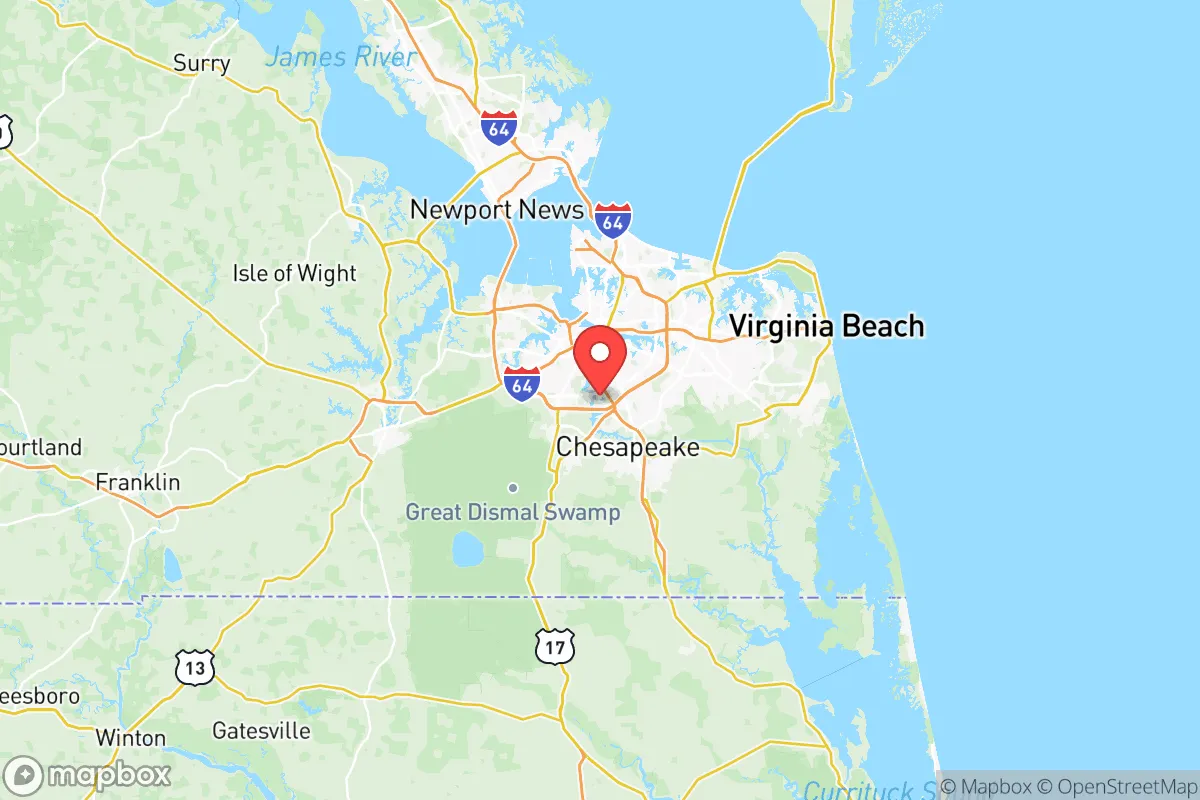
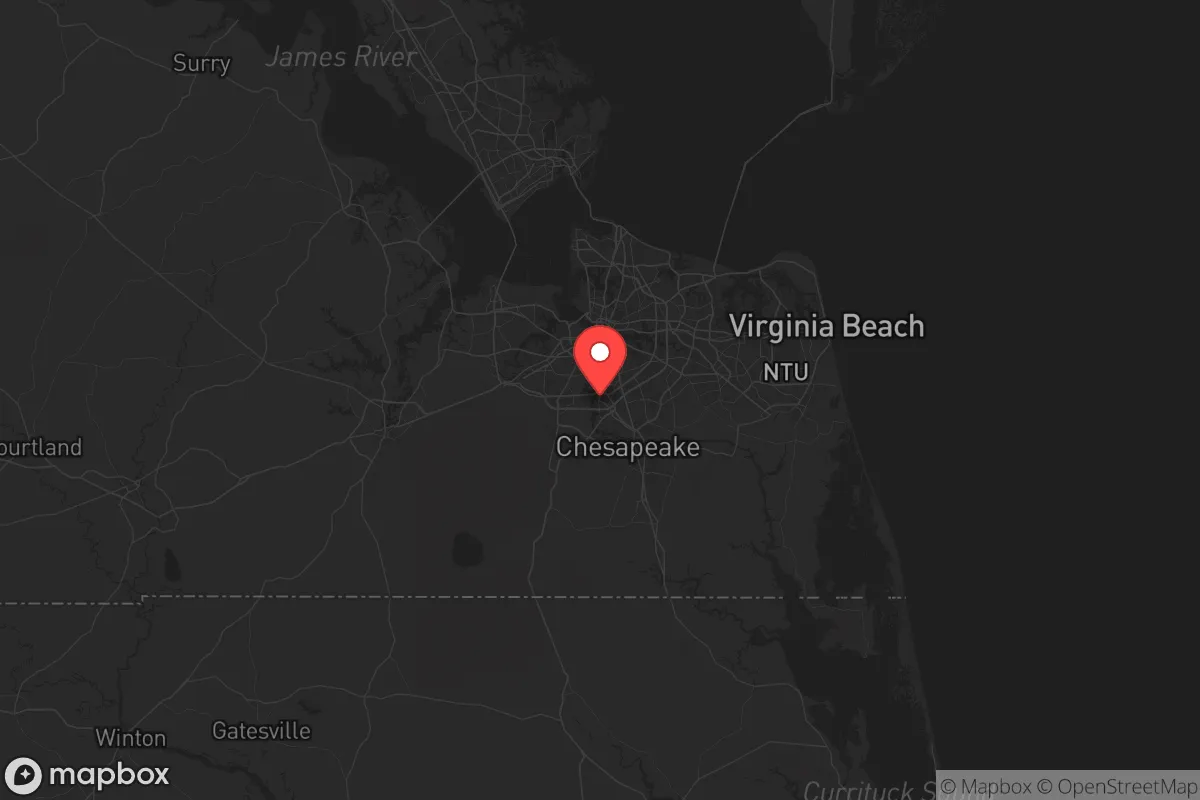
Chesapeake City County, Virginia, presents a nuanced environment for personal sovereignty, where state-level protections for gun rights and parental authority coexist with a moderately active local regulatory posture. As an independent city in southeastern Virginia, Chesapeake operates under Virginia’s Dillon Rule, meaning its authority is limited to powers expressly granted by the state legislature. This creates a legal framework where personal autonomy is often defined by what the state permits rather than what the locality restricts, but local ordinances on land use, noise, and business operations can still shape daily life. For a relocation-minded individual or family prioritizing self-reliance, the key is understanding where Chesapeake’s local code diverges from the broader state context, particularly in areas like tax burden, self-defense law, and the feasibility of homesteading.
Tax burden and regulatory posture in Chesapeake City County
Virginia’s overall tax burden is moderate, ranking 22nd nationally in combined state and local taxes, but Chesapeake’s local tax structure adds a notable layer. The city levies a real property tax rate of $1.01 per $100 of assessed value, which is competitive with neighboring Virginia Beach ($1.05) but higher than rural counties like Southampton ($0.65). Personal property tax on vehicles is a significant factor in Virginia, and Chesapeake applies the standard state rate of 4.15% on assessed value, with no local exemption. The city’s regulatory posture is generally business-friendly but not laissez-faire; zoning codes are enforced consistently, and the permitting process for home-based businesses or accessory structures is straightforward but requires adherence to the city’s Unified Development Ordinance. In areas like Great Bridge and Hickory, residential zoning is more permissive for small-scale agriculture and home occupations than in denser neighborhoods near Greenbrier, where commercial overlay districts impose stricter signage and parking rules. The city’s reliance on property and personal property taxes means that a self-reliant household with multiple vehicles, boats, or a home workshop will face a higher annual tax bill than in a more rural Virginia county, but the trade-off is access to well-maintained roads and public services.
Self-defense and gun law specifics in Chesapeake
Virginia is a “shall-issue” state for concealed handgun permits, and Chesapeake fully aligns with state law, meaning no additional local restrictions beyond the state code. The city does not impose its own waiting periods, magazine capacity limits, or assault weapon bans, leaving those decisions to the General Assembly. Open carry is legal for anyone 18 or older who can legally possess a firearm, and Chesapeake’s police department has historically taken a neutral stance on open carry, though officers may respond to calls from concerned citizens. The state’s “stand your ground” doctrine applies in Virginia, with no duty to retreat in any place where a person has a legal right to be. Deep Creek and Western Branch are neighborhoods where gun ownership is culturally normalized, with several indoor and outdoor shooting ranges within a 20-minute drive, including the Chesapeake Gun Range on Military Highway. The city’s proximity to the North Carolina border means that residents must be aware of differing laws in the neighboring state, particularly regarding magazine capacity and permit reciprocity. For a family prioritizing self-defense, Chesapeake offers a solid legal foundation, but the lack of local preemption on firearms storage or discharge ordinances means that future city council action could tighten rules, especially in residential areas near schools.
Self-reliance and homesteading viability in Chesapeake
Homesteading in Chesapeake is a mixed proposition, heavily dependent on the specific neighborhood and its zoning designation. The city’s Agricultural (A) and Rural Residential (RR) districts, found in areas like Mossy Bottom and Bunch Walks, allow for keeping chickens, goats, and even horses on lots as small as one acre, with no limit on the number of animals as long as they are not a nuisance. However, the city’s Suburban Residential (R-15) zones, common in Great Bridge and Hickory, restrict livestock to a maximum of four chickens per lot and prohibit larger animals entirely. Off-grid living is legally challenging: Virginia law requires connection to public water and sewer in areas where they are available, and Chesapeake’s building code mandates compliance with the Virginia Uniform Statewide Building Code, which effectively prohibits straw-bale or earth-sheltered homes without extensive engineering approvals. Rainwater collection is legal for non-potable uses, but the city requires a permit for any system exceeding 1,000 gallons. Solar panel installation is permitted by right, but homeowners associations in planned communities like Riverwalk and Edinburgh often impose aesthetic restrictions. For a family seeking true self-reliance, the most viable path is purchasing a minimum of 2-3 acres in the Deep Creek or Mossy Bottom areas, where zoning is looser and neighbors are more likely to tolerate a wood-fired boiler or a small workshop.
Personal liberties in Chesapeake: parental rights, medical autonomy, and property
Virginia law provides strong protections for parental rights, including the right to direct a child’s education, medical care, and religious upbringing. Chesapeake Public Schools, the third-largest division in the state, allows parents to opt their children out of sex education and specific health screenings, and the district has a transparent policy on instructional materials. Homeschooling is legal under Virginia’s home instruction statute, requiring a parent to hold a high school diploma and submit a curriculum description annually; the city’s school board does not impose additional requirements. Medical autonomy is more constrained: Virginia mandates the HPV vaccine for school attendance (with a religious exemption), and the state’s certificate of public need (COPN) laws limit the number of healthcare facilities, which can reduce choice for families seeking alternative or direct-primary care. Property rights are generally respected, but Chesapeake’s zoning code includes a “minimum habitable floor area” requirement of 800 square feet for new single-family homes, effectively banning tiny houses on wheels as permanent residences. The city’s noise ordinance prohibits construction work before 7 a.m. and after 9 p.m., and leaf blowers are restricted during summer months in residential areas. Speech is protected under the First Amendment, and the city has not enacted any local ordinances restricting public assembly or protest beyond state traffic laws.
Overall, Chesapeake City County offers a moderate level of personal sovereignty that is stronger than in Northern Virginia or Richmond’s urban core but weaker than in rural counties like Isle of Wight or Surry. The city’s tax burden is higher than the state average, and its zoning code limits the most extreme forms of self-reliance, such as full off-grid living or unrestricted livestock. However, for a family that values gun rights, parental control over education, and the ability to run a home-based business, Chesapeake provides a stable legal environment with predictable enforcement. The key trade-off is between access to urban amenities and the degree of regulatory freedom; neighborhoods like Deep Creek and Mossy Bottom offer the best balance for those prioritizing autonomy, while Greenbrier and Great Bridge are more suited to families who accept tighter rules in exchange for convenience and services. For a relocation decision, Chesapeake is a solid middle-ground choice for the sovereignty-minded individual who does not require the full libertarian freedom of a rural county but wants more personal space and legal latitude than a dense city provides.

* Values derived from national, state, county, city and local statistics and may differ in a specific area. Last updated: 2026-07-16T05:54:36.000Z
Narrative content on this page is AI-generated and may contain mistakes. Verify any details that matter before acting on them.
ReloMaps may earn a commission from affiliate links at no extra cost to you.

