
Personal Sovereignty in Charlottesville City County
Viable for self-reliance. Generally workable, though some barriers may limit total independence.
What does Personal Sovereignty tell us?
Personal Sovereignty measures your capacity for self-reliance and independence with minimal government friction. Higher scores mean fewer barriers between you and the way you want to live... but it assumes you have the space you need and good neighbors.
What does this tell us?
Personal Sovereignty measures your capacity for self-reliance and independence with minimal government friction. Higher scores mean fewer barriers between you and the way you want to live... but it assumes you have the space you need and good neighbors.
State Policy
Energy independence: Importer (20% of energy produced in-state)
Personal Liberty
Homesteading

Personal Liberty Analysis
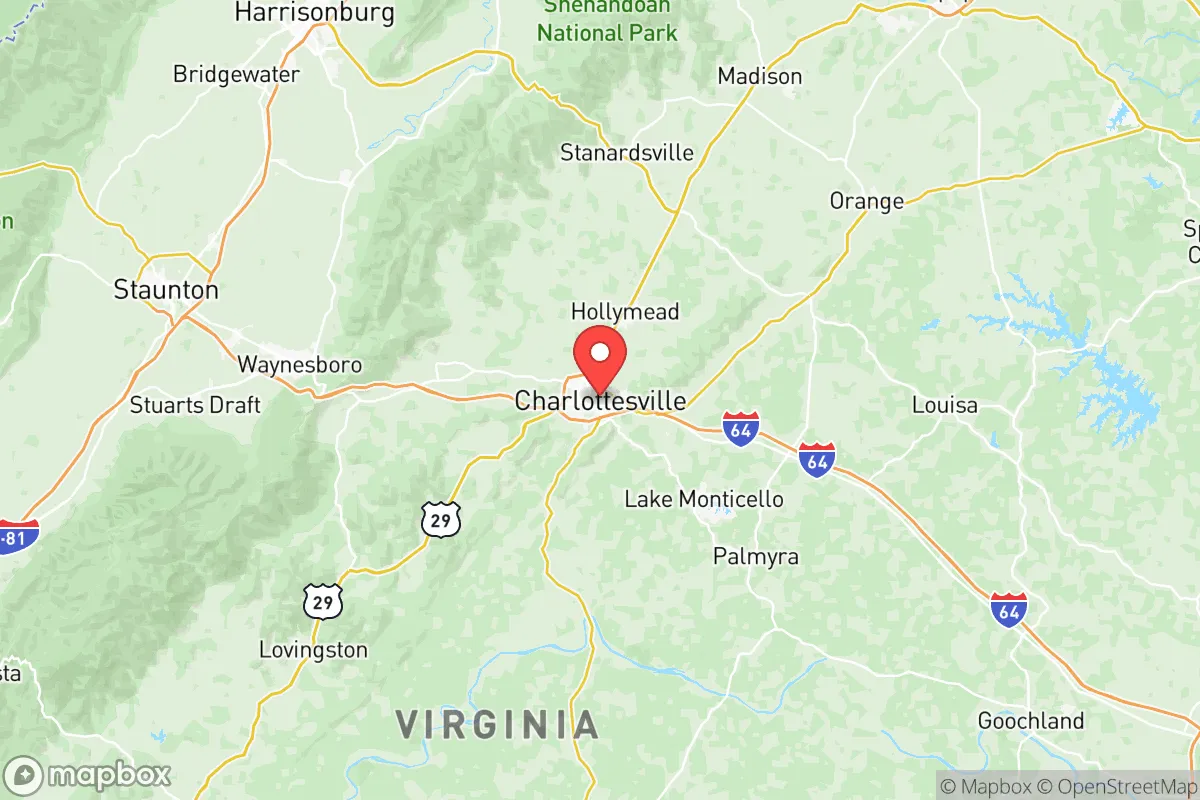
Charlottesville City County, Virginia, presents a complex environment for personal sovereignty, where a progressive city government imposes a relatively heavy regulatory and tax burden, while the surrounding Albemarle County and more rural areas of the region offer a significantly lighter touch. The city itself, with a population of roughly 47,000, is a dense, walkable urban core where individual autonomy is often constrained by municipal codes, zoning restrictions, and a higher cost of living. For a relocation-minded individual or family prioritizing personal freedom, the key distinction is not just between city and county, but between specific neighborhoods and the broader region—the difference between living within the Charlottesville city limits and choosing a property in places like Crozet, Scottsville, or the rural stretches of northern Albemarle County can be the difference between a highly regulated existence and a genuinely self-reliant one.
Tax burden and regulatory posture: How the city and county compare
Virginia is a Dillon's Rule state, meaning localities only have powers expressly granted by the state legislature, which generally limits extreme local overreach. However, Charlottesville City exercises its permitted authority aggressively. The city's real estate tax rate is $0.95 per $100 of assessed value, notably higher than Albemarle County's $0.85 rate. Combined with a personal property tax on vehicles (the city's rate is $4.20 per $100 of assessed value, while the county's is $4.00), the annual tax burden in the city is measurably heavier. The city also imposes a meals tax of 6.5%, which directly impacts daily living costs. Regulatory posture is similarly divergent: the city has a robust rental inspection program, strict short-term rental ordinances, and a zoning code that heavily favors multi-family development over single-family homesteads. In contrast, Albemarle County's regulatory environment is more permissive, particularly in its rural areas. For example, Crozet and Scottsville have their own community development plans, but they generally allow for larger lot sizes and more flexibility in accessory structures (like workshops or sheds) than the city. The city's permitting process for even minor renovations is known to be slower and more costly, a factor that directly impacts a homeowner's ability to modify their property freely.
Self-defense and gun law specifics: A state-level framework with local nuance
Virginia is a "shall-issue" state for concealed handgun permits, and Charlottesville City County does not have its own local gun control ordinances that exceed state law. This means that the state's preemption statute generally prevents the city from banning firearms in most public places. However, the city government has a well-documented history of attempting to restrict firearms, including a 2019 resolution declaring the city a "Second Amendment Sanctuary" in opposition to state-level gun control proposals—a move that was largely symbolic but reflects the local political tension. In practice, a resident living in the city can legally own and carry a firearm (with a permit), but the cultural environment is less gun-friendly than in the surrounding county. Gun ranges and firearm retailers are concentrated outside the city limits, with Rivanna Rifle and Pistol Club in Albemarle County being a primary facility. For those who prioritize self-defense, living in northern Albemarle County near Earlysville or Free Union offers a more permissive cultural environment, where discharging a firearm on private property (subject to noise and safety ordinances) is more feasible than within the city's dense residential blocks. The city's police department also has a reputation for proactive enforcement, which can be a double-edged sword for those who value a "live and let live" approach to personal security.
Self-reliance and homesteading viability: Lot sizes, zoning, and off-grid feasibility
Homesteading and off-grid living are effectively impossible within the Charlottesville city limits. The city's minimum lot size is typically 5,000 to 10,000 square feet for single-family homes, with no allowance for agricultural uses like keeping chickens, goats, or bees without a special permit. The city also requires connection to municipal water and sewer, making off-grid water or septic systems illegal. The regulatory environment shifts dramatically just a few miles outside the city. In Albemarle County's rural areas, minimum lot sizes range from 2 to 10 acres depending on the zoning district, and keeping livestock is a by-right use. Scottsville, a small town in the southern part of the county, is particularly attractive for homesteaders due to its lower land prices and more relaxed enforcement of building codes. Off-grid solar is legally permissible in the county, though net metering with Dominion Energy is required for grid-tied systems. Rainwater collection is legal for non-potable uses, and composting toilets are allowed with proper permitting. For a family seeking true self-reliance, the rural areas around White Hall and Batesville offer the best balance of affordability and regulatory freedom, though property taxes are still higher than in more remote parts of Virginia like the Shenandoah Valley.
Personal liberties: Parental rights, medical autonomy, speech, and property
Virginia state law provides a baseline for parental rights, including the right to direct a child's education and medical care. Charlottesville City Public Schools have a progressive curriculum, and parents who object to certain materials or policies have limited recourse beyond the school board, which is elected but often aligns with the city's dominant political culture. Medical autonomy is generally protected under state law, but the city's health department and local hospital (UVA Health) are heavily influenced by academic medical norms, which can be a concern for those seeking alternative or non-standard treatments. Free speech is protected by the First Amendment, but the city has a history of contentious public meetings and has been sued over its handling of protest permits. Property rights are the most significant area of divergence: the city's zoning code is highly prescriptive, with strict limits on home-based businesses, short-term rentals, and even the number of unrelated adults who can live together in a single-family home. In contrast, Albemarle County's zoning is more permissive for home occupations, and the county's comprehensive plan explicitly supports agricultural and rural enterprises. For a property owner who values the right to use their land as they see fit, the city's regulatory apparatus is a clear constraint, while the county's approach is more aligned with traditional notions of property sovereignty.
Overall, personal sovereignty in Charlottesville City County is a story of two distinct environments. The city itself ranks among the more regulated and taxed localities in Virginia, with a government that actively shapes daily life through zoning, fees, and cultural norms. For a conservative-leaning individual or family, the city's density and political homogeneity can feel stifling. However, the surrounding Albemarle County—particularly the rural communities of Crozet, Scottsville, Earlysville, and White Hall—offers a substantially lighter regulatory touch, lower taxes, and genuine opportunities for self-reliance. Compared to other Virginia localities, the region as a whole is more expensive and more regulated than, say, the Shenandoah Valley or Southside Virginia, but it is far less restrictive than Northern Virginia or the city of Richmond. The strategic choice for a freedom-oriented relocator is clear: live in the county, not the city, and choose a specific community that aligns with your tolerance for regulation and your desire for autonomy.

* Values derived from national, state, county, city and local statistics and may differ in a specific area. Last updated: 2026-07-10T02:08:41.000Z
Narrative content on this page is AI-generated and may contain mistakes. Verify any details that matter before acting on them.
ReloMaps may earn a commission from affiliate links at no extra cost to you.

