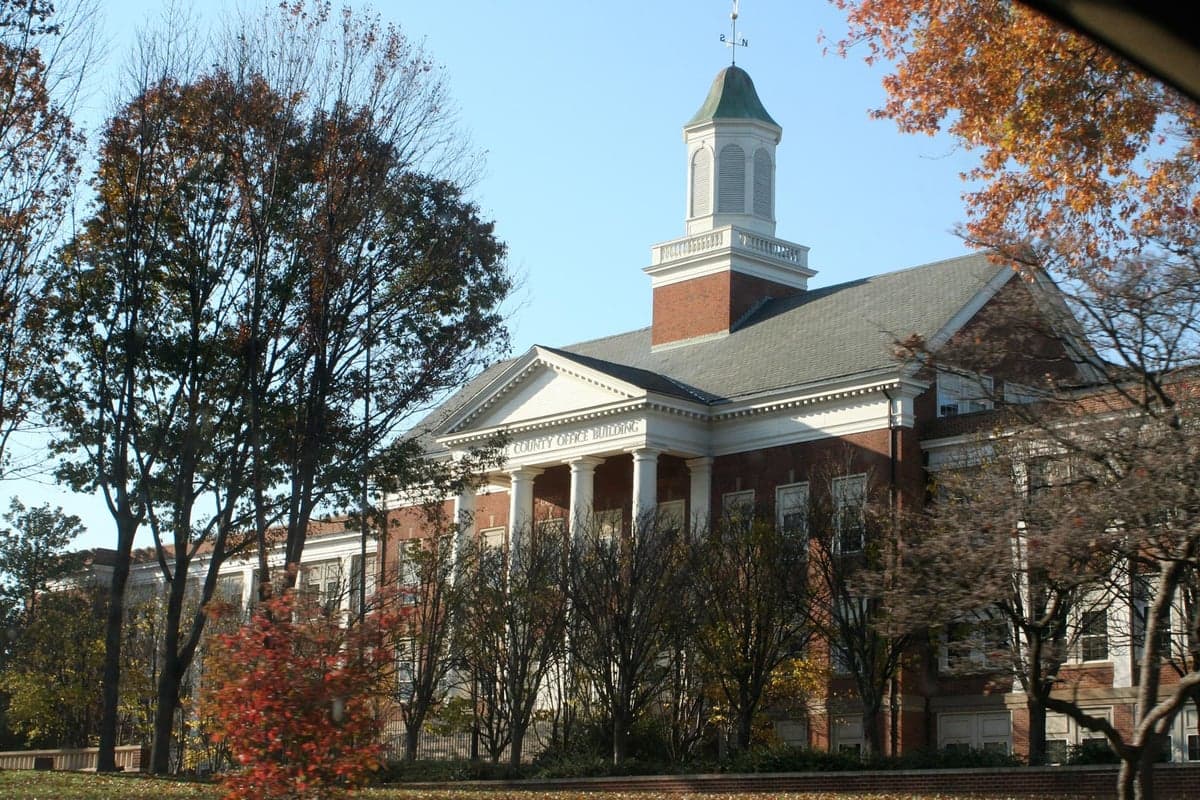
Photo: Wikipedia
Personal Sovereignty in Albemarle County
Viable for self-reliance. Generally workable, though some barriers may limit total independence.
What does Personal Sovereignty tell us?
Personal Sovereignty measures your capacity for self-reliance and independence with minimal government friction. Higher scores mean fewer barriers between you and the way you want to live... but it assumes you have the space you need and good neighbors.
What does this tell us?
Personal Sovereignty measures your capacity for self-reliance and independence with minimal government friction. Higher scores mean fewer barriers between you and the way you want to live... but it assumes you have the space you need and good neighbors.
State Policy
Energy independence: Importer (32% of energy produced in-state)
Personal Liberty
Homesteading

Personal Liberty Analysis
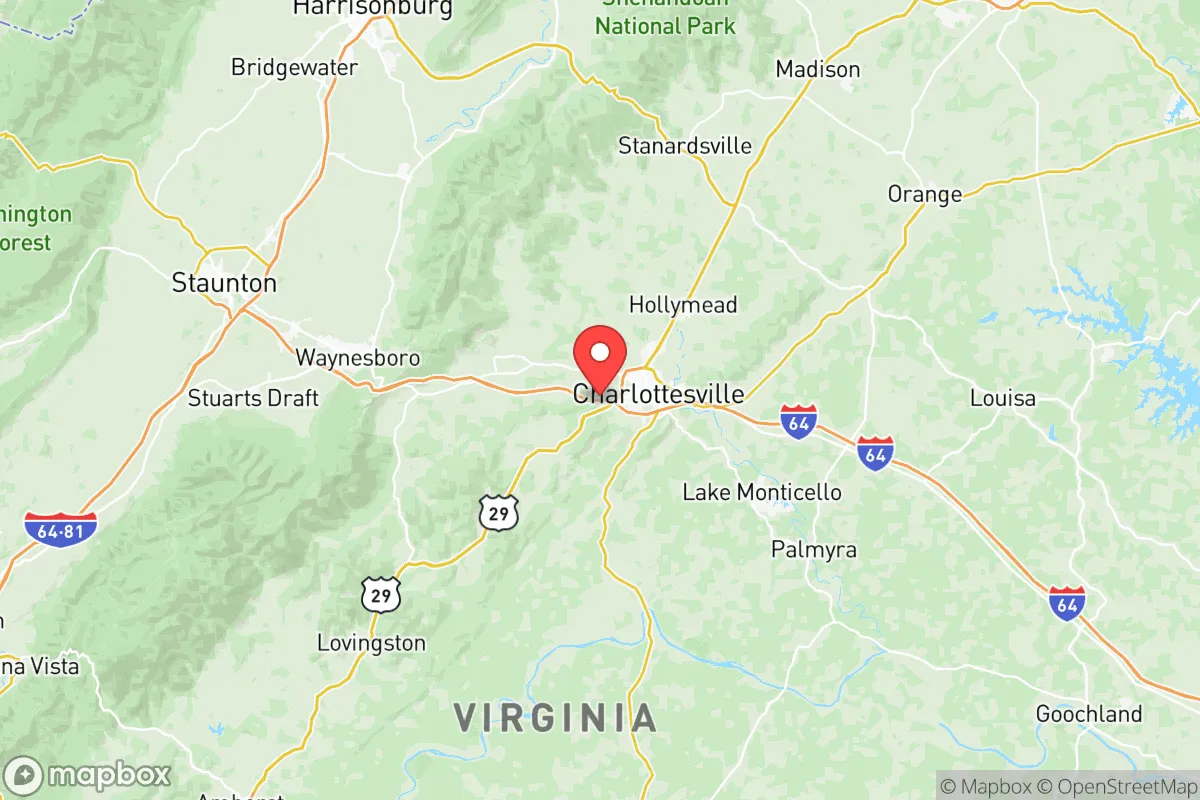
Albemarle County, Virginia, offers a nuanced personal sovereignty environment that balances the autonomy of rural living with the regulatory expectations of a university-anchored, historically preservation-minded region. For individuals and families prioritizing independence, the county presents a mixed picture: state-level protections for self-defense and parental rights provide a solid foundation, but local land-use policies and tax structures impose meaningful constraints not found in more rural parts of the Commonwealth. The key for a freedom-oriented resident lies in choosing the right location within the county, as the regulatory posture varies significantly between the urban ring around Charlottesville and the more rural districts like Scottsville, Crozet, and the communities along the Greene County line.
Tax burden and regulatory posture in Albemarle County
Albemarle County's tax burden is moderate by Virginia standards but notably higher than in neighboring counties like Fluvanna, Louisa, or Greene. The county's real property tax rate sits at approximately $0.854 per $100 of assessed value (as of 2025), which is roughly 15-20% higher than rates in Greene or Fluvanna. This premium reflects the county's investment in schools, parks, and infrastructure, but it directly impacts a resident's disposable income and property rights. The regulatory posture is characterized by a comprehensive zoning ordinance that restricts many uses on rural land. The county's Rural Areas (RA) zoning district, which covers most of the land outside designated growth areas, requires a minimum lot size of 2 acres for subdivisions and imposes strict limits on non-agricultural commercial activity. This means a resident in the rural community of White Hall or Earlysville cannot simply open a home-based machine shop or run a small livestock operation without navigating a special-use permit process. The county's comprehensive plan also strongly discourages "leapfrog" development, funneling most new housing into designated growth areas around Charlottesville and the village of Crozet. For a reader accustomed to the near-absence of zoning in parts of Texas or the Midwest, Albemarle's regulatory framework will feel like a significant constraint on personal autonomy over one's property.
Self-defense and gun law specifics in Albemarle County
Virginia is a "shall-issue" state for concealed handgun permits, and Albemarle County's circuit court processes applications without the discretionary delays seen in some urban jurisdictions. The county itself does not impose any local firearm ordinances beyond state law, meaning there are no additional waiting periods, magazine capacity limits, or assault weapon bans at the county level. However, the city of Charlottesville, which is entirely surrounded by Albemarle County but is an independent city, has a more restrictive posture, including a ban on firearms in city parks and public buildings. For residents of Scottsville or North Garden, this distinction matters little day-to-day, but anyone commuting into Charlottesville for work or errands must be aware of the jurisdictional boundary. The county sheriff's office is generally supportive of Second Amendment rights, and the rural character of areas like Ivy and Batesville means that target shooting on private property is a common and accepted practice, provided it complies with state noise and safety laws. Stand-your-ground laws apply statewide, and Virginia's Castle Doctrine provides a strong legal presumption that a homeowner who uses deadly force against an intruder acted reasonably. For a freedom-oriented reader, Albemarle County offers a solid baseline of self-defense rights, but the proximity of Charlottesville's more restrictive environment is a factor to consider when choosing a specific neighborhood.
Self-reliance and homesteading viability across Albemarle County
The viability of a self-reliant lifestyle in Albemarle County depends heavily on location. The county's zoning code permits a range of agricultural activities in the Rural Areas district, including raising livestock, keeping bees, and operating a market garden, without a special permit. However, the minimum lot size of 2 acres in RA zoning means that true homesteading on a small parcel is possible but constrained. In the more remote areas near White Hall and Earlysville, where parcels of 5 to 20 acres are common, residents can keep horses, cattle, and poultry, and can install solar panels for off-grid electricity. The county does not prohibit rainwater collection, and Virginia state law actually encourages it. Off-grid living is legally feasible, but the county's building code requires a permit for any permanent dwelling, and the health department mandates a septic system for any home with plumbing. This means a truly "off-grid" cabin without a septic system is not a legal residence. The community of Crozet, while more suburban, still has pockets of rural land where small-scale homesteading is practiced. For a family seeking maximum self-reliance, the areas along the Greene County line near Ruckersville offer larger parcels at lower prices than the central parts of Albemarle, though the regulatory framework remains the same. The county's agricultural and forestal districts provide tax incentives for keeping land in productive use, which can reduce the tax burden for a homesteader who actively manages their property for timber or crops.
Personal liberties in Albemarle County: parental rights, medical autonomy, speech, and property
Virginia law provides a strong framework for parental rights, including the right to direct a child's education and medical care. Albemarle County Public Schools, while well-funded and high-performing, are perceived by some conservative families as leaning progressive in curriculum and policy. The county does not have a robust school choice infrastructure; there are a few private and religious schools, but no charter schools and limited homeschooling support networks compared to more rural areas. Medical autonomy is governed by state law, which requires parental consent for most medical procedures on minors, but Virginia has expanded Medicaid and mandates certain vaccine requirements for school attendance. Property rights are the area of greatest tension: the county's zoning and historic preservation ordinances can limit what a property owner can do with their land, particularly in the designated "Rural Historic Districts" near Batesville and Ivy. Free speech is protected under the First Amendment, and the county does not have any local ordinances restricting political expression. The University of Virginia in Charlottesville creates a highly visible liberal cultural environment, but this has little practical impact on the daily life of a resident in Scottsville or North Garden, where community norms are more traditional. For a reader prioritizing personal liberties, the key takeaway is that state-level protections are solid, but local land-use regulations and the cultural climate of the Charlottesville area require careful consideration of where within the county one chooses to settle.
Overall, Albemarle County offers a moderate level of personal sovereignty that is significantly higher than in Northern Virginia or the immediate D.C. suburbs, but lower than in more rural counties like Fluvanna, Buckingham, or Appomattox to the south. The county's tax burden and regulatory posture are the primary constraints on autonomy, while state law provides a reliable foundation for self-defense and parental rights. For a freedom-oriented individual or family, the best strategy is to target the rural districts—White Hall, Earlysville, Scottsville, or the area near the Greene County line—where larger parcels, lower density, and a more traditional community culture mitigate the county's regulatory tendencies. The trade-off is access to the amenities and employment opportunities of Charlottesville, which may be worth the cost for some, but not for those seeking maximum independence.

* Values derived from national, state, county, city and local statistics and may differ in a specific area. Last updated: 2026-10-27T21:07:59.000Z
Narrative content on this page is AI-generated and may contain mistakes. Verify any details that matter before acting on them.
ReloMaps may earn a commission from affiliate links at no extra cost to you.

