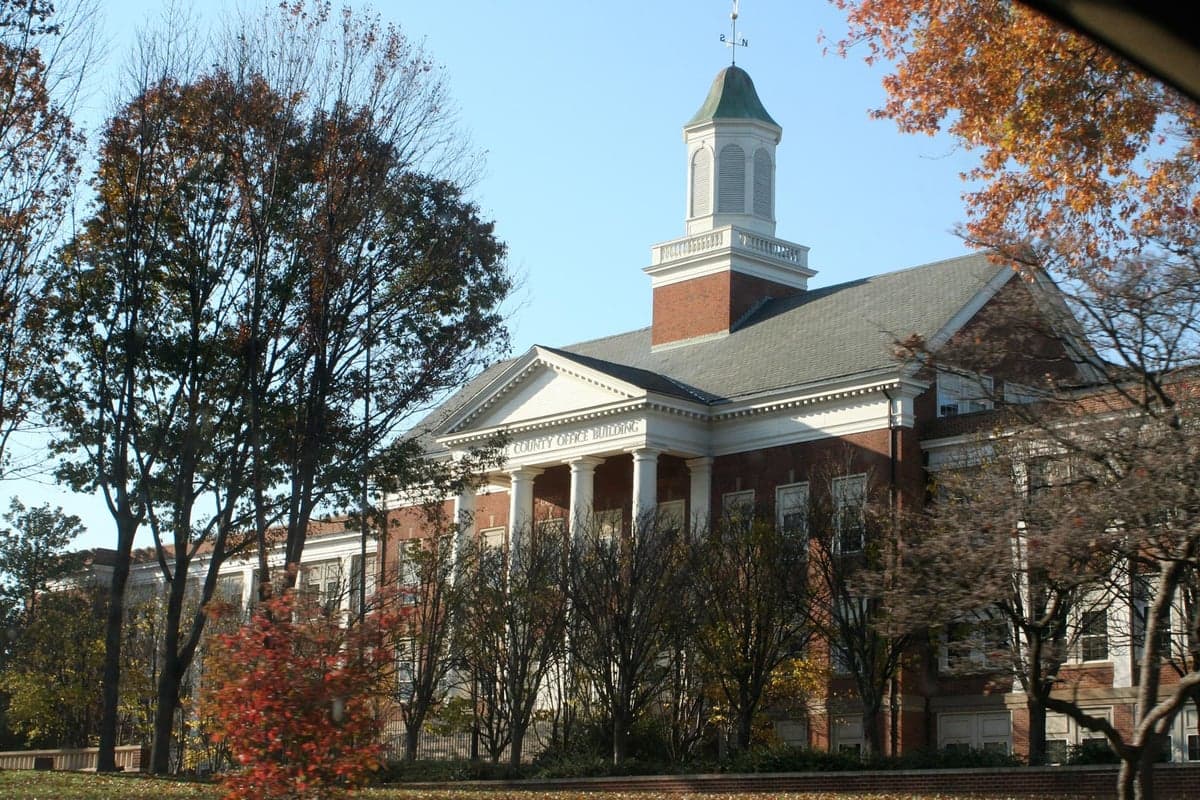
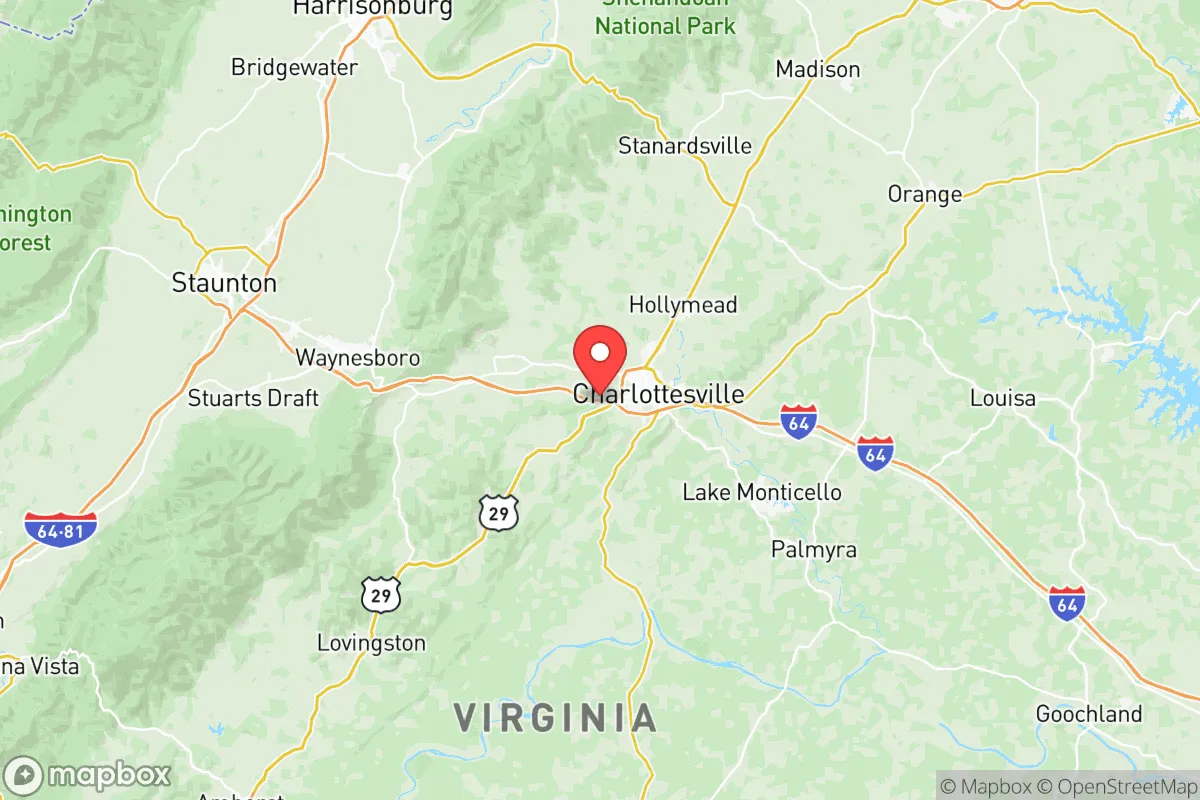
Photo: Wikipedia
Find The Best Places To Live in Albemarle County
PRO TIP! You can paste a Zillow or Redfin link to get info on that property.
Best Places to Live in Albemarle County
Cities & Towns in Albemarle County
Cities in Albemarle County
What It's Like Living in Albemarle County, VA
Living in Albemarle County means trading the frantic pace of a major metro for a life where the Blue Ridge Mountains frame your commute and the local farmer’s market is a Saturday-morning ritual. It’s a place where you’re as likely to run into a UVA professor at the grocery store as you are a vineyard owner, and where the phrase “rush hour” usually means a 22-minute average commute—a stat that feels almost impossibly calm compared to Northern Virginia. The county’s identity is split between the university energy of Charlottesville, the quiet historic streets of Scottsville, and the rural stretches of Crozet and Earlysville, giving it a layered, sometimes contradictory character that rewards people who take the time to understand it.
Daily Rhythm: From Crozet Coffee to Scottsville Silence
Most mornings here start with a decision: do you grab coffee at Mudhouse on the Downtown Mall in Charlottesville, or hit the Crozet Coffee Company before heading to work? The county’s 113,683 residents are spread across a patchwork of distinct communities. In Crozet, you’ll find young families who moved out from Charlottesville for more yard space and a slower pace, while Scottsville feels like a small town that time forgot—a place where the James River is the main attraction and the local diner knows your order. Earlysville and North Garden are even more rural, with horse farms and long gravel driveways that make you feel a world away from the university’s academic hubbub.
Weekends are built around the outdoors. The Rivanna Trail system weaves through the county, and Preddy Creek Trail Park in northern Albemarle is packed with mountain bikers and trail runners. The Charlottesville City Market on Saturdays is a genuine community hub—locals stock up on produce from Polyface Farms and grab breakfast from a food truck. By afternoon, many families head to Carter Mountain Orchard for apple picking and a view that stretches across the valley. The seasonal rhythm is strong: fall means foliage drives along the Blue Ridge Parkway, winter brings quiet fireplace evenings, and spring explodes with dogwood blossoms and the Virginia Film Festival.
Who Fits In: The Educated, the Outdoorsy, and the Priced-Out
With a median age of 39.8 and a staggering 60.6% of adults holding a college degree, Albemarle County leans heavily educated and professional. The dominant employer is the University of Virginia, which shapes everything from the housing market to the restaurant scene. You’ll find a lot of academics, medical professionals at UVA Health, and remote workers who moved here for the quality of life. The median household income sits at $102,617, which sounds comfortable until you see the median home value of $471,000 and a cost of living index of 151—meaning everyday expenses are 51% above the national average. That disconnect is real: many service workers and young professionals are priced out of buying a home, forced into rentals or longer commutes from Waynesboro or Greene County.
The kind of person who thrives here is someone who values access to nature and intellectual life equally. You’ll find parents who spend Saturday morning at a soccer game in Darden Towe Park and Sunday afternoon at a lecture at the Virginia Museum of History & Culture. It’s not a place for people who want a 24-hour nightlife scene or a booming corporate job market—those folks usually head to Richmond or Northern Virginia. But if you’re a family who wants good public schools (the county’s are consistently ranked among Virginia’s best) and a community that cares about local food, local history, and the outdoors, it’s hard to beat.
Sports, Community, and the Things That Bind
Sports here are a different animal than in the rest of the state. There’s no NFL or MLB team, but UVA Cavaliers athletics are a religion. John Paul Jones Arena fills up for basketball games, and Scott Stadium draws 60,000 for football Saturdays in the fall. The energy is genuine—this is a college town at heart, and game days turn Charlottesville into a sea of orange and blue. High school football is big too, especially at Albemarle High School and Western Albemarle High School, where Friday-night games are community events that pull in parents, alumni, and local businesses.
Beyond sports, the county’s cultural calendar is packed. The Virginia Festival of the Book brings authors from around the country, and the Crozet Music Festival is a low-key summer staple. The Paramount Theater on the Downtown Mall hosts concerts and film series, while the Jefferson Theater draws indie bands. For a quieter night, locals head to Keswick Hall for a fancy dinner or Three Notch’d Brewing for a craft beer and a game of cornhole. The biggest cultural quirk? The fierce local pride in Thomas Jefferson’s Monticello—it’s not just a tourist attraction; it’s a symbol of the county’s identity, for better and for worse, given the complicated history it represents.
Honest Pros and Cons: What Locals Love and What Grinds Their Gears
- What locals love: The natural beauty is undeniable—you’re never more than 20 minutes from a hike, a vineyard, or a river. The schools are excellent, and the community is engaged and politically active (though it leans heavily blue, which can be a pro or con depending on your views). The restaurant scene in Charlottesville punches well above its weight, with places like Ivy Inn and Mas Tapas drawing foodies from hours away.
- What frustrates them: The cost of living is the number one complaint. A median home value of $471,000 means many families are house-poor or renting indefinitely. Traffic on US-29 and I-64 can be genuinely frustrating during peak hours, despite the short average commute. The violent crime rate of 210.8 per 100,000 is below the national average but higher than many rural counties, and property crime—especially car break-ins and package thefts—is a persistent annoyance in the more populated areas. And for all its charm, the county can feel insular; newcomers sometimes struggle to break into established social circles.
Albemarle County isn’t for everyone. It’s expensive, it’s politically charged, and it lacks the raw energy of a big city. But for the right person—someone who values a walkable downtown, a mountain view, and a community that cares about books and basketball—it’s a place that gets under your skin and stays there.

* Values derived from national, state, county, city and local statistics and may differ in a specific area. Last updated: 2026-10-27T21:07:59.000Z
Narrative content on this page is AI-generated and may contain mistakes. Verify any details that matter before acting on them.
ReloMaps may earn a commission from affiliate links at no extra cost to you.

