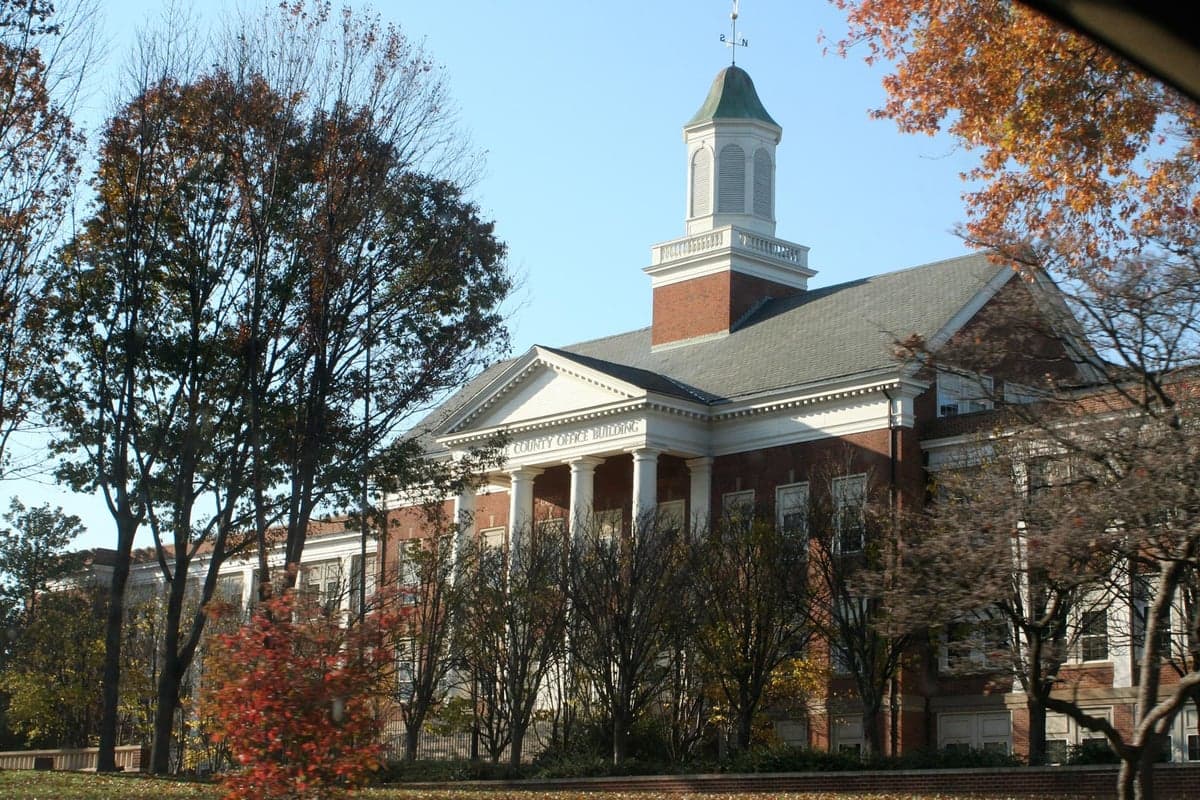
Photo: Wikipedia
Quality of Life in Albemarle County
A livable area that tracks near national norms for affordability, walkability, and neighborhood health.
What does Quality of Life tell us?
Quality of Life measures an area by evaluating factors like cost of living, nearby amenities, country club access, airport proximity, socioeconomic signals and neighborhood character. For large states, this is a general average — quality of life can vary dramatically between metro areas, suburbs, and rural communities within the same state.
What does this tell us?
Quality of Life measures an area by evaluating factors like cost of living, nearby amenities, country club access, airport proximity, socioeconomic signals and neighborhood character. For large states, this is a general average — quality of life can vary dramatically between metro areas, suburbs, and rural communities within the same state.
Cost of Living
51% above national average
76%
The Real Cost of Living in Albemarle County for 2026
| Tier | Individual | Family (4) |
|---|---|---|
| Survival | $26k | $49k |
| Comfortable | $92k | $135k |
| Luxury | $185k+ | $287k+ |
| Elite (Top 5%) | $234k+ | $363k+ |
Quality-of-Life Analysis
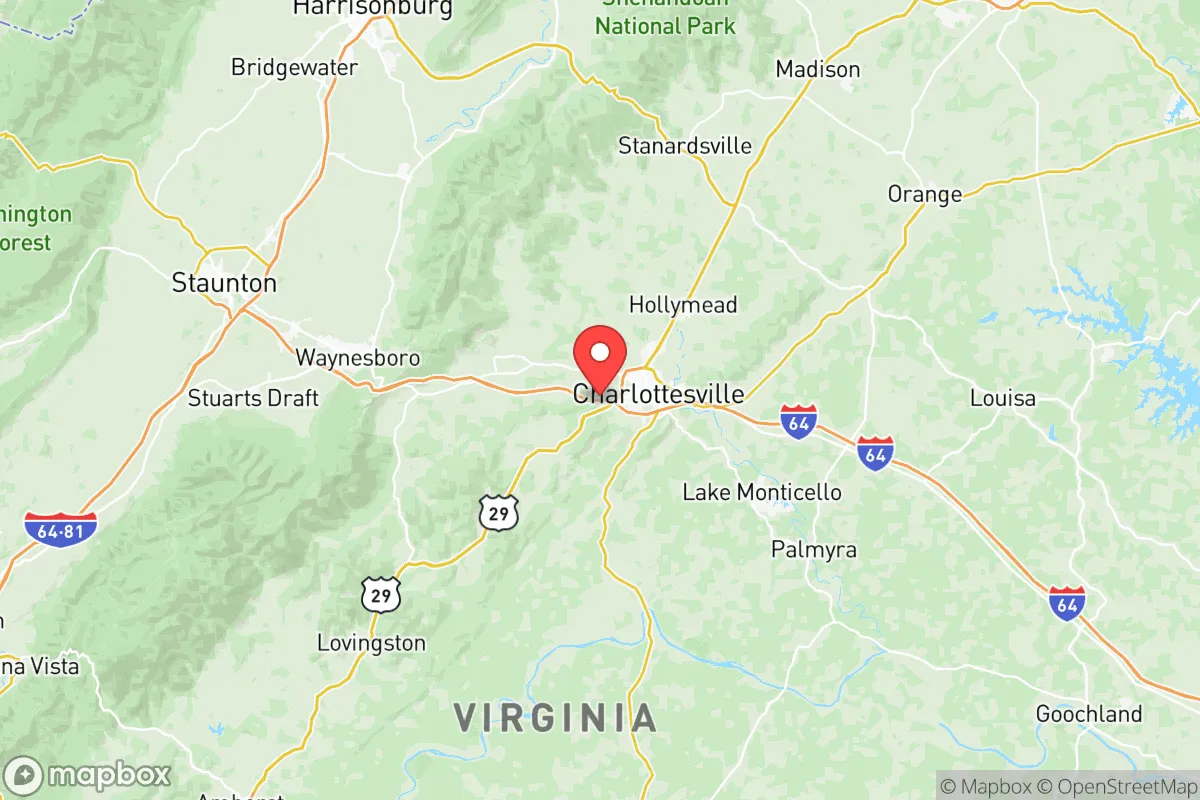
Albemarle County, Virginia, offers a quality-of-life spectrum that ranges from the walkable, amenity-rich urban core of Charlottesville to the quiet, agricultural landscapes of its rural districts, drawing everyone from university faculty and tech entrepreneurs to equestrians and small-scale farmers. The county’s character is defined by this internal contrast: the eastern half, anchored by Charlottesville and its immediate suburbs, provides dense, service-oriented living, while the western and southern reaches—places like Crozet, Scottsville, and the rural communities of White Hall and Ivy—offer slower paces, larger land parcels, and a stronger connection to the Blue Ridge foothills. With a cost of living index of 151 (100 being the U.S. average), a median home value of $471,000, and a median rent of $1,623, the county commands a premium, but that premium buys very different lifestyles depending on location.
Largest town(s) & population centers
Charlottesville, while an independent city, is the undisputed population and economic center of Albemarle County, and the county’s urbanized areas directly abut it. Daily life in the county’s eastern urban ring—neighborhoods like Belmont, Fry’s Spring, and the Rio Road corridor—revolves around a dense mix of University of Virginia employment, biotechnology firms, and a nationally recognized food and arts scene. Residents here walk to restaurants on the Downtown Mall, bike to UVA, and rely on public transit. The county’s largest unincorporated town, Crozet (population roughly 9,000), functions as a self-contained satellite: its historic downtown, anchored by the Crozet Farmer’s Market and the Crozet Wine Trail, offers a small-town main street feel while still being a 15-minute commute to Charlottesville. Crozet’s daily life is family-oriented, with strong schools (Brownsville Elementary) and outdoor access via the Crozet Tunnel and Mint Springs Valley Park. The Pantops area, east of Charlottesville, is a fast-growing commercial and residential corridor with big-box retail, medical offices, and apartment complexes, appealing to commuters who want suburban convenience without leaving the county.
Smaller towns & rural pockets
Beyond the population centers, Albemarle’s smaller towns and unincorporated communities define its rural character. Scottsville (population ~600), on the James River in the county’s southern tip, is a historic river town with a walkable main street, a handful of restaurants, and direct access to the James River for canoeing and fishing—life here is quiet, self-reliant, and distinctly removed from the Charlottesville orbit. White Hall, in the northwest near the Shenandoah National Park entrance, is a crossroads community of large horse farms and estate homes, where daily life centers on private land stewardship and back-road drives to Crozet for groceries. Ivy, along the Ivy Road corridor west of Charlottesville, is a loose collection of historic homes, the Ivy Creek Natural Area, and the Farm at Ivy (a wedding and event venue), offering a semi-rural buffer zone where residents have acreage but remain within 10 minutes of UVA. Earlysville, north of Charlottesville, is a rural bedroom community with the Earlysville Forest subdivision and access to the Rivanna River, popular with families seeking land without total isolation.
Cost & lifestyle range
The cost of living and amenity density vary dramatically across the county. At the high end, the Farmington and Glenmore neighborhoods—gated golf-course communities near Charlottesville—feature median home values well above $800,000, with HOA fees covering private pools, tennis, and clubhouses; these areas attract executives and retirees who want luxury amenities without a city address. In the middle, Crozet and the Hollymead area (near the county’s northern border) offer median home values around $475,000–$550,000, with newer subdivisions like Old Trail and Forest Lakes providing sidewalks, community pools, and proximity to schools—this is the sweet spot for families trading space for a reasonable commute. At the lower end, Scottsville and rural southern Albemarle see median home values closer to $350,000–$400,000, with older homes on larger lots, but residents face a 30-40 minute drive to Charlottesville for most shopping and healthcare. Renters find the most affordable options in the Rio Road and 29 North corridors, where older apartment complexes and duplexes rent for $1,400–$1,800, though inventory is tight. The average commute across the county is just over 22 minutes, but that figure masks a split: urban-ring residents commute under 15 minutes, while those in Scottsville or White Hall often drive 35–45 minutes one way.
Albemarle County best suits people who value a spectrum of choices within a single county—from the intellectual energy of a university town to the solitude of a James River farmstead. Families who prioritize top-ranked public schools (Albemarle County Public Schools consistently ranks among Virginia’s best) and outdoor recreation will find their niche in Crozet or Earlysville, while professionals tied to UVA or the biotech sector will gravitate toward the urban ring. Those seeking the lowest cost of entry and a slower, land-based lifestyle will find the best value in Scottsville or the rural south, provided they can accept the longer commute. The county’s strength is that it does not force a single lifestyle; it offers a genuine rural-to-urban gradient, each with distinct trade-offs in cost, convenience, and community.

Crime in Albemarle County
Generally safer than 60% of comparable U.S. locations.
Violent CrimeViolent Crime Analysis
Property CrimeProperty Crime Analysis
Crime Analysis
Albemarle County, Virginia, reports a violent crime rate of 210.8 incidents per 100,000 residents and a property crime rate of 1,394.5 per 100,000, placing it in a moderate safety tier relative to other Virginia localities. While the county is not among the state's most dangerous, its crime figures are notably higher than those found in the safest surrounding communities, and the influence of progressive criminal justice policies in the Charlottesville area raises legitimate concerns for residents and newcomers alike. The data reflects a community where property crime is the predominant issue, but where violent offenses, though less frequent, still demand attention.
Crime in context
Albemarle County's violent crime rate of 210.8 per 100,000 is roughly 40% lower than the national average of approximately 380 per 100,000, but it sits above the Virginia state average of about 200 per 100,000. Property crime in the county, at 1,394.5 per 100,000, is nearly 20% higher than the national average of roughly 1,150 per 100,000 and significantly exceeds the Virginia average of around 1,100 per 100,000. This pattern—violent crime below national norms but property crime above them—is common in counties that contain a mix of suburban development and rural areas, but it is exacerbated here by the proximity to Charlottesville, a city whose progressive district attorney and judicial philosophy have been criticized for prioritizing offender rehabilitation over public safety. The county's crime picture is thus shaped not only by local demographics but by the broader criminal justice environment in the region.
What residents experience
Residents of Albemarle County most frequently encounter property crimes such as larceny, burglary, and motor vehicle theft, which together account for the majority of reported incidents. The areas around the University of Virginia in Charlottesville and the commercial corridors along U.S. Route 29—particularly near the towns of Rio and Hollymead—see elevated rates of theft and vehicle break-ins, driven by high foot traffic and transient populations. Violent crime, while less common, is concentrated in specific pockets, including parts of Scottsville and the southern end of the county near the Fluvanna County line, where incidents of assault and robbery are reported more frequently. In contrast, the western communities of Crozet and White Hall consistently report lower crime rates, benefiting from their more isolated, rural character and smaller populations. The progressive policies of the Charlottesville-area judiciary, which have included reduced bail requirements and diversion programs for repeat offenders, have been cited by local law enforcement as contributing to a perception of leniency that emboldens property criminals and undermines deterrence.
Neighborhood-level variation
Crime in Albemarle County is not evenly distributed, and neighborhood-level data reveals stark contrasts. The Northside area, encompassing the neighborhoods near the airport and the town of Earlysville, experiences property crime rates roughly 30% lower than the county average, making it one of the safer residential zones. Conversely, the South Fork district, which includes parts of Keswick and the rural stretches along the Rivanna River, sees higher rates of burglary and vandalism, often linked to transient populations and limited law enforcement presence. The Pantops area, adjacent to Charlottesville's urban core, has the highest concentration of reported thefts and drug-related offenses, reflecting spillover from the city's own crime challenges. For families and retirees considering relocation, the safest bets are the western and northern precincts, where community watch programs and lower population density provide a buffer against the region's broader crime trends. However, the county's overall safety profile remains contingent on future judicial and prosecutorial decisions, making it a location where vigilance is warranted despite its many attractive qualities.
* Values derived from national, state, county, city and local statistics and may differ in a specific area. Last updated: 2026-10-27T21:07:59.000Z
Narrative content on this page is AI-generated and may contain mistakes. Verify any details that matter before acting on them.
ReloMaps may earn a commission from affiliate links at no extra cost to you.

