Photo: Wikipedia
Strategic Assessment of Village of Clarkston, MI
Meaningful friction. Expect exposure to either population pressure, blast zones, or natural disaster risk. Consider buying a retreat property.
What does the Strategic Assessment tell us?
Our Strategic Assessment grades tactical survivability of an area. Major population centers, military targets, fallout zones, natural disasters, and border exposure all drive risk — lower exposure means a more defensible position in a crisis.
This is heavily inspired by Joel Skousen's Strategic Relocation book. Highly recommended you checkout the book ($)What does this tell us?
Our Strategic Assessment grades tactical survivability of an area. Major population centers, military targets, fallout zones, natural disasters, and border exposure all drive risk — lower exposure means a more defensible position in a crisis.
This is heavily inspired by Joel Skousen's Strategic Relocation book. Highly recommended you checkout the book ($)Strategic Pillars

Key Distances
Regional Safe Places
Below is our recommended "safe zones" in Michigan and the surrounding area based on our strategic heuristics. For most people, it's unrealistic to live in a “safe zone” full-time due to work, family or other personal reasons. They tend to be more rural. However, many of these areas are perfect for second homes and retreat properties that double as a vacation home or even a short-term rental.


Important Note: For informational purposes only. This does not mean nothing bad ever happens in the green zones. Please use common sense. This is based on public data and modeled with AI. We tried to take a conservative approach but mistakes happen. We update this regularly as new information becomes available.
Solar Generator Recommendations
Backup power matters more here than in safer locations. We've picked three solar generators across budgets and capacity tiers — start with the budget unit if you only need a few essentials, or step up if you want to run a fridge and HVAC for days at a time.

Jackery Portable Power Station Explorer 300
Budget OptionPower on the Go: Weighing only 11 lbs, it's convenient to set up and store with book-sized foldable solar panels

BLUETTI Portable Power Station AC180
Designed for both indoor and outdoor scenarios, AC180 is highly capable as it has a robost capacity and continuous output power.

EF ECOFLOW DELTA Pro Ultra Power Station
Upgraded PickEcoFlow DELTA Pro Ultra is a whole-home energy system designed to grow with your family. Integrated with the Smart Home Panel 2, it scales to meet your evolving energy needs — keeping your home powered, intelligent, and secure through every stage of life.
We earn a commission, at no additional cost to you.
Strategic Assessment Analysis
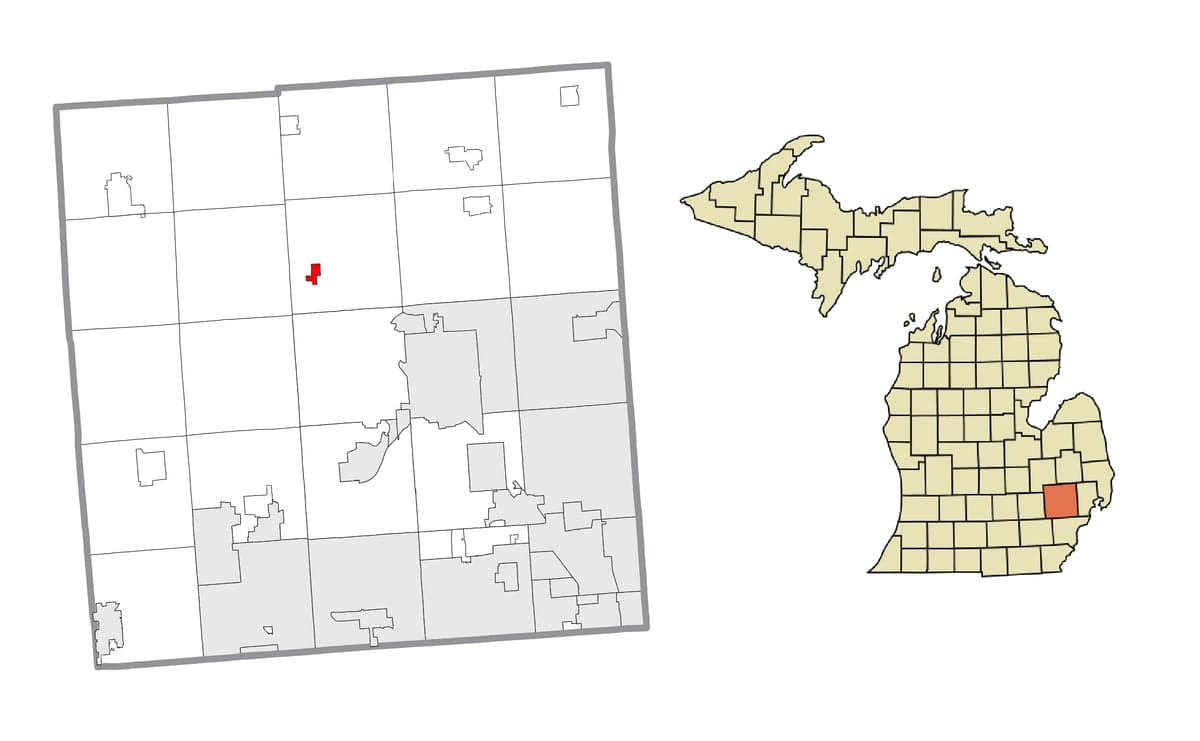
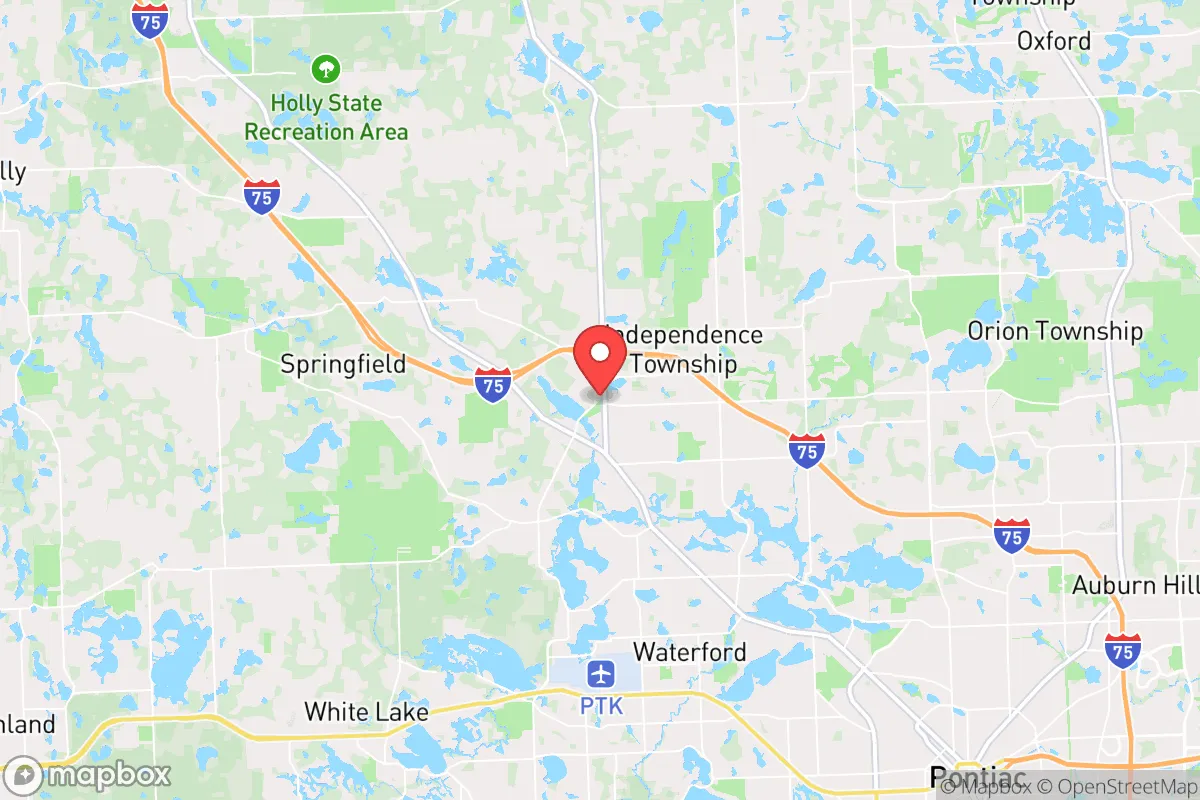
The Village of Clarkston, Michigan, occupies a strategic position in Oakland County that balances proximity to major metropolitan resources with a degree of geographic separation that enhances its resilience profile. Located roughly 40 miles northwest of Detroit and 30 miles from Flint, Clarkston sits at the edge of the suburban sprawl, where the landscape transitions into the more rural, lake-dotted terrain of northern Oakland County. This placement offers a meaningful buffer from the immediate fallout risks associated with a major urban center, while still providing access to supply chains and medical infrastructure that a completely isolated location would lack. For a relocator weighing disaster readiness and self-sufficiency, Clarkston presents a mixed but ultimately favorable strategic picture, provided one understands its specific vulnerabilities and leverages its natural advantages.
Geographic position and natural advantages for disaster readiness
Clarkston’s primary geographic asset is its location within the Clinton River watershed, which provides abundant freshwater resources. The area is dotted with numerous lakes—including Middle Lake, Upper Lake, and the larger Lake Orion to the east—that serve as natural reservoirs. This water abundance is a significant resilience factor, as access to potable water is often the first critical resource to become scarce in a prolonged emergency. The terrain is gently rolling, with elevations around 1,000 feet above sea level, which offers natural drainage and reduces the risk of catastrophic flooding that plagues low-lying areas. The region’s glacial till soils are well-drained and suitable for small-scale agriculture, a key consideration for anyone planning long-term self-sufficiency. Clarkston also benefits from being outside the primary wind patterns that would carry fallout from a major event in Detroit or Flint; prevailing westerly winds mean that a release from either city would generally push contamination eastward, away from Clarkston. The village’s position within the larger Oakland County park system, including the nearby Independence Oaks County Park, provides green space and potential foraging or hunting grounds, though these are not sufficient for sustained subsistence without careful management.
Risks, exposures, and proximity to fallout-relevant landmarks
The most significant risk factor for Clarkston is its proximity to several high-value targets that could be relevant in a conflict or large-scale disaster scenario. The village lies roughly 25 miles from the Detroit Metropolitan Airport (DTW), a major international hub that would be a primary target in any strategic attack. Additionally, the I-75 corridor, which runs just east of Clarkston, is a critical transportation artery that could become a chokepoint or target. The presence of the General Motors Orion Assembly plant in nearby Lake Orion, a facility producing electric vehicles, adds a secondary industrial target. While Clarkston itself is not a primary target, its location within the fallout plume radius of a strike on Detroit or Flint is a real concern. The prevailing westerly winds offer some protection from Detroit-origin fallout, but a strike on Flint or the Saginaw area could deposit contamination over Clarkston depending on wind direction. The area also experiences typical Midwestern natural hazards: severe thunderstorms, occasional tornadoes (Oakland County is in a moderate-risk zone), and winter storms that can disrupt power and transportation for days. The risk of a major earthquake is negligible, but the region’s aging infrastructure—particularly the electrical grid and natural gas pipelines—is vulnerable to cascading failures during extreme weather events. For a relocator, the key takeaway is that Clarkston is not a remote survivalist retreat; it is a suburban village with real, but manageable, exposure to both natural and man-made risks.
Practical resilience for a relocator: food, water, energy, and defensibility
Clarkston’s practical resilience is a mixed bag that requires active preparation. On the positive side, the abundance of surface water from the chain of lakes means that a household with a proper filtration system (e.g., Berkey, Sawyer, or a UV-based unit) can secure a long-term water supply. The village’s municipal water system draws from groundwater wells, which are less vulnerable to surface contamination than surface-water intakes, but a prolonged power outage would still disrupt pumping. For food, the area has several farmers’ markets and local farms (e.g., the Clarkston Farmers Market, and nearby orchards like Blake’s Orchard & Cider Mill), but these are seasonal and not sufficient for year-round self-sufficiency. The growing season in southeast Michigan runs roughly from May to October, allowing for a productive garden, but the cold winters require significant food storage and preservation. The village’s zoning allows for backyard chickens and small livestock in many areas, though restrictions apply. Energy resilience is a weak point: the grid is reliable under normal conditions but has shown vulnerability during ice storms and heat waves. Solar potential is moderate—Michigan averages about 160 sunny days per year, less than the national average—but a grid-tied system with battery backup is feasible. Natural gas is widely available for heating, which is a resilience advantage over all-electric homes, as gas service often remains operational during power outages. Defensibility is perhaps Clarkston’s weakest resilience factor. The village is a compact, walkable community with a traditional grid layout, meaning multiple access points and limited natural chokepoints. The surrounding suburban development means that a security perimeter would be difficult to establish. However, the village’s strong sense of community and active neighborhood watch programs (Oakland County has a robust Sheriff’s Office presence) provide a social resilience layer that is often overlooked. For a relocator, the practical advice is to prioritize water filtration, a backup heat source (wood stove or propane), and a well-stocked pantry, while accepting that Clarkston is not a defensible fortress—it is a community that will need to cooperate to weather a crisis.
The overall strategic picture for Clarkston is one of moderate resilience with clear trade-offs. It offers a genuine buffer from the most acute risks of a major metropolitan area while retaining access to the resources and infrastructure that make daily life functional. The water abundance and agricultural potential are real advantages for a self-sufficient household, but the proximity to multiple high-value targets and the lack of natural defensibility are significant liabilities that cannot be ignored. For a family or individual who is serious about disaster readiness, Clarkston works best as a base of operations—a place to live day-to-day with good schools and community, while maintaining a prepared mindset and a well-stocked retreat plan for the most severe scenarios. It is not a bug-out location, but it is a solid choice for someone who wants to be ready without living off-grid. The key is to treat Clarkston as a strategic compromise: accept its vulnerabilities, invest in practical resilience measures, and understand that in a true collapse scenario, the village’s location within a densely populated region would become a liability. For the vast majority of plausible disruptions—power outages, winter storms, supply chain interruptions—Clarkston is well-positioned to ride them out. For the worst-case scenarios, it is a starting point, not an endpoint.

* Values derived from national, state, county, city and local statistics and may differ in a specific area. Last updated: 2026-10-05T03:59:20.000Z
Narrative content on this page is AI-generated and may contain mistakes. Verify any details that matter before acting on them.
ReloMaps may earn a commission from affiliate links at no extra cost to you.

