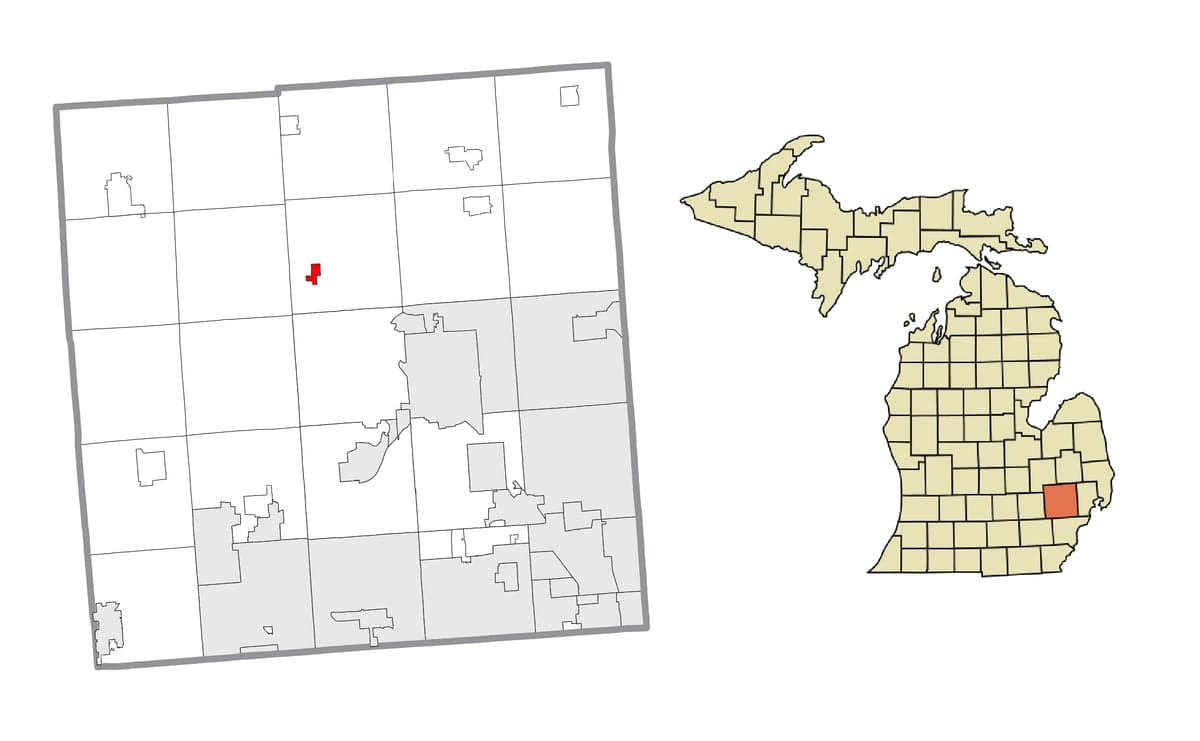
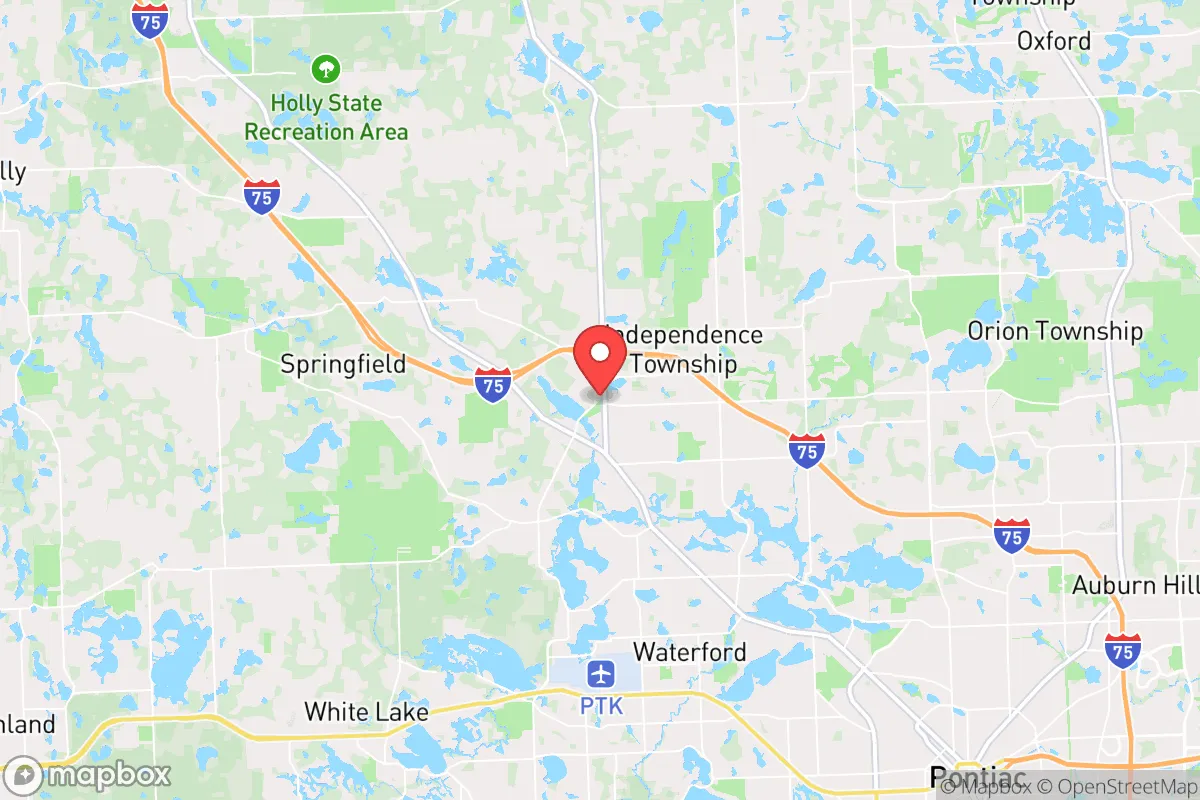
Photo: Wikipedia
Demographics of Village of Clarkston, MI
Affluence Level in Village of Clarkston, MI
An upper-middle-class area. Household wealth, education levels, and homeownership run ahead of national benchmarks.
People of Village of Clarkston, MI
The Village of Clarkston is a small, tight-knit community of 842 residents that remains overwhelmingly white (94.7%) and entirely native-born (0.0% foreign-born), with a notably high college attainment rate of 55.5%. Its character is defined by a historic downtown, strong civic pride, and a family-oriented atmosphere that attracts residents seeking a walkable, small-town lifestyle within commuting distance of metropolitan Detroit. The village’s population is stable and homogeneous, with minimal racial or ethnic diversity—Hispanic residents make up 2.9%, while Black and East/Southeast Asian residents each account for just 0.5%.
How the city was settled and grew
Clarkston’s settlement began in the 1830s, when the first white settlers—primarily of English, Scottish, and German descent—arrived to farm the fertile land and harness water power from the Clinton River. The village was platted in 1840 by Nelson Clark, for whom it is named, and grew as a mill town and stagecoach stop along the Saginaw Trail. The arrival of the Detroit and Milwaukee Railroad in the 1850s spurred a second wave of settlement, bringing merchants, tradesmen, and laborers who built the core of what is now the Historic Village District, centered on Main Street and Depot Road. By the late 19th century, Clarkston had become a summer resort destination for wealthy Detroit families, who built cottages in areas like Clarkston Heights and along Greens Lake, shaping the village’s enduring character as a retreat from the city. The population remained small and almost entirely white through the mid-20th century, sustained by local commerce, light manufacturing, and its role as a service hub for surrounding farm communities.
Modern era (post-1965)
After the 1965 Hart-Cellar Act, Clarkston saw virtually no new immigration—the foreign-born population remains at 0.0% today. Instead, the village’s modern growth came from domestic in-migration, particularly during the 1970s and 1980s, as suburbanization pushed families north from Detroit and Oakland County. These new residents were overwhelmingly white, middle-class, and drawn by the village’s historic charm, low crime, and excellent public schools in the Clarkston Community School District. Newer subdivisions such as Clarkston Meadows and Clarkston Estates were built on the village’s periphery, absorbing families who wanted a suburban lifestyle with a small-town feel. The village’s racial composition has remained remarkably stable: the white share has stayed above 94% for decades, with only slight increases in Hispanic and Black populations since 2000. The 0.5% East/Southeast Asian population is concentrated in the Clarkston Village Condominiums area, while the small Black population is dispersed throughout the village without a distinct neighborhood concentration.
The future
Clarkston’s population is projected to remain stable or decline slightly, as the village is landlocked and fully built out, with little room for new development. The population is aging—the median age is 46.2—and younger families are increasingly priced out by high home values, which averaged $350,000 in 2025. Diversity is unlikely to increase significantly: the foreign-born share will likely stay near zero, and the Hispanic and Black populations may grow only marginally, if at all. The village’s cultural identity will continue to be defined by its historic preservation, seasonal festivals like the Clarkston Founders Day Parade, and its role as a bedroom community for professionals working in Auburn Hills, Pontiac, and Detroit. New residents will most likely be white, college-educated, and drawn from other parts of Oakland County or the broader Midwest, settling in existing homes in the Historic Village District or the established subdivisions of Clarkston Heights and Clarkston Meadows.
For someone moving in now, Clarkston offers a stable, homogeneous, and family-oriented community with a strong sense of place and excellent schools, but little demographic change or diversity on the horizon. It is a place where the past is preserved, and the future looks much like the present—a quiet, safe, and predominantly white village that values tradition over transformation.

* Values derived from national, state, county, city and local statistics and may differ in a specific area. Last updated: 2026-10-05T03:59:20.000Z
Narrative content on this page is AI-generated and may contain mistakes. Verify any details that matter before acting on them.
ReloMaps may earn a commission from affiliate links at no extra cost to you.

