Photo: Wikipedia
Political ClimatePolitical Climate in Village of Clarkston, MI
District shown is the primary district for this city’s centroid. Cities may span multiple districts.
Local Political AnalysisPolitical Analysis of Village of Clarkston, MI
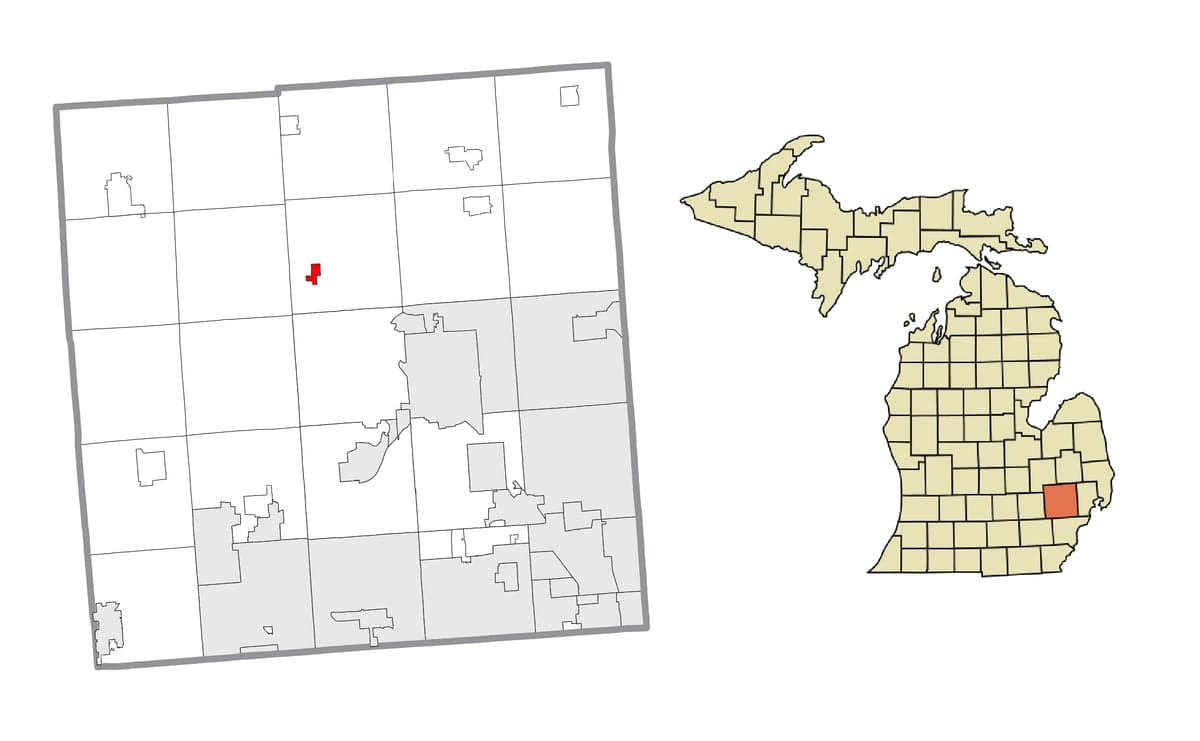
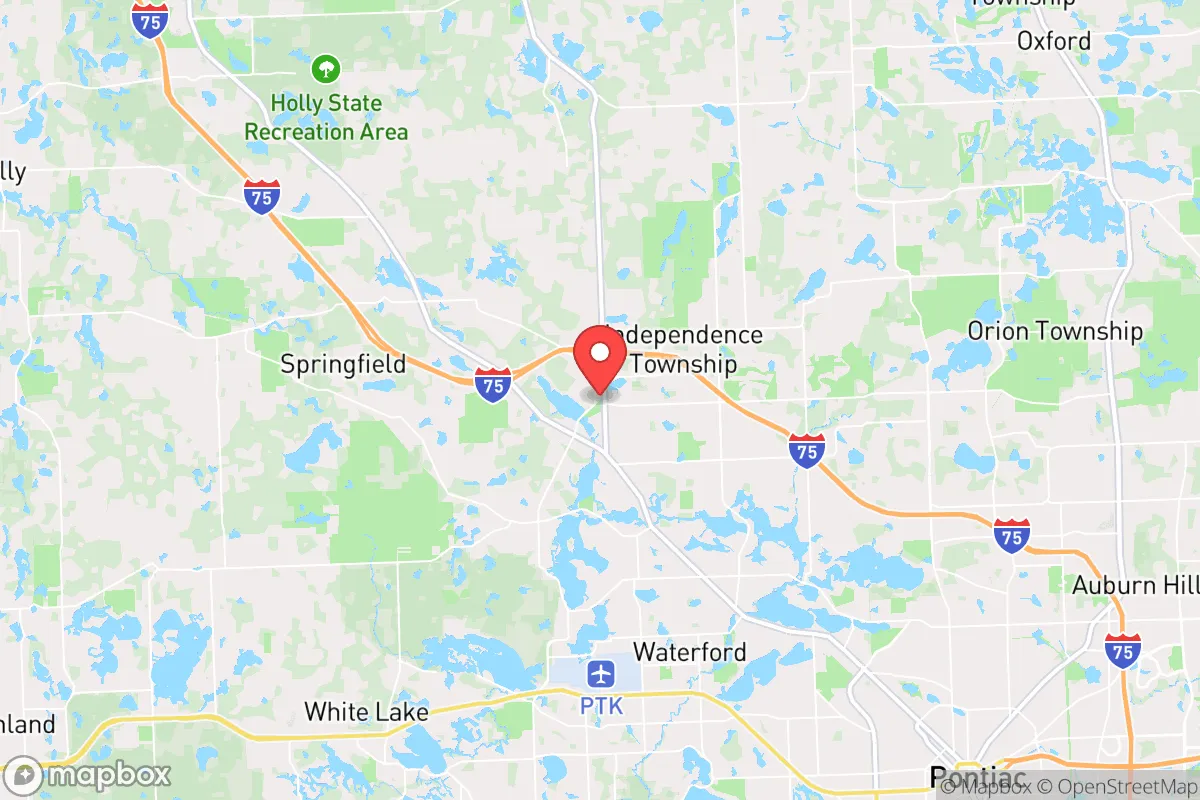
Village of Clarkston sits in a solidly conservative pocket of southeast Michigan, with a Cook Partisan Voting Index of R+16 that makes it one of the most reliably Republican communities in the state. That R+16 rating means the area votes about 16 points more Republican than the national average in presidential elections, a stark contrast to Michigan as a whole, which sits at exactly EVEN on the Cook PVI. In practice, this has been the reality here for decades: Clarkston and surrounding Independence Township have been a GOP stronghold even as Oakland County as a whole has trended purple, and the village itself has only gotten redder over the last two election cycles.
How it compares
Michigan’s statewide EVEN rating reflects its status as a true swing state, where Detroit, Ann Arbor, and Grand Rapids suburbs balance each other out. Clarkston’s R+16 puts it in the same league as places like Midland or Grand Haven, but with a key difference: it’s surrounded by communities that lean the opposite direction. Drive 15 minutes south to Pontiac, and you’re in a city that votes 70-80% Democratic. Head 20 minutes east to Rochester Hills, and you’ll find a more moderate R+5 vibe. The contrast is most visible in local elections: Clarkston’s village council and school board races are often decided in Republican primaries, while neighboring Waterford Township (R+3) and White Lake (R+8) see more competitive general elections. The trajectory here has been steady—Clarkston has voted Republican in every presidential election since at least 2000, and the margin has widened from about 55-45 in 2000 to roughly 62-38 in 2024.
What this means for residents
For conservative residents, the political climate means their values are reflected in local governance—low taxes, limited zoning changes, and a police department that’s well-funded. The Independence Township board has consistently opposed county-level mask mandates and vaccine requirements, and the village council rarely debates hot-button social issues. For liberal residents, it means being in the minority, but not an isolated one. Many drive 20 minutes to Birmingham or Ferndale for more like-minded social circles, and local Democratic clubs are active but small. The practical effect is that Clarkston feels like a small town where politics doesn’t dominate daily life—neighbors know each other across party lines, and the biggest local controversies tend to be about development density or road repairs, not national issues. That said, yard signs during election season are overwhelmingly red, and it’s common to hear conservative talk radio playing in local coffee shops.
Culturally, Clarkston’s political lean shows up in its policy choices. The village has no public transportation system, no rent control, and a strong emphasis on property rights—new housing developments are approved slowly, and the historic downtown is protected by strict design guidelines. The local school district, Clarkston Community Schools, is known for its high test scores and conservative-leaning school board, which has avoided the culture-war battles seen in nearby districts like Bloomfield Hills. For anyone moving here, the political reality is straightforward: if you’re comfortable in a community where the Fourth of July parade features more American flags than political signage, and where the biggest annual debate is whether to allow food trucks on Main Street, you’ll fit right in. If you’re looking for a politically active, progressive environment, you’ll find that 20 minutes south in Royal Oak or Ferndale. Clarkston is what it is—a reliably red village in a swing state, where the politics are predictable but the people are generally friendly across the aisle.

State Political ClimatePolitical Climate in Michigan
State Political AnalysisPolitical Environment in the State
Michigan is the ultimate swing state, with a Cook PVI of EVEN that perfectly captures its razor-thin margins in recent presidential elections. Over the past 20 years, the state has shifted from a reliably blue stronghold in the auto-industrial era to a true battleground where Democrats hold a narrow edge in presidential races (winning in 2020 and 2012, but losing in 2016) while Republicans control the state legislature and governorship has flipped between parties. The dominant coalitions are a union-heavy, diverse urban base in Southeast Michigan versus a growing, culturally conservative exurban and rural vote that has turned much of the Lower Peninsula red.
Urban vs. rural divide
The political map of Michigan is a study in stark contrasts. Wayne County (Detroit) and Washtenaw County (Ann Arbor) are the Democratic engine, delivering margins of 60-70% for Democrats, while the rest of the state outside of a few college towns leans Republican. The key battlegrounds are the suburban "collar counties" around Detroit — Macomb, Oakland, and Kent (Grand Rapids). Macomb County, once the iconic "Reagan Democrat" stronghold, flipped hard for Trump in 2016 and 2020, while Oakland County has trended blue as affluent professionals move in. Grand Rapids (Kent County) is the state's conservative urban center, but it's slowly shifting left as the city grows. Meanwhile, the Thumb region (Huron, Sanilac counties) and the Upper Peninsula are deeply red, with many precincts voting 70%+ Republican. The political geography means that a candidate who wins the Detroit suburbs and Grand Rapids can overcome the rural vote, but it's a delicate balance.
Policy environment
Michigan's policy landscape is a mixed bag that reflects its swing-state status. The state has a flat income tax rate of 4.25%, which was reduced from 4.35% in 2023 via a trigger law. Property taxes are relatively high, with an average effective rate of 1.5%, but the Headlee Amendment and Proposal A cap annual increases to the rate of inflation or 5%, whichever is lower, providing predictability. The regulatory posture is moderate — Michigan is a right-to-work state (the law was repealed in 2023 by a Democratic legislature, but the repeal is being challenged in court). Education policy is contentious: the state has a universal school choice program (schools of choice) and a robust charter school sector, but also has some of the lowest per-pupil funding in the Midwest. Healthcare is dominated by the Big Three insurers (Blue Cross, Priority Health, McLaren), and the state expanded Medicaid under the Healthy Michigan Plan. Election laws are relatively accessible: no-excuse absentee voting was approved by voters in 2018, and same-day voter registration is available. However, voter ID is required at the polls, and the state has a strict photo ID law.
Recent policy direction
The last two years under a Democratic trifecta (governor, House, Senate) have produced a flurry of legislation that signals a clear leftward shift on several fronts. Gun laws: In 2023, Michigan passed universal background checks, safe storage requirements, and a red flag law (extreme risk protection orders) — a major change in a state with a strong hunting and gun culture. Parental and education rights: The state repealed the 1931 abortion ban and codified reproductive rights via Proposal 3 (2022), and also passed a law banning conversion therapy for minors. Property rights: The state has not enacted any major property tax reforms, but the Michigan Environmental Protection Act was strengthened to allow citizens to sue over pollution. Voting and ballot access: Proposal 2 (2022) enshrined nine days of early voting, drop boxes, and automatic voter registration in the state constitution. Privacy and surveillance: Michigan has no comprehensive data privacy law, but a 2023 law restricts the use of facial recognition by police. For conservatives, the gun control package and the repeal of right-to-work are the most significant concerns; for liberals, the codification of abortion rights and expanded voting access are wins. The state remains a patchwork — local governments in conservative areas like Ottawa County have passed resolutions declaring themselves "Second Amendment sanctuaries" and resisting state gun laws.
Civil unrest & political movements
Michigan has been a flashpoint for political activism on both sides. The 2020 Whitmer kidnapping plot and the armed protests at the state capitol over COVID-19 restrictions put Michigan in the national spotlight. The Michigan Conservative Coalition and Michigan Freedom Fund are active on the right, while the Michigan Democratic Party and Progress Michigan organize on the left. Immigration politics are relatively quiet compared to border states, but Dearborn (home to the largest Arab-American community in the U.S.) has been a center of pro-Palestinian activism, while Holland and Grand Rapids have seen tensions over refugee resettlement. Election integrity remains a live issue: the 2020 election in Michigan was subject to numerous audits and lawsuits, with Republican-led counties like Antrim County initially reporting a software error that fueled conspiracy theories. The state has since passed bipartisan election reforms, but distrust persists. A new resident would notice the prevalence of political yard signs and bumper stickers, especially in swing counties like Macomb and Kent, where the "Trump 2024" and "Biden 2024" signs are equally common.
Projection
Over the next 5-10 years, Michigan is likely to remain a toss-up, but the demographic trends favor Democrats slightly. In-migration from Illinois and California is bringing more liberal voters to the Grand Rapids and Traverse City areas, while the Detroit suburbs continue to diversify. However, the rural exodus is accelerating — counties like Oscoda and Alcona are losing population, which concentrates the conservative vote in fewer, more intense precincts. The state's electoral college votes (15) will remain critical, and both parties will invest heavily. The biggest wildcard is the auto industry's transition to electric vehicles — if it creates jobs in Democratic-leaning areas like Ann Arbor and Lansing, it could solidify the blue base; if it kills jobs in Republican-leaning areas like Flint and Saginaw, it could fuel populist backlash. A new resident moving in now should expect the state to be a political battleground for at least the next decade, with policy swings depending on which party holds the governorship and legislature.
For a conservative relocator, Michigan offers a mixed bag: low taxes and school choice are draws, but the recent gun control and labor laws are headwinds. For a liberal relocator, the state's abortion protections and voting access are strong, but the high property taxes and struggling public schools in some districts are drawbacks. The bottom line: Michigan is not a place where you can assume your neighbors share your politics — it's a state where you'll have to engage, debate, and vote to shape the direction. If you value living in a true swing state where your vote actually matters, Michigan delivers that in spades.
* Values derived from national, state, county, city and local statistics and may differ in a specific area. Last updated: 2026-10-05T03:59:20.000Z
Narrative content on this page is AI-generated and may contain mistakes. Verify any details that matter before acting on them.
ReloMaps may earn a commission from affiliate links at no extra cost to you.

