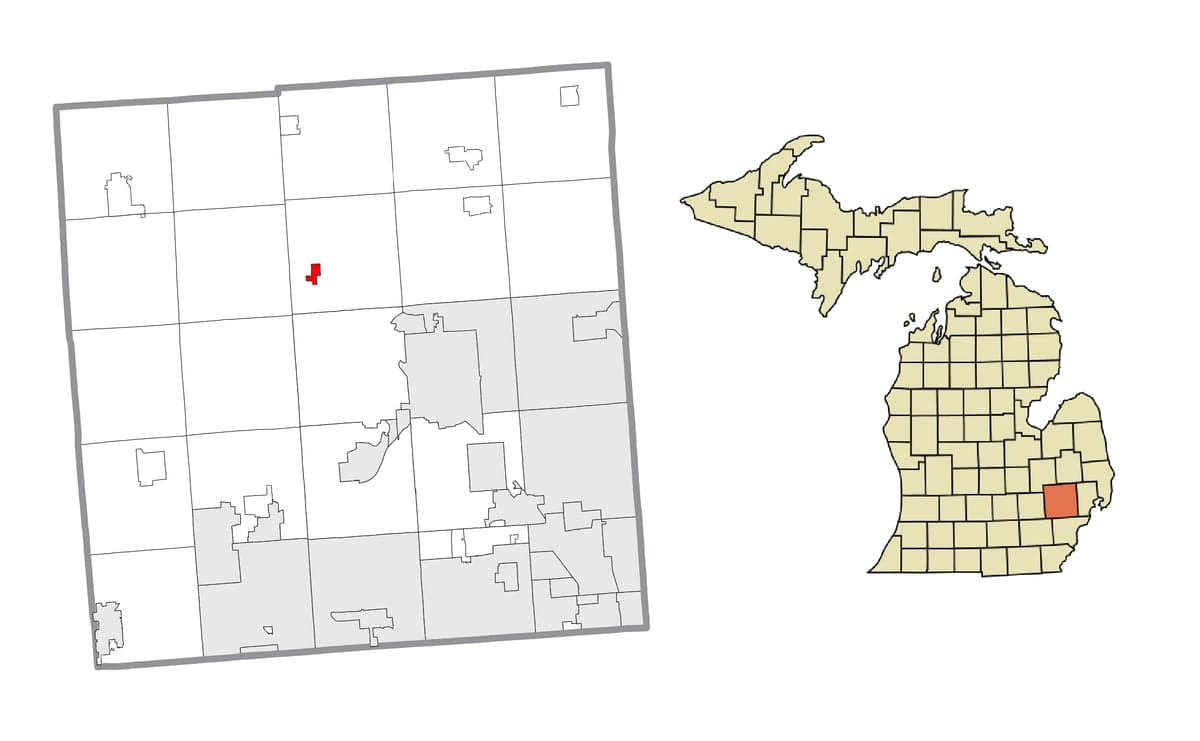
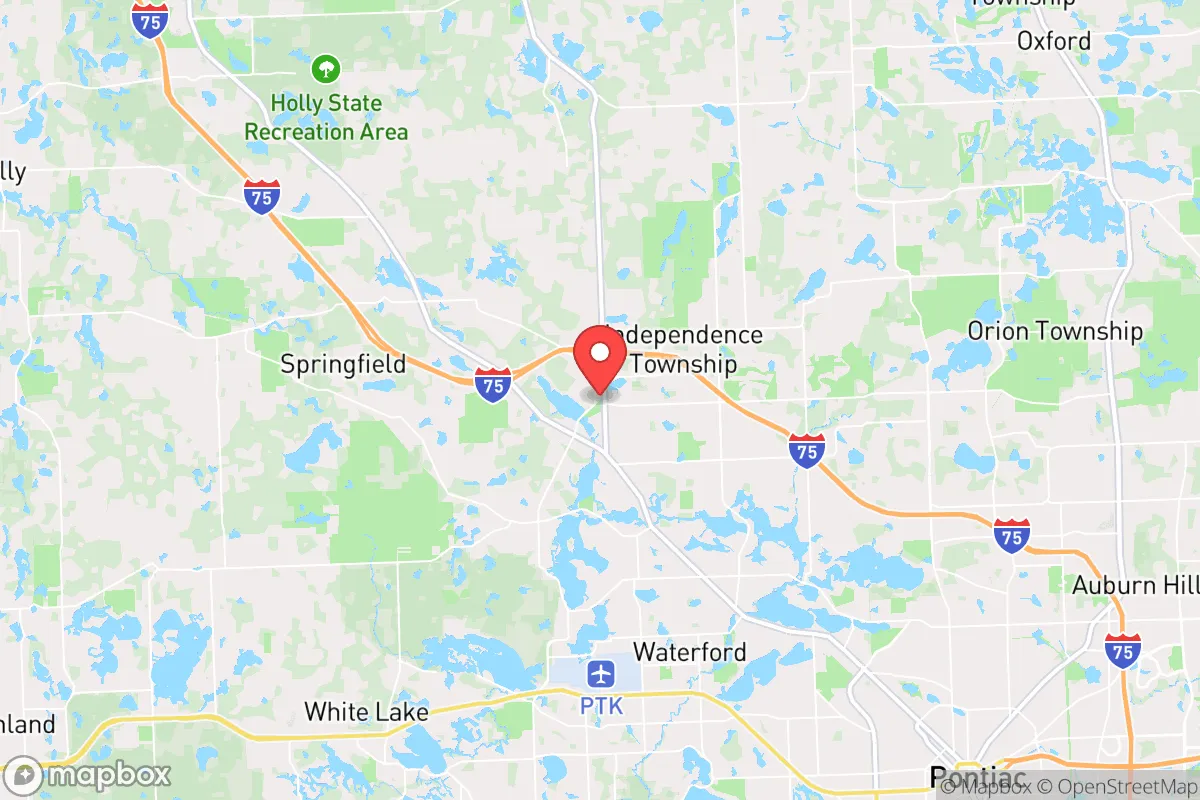
Photo: Wikipedia
Personal Sovereignty in Village of Clarkston, MI
Strong independent fundamentals that actively favor personal liberty and low regulation.
What does Personal Sovereignty tell us?
Personal Sovereignty measures your capacity for self-reliance and independence with minimal government friction. Higher scores mean fewer barriers between you and the way you want to live... but it assumes you have the space you need and good neighbors.
What does this tell us?
Personal Sovereignty measures your capacity for self-reliance and independence with minimal government friction. Higher scores mean fewer barriers between you and the way you want to live... but it assumes you have the space you need and good neighbors.
State Policy
Energy independence: Importer (20% of energy produced in-state)
Personal Liberty
Homesteading

Personal Liberty Analysis
In the Village of Clarkston, personal sovereignty is shaped by a blend of Michigan’s state-level legal framework and the village’s own local ordinances, creating an environment where individual autonomy is generally respected but not without some regulatory guardrails. For a relocation reader prioritizing self-reliance and minimal government overreach, Clarkston offers a moderate-to-favorable balance: property rights are strong, gun laws are permissive by national standards, and the tax burden is manageable, but local zoning and building codes impose some limits on off-grid living and homesteading ambitions. The village sits within Oakland County, a jurisdiction that leans more progressive than surrounding rural areas, which can affect everything from school board policies to health mandates, yet the day-to-day experience for most residents is one of light-touch governance in personal and economic matters.
Tax burden and regulatory posture in Clarkston and Oakland County
Michigan’s overall tax climate ranks near the middle nationally, and Clarkston benefits from that relative moderation. The state levies a flat 4.25% personal income tax and a 6% corporate income tax, with no local income tax in the village itself. Property taxes in Clarkston are set by Oakland County at roughly 1.5% of assessed value annually, which is slightly above the national average but typical for Southeast Michigan. The village does not impose its own sales tax, so the state rate of 6% applies. For a family earning $100,000, the combined state and local tax burden lands around 10-11% of income, which is competitive with many Midwestern suburbs. Regulatory posture in Clarkston is best described as moderately permissive: the village enforces standard building codes and zoning ordinances, but does not have the kind of aggressive business licensing or environmental overlay that can stifle small-scale entrepreneurship. Home-based businesses are allowed with a simple permit, though restrictions on signage and customer traffic apply. The village’s small size (roughly 1,000 residents) means that most regulatory decisions are made at the county or state level, which tends to favor a lighter touch than larger cities like Detroit or Ann Arbor.
Self-defense and gun law specifics in Clarkston and Michigan
Michigan is a shall-issue state for concealed pistol licenses (CPL), meaning that as long as an applicant meets basic criteria—age 21, no felony record, completion of a safety course—the county sheriff must issue the permit. Clarkston residents apply through Oakland County, which processes CPL applications efficiently, typically within 45 days. The state does not require a permit to open carry a handgun, and long guns are unregulated for purchase and possession by legal adults. Stand-your-ground laws are in effect: Michigan has no duty to retreat in any place where a person has a legal right to be, including public spaces. Castle doctrine protections apply to homes and vehicles, with a presumption of reasonable fear of death or great bodily harm if an intruder forcibly enters. Magazine capacity is not restricted, and there is no state-level assault weapons ban. The village itself has no additional gun ordinances beyond state law, so residents enjoy full Second Amendment protections. One nuance: Oakland County’s sheriff has historically been supportive of gun rights, but the county prosecutor’s office has occasionally taken a more restrictive stance on charging decisions in self-defense cases. For practical purposes, a law-abiding gun owner in Clarkston faces minimal bureaucratic friction, though the political climate in the county can feel less gun-friendly than in rural northern Michigan.
Self-reliance and homesteading viability in Clarkston
Clarkston’s residential lots average 0.25 to 0.5 acres within the village limits, which limits large-scale homesteading but does not preclude significant self-reliance. The village zoning code permits backyard chickens (hens only, no roosters) with a permit, and beekeeping is allowed on lots of at least 0.25 acres. Rainwater collection is unrestricted under Michigan law, and many homeowners install rain barrels for gardening. Vegetable gardens, fruit trees, and small greenhouses are generally allowed without special permits. However, off-grid living faces real obstacles: the village requires connection to municipal water and sewer where available, and solar panels must comply with building codes that can add permitting costs. Composting toilets and graywater systems are not explicitly prohibited but would require a variance, which is rarely granted. For those seeking true self-sufficiency, the surrounding Independence Township (which surrounds the village) offers larger parcels—1 to 5 acres are common—where well and septic systems are standard, and zoning is more lenient. Wood-burning stoves and outdoor furnaces are permitted in the township but subject to setback rules and seasonal burn bans during high fire risk. Overall, Clarkston itself is better suited for a “suburban homestead” approach—growing food, raising small livestock, and reducing utility dependence—than for full off-grid independence. The regulatory environment is not hostile to self-reliance, but it does assume participation in municipal infrastructure.
Personal liberties in Clarkston: parental rights, medical autonomy, speech, and property
Parental rights in Michigan are generally strong, and Clarkston reflects that. The state does not have mandatory vaccination laws for school attendance—parents can claim a medical, religious, or philosophical exemption—and the Clarkston Community School District has not imposed mask or vaccine mandates beyond state guidance during public health emergencies. Curriculum transparency is protected under Michigan’s Parents’ Right to Know law, which requires schools to post instructional materials online and allow parents to opt their children out of specific lessons. Medical autonomy is more mixed: Michigan does not require parental consent for minors to receive certain reproductive health services, which may concern some conservative families, but the state does not have a vaccine passport system or broad health data collection mandates. Free speech is fully protected under the First Amendment, and Clarkston has no local ordinances restricting political signage, leafleting, or public assembly. Property rights are robust: Michigan is a “right-to-farm” state, which protects agricultural activities from nuisance lawsuits, though this applies more to rural areas than to Clarkston’s suburban lots. Eminent domain is rarely used in the village, and property taxes are predictable. One area where personal liberty is somewhat constrained is land use: the village’s historic district overlay means that exterior modifications to homes in certain areas require approval from the Historic District Commission, which can delay projects and impose aesthetic standards. For most residents, this is a minor inconvenience, but for those who value absolute control over their property, it is worth noting.
Overall, personal sovereignty in Clarkston is best described as pragmatic and balanced. The village does not impose the kind of heavy-handed regulations found in larger cities, but it also does not offer the libertarian free-for-all of rural counties in northern Michigan. For a conservative-leaning individual or family, the environment is generally supportive of self-defense, economic independence, and parental authority, with the main trade-offs being moderate property taxes and some zoning constraints on homesteading. Compared to nearby communities like Rochester or Birmingham, Clarkston feels noticeably less regulated; compared to rural townships in Lapeer or Livingston counties, it feels more structured. For the reader who values personal freedom but also wants access to good schools, low crime, and proximity to Detroit’s job market, Clarkston represents a solid middle ground where autonomy is respected without being absolute.

* Values derived from national, state, county, city and local statistics and may differ in a specific area. Last updated: 2026-10-05T03:59:20.000Z
Narrative content on this page is AI-generated and may contain mistakes. Verify any details that matter before acting on them.
ReloMaps may earn a commission from affiliate links at no extra cost to you.

