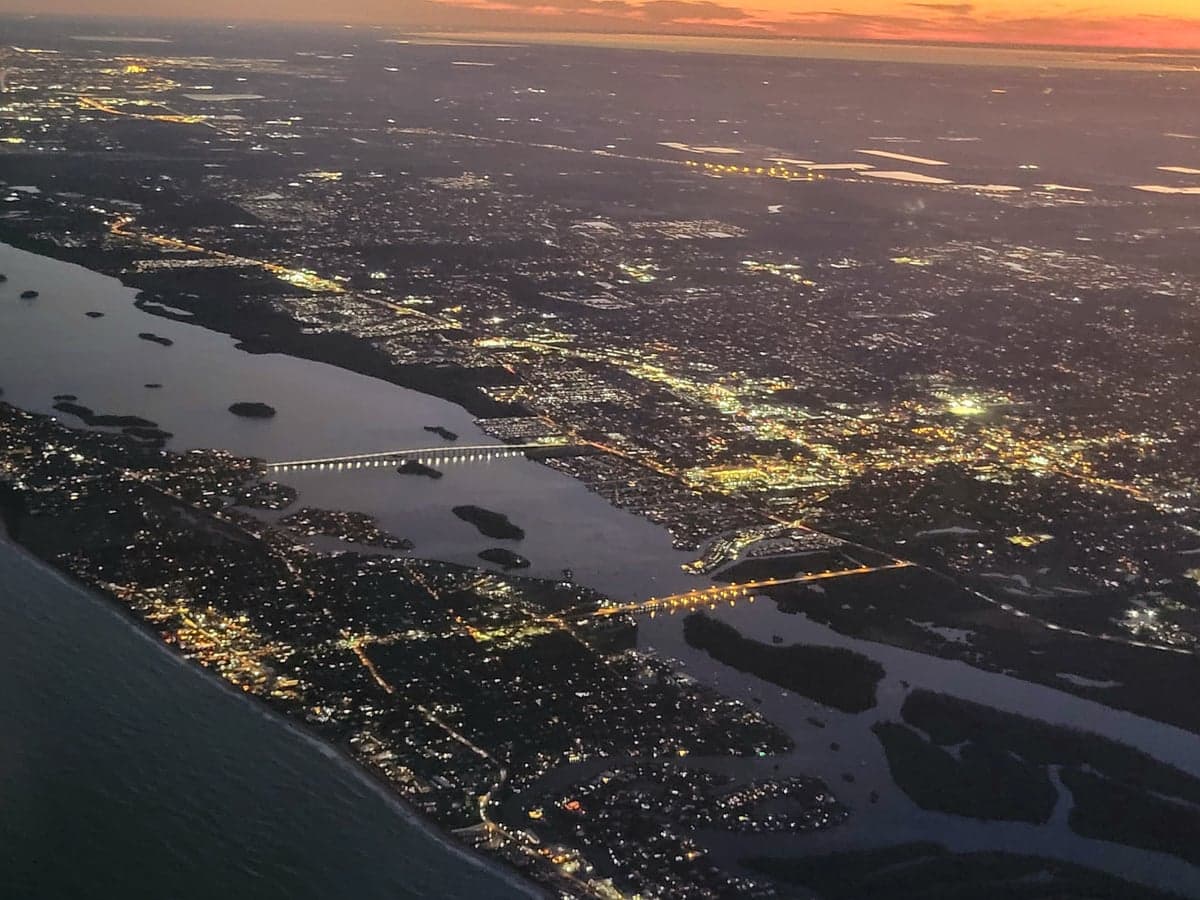
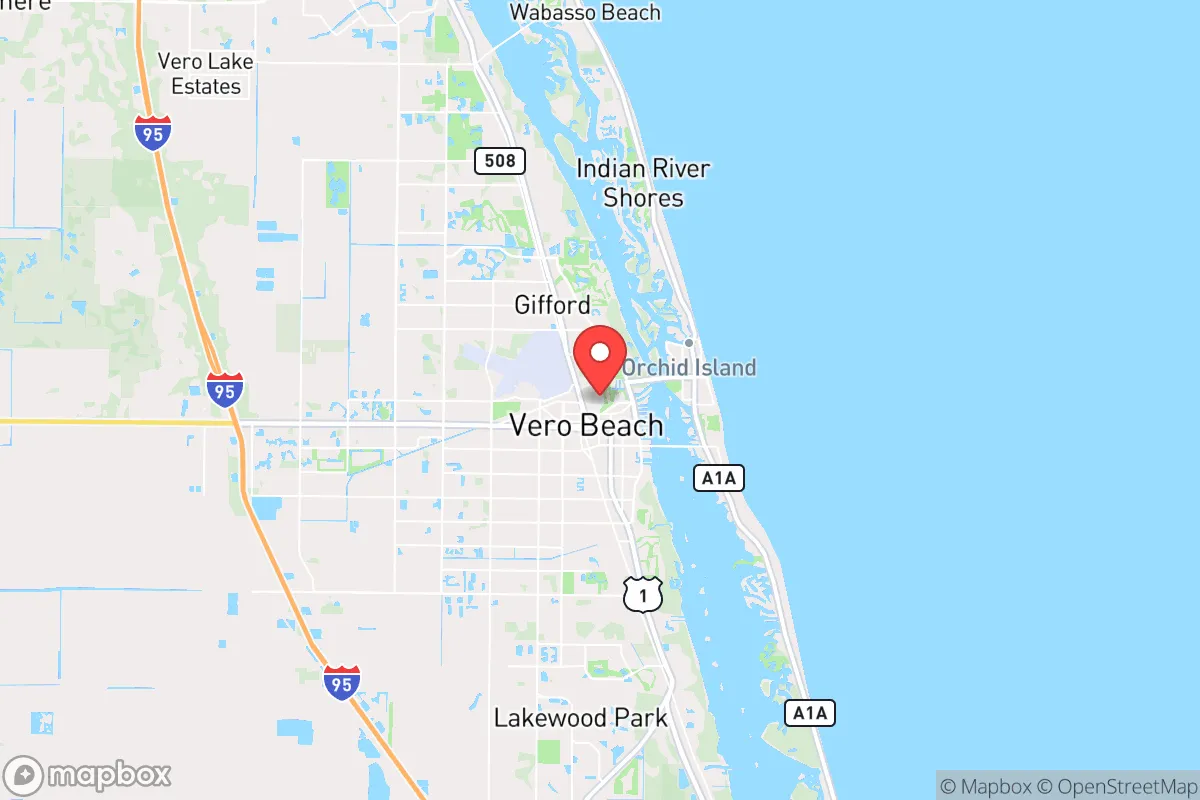
Photo: Wikipedia
Political ClimatePolitical Climate in Vero Beach, FL
District shown is the primary district for this city’s centroid. Cities may span multiple districts.
Inherited from parent county — no local data available.
* Lean and PVI are calculated from Vero Beach, FL’s own 2020 presidential results (precinct returns summed to the city), with 2024 estimated from the surrounding county’s 2020–2024 shift, Cook-style. Sources: state election offices; VEST 2020 precinct results (CC BY 4.0).
Political rankings in Florida
- Most Conservative Cities in Florida
- Most Liberal Cities in Florida
- Best Liberal-Leaning Towns in the South
- Safest Liberal-Leaning Towns in the South
- Safest Conservative-Leaning Towns in the South
- Safest Liberal-Leaning Towns on the East Coast
- Safest Conservative-Leaning Towns on the East Coast
- Affordable Small Towns for Conservatives
- Most Conservative Counties in Florida
- Most Liberal Counties in Florida
Local Political AnalysisPolitical Analysis of Vero Beach, FL
Vero Beach has a political climate that feels more moderate than the rest of Florida, but that's changing. The area's Cook PVI of D+4 means it leans slightly Democratic, which is a real outlier in a state that has trended reliably red in recent cycles. Locals will tell you that Indian River County as a whole has been a Republican stronghold for decades, but Vero Beach itself—especially the older, more established neighborhoods near the barrier island and downtown—has historically been a pocket of Democratic and independent voters. That's shifting, though, as new retirees from the Northeast and Midwest bring a mix of conservative and liberal views, and as younger families move in from places like Orlando and Miami.
How it compares
Compared to the rest of Florida, Vero Beach is a blue dot in a red county. The surrounding towns tell the story: Sebastian to the north and Fellsmere to the west lean more conservative, while the unincorporated areas of Indian River County vote heavily Republican. Drive 20 minutes south to Fort Pierce, and you'll find a similar D+ lean, but with a younger, more diverse population that makes the politics feel different. The big contrast is with the state as a whole. Florida has swung right in every presidential election since 2012, and the state legislature is firmly controlled by Republicans. Vero Beach's D+4 rating puts it in the same ballpark as places like Tallahassee and Gainesville—college towns and state capitals—but without the university influence. That makes its moderate lean more about older, wealthier, and often more socially liberal retirees than about progressive activism.
What this means for residents
For conservative residents, Vero Beach is still a comfortable place to live. The county government and school board are reliably Republican, and you'll find plenty of Trump signs in yards west of I-95. For liberal residents, the city itself offers a more tolerant atmosphere than much of the surrounding area. You'll see Biden-Harris yard signs in the historic district and near the beach, and local Democratic clubs are active. The practical effect is that local elections are often decided by a few hundred votes, and candidates tend to run as moderates rather than ideologues. The city council and mayor's office have swung between both parties in recent years, which keeps policy from veering too far in either direction. That said, the county's conservative tilt means that issues like growth management, environmental regulations on the Indian River Lagoon, and school curriculum debates can get heated.
One cultural distinction that sets Vero Beach apart is its strong sense of place and history. The city has a well-preserved downtown, a thriving arts scene, and a deep connection to the barrier island and the lagoon. That shared identity often transcends party lines. You'll find conservatives and liberals alike fighting to protect the lagoon from pollution or to preserve the city's small-town character against overdevelopment. In that sense, the political climate here is less about national culture wars and more about local quality-of-life issues. The trajectory is toward more polarization as new residents arrive, but for now, Vero Beach remains one of the few places in Florida where a Democrat can win a local election and a Republican can feel heard at a city council meeting. That balance is fragile, but it's what makes the area unique.

State Political ClimatePolitical Climate in Florida
State Political AnalysisPolitical Environment in the State
Florida is a purple state that has shifted decisively red over the past decade, with Republicans now holding a trifecta in state government and a voter registration advantage that has grown from roughly even in 2020 to a 1.2 million edge by 2026. The state’s political trajectory is driven by a combination of domestic migration from blue states, a growing Hispanic electorate that leans conservative in many regions, and a Democratic Party that has struggled to maintain its base outside of a few urban strongholds. For a relocator, this means a state government that is aggressively conservative on most policy fronts, but with local pockets where liberal governance still holds sway.
Urban vs. rural divide
The political map of Florida is a study in stark contrasts. The Democratic vote is concentrated in three main areas: Miami-Dade County, which has trended rightward but still delivers large raw vote totals for Democrats; Broward and Palm Beach counties in the southeast, which remain deep blue; and the urban core of Orlando (Orange County) and Tampa (Hillsborough County), which are competitive but lean Democratic. The rest of the state is overwhelmingly Republican. The I-4 corridor from Tampa to Daytona Beach is the classic swing region, but it has shifted right in recent cycles — Volusia County, once a bellwether, now votes Republican by double digits. The Panhandle, from Pensacola to Tallahassee (the capital itself is a blue island), is deeply conservative, as are the interior counties like Lake, Marion, and Polk, which have seen explosive growth from retirees and families seeking lower taxes and conservative governance. The southwest coast, from Naples to Sarasota, is reliably red, with Collier County being one of the most Republican counties in the nation. The rural Big Bend and North Florida regions are ancestrally Democratic but have flipped hard red on cultural and economic issues.
Policy environment
Florida’s policy environment is defined by a low-tax, low-regulation posture that has made it a magnet for business and population growth. There is no state income tax, and the state’s corporate tax rate is a flat 5.5%. Property taxes are relatively high compared to some other states, but a $50,000 homestead exemption and a 3% annual cap on assessed value increases (Save Our Homes) provide stability for homeowners. The regulatory climate is business-friendly, with a right-to-work law and minimal labor union influence. Education policy has been a flashpoint: the state has a robust school choice program, including vouchers for private and religious schools, and has banned “critical race theory” and DEI initiatives in public schools and universities. Healthcare policy is market-oriented, with no state-level Medicaid expansion (though a limited expansion was passed in 2025 for postpartum care) and a heavy reliance on private insurance. Election laws have been tightened since 2020, with stricter voter ID requirements, limits on drop boxes, and a ban on ballot harvesting. The state also has a “stand your ground” self-defense law and a permitless carry law for firearms.
Recent policy direction
Under Governor Ron DeSantis, Florida has enacted a series of high-profile conservative laws that define its recent direction. On guns, the state passed permitless carry (HB 543) in 2023, allowing any adult who can legally possess a firearm to carry it concealed without a permit. On education and parental rights, the Parental Rights in Education Act (HB 1557), known by critics as “Don’t Say Gay,” restricts classroom instruction on sexual orientation and gender identity through third grade. The Stop WOKE Act (HB 7) limits workplace and school training on race and gender. On immigration, the state passed SB 1718 in 2023, which requires hospitals to ask about immigration status, penalizes transporting undocumented immigrants, and invalidates out-of-state driver’s licenses for undocumented residents. On medical and bodily autonomy, the state banned abortion after six weeks in 2024 (with exceptions for rape, incest, and life of the mother), and has restricted gender-affirming care for minors. On property rights, the state has preempted local rent control and short-term rental regulations. On voting, SB 90 (2021) and SB 524 (2023) added restrictions on mail-in voting and drop boxes. The overall direction is toward maximizing individual liberty in economic and self-defense matters while imposing conservative social values through state law.
Civil unrest & political movements
Florida has seen its share of political flashpoints. The 2020 Black Lives Matter protests in Miami, Orlando, and Tampa were large but largely peaceful, though they led to the creation of a state-level “anti-riot” law (HB 1) in 2021 that enhanced penalties for protest-related offenses and created new protections for drivers who strike protesters. The immigration debate is a live wire: the 2023 SB 1718 sparked protests from immigrant rights groups and some business leaders, particularly in the agriculture and hospitality sectors. The state has no sanctuary cities, and local governments that attempt to limit cooperation with ICE face state preemption and funding cuts. Election integrity remains a charged topic: the 2020 and 2022 cycles saw no major fraud scandals, but the state created a new Office of Election Crimes and Security, which has prosecuted a handful of cases involving felons voting illegally. Secession or nullification rhetoric is minimal, though there is a vocal “Free Florida” movement among some libertarians and constitutionalists. The most visible political movements are the Moms for Liberty chapters active in school board races and the Florida Democratic Party, which is struggling to rebuild after a series of electoral losses. A new resident will notice that political signs and bumper stickers are common, and that local news is heavily politicized, especially in the I-4 corridor and southeast Florida.
Projection
Over the next 5-10 years, Florida is likely to remain a Republican-leaning state, but the margin could narrow as the population continues to grow and diversify. The state is adding roughly 300,000 new residents per year, many from blue states like New York, California, and Illinois. While many of these newcomers are conservative-leaning, a significant number are moderate or liberal, and they are concentrated in the urban and suburban counties that are already the most competitive. The Hispanic electorate, which is about 20% of the voting population, is not monolithic: Cuban-Americans in Miami-Dade lean heavily Republican, while Puerto Ricans in Orlando and Central Florida lean Democratic. As the Puerto Rican population grows, it could shift the I-4 corridor back toward the center. The retiree vote is also shifting: older voters are reliably Republican, but younger retirees from blue states may bring more moderate views on social issues. The state’s housing affordability crisis — home prices have risen 60% since 2020 — could become a political issue that benefits Democrats if they can frame it as a failure of the state’s growth management policies. The climate change issue is a wild card: rising insurance costs and flood risks in coastal areas could drive a political realignment, especially in the southeast. For now, the state’s political trajectory is a slow rightward drift, but the demographic and economic forces that could reverse it are already in motion.
Bottom line for a new resident: If you are a conservative, you will find a state government that shares your values on taxes, guns, education, and social issues, and you will be able to live in a community that reflects those values almost anywhere outside of a few urban counties. If you are a liberal, you will find that your vote carries less weight at the state level, but you can still live in a blue enclave like Miami Beach, St. Petersburg, or Gainesville where local governance is more aligned with your views. The practical reality is that Florida’s political climate is stable and predictable: the state will continue to be a laboratory for conservative policy, and the culture wars will remain front and center. Plan accordingly.
* Values derived from national, state, county, city and local statistics and may differ in a specific area. Last updated: 2026-11-08T00:56:23.000Z
Narrative content on this page is AI-generated and may contain mistakes. Verify any details that matter before acting on them.
ReloMaps may earn a commission from affiliate links at no extra cost to you.

