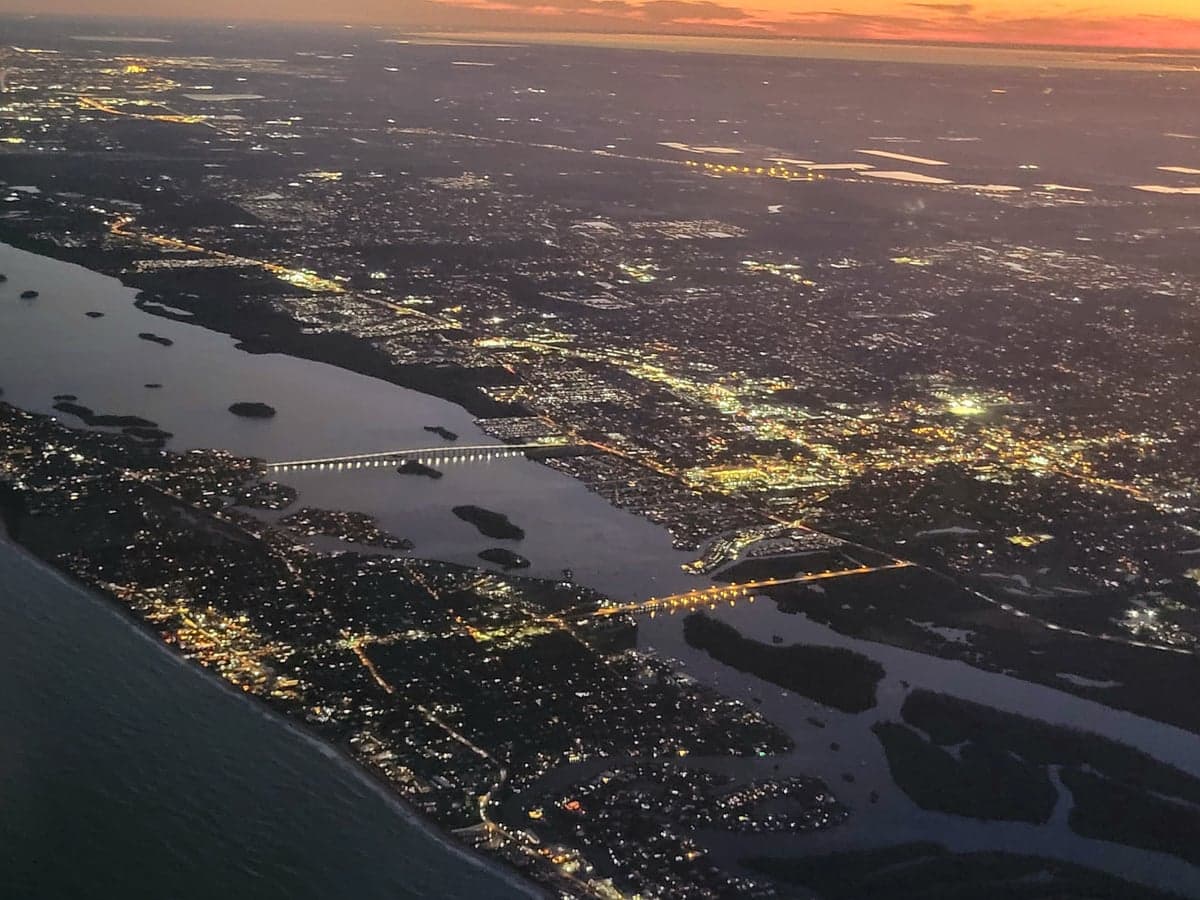
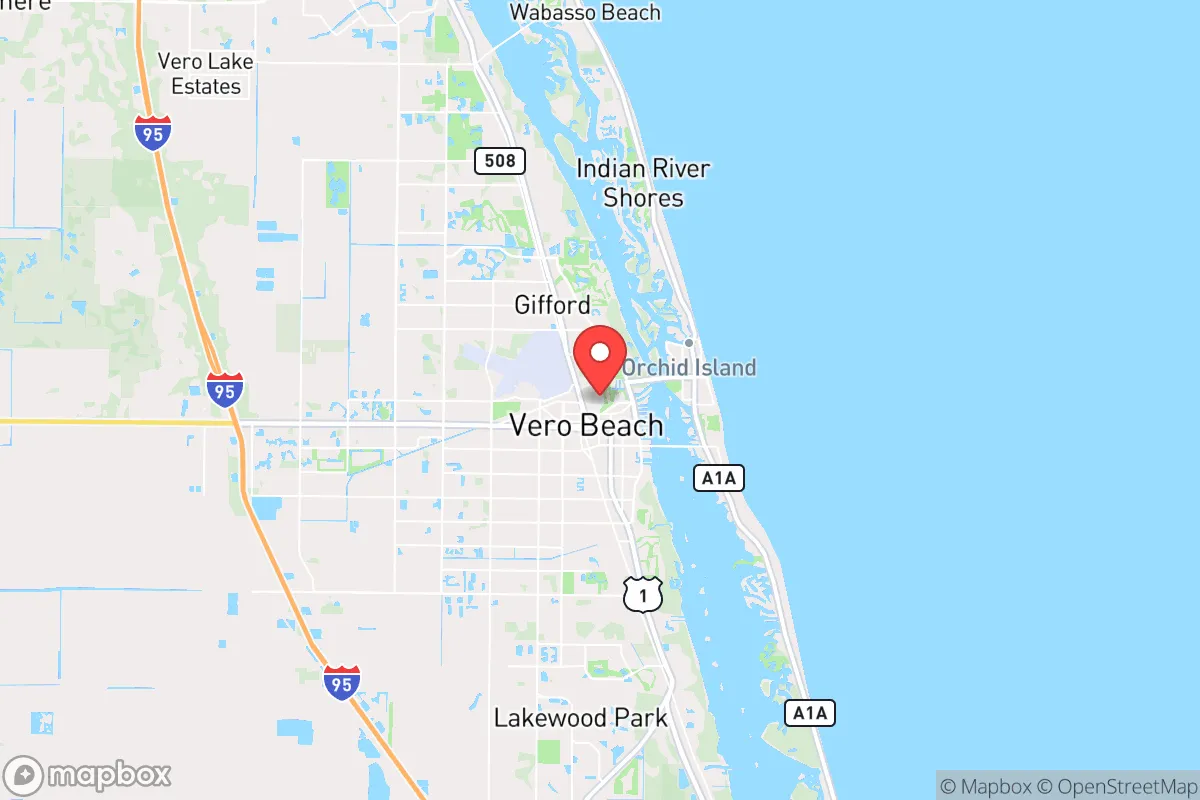
Photo: Wikipedia
Demographics of Vero Beach, FL
Affluence Level in Vero Beach, FL
A middle-class area roughly in line with national averages across income, home values, education, and employment.
People of Vero Beach, FL
The people of Vero Beach, Florida today number 16,785, forming a predominantly white (72.0%) community with a notably low foreign-born share of just 3.0%. The city is older and more educated than the national average, with 38.6% of adults holding a college degree, and its character remains rooted in a quiet, conservative coastal lifestyle. Distinctive identity markers include a strong seasonal population of retirees from the Northeast and Midwest, a deep connection to the Indian River Lagoon, and a social fabric that is less diverse than Indian River County as a whole.
How the city was settled and grew
Vero Beach was not a colonial-era settlement; its founding is a distinctly 20th-century story. The area was originally inhabited by the Ais people, but sustained European-American settlement began only after the Florida East Coast Railway extended south in the 1890s. The city was officially incorporated in 1919, driven by the citrus and pineapple industries that drew farmers from the Carolinas, Georgia, and the Midwest. The original population clustered around the downtown core, particularly in the Pocahontas Park neighborhood, where early merchants and railroad workers built modest homes. A second wave arrived during the 1920s land boom, when developers platted subdivisions like Osceola Park, a historic district of Craftsman bungalows that still anchors the city's oldest residential area. The Great Depression slowed growth, but World War II brought a third wave: the U.S. Navy established the Naval Amphibious Training Base (now the Vero Beach Regional Airport), drawing servicemen and support personnel from across the country. Many of these veterans returned after the war, settling in the Miracle Mile area and the newly built Central Beach neighborhood east of the railroad tracks. By 1950, Vero Beach's population had reached roughly 5,000, and the city's identity as a quiet, white-majority retirement and agricultural hub was firmly set.
Modern era (post-1965)
The post-1965 period reshaped Vero Beach's population primarily through domestic in-migration rather than international immigration. The 1965 Immigration and Nationality Act had little immediate effect here; the city's foreign-born share remains just 3.0%, far below the national average. Instead, the dominant trend was the steady arrival of retirees from the Northeast and Midwest, drawn by the warm climate, low taxes, and the established reputation of the Indian River Shores barrier island community. This enclave, along with the gated communities of John's Island and Grand Harbor, absorbed a wealthy, overwhelmingly white cohort that now defines the city's seasonal population. Meanwhile, the Hispanic share grew to 11.1%, concentrated in the Gifford area just north of the city limits and in the South Vero neighborhoods near 43rd Avenue. The Black population, at 8.5%, is historically rooted in the Gifford community, a historically African American settlement that predates Vero Beach's incorporation and remains the cultural heart of the county's Black population. East/Southeast Asian residents (1.3%) and Indian-subcontinent residents (0.9%) are small but visible, with families often settling in the newer subdivisions near the Interstate 95 corridor, such as West Vero and the County Road 510 area. The city's overall racial composition—72.0% white, 11.1% Hispanic, 8.5% Black—reflects a population that has grown more diverse since 2000 but remains less diverse than the county (which is 83.4% white) and far less diverse than Florida as a whole.
The future
Vero Beach's population is slowly becoming more diverse, but the pace is modest. The Hispanic share has risen from roughly 6% in 2000 to 11.1% today, driven by service-sector workers and agricultural laborers settling in the Gifford and South Vero areas. The Black population has held steady at around 8-9%, with younger families moving into Gifford and the Dixie Highway corridor. The East/Southeast Asian and Indian communities, while small, are growing as professionals are drawn to the Cleveland Clinic Indian River Hospital and the nearby Piper Aircraft headquarters. The most significant demographic shift, however, is the aging of the white population: the median age in Vero Beach is 56.6, well above the national median of 38.8. As the baby-boomer generation passes, the city faces a potential population decline unless younger families are attracted. The Vero Beach 2030 comprehensive plan emphasizes infill development and downtown revitalization to appeal to millennials and remote workers, but the high cost of housing on the barrier island and the limited rental stock in the city proper remain barriers. Over the next 10-20 years, Vero Beach will likely become slightly more Hispanic and slightly less white, but it will remain a predominantly older, conservative, and low-density community—a place where demographic change is gradual and concentrated in specific neighborhoods rather than citywide.
For someone moving in now, Vero Beach offers a stable, low-crime environment with a strong sense of place, but the population is aging and the cultural identity is firmly rooted in its mid-20th-century character. Newcomers will find a community that is welcoming but not rapidly transforming, where the seasonal rhythm of retirees and the quiet pace of coastal life remain the dominant themes. The city's future is one of slow, incremental diversification rather than dramatic change, making it a predictable choice for those seeking a traditional Florida small-town experience.

* Values derived from national, state, county, city and local statistics and may differ in a specific area. Last updated: 2026-11-08T00:56:23.000Z
Narrative content on this page is AI-generated and may contain mistakes. Verify any details that matter before acting on them.
ReloMaps may earn a commission from affiliate links at no extra cost to you.

