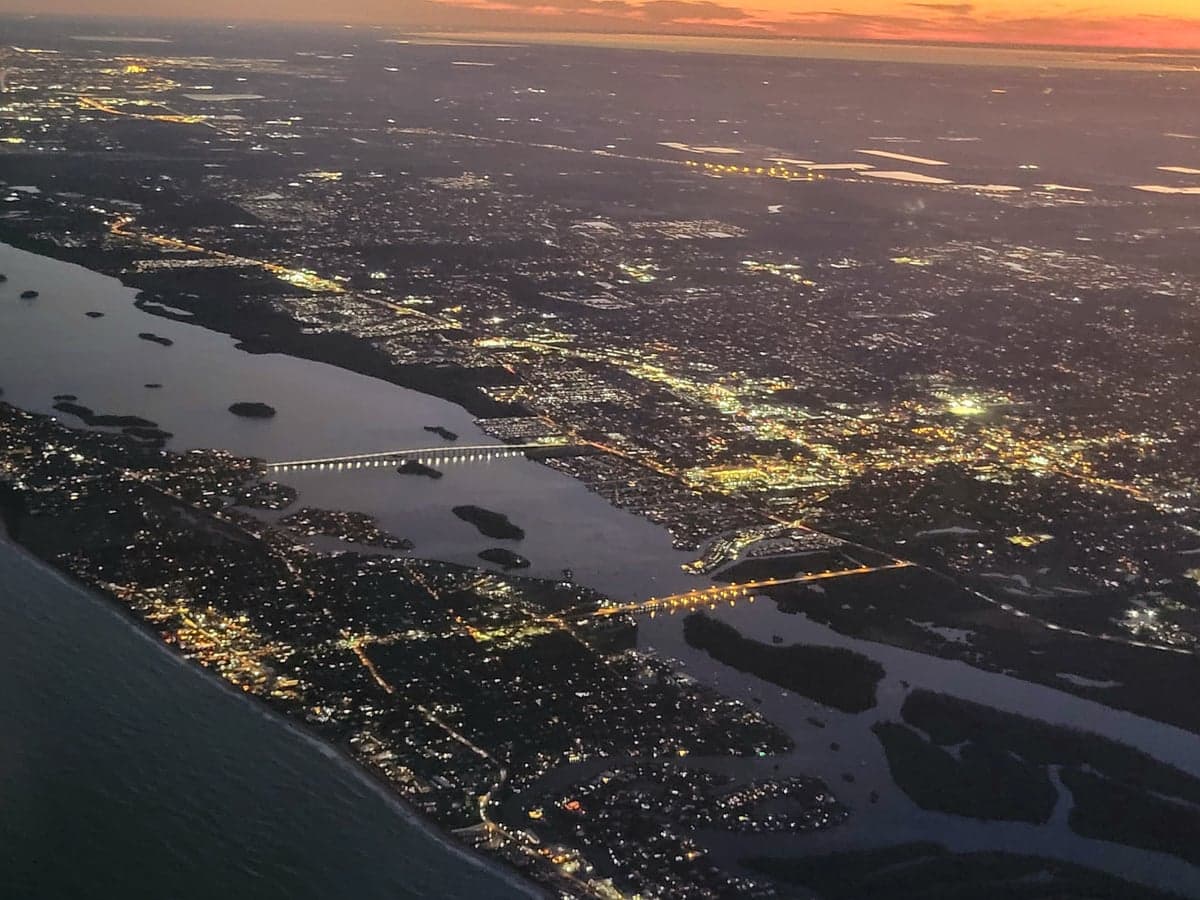
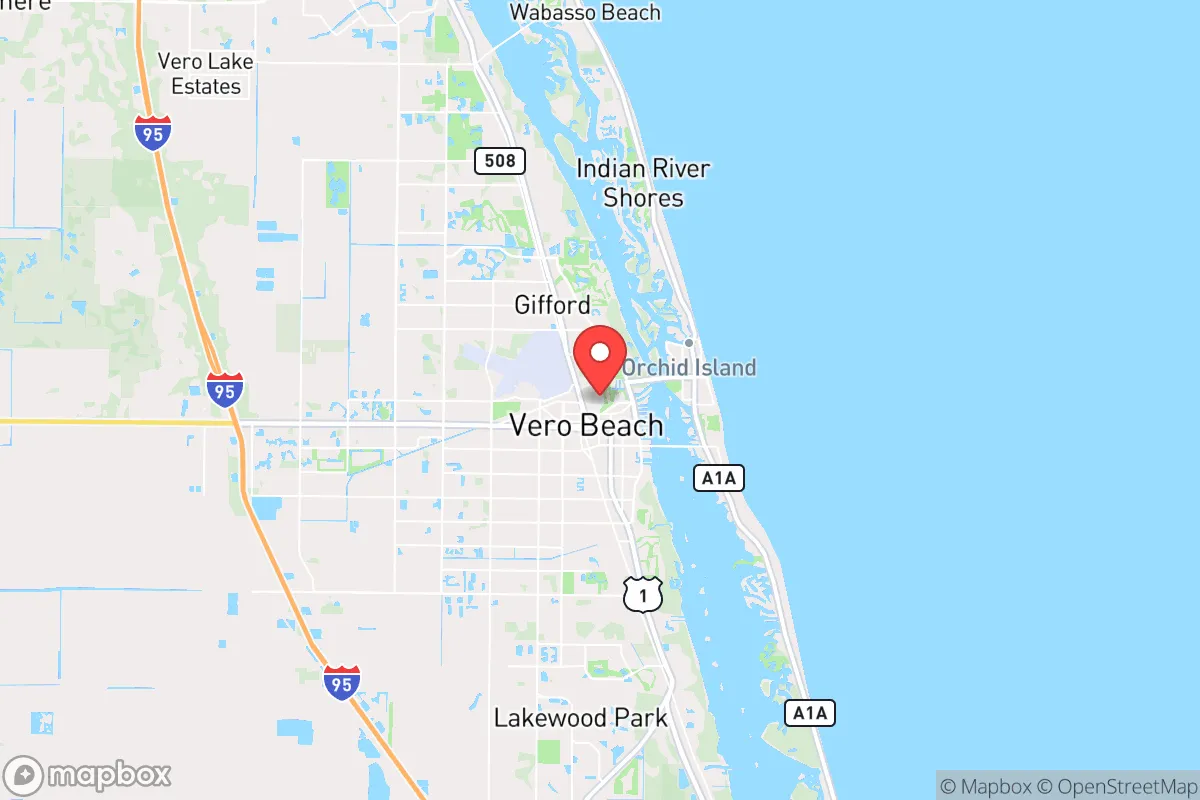
Photo: Wikipedia
Personal Sovereignty in Vero Beach, FL
Viable for self-reliance. Generally workable, though some barriers may limit total independence.
What does Personal Sovereignty tell us?
Personal Sovereignty measures your capacity for self-reliance and independence with minimal government friction. Higher scores mean fewer barriers between you and the way you want to live... but it assumes you have the space you need and good neighbors.
What does this tell us?
Personal Sovereignty measures your capacity for self-reliance and independence with minimal government friction. Higher scores mean fewer barriers between you and the way you want to live... but it assumes you have the space you need and good neighbors.
State Policy
Energy independence: Importer (12% of energy produced in-state)
Personal Liberty
Homesteading

Personal Liberty Analysis
Vero Beach offers a notably high degree of personal sovereignty, rooted in Florida’s strong preemption laws, absence of a state income tax, and a regulatory culture that generally favors individual discretion over government oversight. For single individuals and families prioritizing autonomy, the area combines the legal framework of a freedom-oriented state with the practical realities of a mid-sized Atlantic coast community where local governance tends to be less intrusive than in South Florida or major metropolitan areas. The sovereignty environment here is defined less by radical libertarian experimentation and more by a stable, predictable legal structure that allows residents to make independent decisions about their finances, self-defense, property use, and family life without excessive bureaucratic friction.
Tax burden and regulatory posture for residents and business owners
The most immediate sovereignty advantage in Vero Beach is the absence of a state personal income tax, which Florida has constitutionally prohibited since 1968. This means residents keep 100% of their earned income, wages, and investment returns — no state-level claim on individual productivity. Sales tax in Indian River County is 7%, which includes the state’s 6% base plus a 1% local discretionary surtax, a rate that is moderate compared to many coastal Florida counties. Property taxes are levied at the county and municipal level, with the effective rate in Vero Beach proper hovering around 0.85% of assessed value, slightly below the state average. Florida’s Save Our Homes amendment caps annual assessed value increases at 3% for homesteaded properties, providing long-term predictability for homeowners. Regulatory posture at the county level is generally permissive. Indian River County does not impose rent control, and there are no county-level minimum wage ordinances beyond the state’s $12.00 per hour (as of 2025). Business licensing is straightforward, with no county-level business tax for most sole proprietorships. Zoning is enforced but not aggressively restrictive in unincorporated areas; the county’s comprehensive plan allows for home-based businesses with minimal permitting, provided they do not generate excessive traffic or noise. The city of Vero Beach itself has slightly more stringent codes, particularly regarding signage and short-term rentals, but overall the regulatory environment is light-touch compared to jurisdictions like Broward or Palm Beach counties.
Self-defense rights and Florida gun law specifics in Indian River County
Florida is a shall-issue state for concealed carry permits, and Indian River County’s sheriff’s office processes applications efficiently, typically within 30-60 days. As of 2023, Florida enacted permitless carry (constitutional carry) for residents who are legally allowed to possess a firearm, meaning no permit is required to carry a concealed handgun in public. This law applies statewide, including Vero Beach, though private property owners and businesses may post signage prohibiting firearms. Open carry of handguns remains illegal except in specific circumstances (hunting, fishing, camping, or while on one’s own property), so concealed carry is the standard method for public self-defense. Stand Your Ground laws are fully in effect: there is no duty to retreat before using deadly force if a person reasonably believes it is necessary to prevent imminent death or great bodily harm. Indian River County has a generally pro-Second Amendment culture; the sheriff’s office publicly supports gun rights, and there are no local ordinances that exceed state preemption on firearm regulation. Background checks are required for all commercial firearm purchases, but private sales between individuals do not require a background check or waiting period. Magazine capacity is unrestricted, and there is no state-level assault weapons ban. For families, this means the legal environment strongly supports individual choice in self-defense tools and methods, with minimal local interference.
Self-reliance and homesteading viability: lot sizes, zoning, and off-grid feasibility
For those seeking a self-reliant lifestyle, Vero Beach offers moderate opportunities, though it is not a frontier homesteading zone. In unincorporated Indian River County, minimum lot sizes in agricultural zoning districts (A-1) are typically 5 acres, with some areas allowing 2.5-acre parcels. These properties are common west of I-95, where land prices are significantly lower than the coastal barrier island. The county allows keeping of livestock — including chickens, goats, and horses — on parcels of 1 acre or more, with specific setback requirements for structures. Beekeeping is permitted on lots of 0.5 acres or larger. Off-grid feasibility is limited by state building codes and utility requirements. Florida’s building code mandates connection to approved septic or sewer systems, and while solar panels are permitted and net metering is available through Florida Power & Light, full disconnection from the grid is not legally straightforward. Rainwater collection is allowed for non-potable uses, but potable water must come from a permitted well or municipal supply. Composting toilets are not recognized as primary sanitation under state code, so a conventional septic system is required for any habitable dwelling. The county does not have specific ordinances prohibiting tiny houses or RVs as permanent residences, but they must meet the same building code standards as stick-built homes, which effectively discourages most alternative housing. For families wanting a garden, some livestock, and reduced utility dependence, a 2-5 acre parcel west of the city is viable, but full off-grid autonomy is not practically achievable under current regulations.
Personal liberties: parental rights, medical autonomy, speech, and property rights
Florida has been at the forefront of parental rights legislation in recent years. The Parental Bill of Rights (HB 241, 2021) codifies that parents have the fundamental right to direct the upbringing, education, and health care of their minor children, including the right to opt out of school curriculum or activities. Indian River County School District has implemented policies requiring parental notification for any health or wellness services provided to students, and parents can review all instructional materials. Medical autonomy for adults is generally respected; Florida does not have a state-level vaccine mandate for adults, and there is no sales tax on over-the-counter medications or prescribed medical devices. However, Florida law requires parental consent for minors to receive most medical treatments, including vaccinations and mental health services. Speech protections are robust: Florida has a state-level equivalent to the First Amendment, and the city of Vero Beach has no local ordinances restricting expressive activity beyond standard time-place-manner regulations. Property rights are strongly protected under Florida’s Private Property Rights Protection Act, which requires government agencies to demonstrate a compelling interest before restricting land use. Indian River County does not have rent control, and there are no county-level eviction moratoria in place. For homeowners, the ability to modify, improve, or sell property is subject only to standard zoning and building codes, with no additional local overlay districts that impose aesthetic or historical restrictions outside of the city’s designated historic district.
Overall, Vero Beach ranks among the more sovereignty-friendly communities on Florida’s Atlantic coast, particularly for those who value low taxation, strong self-defense laws, and parental autonomy. The regulatory environment is lighter than in South Florida or the Tampa Bay area, but heavier than in rural North Florida or the Panhandle. The trade-off is access to coastal amenities, a stable economy, and a community that largely shares these values. For a single individual or family seeking a balance between personal freedom and the conveniences of a mid-sized coastal city, Vero Beach provides a legal and cultural framework that supports independent decision-making without requiring residents to fight constant bureaucratic battles.

* Values derived from national, state, county, city and local statistics and may differ in a specific area. Last updated: 2026-11-08T00:56:23.000Z
Narrative content on this page is AI-generated and may contain mistakes. Verify any details that matter before acting on them.
ReloMaps may earn a commission from affiliate links at no extra cost to you.

