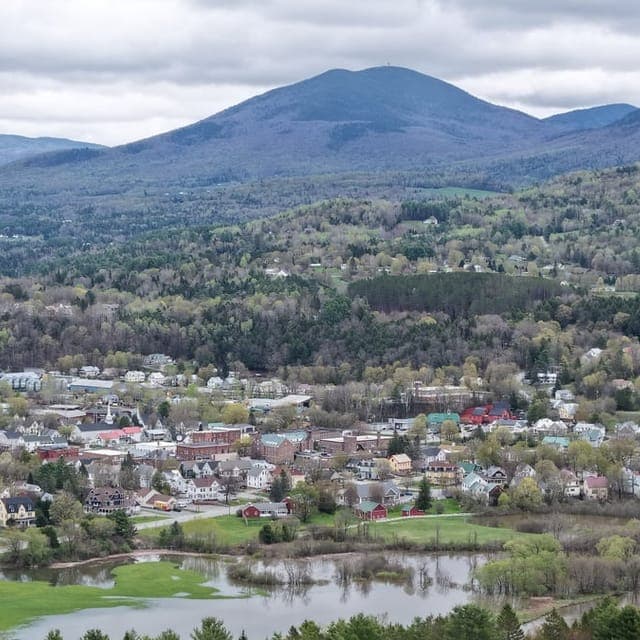
Photo: Wikipedia
Political ClimatePolitical Climate in Vermont
Political Environment in the State
Vermont is one of the most reliably Democratic states in the nation, with a Cook PVI of D+17, meaning it votes about 17 points more Democratic than the national average in presidential elections. Over the past 20 years, the state has shifted from a moderate, fiscally conservative Yankee Republican tradition to a solidly progressive stronghold, driven largely by an influx of out-of-state transplants and the hollowing out of its rural, working-class towns. While the state still elects a Republican governor (Phil Scott) due to his personal popularity and moderate stances, the legislature is overwhelmingly Democratic and has pushed an aggressively progressive agenda on taxes, energy, and social policy.
Urban vs. rural divide
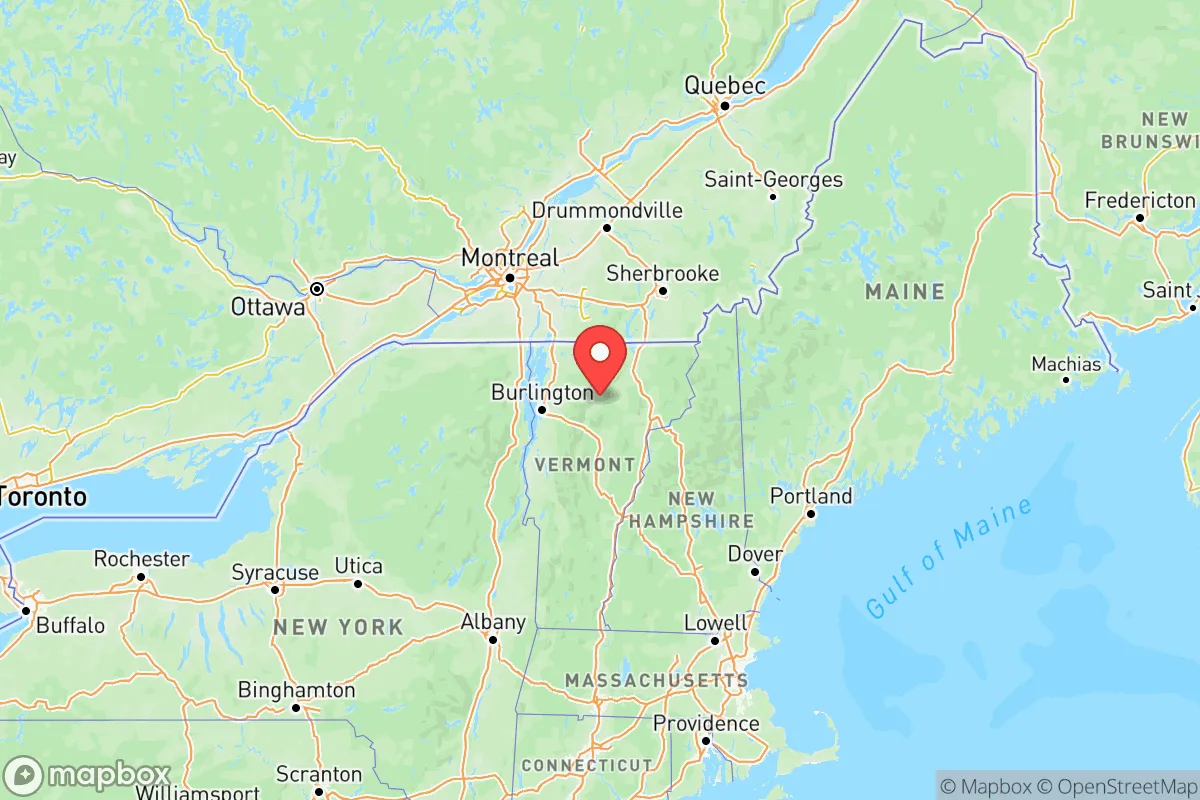
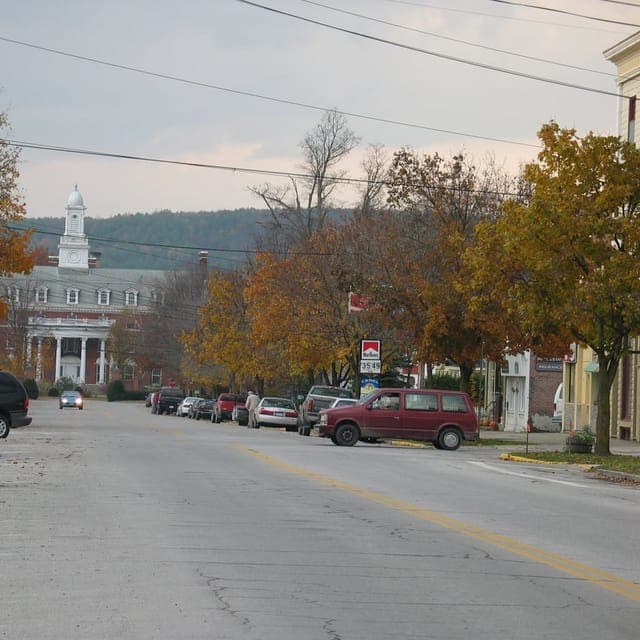
The political map of Vermont is a tale of two landscapes. The urban core of Burlington and its surrounding Chittenden County is the engine of the state’s progressive tilt, routinely delivering margins of 70-80% for Democratic candidates. This metro area, home to the University of Vermont and a growing tech and healthcare sector, is where you’ll find the highest concentration of out-of-state transplants, young professionals, and activist groups. In contrast, the rural Northeast Kingdom—counties like Essex, Orleans, and Caledonia—still lean Republican, though their populations are shrinking and aging. Towns like Newport and St. Johnsbury vote red, but their influence is diluted by the sheer population weight of Chittenden County. The southern tier, including Bennington and Rutland, is more mixed, with Rutland County flipping from red to purple in recent cycles as new residents from New York and Massachusetts move in. The divide isn’t just about party—it’s about culture. Rural Vermonters feel increasingly alienated from the state government in Montpelier, which they see as run by Burlington elites who don’t understand life off the grid.
Policy environment
Vermont’s policy environment is among the most progressive in the country, and it shows in the tax code and regulatory climate. The state has a progressive income tax with a top marginal rate of 8.75%, one of the highest in the nation, and property taxes are steep, averaging around $2,500 per $100,000 of assessed value. The state also has a statewide land use law, Act 250, which imposes strict environmental review on any development, making it notoriously difficult to build housing or expand businesses. On education, Vermont was an early adopter of universal pre-K and has some of the highest per-pupil spending in the country, but school choice is limited—most students are assigned to district schools, and charter schools are virtually nonexistent. Healthcare is dominated by the state’s single-payer-like system, Green Mountain Care, which has driven up costs and limited provider options. On election law, Vermont has same-day voter registration, no-excuse absentee voting, and automatic voter registration, making it very easy to vote—but critics argue this opens the door to fraud, though no major scandals have emerged. The state also has a strict gun control regime, including a 2018 law that banned magazines over 10 rounds, required background checks on private sales, and raised the purchase age to 21. For a conservative-leaning reader, the policy environment is a red flag: high taxes, heavy regulation, and limited personal choice in education and healthcare.
Trajectory & freedom
Vermont is becoming less free by almost any measure, especially for those who value personal liberty in the traditional sense. The most significant recent contraction came with the passage of Act 76 in 2023, which created a statewide payroll tax to fund paid family and medical leave, effectively forcing all workers and employers into a government-run program. This was followed by Act 47, which imposed a new tax on short-term rentals like Airbnb, and Act 59, which mandated that all new residential construction meet net-zero energy standards by 2030—a massive regulatory burden on homeowners and builders. On gun rights, the 2018 law (Act 94) was a major blow, and efforts to repeal or weaken it have failed. On parental rights, Vermont passed Act 1 in 2022, which requires schools to affirm a student’s chosen gender identity without notifying parents, a flashpoint for many conservative families. The state also legalized assisted suicide in 2013 and has some of the most permissive abortion laws in the country, including a 2019 law that removed all restrictions. For a conservative, the trajectory is clear: the state government is expanding its reach into every aspect of life, from how you heat your home to how you raise your kids. The only counterbalance is Governor Scott, who has vetoed some of the most extreme bills, but the legislature routinely overrides him.
Civil unrest & political movements
Vermont is not known for violent civil unrest, but it has a long history of organized activism, mostly on the left. The Burlington area has been a hub for climate protests, with groups like Extinction Rebellion and 350Vermont staging regular demonstrations, including a 2023 blockade of the Vermont Yankee site. The state also has a strong sanctuary movement—Burlington and Montpelier have declared themselves sanctuary cities, and Vermont was the first state to pass a law (Act 57 in 2017) limiting local cooperation with federal immigration enforcement. On the right, the Rutland and Newport areas have seen the rise of local Second Amendment groups and a small but vocal “Take Back Vermont” movement, which resurfaces periodically over issues like gun control and education. There have been no major election integrity controversies in Vermont, but the state’s universal mail-in voting system, adopted permanently in 2020, has drawn criticism from conservatives who worry about ballot security. A notable flashpoint was the 2023 debate over Act 1, which led to protests at the Statehouse by parents’ rights groups, including the Vermont chapter of Moms for Liberty. For a new resident, the political climate is less about street protests and more about a constant, low-grade cultural tension between the progressive urban core and the rural, libertarian-leaning periphery.
Projection
Over the next 5-10 years, Vermont is likely to become more progressive, not less. The demographic trends are clear: the state’s population is aging and declining, but the people moving in are overwhelmingly from blue states like New York, Massachusetts, and Connecticut, and they bring their politics with them. The rural towns that vote Republican are losing population, while Chittenden County and a few other growth areas (like Stowe and Manchester) are gaining. This will likely lead to even more aggressive policy moves—think a state-level wealth tax, a public option for health insurance, and stricter environmental mandates. The only wild card is the housing crisis: if it becomes impossible for young families to afford a home, the in-migration could slow, but that would also hurt the rural economy. For a conservative moving in now, the expectation should be that the state will continue to drift left, with the legislature overriding Governor Scott’s vetoes more frequently. The best-case scenario is that the rural-urban divide becomes so stark that a new political coalition emerges, but that’s a long shot.
For a new resident, the bottom line is this: Vermont offers stunning natural beauty and a slower pace of life, but you will pay for it with high taxes, heavy regulation, and a government that is increasingly intrusive into your personal choices. If you value low taxes, school choice, gun rights, and parental autonomy, this is not a friendly state. If you can afford the cost and are willing to live in a rural area where you can keep to yourself, you might find a niche—but don’t expect the political climate to improve. It’s a beautiful place to visit, but a tough place to live if you lean conservative.

Most Conservative Cities in Vermont

Most Liberal Cities in Vermont
* Values derived from national, state, county, city and local statistics and may differ in a specific area. Last updated: 2026-04-19T01:48:17.000Z
Narrative content on this page is AI-generated and may contain mistakes. Verify any details that matter before acting on them.
ReloMaps may earn a commission from affiliate links at no extra cost to you.

