Photo: Wikipedia
Quality of Life in Grand Isle County
A livable area that tracks near national norms for affordability, walkability, and neighborhood health.
What does Quality of Life tell us?
Quality of Life measures an area by evaluating factors like cost of living, nearby amenities, country club access, airport proximity, socioeconomic signals and neighborhood character. For large states, this is a general average — quality of life can vary dramatically between metro areas, suburbs, and rural communities within the same state.
What does this tell us?
Quality of Life measures an area by evaluating factors like cost of living, nearby amenities, country club access, airport proximity, socioeconomic signals and neighborhood character. For large states, this is a general average — quality of life can vary dramatically between metro areas, suburbs, and rural communities within the same state.
Cost of Living
26% above national average
87%
The Real Cost of Living in Grand Isle County for 2026
| Tier | Individual | Family (4) |
|---|---|---|
| Survival | $23k | $43k |
| Comfortable | $71k | $104k |
| Luxury | $164k+ | $254k+ |
| Elite (Top 5%) | $200k+ | $311k+ |
Quality-of-Life Analysis
Grand Isle County, Vermont, offers a spectrum of quality-of-life options that range from bustling lakeside villages to deeply rural agricultural hamlets, drawing a mix of seasonal tourists, remote workers, and year-round families seeking both recreation and solitude. The county’s character is defined by its Lake Champlain shoreline and working farms, with the largest population center, the town of Grand Isle, acting as a hub for services while smaller communities like South Hero and North Hero cater to those prioritizing lake access over commercial amenities. The county’s cost of living index of 126 (100 = US average) and median home value of $363,500 place it above the Vermont state median, reflecting premium property values tied directly to waterfront and scenic vistas.
Largest town(s) & population centers
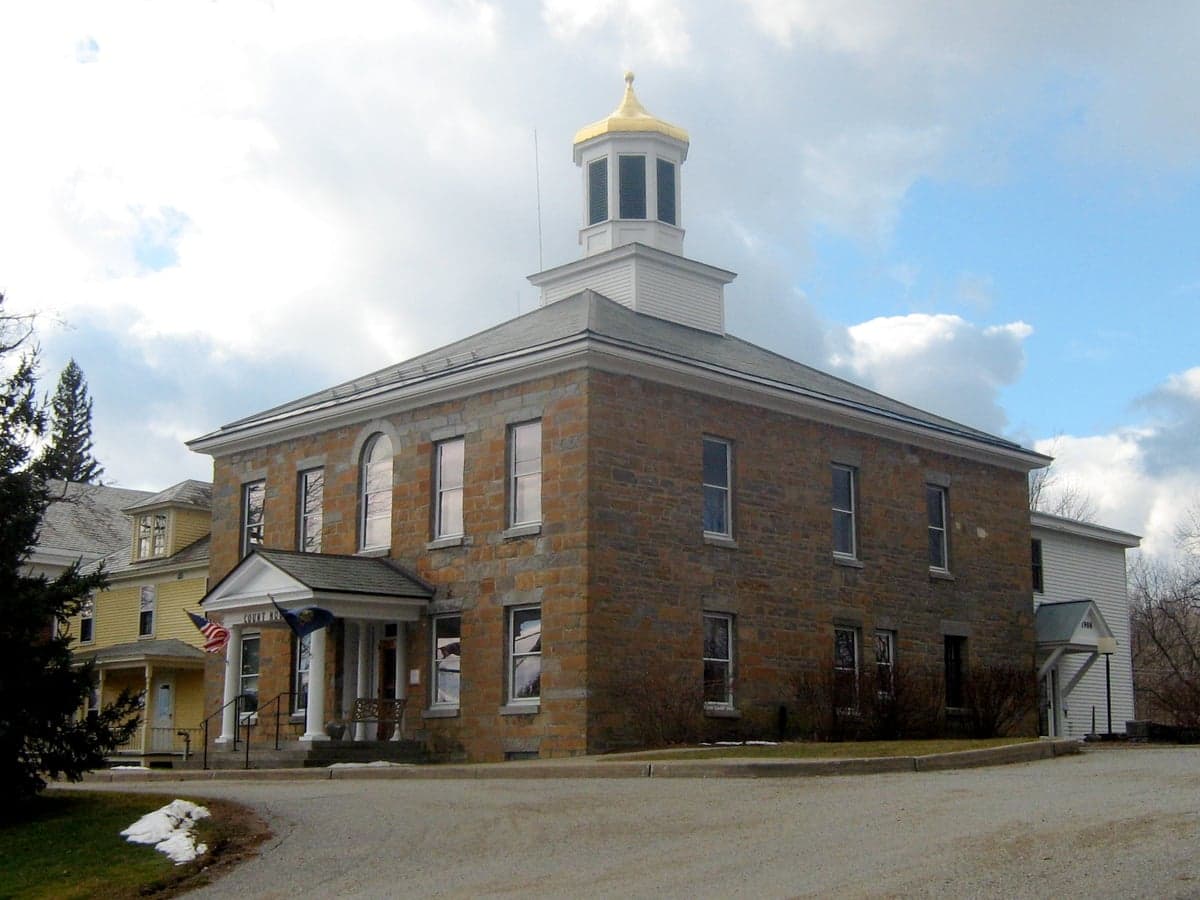
The town of Grand Isle is the county’s de facto population and commercial center, home to the county courthouse, the Grand Isle Relief Center, and a cluster of retail options including the Grand Isle Market. Daily life here revolves around a mix of full-time residents and seasonal second-home owners, with the Grand Isle Ferry Landing providing direct access to New York’s Essex County, making it a practical base for commuters with an average commute of 32.9 minutes. The median rent of $1,436 in this area is slightly above the state average, driven by limited rental inventory near the water. The town of South Hero, while smaller, functions as a secondary hub with the South Hero Community Library, the Hero’s Welcome general store, and popular eateries like The Kitchen at the Island, drawing a younger cohort of remote workers and families who value the walkable downtown and proximity to the South Hero State Park beaches.
Smaller towns & rural pockets
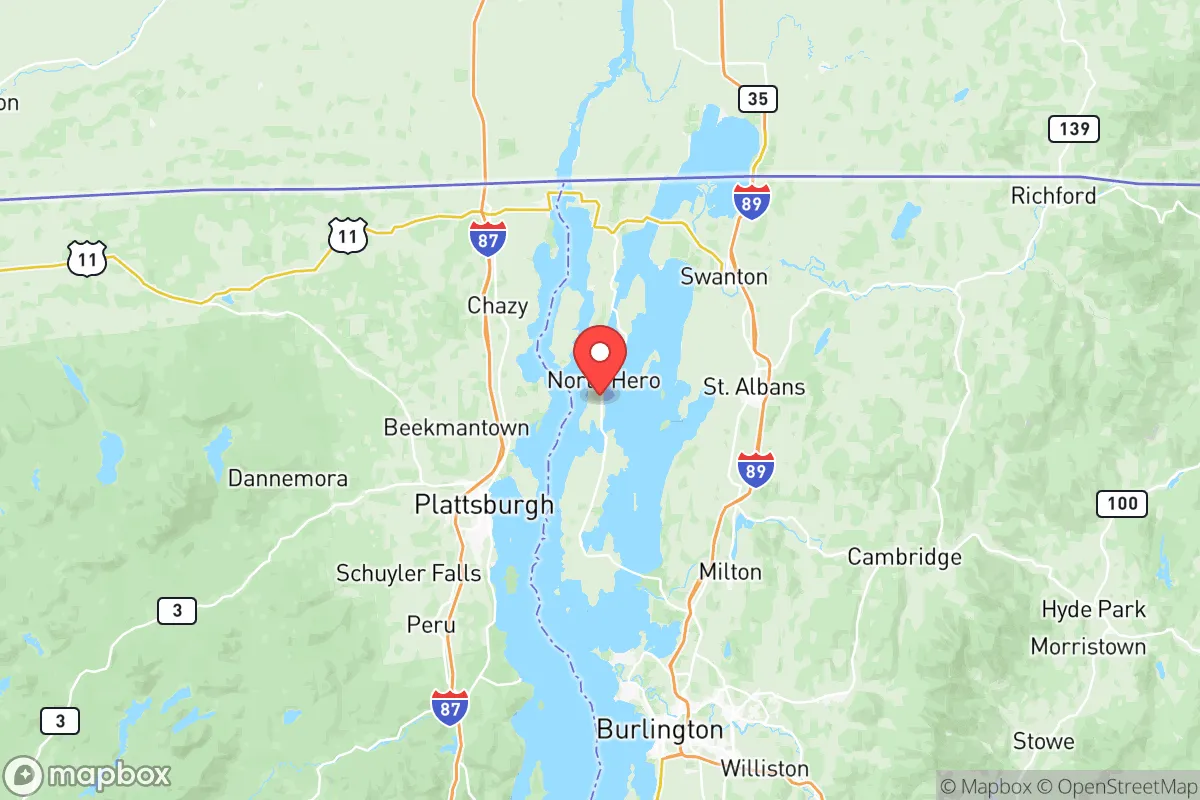
The unincorporated village of North Hero is the county’s most sparsely populated settlement, characterized by expansive farms and the North Hero State Park. Life here is defined by quiet roads, long driveways, and a reliance on shopping trips to Alburgh or Grand Isle for groceries. The community of Alburgh (sometimes spelled Alburg) occupies the county’s northern tip, a peninsula connected to New York and Canada, where daily life feels distinctly more remote, with no centralized downtown and housing dispersed along farm lanes and lakefronts. Smaller pockets like Keeler Bay (in South Hero) and Pearl (in Grand Isle) consist of seasonal camps and year-round homes clustered around narrow inlets, offering the most isolated lifestyle within the county, often lacking sidewalks and streetlights entirely.
Cost & lifestyle range
The cost of living in Grand Isle County varies dramatically by location and proximity to water. The highest property values are found in South Hero’s Lake Shore Drive corridor and Grand Isle’s seafront parcels, where a median home value of $363,500 can buy a modest cottage but where lakefront lots often exceed $500,000. At the lower end of the spectrum, properties in Alburgh’s interior farmland and the rural backroads of North Hero can dip into the $250,000–$300,000 range for fixer-uppers or older homes without direct water views. Rents are tight countywide; the median of $1,436 often applies to two-bedroom units in Grand Isle village, while in Alburgh and North Hero, rentals are scarce and typically tied to farmworker housing or short-term seasonal lets. Amenities follow a gradient: Grand Isle and South Hero offer year-round grocery stores, a pharmacy, and multiple restaurants, while North Hero and Alburgh have no supermarkets, forcing residents into a 15- to 25-minute drive for basic needs. The commute average of 32.9 minutes is heavily influenced by residents working in Burlington (45 minutes via ferry or Route 7) or Plattsburgh, New York (35 minutes via the ferry), making car ownership essential everywhere except the most walkable parts of South Hero village.
The type of person who thrives in Grand Isle County is someone who values active outdoor recreation—boating, fishing, and biking on the Island Line Trail—and is willing to trade immediate urban conveniences for a slower pace and strong community ties. Families and retirees seeking a second home find the best fit in South Hero or Grand Isle, while those looking for lower entry costs, total seclusion, or agricultural land are drawn to North Hero and Alburgh. The county’s mix of seasonal tourism and quiet rural life means that self-sufficiency and a tolerance for limited retail options are prerequisites for year-round living, making it ideal for remote workers, entrepreneurs, and those who see the lake as the centerpiece of their daily existence.

Crime in Grand Isle County
Generally safer than 71% of comparable U.S. locations.
Violent CrimeViolent Crime Analysis
Property CrimeProperty Crime Analysis
Crime Analysis
Grand Isle County, Vermont, is one of the safest rural areas in New England, but its crime landscape differs sharply from national averages. With a population of roughly 7,200, the county recorded a violent crime rate of 213.8 per 100,000 residents — slightly below the national average of 380 per 100,000 in 2024, but elevated compared to Vermont’s state rate of 173 per 100,000. Property crime, at 1,438.3 per 100,000, sits well above state norms (1,900 per 100,000 nationally but roughly 1,100 per 100,000 in Vermont), suggesting theft and vandalism are the primary local concerns. The county’s isolation — a chain of islands in Lake Champlain accessible only via the U.S. 2 causeway and one bridge — limits most major crime but creates unique vulnerabilities for seasonal property crimes.
Crime in context
When compared directly to Vermont’s other 13 counties, Grand Isle stands out for its proportionally high property crime rate. For context, nearby Franklin County, with its larger population centers like St. Albans, reports a violent crime rate near 150 per 100,000 and a property crime rate around 1,200 — lower in both categories. Grand Isle’s violent crime, while below the U.S. average, spikes in specific towns: South Hero and North Hero, the two main island communities, account for most incidents, particularly alcohol-fueled assaults during the summer tourist season. By contrast, the hamlet of Grand Isle town (population ~500) and Alburgh (population ~2,000) on the northern mainland tip see far fewer violent offenses, with rates closer to 100 per 100,000. The county’s property crime is concentrated in unoccupied vacation rentals and lakefront camps — burglaries of seasonal homes spike between October and April, when owners are absent. The Champlain Islands are served by the Vermont State Police Troop C barracks in Williston, a 30-minute drive, which means response times can exceed 20 minutes in remote areas.
What residents experience
Daily life for most Grand Isle residents involves low worry about street crime or personal violence. Neighbors know each other, and the islands’ small scale — only 7,000 year-round residents scattered across four towns — means most property crimes are crimes of opportunity, not organized activity. However, the county’s judicial structure introduces a concern familiar to many rural Vermonters: cases are handled by the Vermont Superior Court in Burlington (Chittenden County), the state’s most liberal jurisdiction. Chittenden County’s State’s Attorney, Sarah George, and the Burlington-area judiciary are consistently rated among the most progressive in New England, prioritizing diversion programs, reduced bail, and restorative justice for property offenders. For Grand Isle residents, this means a burglar caught stealing from a South Hero camp may face pre-trial release without cash bail and a plea deal that avoids jail time, regardless of victim impact. The result is that repeat property offenders from the Burlington metro area — less than 30 minutes by highway — occasionally cycle through the islands because they know the deterrent effect is weak. Residents in Isle La Motte (population 470), the most remote and sparsely policed town, have told local media they feel especially exposed, as a stolen boat or ATV can be quickly moved across the Canadian border (a 15-minute drive from Alburgh) before authorities respond.
Neighborhood-level variation is moderate but consistent. The developed lakeside routes on U.S. 2 through South Hero see the highest property crime rates, with vacation homes broken into at nearly twice the rate of year-round residences. Inland areas like the farms and forests of North Hero’s central peninsula see virtually no violent crime but report occasional ATV theft and trespassing. The safest pockets are the year-round owner-occupied homes in Grand Isle Village and the waterfront homesteads of Isle La Motte, where crime rates mimic the state’s lowest (around 100 per 100,000 property crime). For anyone considering a move, the key trade-off is rural peace vs. limited policing and a justice system far away, both geographically and ideologically, from the islands’ conservative-leaning community.
* Values derived from national, state, county, city and local statistics and may differ in a specific area. Last updated: 2026-06-22T06:09:59.000Z
Narrative content on this page is AI-generated and may contain mistakes. Verify any details that matter before acting on them.
ReloMaps may earn a commission from affiliate links at no extra cost to you.

