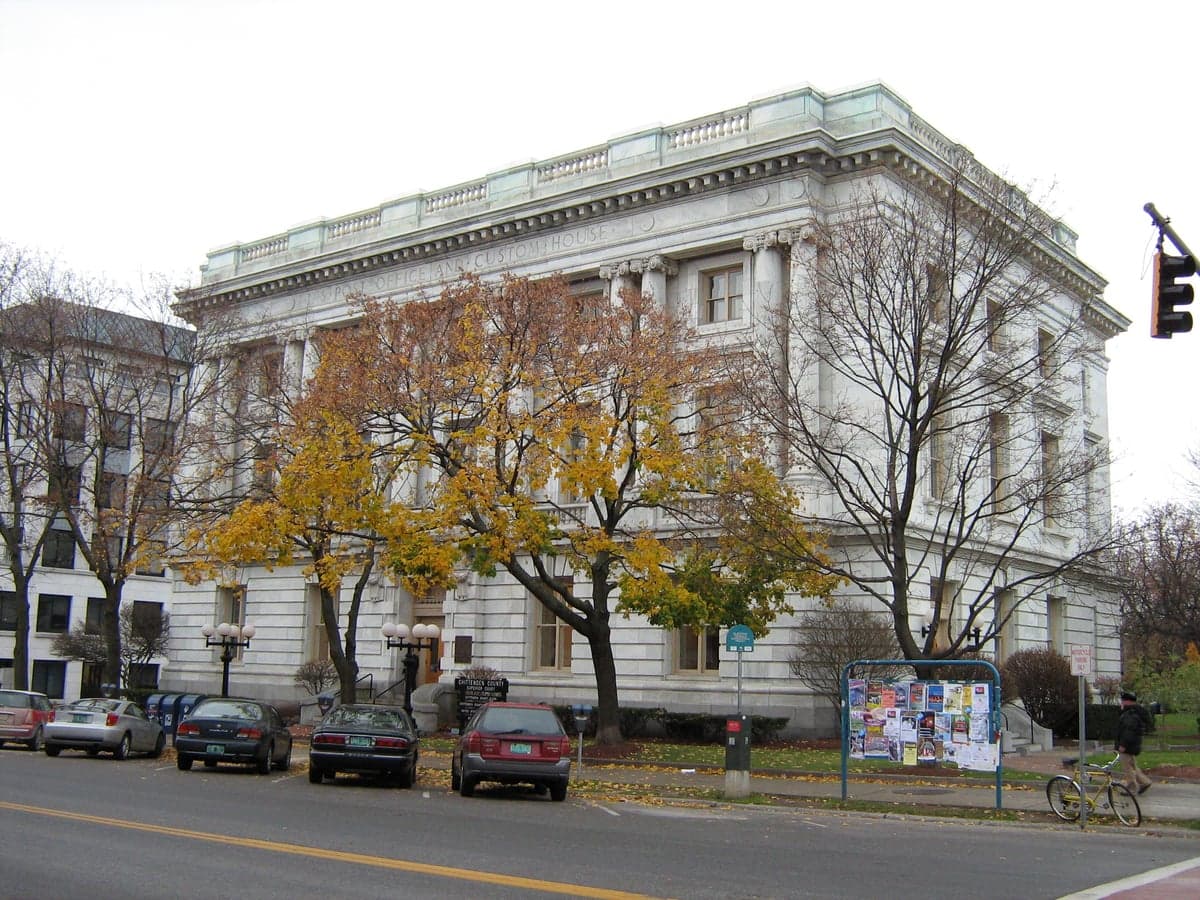
Photo: Wikipedia
Political ClimatePolitical Climate in Chittenden County
Showing state-level results — no local-only data available.
Local Political AnalysisPolitical Analysis of Chittenden County
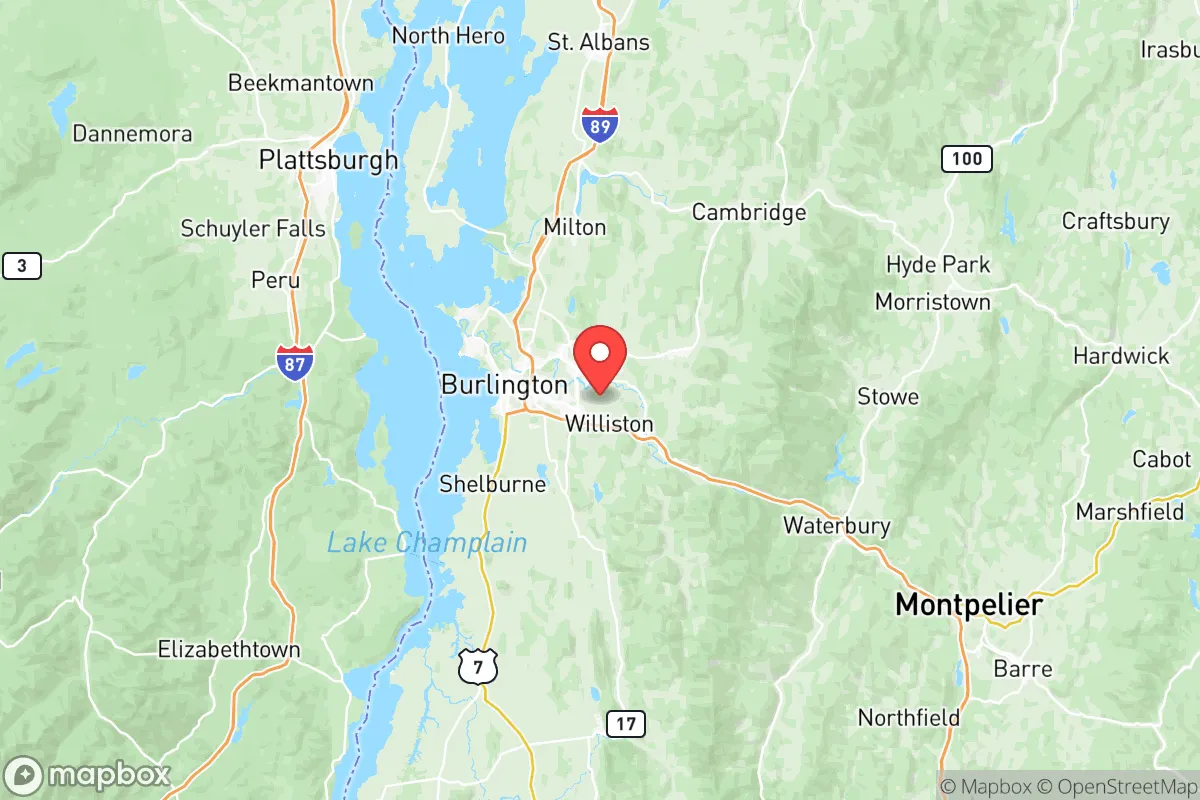
Chittenden County is the deep blue heart of Vermont, and its politics are as reliably progressive as the state's famously independent streak. With a Cook Partisan Voting Index (PVI) of D+17, the county is a solid Democratic stronghold, mirroring the state's own D+17 rating. This isn't a recent shift; it's a long-standing reality that has only deepened over the past two decades, driven by the growth of Burlington and its surrounding suburbs. The county's political trajectory is one of steady, leftward movement, with the most dramatic changes visible in formerly more moderate towns like Williston and South Burlington, which have become reliably blue as the region's economy and demographics have evolved.
How it compares
While Chittenden County and Vermont share the same PVI score, the county's political landscape is far more uniform than the state's. Vermont's D+17 rating is an average that masks a sharp urban-rural divide. For example, while Chittenden County is overwhelmingly Democratic, rural counties like Essex and Orleans lean Republican, with some towns voting +30 or more for GOP candidates. Within Chittenden County itself, the variation is more about shades of blue. Burlington is the epicenter of progressive politics, with a strong presence of Vermont Progressive Party members on the city council. South Burlington, Williston, and Winooski are solidly Democratic, while towns like Hinesburg and Richmond lean left but with a more moderate, independent streak. The only real outlier is the town of Milton, which has a more conservative bent, often voting Republican in local and state races, though it still falls within the county's overall blue hue. The swing precincts are few and far between, but you'll find them in the more rural fringes of the county, like parts of Jericho and Underhill, where independent voters can tip a local race.
What this means for residents
For a liberal resident, Chittenden County feels like a natural fit. You'll find strong support for environmental regulations, social justice initiatives, and public investment in education and transit. The local government in Burlington, for instance, has been a leader in housing-first policies and climate action plans. For a conservative resident, the reality is more about navigating a minority position. You won't find many Republican campaign signs, and your views on taxes or gun control might be in the minority at a town meeting. However, the county's political culture is generally respectful, and many conservatives find their voice in local business associations or on issues like property taxes and school budgets, where fiscal conservatism can still resonate. The practical impact is that state and local policies tend to be progressive, from a $15+ minimum wage to strict land-use regulations, which can be a source of frustration for those who prefer a smaller government footprint.
Culturally, Chittenden County's politics are deeply intertwined with its identity as a college town and a hub for the "creative class." The University of Vermont and Champlain College in Burlington, along with the tech and healthcare sectors, attract a highly educated, socially liberal population. This creates a distinct policy focus on issues like renewable energy, local food systems, and affordable housing, which are less prominent in other parts of Vermont. The county's politics are also notably more secular and less focused on the "live and let live" libertarian streak found in some rural parts of the state. In practice, this means a Chittenden County resident is more likely to encounter a city ordinance banning single-use plastics than a debate over gun rights at a town hall. The long-term trajectory suggests this progressive consensus will only strengthen, as the county continues to attract new residents who align with its values, while the more conservative rural towns in the state see slower growth or population decline.

State Political ClimatePolitical Climate in Vermont
State Political AnalysisPolitical Environment in the State
Vermont is one of the most reliably Democratic states in the country, with a Cook Partisan Voting Index of D+17, meaning it votes about 17 points more Democratic than the national average. The dominant coalition is a blend of progressive Burlington-area voters, college-town liberals, and fiscally moderate but socially liberal independents, though the state has a strong libertarian streak on issues like personal privacy and small-scale agriculture. Over the last 20 years, the state has shifted leftward in presidential races — from a 9-point Democratic margin in 2004 to a 35-point margin in 2020 — driven by the exodus of moderate Republicans and the in-migration of out-of-state remote workers, many from the Northeast corridor.
Urban vs. rural divide
The political map is a classic urban-rural split, but with a twist. Burlington and its surrounding Chittenden County are the Democratic engine, delivering margins of 70-80% in recent elections. The city itself is home to the University of Vermont, a large public sector workforce, and a dense concentration of progressive activists. Montpelier, the state capital, and Middlebury (home to Middlebury College) are similarly deep blue, driven by education and government employment. In contrast, the Northeast Kingdom — counties like Essex, Orleans, and Caledonia — are the most conservative parts of the state, often voting Republican by 10-20 points in state races. Rutland and Bennington counties are more mixed, with working-class towns that have trended toward the GOP in recent cycles, especially in legislative races. The rural-urban divide is stark: a voter in St. Johnsbury lives in a very different political world than one in Burlington, even though they're only 90 minutes apart.
Policy environment
Vermont's policy environment is among the most progressive in the nation, but with some notable exceptions. The state has a progressive income tax with rates up to 8.75%, and property taxes are high — among the top five in the country — to fund a robust K-12 education system. There is no sales tax on most goods, which is a relief for consumers but shifts the burden to property and income. The regulatory posture is generally pro-environment and pro-labor: Vermont has a $15.69 minimum wage (indexed to inflation), strong renewable energy mandates, and some of the strictest land-use regulations in the Northeast. On healthcare, the state operates a single-payer-like system through Green Mountain Care, though it's not a true single-payer model. Election laws are very accessible: universal mail-in ballots, same-day voter registration, and no voter ID requirement. Gun laws are among the strictest in the country, including a 2018 law that raised the purchase age to 21, banned magazines over 10 rounds, and expanded background checks for private sales.
Recent policy direction
The last five years have seen a sharp acceleration of progressive policy. In 2023, the legislature passed a paid family and medical leave program funded by a payroll tax, set to begin in 2025. In 2024, it passed a law requiring that 100% of electricity come from renewable sources by 2035. On gun policy, a 2024 law banned carrying firearms in hospitals, schools, and state buildings, and a 2023 law created a "red flag" extreme risk protection order system. On education, the state passed a universal school meals program in 2022 and has moved toward a "community schools" model that expands wraparound services. On parental rights, Vermont was one of the first states to pass a law protecting access to gender-affirming care for minors, and it has a strong shield law for providers. On privacy, the state passed a comprehensive data privacy law in 2024, giving residents the right to opt out of data collection. On property rights, Act 250 — the state's landmark land-use law — was updated in 2024 to streamline permitting for housing development in designated growth areas, a nod to the housing crisis. On voting, the state expanded automatic voter registration in 2023. For a conservative relocator, the key takeaway is that the state's trajectory is firmly leftward on nearly every dimension, with no sign of reversal.
Civil unrest & political movements
Vermont is not known for large-scale civil unrest, but it has a history of intense, localized activism. The Burlington area saw significant Black Lives Matter protests in 2020, with some property damage and clashes with police. The state has a strong environmental movement, with groups like the Vermont Public Interest Research Group (VPIRG) and 350Vermont organizing regular protests against fossil fuel infrastructure. On the right, the Vermont Republican Party is small but active, with a focus on gun rights and school choice. The "Green Mountain Patriots" group has organized rallies at the Statehouse, but they are a fringe presence. Immigration politics are relatively quiet — Vermont has a sanctuary state law (2018) that limits cooperation with federal immigration enforcement, but the state's small immigrant population means it's not a flashpoint. Election integrity controversies have been minimal, as the state's mail-in voting system has broad bipartisan support. There was a brief secessionist movement in the 2000s (the "Second Vermont Republic"), but it has faded. The most visible flashpoint for a new resident would be the tension between long-time rural residents and new arrivals from out of state, often expressed in local zoning and school board meetings.
Projection
Over the next 5-10 years, Vermont's political trajectory is likely to continue leftward, but with some moderating forces. The in-migration of remote workers — many from New York, Massachusetts, and Connecticut — is accelerating the state's demographic shift, as these newcomers tend to be more liberal than the existing population. However, the state's housing crisis is a wild card: if affordability worsens, it could slow in-migration and even trigger an outflow of younger residents, which would shift the electorate toward older, more conservative homeowners. The Republican Party in Vermont is in a weak position, but it could gain ground if the state's tax burden continues to rise and if the education system faces a crisis of funding or quality. The most likely scenario is that Vermont remains a solidly Democratic state, with the legislature continuing to pass progressive legislation on climate, healthcare, and social policy. A conservative moving in now should expect to live in a state where their political views are in the minority, but where local politics in rural towns can still be competitive. The state's small size and town-meeting tradition mean that individual voices can still have an outsized impact, even if the statewide direction is clear.
For a new resident, the bottom line is this: Vermont is a state where the political climate is deeply progressive, and that shapes everything from taxes to gun laws to school curriculum. If you're a conservative, you'll be in the minority, but you'll find like-minded communities in the Northeast Kingdom and parts of Rutland County. If you're a liberal, you'll find a state that largely aligns with your values, but be prepared for high costs and a slow pace of change. The state's political culture is one of intense civic engagement — town meetings, school board races, and local referendums matter more here than in most places. Your vote will count, but it will count in a state that is firmly blue and getting bluer.
* Values derived from national, state, county, city and local statistics and may differ in a specific area. Last updated: 2026-07-18T17:10:11.000Z
Narrative content on this page is AI-generated and may contain mistakes. Verify any details that matter before acting on them.
ReloMaps may earn a commission from affiliate links at no extra cost to you.

