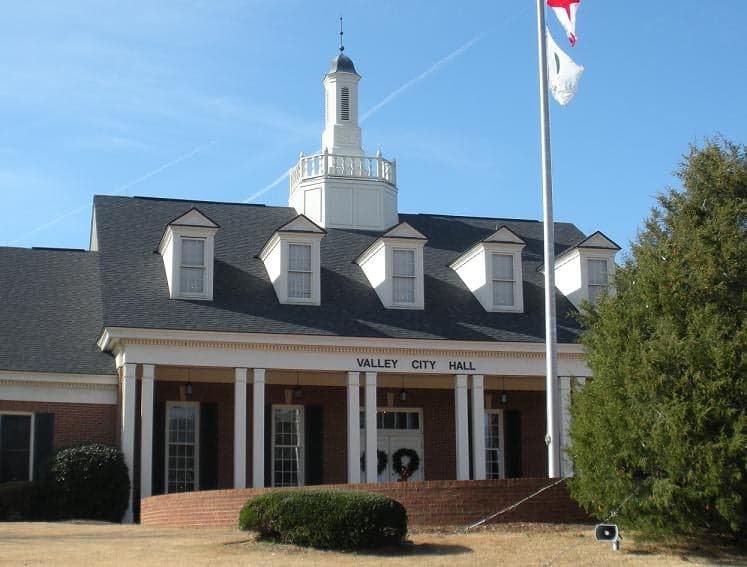
Photo: Wikipedia
Political ClimatePolitical Climate in Valley, AL
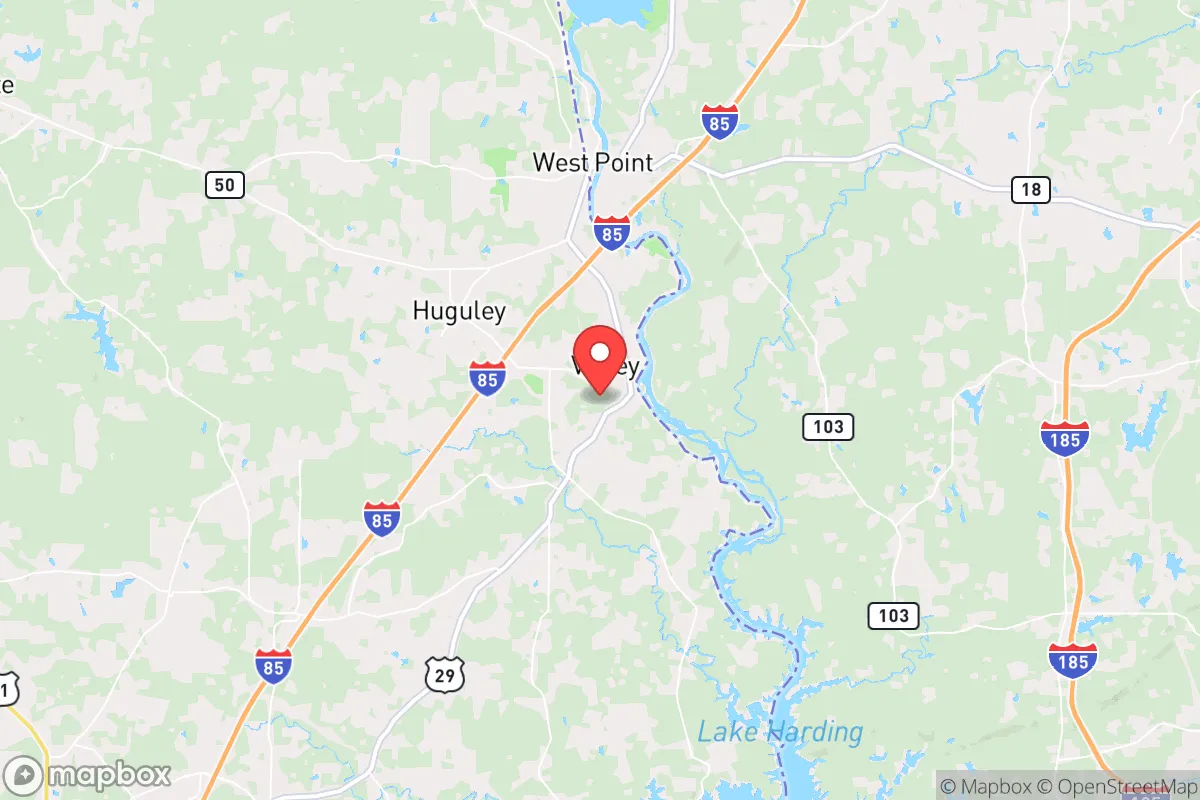
District shown is the primary district for this city’s centroid. Cities may span multiple districts.
Local Political AnalysisPolitical Analysis of Valley, AL
Valley, Alabama, is about as reliably Republican as it gets in this part of the state, with a Cook Partisan Voting Index (PVI) of R+23 — meaning the district votes 23 points more Republican than the national average. That’s not a fluke of one election; it’s a long-standing trend that’s only gotten more entrenched over the past decade. The area’s political identity is rooted in a mix of rural conservatism, strong evangelical church presence, and a manufacturing-based economy that’s historically leaned union but now votes solidly red. If you’re looking for a swing district, this isn’t it — Valley’s trajectory has been steadily rightward since the early 2000s, and there’s no sign of that slowing down.
How it compares
Compared to the rest of Alabama, Valley is actually a bit more conservative than the state average. While Alabama as a whole doesn’t have a single Cook PVI number (it’s a state, not a district), statewide elections consistently favor Republicans by margins of 20-30 points — think Trump winning by 25 points in 2020. Valley’s R+23 PVI puts it right in that ballpark, but it’s worth noting that the city sits in Chambers County, which is even more conservative than some of the state’s suburban pockets. For contrast, drive 30 minutes north to Opelika or Auburn, and you’ll find a more moderate Republican vibe — still red, but with a younger, college-educated population that can swing closer to R+15. Head 45 minutes south to Phenix City, and you’re in a similar R+20 range, but with a stronger Democratic minority vote. Valley, by comparison, is more uniformly conservative — there’s no major university or military base to dilute the rural base.
What this means for residents
For conservative residents, Valley’s political climate is a comfortable fit. Local elections are effectively decided in the Republican primary, and the city council and county commission are reliably GOP. You’ll find strong support for Second Amendment rights, low taxes, and a general skepticism of federal overreach. For liberal residents, it’s a different story. While you won’t face open hostility, you’ll likely feel politically isolated — there’s no active Democratic Party presence in the area, and progressive candidates rarely even file to run. Socially, that means things like Pride events or public discussions of racial equity are rare and often met with quiet resistance. That said, Valley is a small, tight-knit community where people generally get along day-to-day regardless of politics — it’s not the kind of place where you’ll see yard sign wars. The real friction tends to surface around school board decisions and zoning debates, where conservative values often shape policy on things like library content and development approvals.
Culturally, Valley stands out from nearby towns like Lanett or LaFayette, which have larger Black populations and a more visible Democratic voting bloc. In Valley, the political culture is more homogeneous — you’ll hear more talk about hunting, church potlucks, and local factory jobs than about state-level policy debates. The area’s strong manufacturing base (think WestRock and other industrial employers) means there’s a pragmatic streak: residents may vote Republican, but they also support infrastructure spending and job training programs that benefit the working class. Looking ahead, I’d expect Valley to stay R+20 or higher for the foreseeable future. The only wildcard is if younger residents, who are slightly more moderate on social issues, start to shift the needle — but that’s a slow burn, not a sudden flip. For now, if you’re moving here, you’re moving into a place where conservative values are the baseline, and everything else is just background noise.

State Political ClimatePolitical Climate in Alabama
State Political AnalysisPolitical Environment in the State
Alabama is a deeply conservative state, with Republicans holding every statewide elected office and supermajorities in both legislative chambers, a dynamic that has solidified over the past two decades. The state has voted for the Republican presidential candidate by margins of 25 points or more in every election since 2008, and the shift from a reliably Democratic "Solid South" state to a GOP stronghold was largely complete by the early 2000s. For a relocator, this means state policy consistently reflects conservative priorities on taxes, gun rights, and social issues, though the political reality is more nuanced than a simple red-state label suggests.
Urban vs. rural divide
The political map of Alabama is a classic study in urban-rural polarization, with a few key metros driving the state's minority Democratic vote. Jefferson County (Birmingham) and Montgomery County are the two largest Democratic strongholds, consistently delivering 60-70% of their votes to Democratic candidates, powered by large African American populations and younger, more diverse urban cores. Mobile County and Madison County (Huntsville) are more competitive but lean Republican; Huntsville's rapid growth as a tech and aerospace hub has brought in a mix of out-of-state professionals who tend to be moderate to conservative, but not as uniformly Republican as the rural counties. The real engine of GOP dominance is the vast rural and exurban expanse: counties like DeKalb, Marshall, and Cullman in the north, and Baldwin County on the coast, routinely vote 80%+ Republican. The suburban ring around Birmingham—places like Shelby County (home to Hoover and Vestavia Hills)—is the state's most reliably Republican suburban area, often voting 75%+ GOP. The divide is stark: the state's 10 most populous counties account for nearly all Democratic votes, while the remaining 57 counties are overwhelmingly Republican.
Policy environment
Alabama's policy environment is shaped by a low-tax, low-regulation philosophy. The state has no state-level property tax (only local), and the combined state and local sales tax rate averages around 9-10%, among the highest in the nation. Income tax is a flat 5% on most income, with a standard deduction that is relatively low. The regulatory posture is business-friendly, with a right-to-work law and minimal environmental or labor regulations. Education policy is a major flashpoint: the state has a school choice program (the Alabama Accountability Act) that provides tax credits for private school tuition, and in 2024, the legislature passed a universal school choice expansion. Healthcare is a mixed bag—Alabama did not expand Medicaid under the Affordable Care Act, leaving a coverage gap for low-income adults, but the state has a robust network of rural hospitals and a growing telemedicine sector. Election laws are among the most restrictive in the nation: voter ID is required, early voting is limited (absentee only with an excuse), and the state has strict rules on ballot collection. For a conservative relocator, the policy environment is largely welcoming; for a liberal one, it can feel like a constant uphill battle on social and voting issues.
Recent policy direction
The last five years have seen Alabama move aggressively on several fronts. Gun and self-defense law is among the most permissive in the country: the state passed constitutional carry (permitless carry) in 2022, and has a strong Stand Your Ground law. Parental and education rights have been a major focus: the 2022 "Don't Say Gay" law (HB 322) restricts classroom discussion of sexual orientation and gender identity in K-5, and the 2024 CHOOSE Act created a universal education savings account program. Speech and privacy are less protected than in many states—Alabama has no comprehensive privacy law, and the state's public records law is weak, with broad exemptions. Medical and bodily autonomy is heavily restricted: a near-total abortion ban (the Human Life Protection Act) took effect in 2019, with no exceptions for rape or incest, and the state has criminalized gender-affirming care for minors. Property rights are strong, with no state-level property tax and a homestead exemption that protects a portion of home value from local taxes. Taxation is trending slightly downward: the state cut the grocery tax from 4% to 3% in 2023, and there is ongoing debate about eliminating the income tax entirely. Voting and ballot access have tightened: the 2021 voter ID law was upheld, and the state has purged voter rolls aggressively, drawing lawsuits from civil rights groups. For a relocator, the direction is clear: Alabama is doubling down on conservative social policy and low taxes, while leaving healthcare and privacy largely unaddressed.
Civil unrest & political movements
Alabama has a history of civil rights activism that remains a living part of its political landscape. The Selma to Montgomery marches are still commemorated annually, and the state's Black Belt counties (like Lowndes and Wilcox) are centers of ongoing voting rights activism. In recent years, the most visible political movements have been on the right: the 2020-2021 "Stop the Steal" protests drew thousands in Montgomery and Birmingham, and the state's Republican Party has been a stronghold of election integrity activism, with the Secretary of State's office frequently at odds with the Department of Justice over voter roll maintenance. Immigration politics are less heated than in border states, but there is a vocal anti-sanctuary movement—the state passed a law in 2024 requiring local law enforcement to cooperate with ICE. There is no serious secession or nullification rhetoric beyond fringe groups; Alabama's political establishment is firmly within the mainstream conservative movement. For a new resident, the most visible flashpoint is likely the ongoing debate over Confederate monuments and school names, which flares up periodically in cities like Birmingham and Mobile, but is largely settled in favor of removal in urban areas and preservation in rural ones.
Projection
Over the next 5-10 years, Alabama's political trajectory is likely to remain deeply conservative, but with some important shifts. In-migration from blue states is accelerating, particularly to Huntsville and the Gulf Coast (Baldwin County), bringing a mix of moderate Republicans and libertarian-leaning independents who may push the state toward more pragmatic governance on issues like Medicaid expansion and criminal justice reform. The demographic shift is slow but real: the state's white population is aging and shrinking, while the Hispanic and Asian populations are growing, particularly in the Huntsville metro. This could make the state slightly more competitive at the margins, but the rural-urban divide is so deep that a Democratic statewide win is unlikely before 2035 at the earliest. The policy direction will likely continue on its current path: more school choice, further tax cuts, and continued restrictions on abortion and transgender rights. The wild card is the state's prison system, which is under federal oversight for unconstitutional conditions—a major budget pressure that could force tax increases or spending cuts in other areas. For someone moving in now, expect to find a state that is politically stable but not static, with a growing tension between its rural conservative base and its urbanizing, diversifying metros.
For a new resident, the bottom line is this: if you align with conservative values on taxes, guns, and social issues, Alabama will feel like a natural fit, with a government that is responsive to your priorities. If you lean liberal, you will find a vibrant activist community in Birmingham, Montgomery, and Huntsville, but you will be swimming against a strong current on most state-level issues. The practical takeaway is that local politics matter more here than in many states—your experience in Hoover or Madison will be very different from Selma or Anniston. Choose your county carefully, and understand that the state's political climate is not monolithic, but it is overwhelmingly conservative at the state level.
* Values derived from national, state, county, city and local statistics and may differ in a specific area. Last updated: 2026-10-20T05:45:48.000Z
Narrative content on this page is AI-generated and may contain mistakes. Verify any details that matter before acting on them.
ReloMaps may earn a commission from affiliate links at no extra cost to you.

