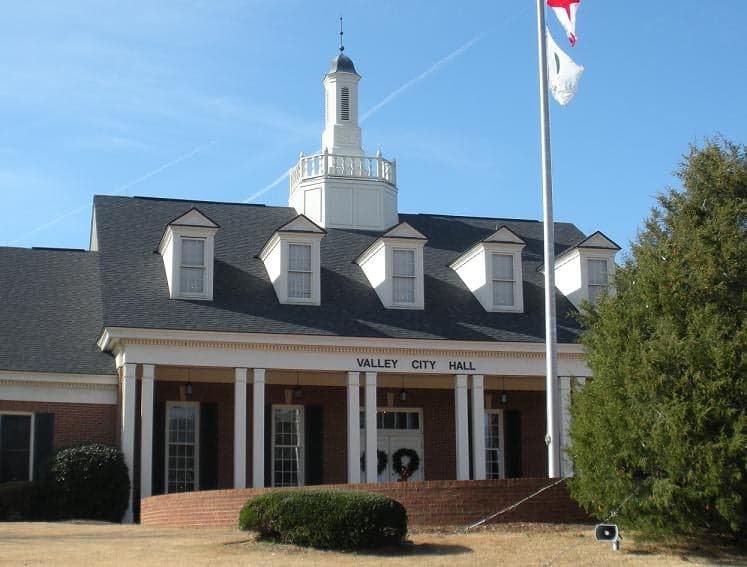
Photo: Wikipedia
Strategic Assessment of Valley, AL
Workable tactical position. Some exposure to population density or targets, but generally defensible in a crisis.
What does the Strategic Assessment tell us?
Our Strategic Assessment grades tactical survivability of an area. Major population centers, military targets, fallout zones, natural disasters, and border exposure all drive risk — lower exposure means a more defensible position in a crisis.
This is heavily inspired by Joel Skousen's Strategic Relocation book. Highly recommended you checkout the book ($)What does this tell us?
Our Strategic Assessment grades tactical survivability of an area. Major population centers, military targets, fallout zones, natural disasters, and border exposure all drive risk — lower exposure means a more defensible position in a crisis.
This is heavily inspired by Joel Skousen's Strategic Relocation book. Highly recommended you checkout the book ($)Strategic Pillars
Key Distances
Regional Safe Places
Below is our recommended "safe zones" in Alabama and the surrounding area based on our strategic heuristics. For most people, it's unrealistic to live in a “safe zone” full-time due to work, family or other personal reasons. They tend to be more rural. However, many of these areas are perfect for second homes and retreat properties that double as a vacation home or even a short-term rental.
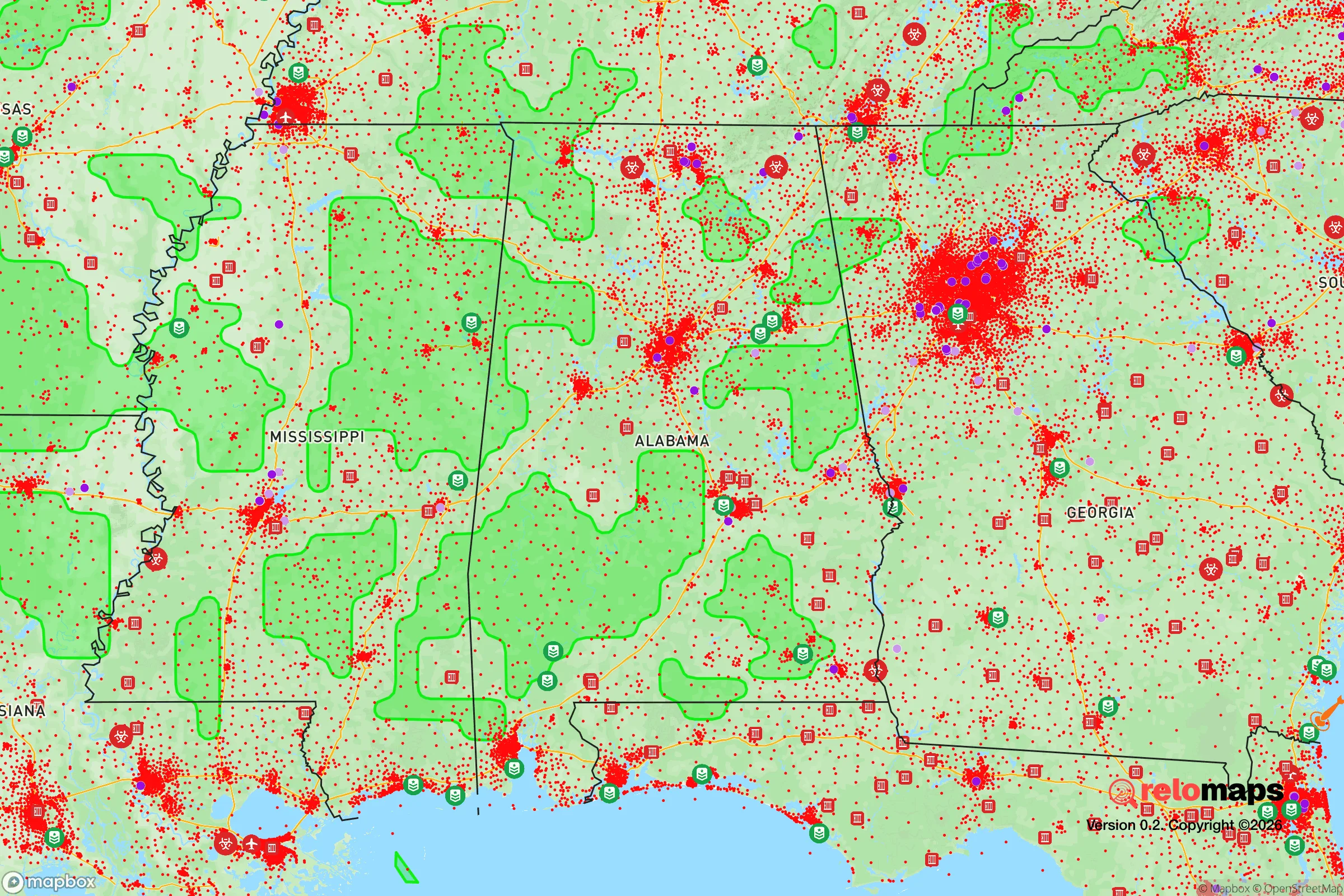
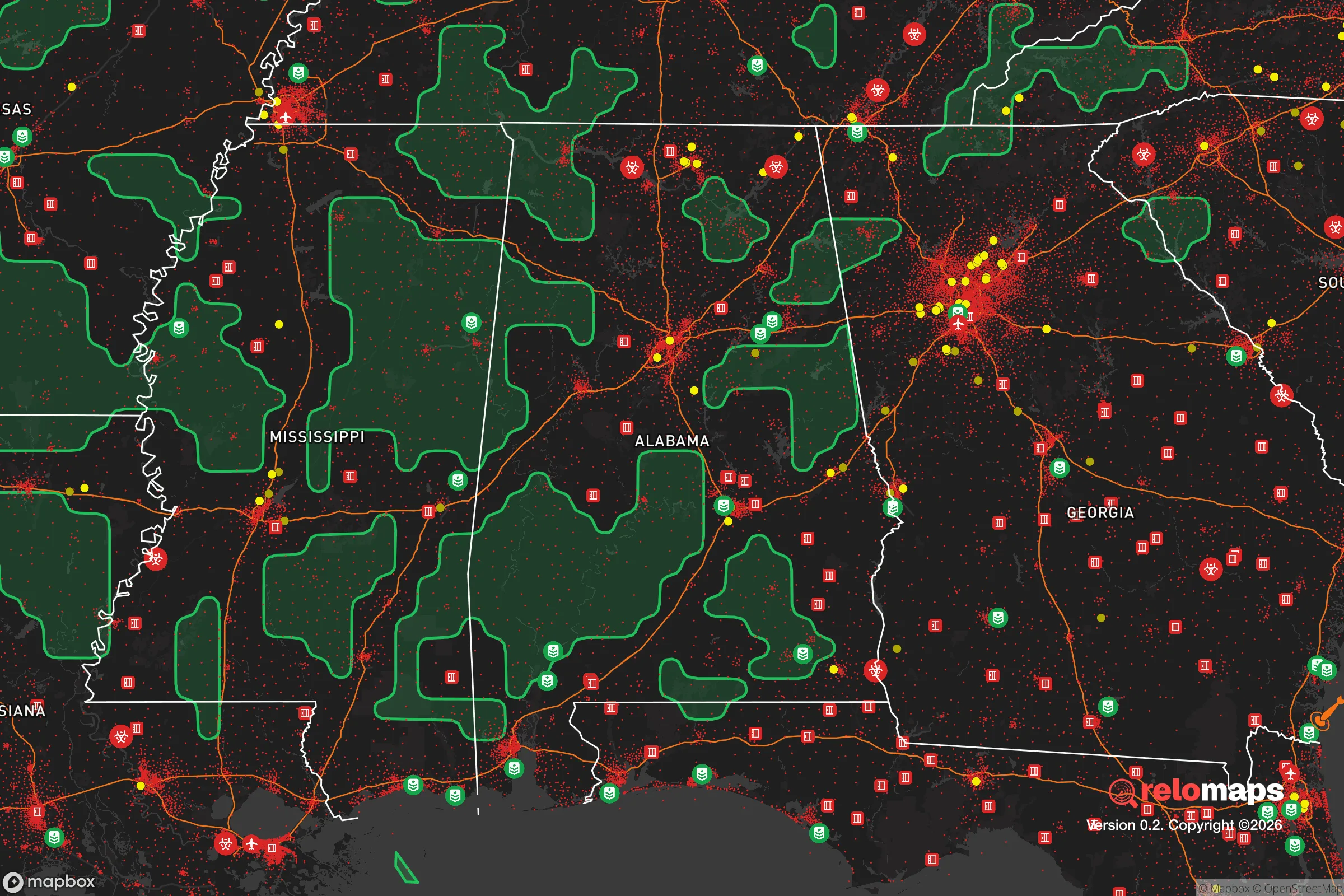


Important Note: For informational purposes only. This does not mean nothing bad ever happens in the green zones. Please use common sense. This is based on public data and modeled with AI. We tried to take a conservative approach but mistakes happen. We update this regularly as new information becomes available.
Solar Generator Recommendations
Backup power matters more here than in safer locations. We've picked three solar generators across budgets and capacity tiers — start with the budget unit if you only need a few essentials, or step up if you want to run a fridge and HVAC for days at a time.
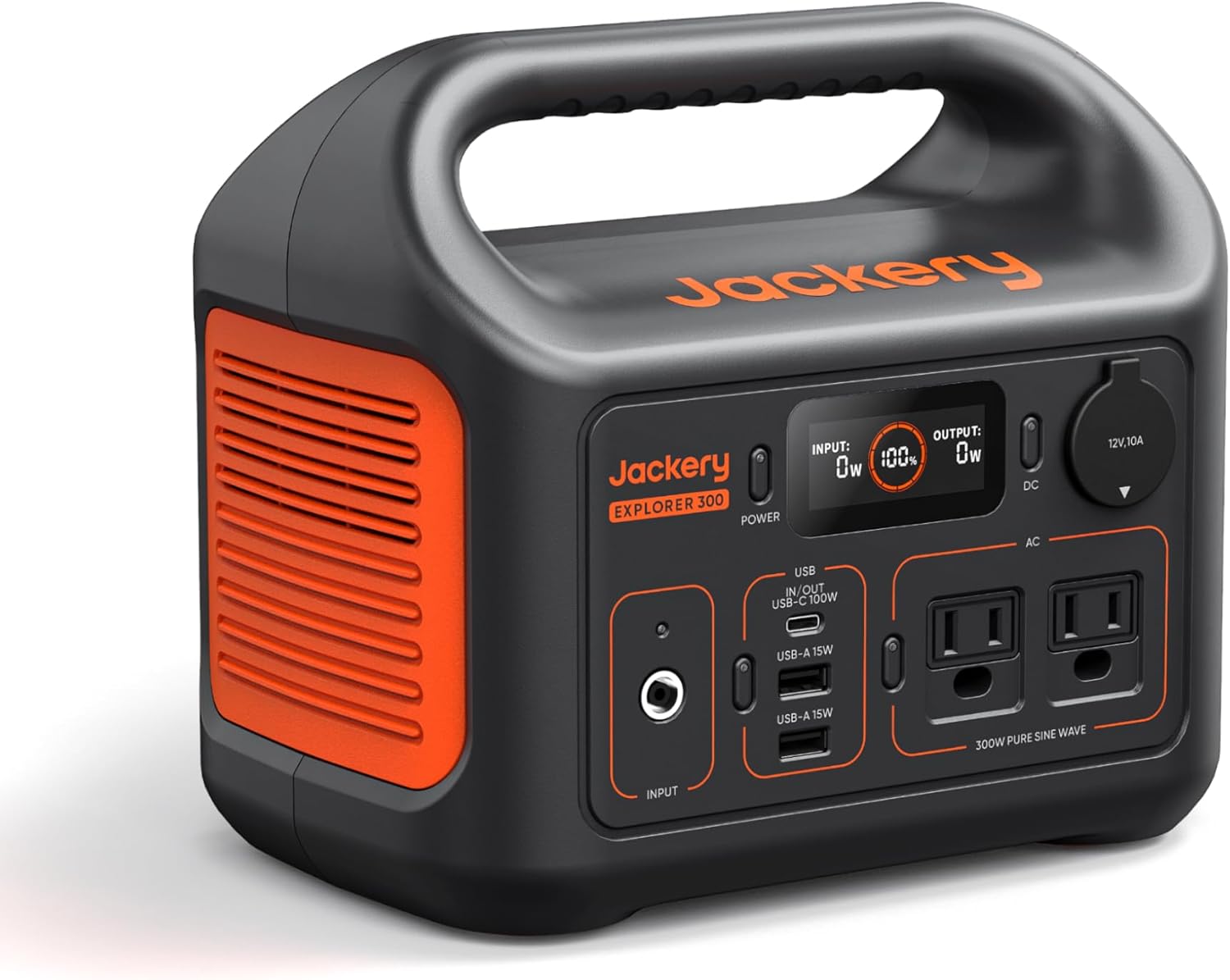
Jackery Portable Power Station Explorer 300
Budget OptionPower on the Go: Weighing only 11 lbs, it's convenient to set up and store with book-sized foldable solar panels

BLUETTI Portable Power Station AC180
Designed for both indoor and outdoor scenarios, AC180 is highly capable as it has a robost capacity and continuous output power.

EF ECOFLOW DELTA Pro Ultra Power Station
Upgraded PickEcoFlow DELTA Pro Ultra is a whole-home energy system designed to grow with your family. Integrated with the Smart Home Panel 2, it scales to meet your evolving energy needs — keeping your home powered, intelligent, and secure through every stage of life.
We earn a commission, at no additional cost to you.
Strategic Assessment Analysis
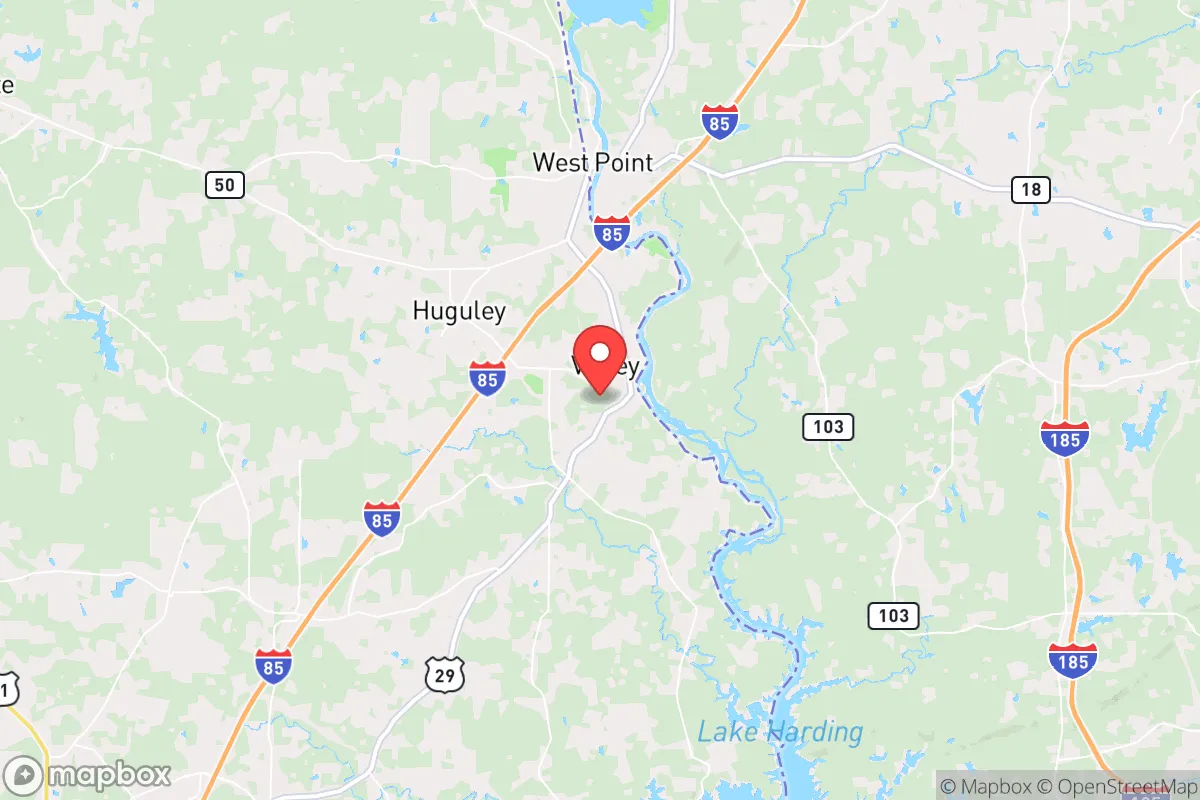
Valley, Alabama, offers a strategic blend of small-town resilience and practical geographic advantages that appeal to relocation-minded individuals and families prioritizing disaster readiness and self-sufficiency. Situated in Chambers County along the Georgia border, this community of roughly 9,500 residents sits at a meaningful distance from major metropolitan centers like Atlanta (about 90 miles northeast) and Montgomery (roughly 70 miles southwest), providing a buffer from the immediate fallout risks associated with large urban targets while still maintaining access to regional supply chains and medical infrastructure. The area's position within the Piedmont region, characterized by rolling hills and mixed hardwood forests, contributes to a lower natural disaster profile compared to coastal or tornado-alley communities, making it a credible option for those weighing long-term stability against everyday livability.
Geographic position and natural advantages for long-term stability
Valley's location in east-central Alabama places it within a zone that experiences fewer catastrophic natural events than many other parts of the Southeast. The area sits well inland, roughly 200 miles from the Gulf Coast, which significantly reduces the risk of direct hurricane impacts—though remnants of tropical systems can still bring heavy rain and flooding. The local topography, with elevations ranging from 600 to 800 feet above sea level, provides natural drainage and reduces the likelihood of standing floodwaters that plague flatter regions. The surrounding landscape is dominated by the Chattahoochee River to the east and numerous smaller creeks and tributaries, offering reliable surface water sources for those planning long-term self-sufficiency. The region's clay-heavy soils, while challenging for gardening, also mean that groundwater contamination from surface events tends to move slowly, a subtle but meaningful advantage for well-dependent properties. Winters are mild, with average January lows around 32°F, and summers are hot and humid, but the moderate climate reduces the energy burden for heating and cooling compared to more extreme northern or southern locations. For a relocator focused on resilience, the area's low seismic activity—Alabama experiences negligible earthquake risk—and absence of wildfire-prone dry seasons add to its baseline stability.
Risks, exposures, and proximity to fallout-relevant landmarks
While Valley avoids many natural extremes, the strategic assessment must account for man-made and proximity-based risks. The most significant exposure comes from its location within roughly 100 miles of Fort Moore (formerly Fort Benning) in Columbus, Georgia, a major Army installation that could be a target in a conflict scenario. Additionally, the West Point Lake dam on the Chattahoochee River, located just north of Valley, represents a potential infrastructure vulnerability—though dam failures are rare, the downstream impact on Valley would be substantial if one occurred. The area is also within 150 miles of Hartsfield-Jackson Atlanta International Airport, a high-value transportation hub that could be a secondary target. On the positive side, Valley itself hosts no major military bases, nuclear facilities, or large-scale industrial chemical plants, which reduces its attractiveness as a primary target. The local economy is anchored by manufacturing (notably the Kia Motors plant in nearby West Point, Georgia) and agriculture, neither of which typically draws direct strategic strikes. For the relocator concerned about fallout, the prevailing wind patterns in this region generally move from west to east, meaning that a strike on Atlanta would likely push contamination away from Valley, while a strike on Montgomery or Columbus would require more specific wind analysis. The area's distance from major ports (Savannah is about 250 miles away) and nuclear power plants (the nearest is Plant Farley in Dothan, roughly 120 miles south) further reduces exposure to cascading infrastructure failures.
Practical resilience for a relocator: food, water, energy, and defensibility
For a family or individual serious about self-sufficiency, Valley offers a mix of opportunities and limitations. Water availability is a strong point: the Chattahoochee River provides a massive, reliable surface water source, and the local water table is generally accessible via shallow wells (typically 50-150 feet deep) in most residential areas. However, well water in this region often requires treatment for iron and manganese, so pre-planning filtration systems is advisable. Food production potential is moderate—the growing season runs from April to October, with about 220 frost-free days, suitable for warm-season crops like tomatoes, peppers, corn, and beans. The clay soils benefit from raised beds or container gardening, and local extension services (Alabama Cooperative Extension in Chambers County) offer soil testing and guidance. For protein, the area supports small-scale poultry and goat operations, and the surrounding forests provide deer and turkey for hunting, though public land access is limited. Energy resilience is a mixed picture: the grid is served by Alabama Power, which has a relatively reliable record, but rural areas can experience longer outage durations during storms. Solar potential is good, with an average of 5.2 peak sun hours per day, and local zoning does not prohibit residential solar installations. Natural gas is available in town but not in outlying areas, so propane or wood heating is common for off-grid setups. Defensibility is a key consideration: Valley's layout as a linear town along the U.S. 29 corridor means that choke points exist at the bridges over the Chattahoochee and at the railroad crossings, which could be used to control access in a crisis. The surrounding countryside offers numerous rural properties with good visibility and limited road access, ideal for those seeking a more secure homestead. The local law enforcement presence is modest—the Valley Police Department has about 30 officers—so community-based security networks would be important in a prolonged disruption. The nearest Level 1 trauma center is in Columbus, Georgia (about 30 minutes away), which is a reasonable distance for emergencies but could be compromised in a regional crisis.
Overall, Valley, Alabama presents a credible option for the relocator who wants to balance disaster readiness with a functional, affordable lifestyle. Its primary strengths are its distance from high-value targets, reliable water access, and moderate climate that supports year-round food production. The main weaknesses are the proximity to Fort Moore and the Chattahoochee River dam, which introduce non-negligible man-made risks, and the clay soils that require work for gardening. For a family willing to invest in well water treatment, raised-bed gardening, and solar backup, the area offers a defensible position with access to regional resources. It is not a remote survivalist retreat—it is a working-class Southern town with real infrastructure and community ties—but for those who want to be prepared without isolating themselves from society, Valley strikes a practical balance. The key is to choose a property with good elevation, away from the floodplain, and with a clear plan for water and energy independence. In a world where resilience increasingly means being close enough to help but far enough to be safe, Valley earns a solid, if not exceptional, strategic rating.

* Values derived from national, state, county, city and local statistics and may differ in a specific area. Last updated: 2026-10-20T05:45:48.000Z
Narrative content on this page is AI-generated and may contain mistakes. Verify any details that matter before acting on them.
ReloMaps may earn a commission from affiliate links at no extra cost to you.

