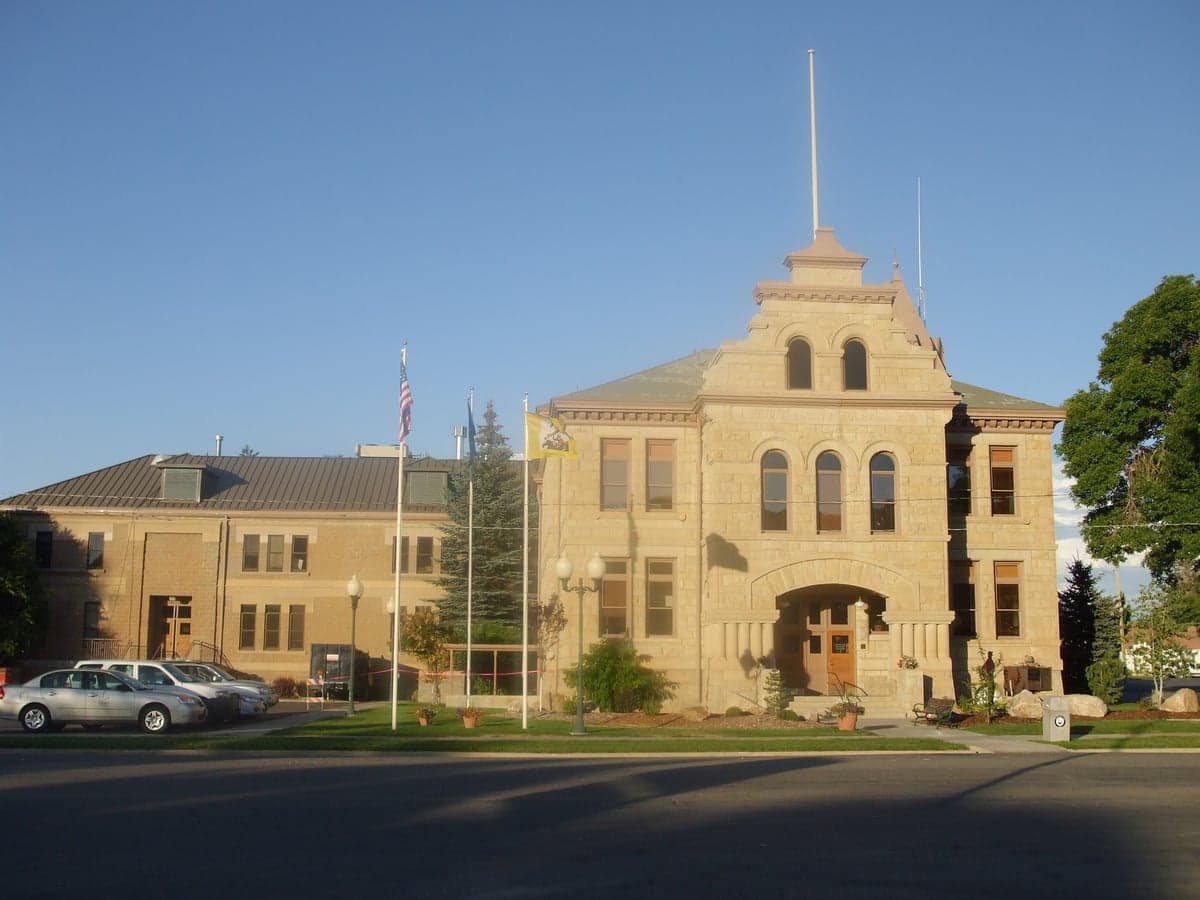
Photo: Wikipedia
Political ClimatePolitical Climate in Summit County
Showing county-level results — no local-only data available.
Lean and PVI are calculated from this county’s 2020 and 2024 presidential results, Cook-style.
Political rankings in Utah
- Most Conservative Cities in Utah
- Most Liberal Cities in Utah
- Best Liberal-Leaning Towns in the Mountain West
- Safest Liberal-Leaning Towns in the Mountain West
- Safest Conservative-Leaning Cities in the Mountain West
- Affordable Small Towns for Conservatives
- Most Affordable Liberal-Leaning Small Towns in the U.S.
- Safest Conservative-Leaning Cities in the U.S.
- Most Conservative Counties in Utah
- Most Liberal Counties in Utah
Local Political AnalysisPolitical Analysis of Summit County
Summit County, Utah, is a striking political outlier in an otherwise deep-red state, carrying a Cook Partisan Voting Index (PVI) of D+8 while the surrounding state of Utah sits at R+11. This means the county is a solidly Democratic-leaning island, a shift that has accelerated over the past two decades as the Wasatch Back has transformed from a rural, ranching community into a playground for second-home owners, outdoor enthusiasts, and a growing year-round workforce tied to Park City's tourism and tech-adjacent industries. The county's politics are driven largely by the Park City area, which votes overwhelmingly blue, while the eastern and southern parts of the county—towns like Coalville, Kamas, and Oakley—still lean conservative, creating a sharp urban-rural divide within the county's borders.
How it compares
The contrast between Summit County and the rest of Utah couldn't be starker. While Utah as a whole has not voted for a Democratic presidential candidate since 1964 and routinely elects Republicans by double-digit margins, Summit County has gone blue in every presidential election since 2000, often by wide margins. In 2020, Joe Biden carried Summit County by roughly 20 points, while Donald Trump won Utah by the same margin. This isn't just a presidential phenomenon—local offices reflect the split. The county council and school board are reliably Democratic, and the Park City municipal government is one of the most progressive in the state, with strong environmental regulations and a focus on affordable housing. Meanwhile, the state legislature, dominated by Republicans from rural and suburban districts, frequently overrides local ordinances from Summit County, especially on land use and tax policy. The result is a constant tug-of-war: Summit County residents often feel their values are at odds with the state government, while state lawmakers view the county as an outlier that needs to be reined in.
What this means for residents
For liberal residents, Summit County offers a rare blue haven in Utah, where they can live in a community that shares their views on climate action, public lands, and social issues. They can vote for candidates who align with their values at the local level, and they benefit from county-level policies like a robust public transit system and strict development codes. However, they also face the frustration of seeing their local priorities—like expanded gun control or stronger environmental protections—blocked by the state legislature. For conservative residents, especially those in the eastern part of the county, the political climate can feel isolating. They are a minority in county elections, and they often feel that local government prioritizes the interests of Park City's wealthy transplants over the needs of ranchers and long-time families. That said, they still have strong representation at the state level, and they can find like-minded neighbors in towns like Coalville or along the Weber River corridor. The swing precincts are few, but they exist in areas like the Snyderville Basin, where moderate voters sometimes tip the balance in closer races.
Culturally, Summit County is defined by its split identity. Park City is a world-class ski town with a vibrant arts scene, a walkable Main Street, and a population that skews younger, wealthier, and more transient. The rest of the county is more traditional, with rodeos, hunting, and a strong sense of local history. This divide plays out in policy debates over everything from short-term rental regulations to school funding. The county's Democratic lean is unlikely to change soon, as new residents tend to be liberal-leaning and the Park City area continues to grow. But the tension with the state government will persist, making Summit County a fascinating case study of a blue island in a red state—a place where national political trends collide with local realities every single day.

State Political ClimatePolitical Climate in Utah
State Political AnalysisPolitical Environment in the State
Utah is one of the most reliably Republican states in the nation, with a Cook Partisan Voting Index of R+11, meaning it votes about 11 points more Republican than the national average in presidential elections. The state hasn't voted for a Democratic presidential candidate since 1964, and Republicans hold every statewide office and supermajorities in both legislative chambers. Over the past 10-20 years, however, the political landscape has shifted subtly: the Wasatch Front metros have grown more diverse and slightly more competitive, while rural areas have hardened their conservative stance, creating a more nuanced political reality than the simple "red state" label suggests.
Urban vs. rural divide
The political map of Utah breaks down along a clear urban-rural axis, with the Wasatch Front—the string of cities from Ogden through Salt Lake City to Provo—containing the vast majority of the state's population and driving its overall Republican lean. Salt Lake City itself is a deep blue island in a red sea, consistently voting Democratic by 30-40 points in presidential elections, driven by a young, educated, and increasingly secular population. Just 45 miles south, Provo and Orem in Utah County are among the most conservative metros in the country, anchored by Brigham Young University and a heavily LDS (Mormon) population; Utah County voted 68% for Trump in 2024. The suburbs in between—like Sandy, Draper, and Lehi—have become the state's key battlegrounds, trending purple as tech workers from Silicon Valley transplants and younger families shift toward moderate Republican or independent leanings. Outside the Wasatch Front, rural counties like San Juan, Carbon, and Emery are deeply red, often voting 80%+ Republican, with economies tied to mining, ranching, and tourism. The divide isn't just about party—it's about culture: urban Utahns are more likely to be non-religious or less observant, while rural areas remain overwhelmingly LDS and socially conservative.
Policy environment
Utah's policy environment reflects its conservative majority: no state income tax on Social Security benefits, a flat 4.65% individual income tax rate, and a state sales tax of 4.85% (with local options pushing it higher in some cities). The state has a strong right-to-work law, no statewide rent control, and a regulatory posture that favors business development, particularly in tech and energy. Education policy is a mixed bag: Utah spends less per pupil than the national average (around $8,000 per student), but has embraced school choice aggressively, with a robust charter school system and a new universal school voucher program (HB 215, passed in 2023) that gives families about $8,000 per child for private or homeschool expenses. Healthcare is dominated by Intermountain Health, a nonprofit system that keeps costs relatively low, but the state has not expanded Medicaid under the Affordable Care Act, leaving a coverage gap for low-income adults. Election laws are generally secure but not overly restrictive: voter ID is required, same-day registration is not available, and mail-in voting is universal—every active registered voter automatically receives a ballot. The state has a nonpartisan redistricting commission, though the legislature has overridden its maps in the past.
Recent policy direction
Utah's recent legislative sessions have pushed the state further right on social issues while maintaining a pragmatic streak on economics. In 2023, the legislature passed HB 261, which bans diversity, equity, and inclusion (DEI) programs at public universities and in state government, and SB 16, which restricts transgender youth from accessing gender-affirming care, including puberty blockers and hormone therapy. Gun laws remain among the most permissive in the country: Utah is a constitutional carry state (no permit needed for concealed carry), has no universal background checks, and in 2024 passed a law allowing armed teachers in schools with district approval. On parental rights, the state passed HB 331 in 2023, requiring schools to notify parents if a student requests changes to their gender identity or pronouns. Property rights are strong, with no statewide zoning mandates and a "right to farm" law protecting agricultural operations from nuisance lawsuits. Privacy and surveillance laws are relatively weak—Utah has no comprehensive data privacy law like California's CCPA, though a 2022 law (SB 227) created a limited right for consumers to opt out of data collection by large companies. Voting access remains stable: the universal mail-in system is popular across party lines, but the legislature has rejected proposals for automatic voter registration or same-day registration.
Civil unrest & political movements
Utah has seen relatively little large-scale civil unrest compared to coastal states, but political movements are active and visible. The most prominent flashpoint in recent years has been the debate over public lands: the "Sagebrush Rebellion" movement, which seeks to transfer federal land to state control, has strong support in rural counties like San Juan and Emery, where federal ownership exceeds 70% of land area. In 2024, the state filed a lawsuit against the Biden administration over the creation of the Baaj Nwaavjo I'tah Kukveni – Ancestral Footprints of the Grand Canyon National Monument, arguing it overstepped federal authority. On the left, the "Save Our Schools" movement has organized protests against the voucher program and DEI bans, drawing thousands to the state capitol in 2023 and 2024. Immigration politics are relatively muted compared to border states: Utah has no sanctuary city policies, and in 2023 the legislature passed a bill requiring local law enforcement to cooperate with federal immigration authorities (HB 469). Election integrity controversies have been minimal—Utah's mail-in system enjoys bipartisan trust, and no major fraud cases have been substantiated. The LDS Church's influence remains a quiet but powerful force: church leaders rarely endorse candidates but signal priorities through official statements, and their stance on issues like immigration reform (supporting a path to citizenship) and LGBTQ+ rights (opposing discrimination but upholding traditional marriage) shapes the political conversation.
Projection
Over the next 5-10 years, Utah's political trajectory points toward a slow but steady moderation along the Wasatch Front, while rural areas will likely become even more conservative. The key driver is demographic change: the state is growing faster than almost any other, adding about 50,000 new residents per year, many from California and other blue states. These newcomers tend to be younger, more educated, and less religious, and they're settling in places like Lehi, Draper, and Herriman—suburbs that are already trending purple. By 2030, Utah County could shift from a solid 68% Republican to a more competitive 55-60% Republican, while Salt Lake County may become a genuine swing county. The state's overall Republican lean will persist, but the margin may shrink from R+11 to R+6 or R+7. Policy-wise, expect continued battles over education funding (vouchers vs. public schools), land use (federal vs. state control), and social issues (transgender rights, DEI, abortion—which is currently banned at 18 weeks with exceptions). The LDS Church's influence may wane slightly as the non-LDS population grows, but it will remain a stabilizing force against extreme positions on either side. For a new resident, the practical takeaway is that Utah will remain a conservative state for the foreseeable future, but the flavor of that conservatism is shifting from a culturally Mormon, socially rigid version to a more libertarian, tech-friendly, and economically dynamic one.
Bottom line for a new resident: If you're a conservative family looking for a state with low taxes, strong gun rights, school choice, and a stable social environment, Utah delivers consistently. If you're a liberal, you'll find a welcoming community in Salt Lake City and a growing number of like-minded neighbors in the suburbs, but you'll need to accept that state policy will remain conservative on most issues. The key is knowing which Utah you're moving to: the urban, purple-trending Wasatch Front or the deeply red, rural rest of the state. Either way, the political climate is stable, pragmatic, and unlikely to surprise you—which is exactly why so many people are moving here.
* Values derived from national, state, county, city and local statistics and may differ in a specific area. Last updated: 2026-11-17T23:42:16.000Z
Narrative content on this page is AI-generated and may contain mistakes. Verify any details that matter before acting on them.
ReloMaps may earn a commission from affiliate links at no extra cost to you.

