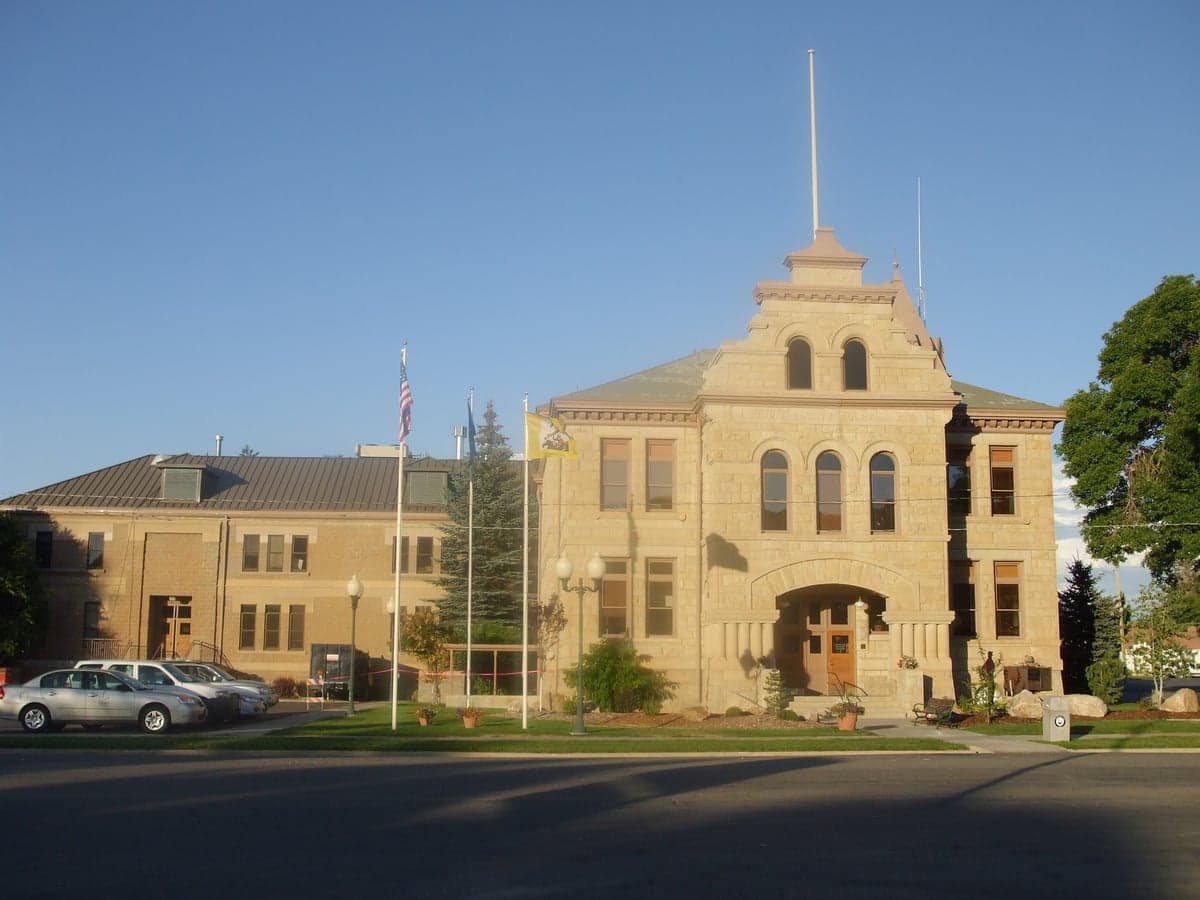
Photo: Wikipedia
Demographics of Summit County
Affluence Level in Summit County
A wealthy area with high-earning, well-educated households. Incomes, home values, and educational attainment meaningfully outpace national averages.
People of Summit County
Summit County, Utah, today is a high-altitude region of 42,709 residents defined by a stark contrast: a historic, deeply rooted Mormon and ranching population in towns like Coalville and Kamas, alongside a newer, affluent, and highly educated wave of outdoor-recreation migrants and second-home owners concentrated in Park City. The county is overwhelmingly white (83.2%) with a notable Hispanic minority (11.1%) and a small but growing East/Southeast Asian community (1.7%), while the foreign-born share sits at just 5.0%. With 58.1% of adults holding a college degree—nearly double the national average—Summit County’s population is among the most educated in Utah, a marker of its transformation from a mining and agricultural outpost into a resort-driven economy and a bedroom community for the Wasatch Front.
Settlement & growth (pre-1960)
Before Anglo-American settlement, the Ute people—specifically the Timpanogos and Weber Ute bands—seasonally occupied the Summit County valleys, hunting and fishing along the Weber and Provo Rivers. The first permanent non-Native settlers were Mormon pioneers dispatched by Brigham Young in the 1850s to establish agricultural colonies in the high mountain valleys. Coalville, founded in 1859 as a Mormon farming settlement, became the county seat and the hub for the region’s early economy: livestock grazing, hay farming, and coal mining. The discovery of coal in the surrounding canyons drew a small wave of Welsh and English miners in the 1870s and 1880s, though the industry remained modest compared to Utah’s Carbon County.
The arrival of the Union Pacific Railroad in the 1870s connected Summit County to national markets and spurred the growth of smaller towns like Kamas (founded 1859) and Oakley (founded 1868), which served as supply points for ranchers and farmers. The railroad also brought a transient population of Irish and Chinese laborers, though few stayed permanently. By 1900, the county’s population was nearly entirely native-born white Mormons, with a small handful of non-Mormon merchants and miners. The early 20th century saw little demographic change; the county’s remote, high-elevation valleys (averaging 6,500–8,000 feet) discouraged large-scale immigration. The Great Depression actually reduced the population, as young people left for Salt Lake City or the Pacific Coast, and the county’s numbers stagnated at around 10,000 through the 1950s.
The first real shift came with the development of Park City as a silver-mining camp in the 1870s. Unlike the Mormon farming towns, Park City attracted a diverse, transient workforce of Cornish, Irish, Italian, and Chinese miners, as well as a small number of Greek and Slavic immigrants. By 1900, Park City was a rough, ethnically mixed boomtown of about 4,000 people, with a saloon culture that stood in sharp contrast to the dry, church-centered life of Coalville and Kamas. However, the silver crash of 1893 and the depletion of ore bodies led to a long decline; by 1960, Park City’s population had fallen to just 1,200, and the town was nearly a ghost town.
Modern era (post-1965)
The 1965 Hart-Cellar Act had little direct effect on Summit County, as the region remained overwhelmingly white and native-born through the 1970s. The real demographic revolution came from domestic migration: the transformation of Park City into a world-class ski resort. The 1970s and 1980s saw an influx of affluent, college-educated migrants from California, the Northeast, and Colorado, drawn by the opening of Deer Valley Resort (1981) and the expansion of Park City Mountain Resort. This wave was overwhelmingly white and non-Mormon, and it created a cultural divide between the resort town of Park City (now the county’s largest city, with about 8,500 year-round residents) and the rest of the county.
Hispanic population growth began in the 1990s and accelerated after 2000, driven by construction and service jobs in the booming resort economy. Today, the Hispanic community (11.1% of the county) is concentrated in Park City’s service-worker neighborhoods and in the agricultural areas around Kamas and Oakley, where many work in landscaping, construction, and hospitality. Many families trace their roots to Mexico and Central America, arriving in the 1990s and 2000s. The East/Southeast Asian population (1.7%) is a more recent phenomenon, largely composed of professionals in tech and finance who work remotely or commute to Salt Lake City, and who tend to settle in Park City’s newer subdivisions.
The Indian-subcontinent population (0.1%) is negligible, and the Black population (0.4%) remains tiny, reflecting the county’s historic lack of industrial or urban pull factors. The most significant modern trend is the suburbanization of the Wasatch Back: communities like Snyderville and Silver Summit (unincorporated areas near Park City) have grown rapidly since 2000, attracting families who work in Salt Lake City (a 30- to 45-minute commute) but want mountain lifestyle and top-ranked schools. The county’s population has more than doubled since 1990, from 15,000 to 42,709, almost entirely due to this domestic in-migration.
The future
Summit County is projected to continue growing at a moderate pace (1–2% annually), driven by remote-work migration and the expansion of Park City’s resort economy. The population is likely to become slightly more diverse, with the Hispanic share potentially rising to 15–18% by 2040 as service-sector families grow and age. The East/Southeast Asian share may also increase modestly as tech-remote workers continue to discover the area. However, the county’s high housing costs—median home prices exceed $1 million in Park City—will limit in-migration to the affluent, reinforcing the county’s character as a wealthy, highly educated enclave. The cultural divide between the resort corridor (Park City, Snyderville) and the traditional ranching towns (Coalville, Kamas, Oakley) is likely to persist, with the former growing faster and the latter maintaining a slower, more conservative pace.
Bottom line: Summit County is becoming a bifurcated place—a wealthy, liberal-leaning, outdoor-recreation hub in the west, and a quieter, more conservative, agricultural and Mormon community in the east. For someone moving in now, the choice is essentially between the high-amenity, high-cost resort lifestyle of Park City and the more affordable, small-town feel of the Kamas Valley or Coalville. The county’s future will be shaped by water availability, wildfire risk, and the ongoing tension between preservation and development, but its demographic trajectory—whiter, wealthier, and more educated than the national average—appears firmly set for the next decade.

* Values derived from national, state, county, city and local statistics and may differ in a specific area. Last updated: 2026-11-17T23:42:16.000Z
Narrative content on this page is AI-generated and may contain mistakes. Verify any details that matter before acting on them.
ReloMaps may earn a commission from affiliate links at no extra cost to you.

