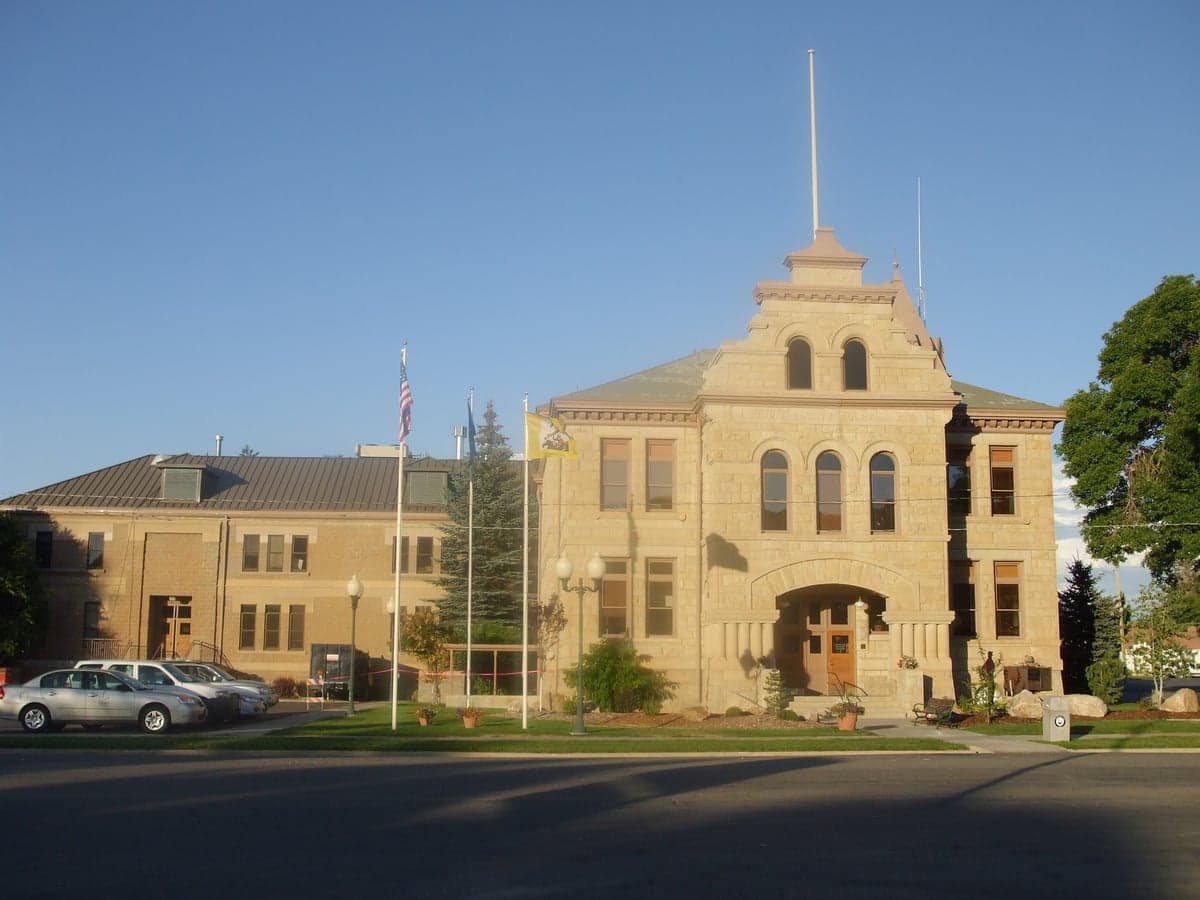
Photo: Wikipedia
Personal Sovereignty in Summit County
Viable for self-reliance. Generally workable, though some barriers may limit total independence.
What does Personal Sovereignty tell us?
Personal Sovereignty measures your capacity for self-reliance and independence with minimal government friction. Higher scores mean fewer barriers between you and the way you want to live... but it assumes you have the space you need and good neighbors.
What does this tell us?
Personal Sovereignty measures your capacity for self-reliance and independence with minimal government friction. Higher scores mean fewer barriers between you and the way you want to live... but it assumes you have the space you need and good neighbors.
State Policy
Energy independence: Net exporter (108% of energy produced in-state)
Personal Liberty
Homesteading

Personal Liberty Analysis
Summit County, Utah presents a nuanced personal sovereignty environment where state-level protections for gun rights and property rights coexist with some of the most restrictive local land-use and public health regulations in the state. The autonomy a resident experiences here depends heavily on whether they live in the unincorporated backcountry, a small town like Coalville, or a resort community like Park City. While Utah as a whole ranks favorably for individual liberty on many metrics, Summit County’s local governance often imposes a heavier touch than neighboring Wasatch or Morgan counties, making it a place where personal freedom is protected at the state level but constrained at the county level.
Tax burden and regulatory posture: How Summit County compares to the rest of Utah
Summit County’s tax burden is moderate by national standards but high for Utah. The combined state and local sales tax rate in most of the county is 7.05%, which is above the state average of 6.85% due to local option taxes for transit and recreation. Property taxes are also elevated relative to other Utah counties, driven by high home values in the Park City area. The county’s regulatory posture is notably more interventionist than the state norm. Summit County has adopted some of the most aggressive land-use regulations in Utah, including strict short-term rental caps, building height limits, and environmental overlay zones that restrict development on steep slopes and near watersheds. In contrast, the eastern parts of the county, including Coalville and Henefer, have far lighter regulatory touch, with fewer zoning overlays and more permissive building codes. The county also maintains a mandatory recycling ordinance and a plastic bag ban in unincorporated areas, reflecting a local regulatory culture that prioritizes environmental goals over individual convenience. For a reader comparing Summit County to Morgan County or Wasatch County, the key difference is that Summit County’s local government is more likely to impose use restrictions on private property, particularly in the western half of the county.
Self-defense and gun law specifics: What the state guarantees and the county cannot restrict
Utah is a shall-issue state for concealed carry permits, and Summit County fully complies with state preemption laws that prevent local governments from enacting their own gun control ordinances. This means that regardless of where you live in Summit County—whether in Park City, Kamas, or Oakley—the same state-level firearms laws apply. Utah does not require a permit to openly carry a firearm, and concealed carry permits are issued to any resident who passes a background check and completes a certified course. The state also has a stand-your-ground law with no duty to retreat in any place where a person has a legal right to be. Summit County has not attempted to create gun-free zones beyond those required by state law (e.g., secure areas of airports and courthouses). However, the cultural attitude toward firearms varies across the county. In Park City, open carry is uncommon and may draw attention, while in Coalville and Henefer, it is a routine part of daily life. The county sheriff’s office is generally supportive of Second Amendment rights, and there are no local magazine capacity or ammunition restrictions. For a freedom-oriented reader, the key takeaway is that Summit County’s local government cannot erode state-level gun protections, but the social environment in the western resort areas may feel less gun-friendly than the eastern ranch communities.
Self-reliance and homesteading viability: Lot sizes, zoning, and off-grid feasibility across the county
Homesteading and off-grid living are viable in Summit County, but only in specific areas. The county’s zoning code divides land into several categories, with the most restrictive being the Resort Residential and Park City Municipal zones, where minimum lot sizes are small (often under one acre) and building permits require extensive environmental review. In contrast, the Agricultural (AG) and Rural Residential (RR) zones in the eastern and northern parts of the county allow for much larger lots—minimum 20 acres in AG zones—and permit accessory dwelling units, barns, and workshops without the same level of scrutiny. Off-grid living is technically legal in unincorporated areas, but the county requires a septic system permit and a water rights verification before issuing a building permit. Solar panels are allowed by right, but wind turbines over 35 feet require a conditional use permit. The towns of Oakley and Kamas are the most homestead-friendly, with active agricultural communities, local feed stores, and a county extension office that offers workshops on livestock and gardening. Coalville, the county seat, has a more permissive attitude toward outbuildings and animal keeping than the western resort areas. For a reader seeking true self-reliance, the eastern half of Summit County offers a realistic path, while the Park City area is effectively closed to homesteading due to lot sizes and regulatory hurdles.
Personal liberties: Parental rights, medical autonomy, speech, and property
Utah has strong state-level protections for parental rights, including a Parental Bill of Rights that guarantees parents the authority to direct their children’s education, medical care, and moral upbringing. Summit County’s school district, the Park City School District, has been a focal point of parental rights debates, with some parents reporting friction over curriculum transparency and library book content. In contrast, the North Summit School District (serving Coalville and Henefer) and the South Summit School District (serving Kamas and Oakley) have more traditional approaches and fewer reported conflicts. Medical autonomy in Utah is mixed: the state does not have a broad medical freedom law, but it does protect the right to refuse any medical treatment, including vaccines, for oneself and one’s children. Summit County’s health department has historically been more proactive in public health mandates than other Utah counties, including during the COVID-19 pandemic when it issued a mask mandate that was stricter than the state’s. Free speech is protected under the Utah and U.S. Constitutions, and Summit County has not enacted any local ordinances restricting political speech or assembly. Property rights are the most contested area of personal liberty in Summit County. The county’s land use authority is broad, and property owners frequently face restrictions on what they can build, how they can use their land, and whether they can rent it short-term. The Summit County Planning Commission has the power to deny subdivisions, impose open space easements, and require public trail access as a condition of development. For a reader who values property autonomy, the eastern towns offer a much lighter touch than the Park City area.
Overall, Summit County offers a split personal sovereignty environment. State-level protections for gun rights, parental rights, and property rights are strong, but local governance in the western half of the county imposes significant restrictions on land use, building, and short-term rentals. For a freedom-oriented individual or family, the best bet is to locate in the eastern towns of Coalville, Oakley, Kamas, or Henefer, where the regulatory climate is lighter and the culture more self-reliant. Compared to Utah County or Morgan County, Summit County’s western resort areas are among the most restrictive in the state for personal autonomy, while its eastern agricultural communities remain among the most permissive. The county is not a uniform sovereignty environment—it is a patchwork where location determines liberty.

* Values derived from national, state, county, city and local statistics and may differ in a specific area. Last updated: 2026-11-17T23:42:16.000Z
Narrative content on this page is AI-generated and may contain mistakes. Verify any details that matter before acting on them.
ReloMaps may earn a commission from affiliate links at no extra cost to you.

