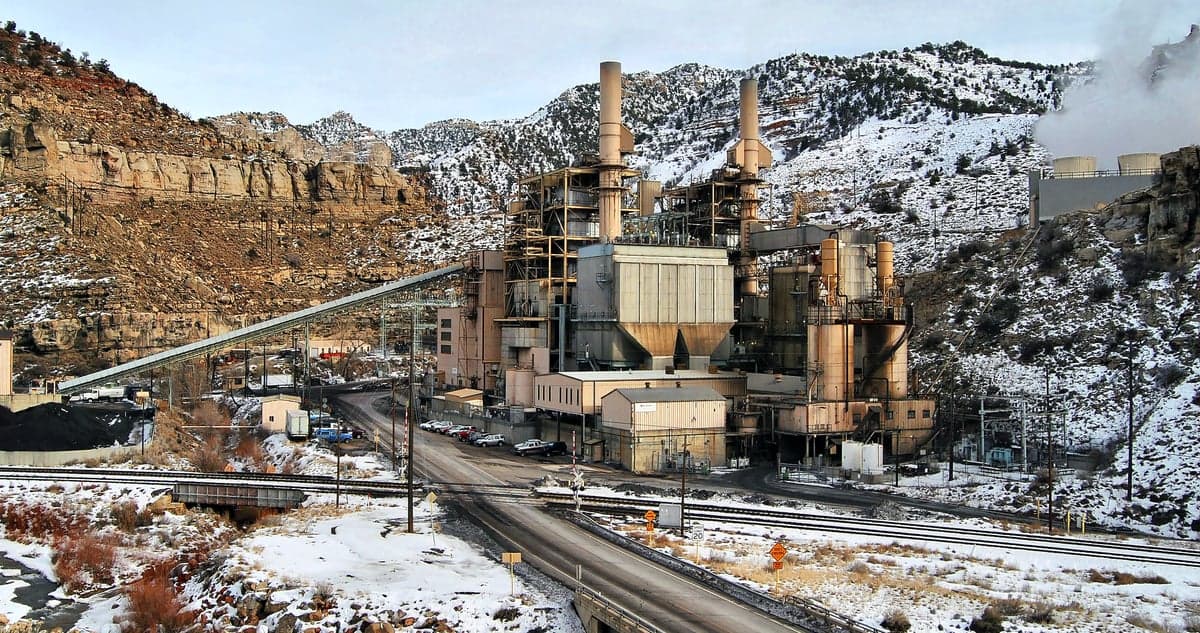
Photo: Wikipedia
Political ClimatePolitical Climate in Carbon County
Showing county-level results — no local-only data available.
Lean and PVI are calculated from this county’s 2020 and 2024 presidential results, Cook-style.
Political rankings in Utah
- Most Conservative Cities in Utah
- Most Liberal Cities in Utah
- Best Liberal-Leaning Towns in the Mountain West
- Safest Liberal-Leaning Towns in the Mountain West
- Safest Conservative-Leaning Cities in the Mountain West
- Affordable Small Towns for Conservatives
- Most Affordable Liberal-Leaning Small Towns in the U.S.
- Safest Conservative-Leaning Cities in the U.S.
- Most Conservative Counties in Utah
- Most Liberal Counties in Utah
Local Political AnalysisPolitical Analysis of Carbon County
Carbon County, Utah, is a political outlier in a deeply red state, carrying a Cook PVI of R+10 that makes it competitive by Utah standards—yet still solidly Republican nationally. The county’s politics are a fascinating mix of a fading coal-mining union heritage, a growing outdoor-recreation economy, and a steady influx of newcomers, creating a landscape where the old Democratic strongholds of the 20th century have morphed into a volatile swing territory. The trajectory here isn’t a simple march rightward; it’s a story of a place where the working-class vote is up for grabs, and the margins in places like Price and Helper tell you more than any statewide number ever could.
How it compares
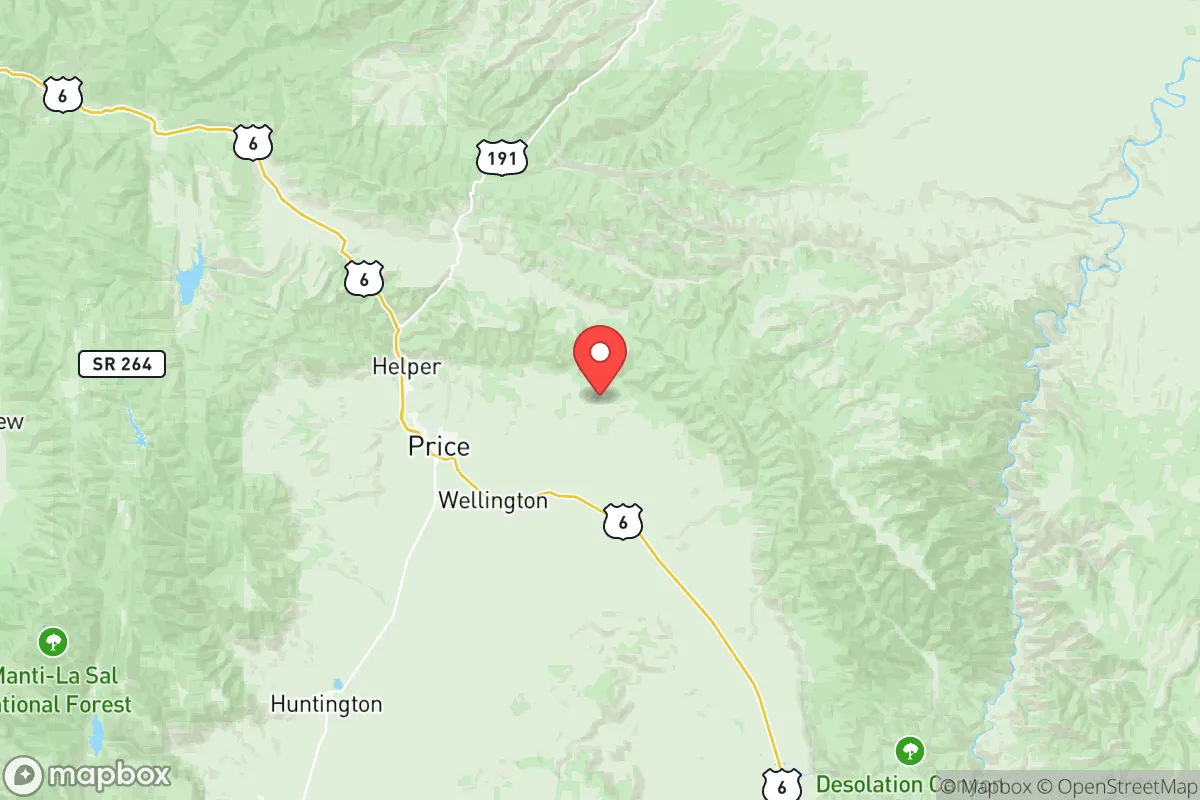
To understand Carbon County, you have to look at it against the rest of Utah, which sits at R+11. On paper, that’s a one-point difference, but in practice, it’s a chasm. Utah’s R+11 is driven by the Wasatch Front’s solidly conservative suburbs and the rural Mormon belt, where Republicans routinely win by 40 or 50 points. Carbon County’s R+10, however, is a compromise—a place where the GOP wins, but not by a landslide. The difference is most visible in the county’s two main towns. Price, the county seat, is the political bellwether, with precincts that have swung between parties in recent cycles; the east side of Price leans more conservative, while the neighborhoods near the College of Eastern Utah (now USU Eastern) and the hospital tend to vote bluer. Helper, the old railroad town just north of Price, is the county’s most liberal enclave, with a visible arts community and a history of union activism that still shows up in local races. In contrast, the rural precincts outside these towns—places like Wellington, East Carbon, and Sunnyside—are deeply red, often voting 70% or more for Republican candidates. So while the county’s overall PVI is R+10, that number masks a genuine urban-rural split that makes local elections far more interesting than the statewide picture.
What this means for residents
For a conservative resident, Carbon County is a comfortable place to live politically, but not a guaranteed win. You’ll find that statewide races are usually safe, but local primaries and county commission seats are where the real fights happen. The Republican Party here isn’t monolithic; there’s a pragmatic, pro-labor wing that’s skeptical of national GOP orthodoxy on energy policy, and a more traditional conservative wing that aligns with the state party. For a liberal resident, it’s a different experience. You’re not going to be in the majority, but you’re not isolated either. Helper’s city council has had progressive members, and the county’s Democratic Party, while small, is organized and active, often fielding candidates for local office who can pull 40-45% of the vote in a good year. The practical reality is that both sides have to engage in coalition-building, which is rare in Utah. The swing precincts in Price—particularly around the hospital and the university—are where elections are actually decided, and both parties know it. This makes for a more moderate, issue-based politics than the rest of the state, where a primary win is often the same as a general election win.
Looking ahead, the near-term future is likely to see Carbon County stay in the R+8 to R+12 range, but the long-term trend is a slow drift leftward. The coal industry’s decline is pushing younger residents toward solar, wind, and tourism jobs, and the influx of remote workers from Salt Lake City and Denver is changing the cultural fabric of Price and Helper. The county’s political identity is still being written, and the one thing that’s certain is that it won’t look like the rest of Utah anytime soon.

State Political ClimatePolitical Climate in Utah
State Political AnalysisPolitical Environment in the State
Utah is a solidly Republican state with a Cook PVI of R+11, but the political reality here is more layered than the raw numbers suggest. The state has voted Republican in every presidential election since 1968, and the 2024 cycle saw Donald Trump win the state by roughly 20 points, though that margin was actually tighter than his 2020 performance in some fast-growing counties. What makes Utah distinctive is that its conservatism is heavily shaped by the Church of Jesus Christ of Latter-day Saints (LDS), which influences everything from social policy to the state’s famously cooperative civic culture — but that influence is slowly eroding as the Wasatch Front diversifies and out-of-state transplants pour in.
Urban vs. rural divide
The political map of Utah is a tale of three distinct regions. The Wasatch Front — the corridor running from Ogden through Salt Lake City down to Provo — is where roughly 80% of the state’s population lives, and it’s far from monolithic. Salt Lake City itself is a blue island in a red sea, consistently voting Democratic by 30-point margins, while its suburbs like Sandy and Draper lean Republican but are trending purple. Provo and Orem, home to Brigham Young University, are among the most reliably conservative mid-sized cities in America, often voting 70%+ Republican. The Wasatch Back — Park City, Summit County, and parts of Wasatch County — has flipped hard Democratic over the past two decades, driven by wealthy second-home owners and a booming ski-resort economy; Summit County went for Joe Biden by 25 points in 2020. Meanwhile, the rural counties — Duchesne, Uintah, San Juan, and the vast western desert counties like Millard and Beaver — are deep red, often voting 85-90% Republican. The one notable shift: Washington County (St. George) in the southwest has grown explosively with conservative retirees and families, cementing its status as a Republican stronghold while also becoming a hotbed of more libertarian-leaning politics.
Policy environment
Utah’s policy environment is defined by low taxes, a light regulatory touch, and a strong emphasis on local control. The state has a flat income tax rate of 4.55% (down from 5% in 2022), a 6.1% sales tax, and no inheritance tax. Property taxes are among the lowest in the nation, with a generous primary-residence exemption. The regulatory posture is business-friendly — Utah has ranked #1 in the American Legislative Exchange Council’s "Rich States, Poor States" economic outlook for over a decade. Education policy is a mixed bag: the state funds schools through a weighted pupil unit formula, but per-pupil spending ranks near the bottom nationally (around $8,000 per student). The state has embraced school choice aggressively, with a universal education savings account (ESA) program passed in 2023 that gives every family roughly $8,000 in public funds for private or homeschool expenses. Healthcare is a patchwork — Utah expanded Medicaid under a voter-approved ballot initiative in 2018, but the state legislature has since added work requirements and premiums. Election laws are moderately restrictive: Utah has automatic voter registration via the DMV, but requires a photo ID to vote in person and has no same-day registration. The state’s mail-in voting system is actually quite robust — every registered voter gets a ballot mailed to them automatically, a system that has been in place since 2013.
Recent policy direction
The last five years have seen Utah’s legislature move decisively on a range of liberty issues. On guns, Utah is a constitutional carry state — no permit needed to carry concealed since 2021 — and the legislature passed a "Second Amendment Sanctuary" resolution in 2023. On parental rights, the state passed HB 311 in 2024, which requires schools to notify parents of any curriculum changes involving sexuality or gender identity and mandates parental consent for any student to change their preferred name or pronouns. The state also passed a near-total abortion ban in 2020 (trigger law), though it’s currently tied up in court; a 2023 amendment allows exceptions for rape, incest, and fatal fetal defects. On speech, Utah was the first state to pass comprehensive social media regulations — the 2023 Utah Social Media Regulation Act requires age verification and parental consent for minors under 18, though it’s being challenged in court. Property rights are strongly protected: Utah has a robust "right to farm" law and the 2022 "Utah Property Rights Act" that limits government’s ability to take land via eminent domain for private development. On taxation, the 2024 session cut the income tax rate again and expanded the child tax credit. The one area where Utah bucks the national conservative trend is privacy: the 2022 Utah Consumer Privacy Act gives residents the right to access, delete, and opt out of data collection by companies — a genuinely bipartisan piece of legislation.
Civil unrest & political movements
Utah is not a hotbed of street-level political conflict, but there are visible flashpoints. The most significant protest movement in recent memory was the 2020 Black Lives Matter demonstrations in Salt Lake City, which drew thousands and led to the removal of a controversial statue of Brigham Young on the Capitol grounds. On the right, the "Sovereign State" movement has a small but vocal presence in rural counties like Box Elder and Cache, where some residents have pushed back against federal land management — the 2016 Bundy standoff at the Malheur refuge drew several Utah participants. Immigration politics are real but muted: Utah passed a "compact" immigration reform law in 2011 (HB 116) that was a national model for a middle path — it allowed undocumented immigrants to apply for a guest-worker permit but required them to acknowledge breaking the law. That law was repealed in 2017, and the state has since passed several bills requiring local law enforcement to cooperate with federal immigration authorities. There is no sanctuary city in Utah, though Salt Lake City’s mayor has publicly resisted full cooperation. Election integrity has been a minor issue — the state’s mail-in system has been widely praised as secure, and even conservative legislators have defended it, though a 2023 bill added stricter signature verification requirements. The most visible political movement you’ll notice as a new resident is the neighborhood-level activism around growth and zoning — in places like Lehi and Eagle Mountain, planning commission meetings are packed with residents fighting density increases, a uniquely Utah blend of libertarian property rights and NIMBYism.
Projection
Over the next 5-10 years, Utah’s politics will likely stay Republican but get more complicated. The state is growing at roughly 1.5% annually, one of the fastest rates in the nation, and most of that growth is along the Wasatch Front. The in-migration is disproportionately from California and Colorado, and while many of these transplants are conservative-leaning (drawn by low taxes and family values), the sheer volume is diluting the LDS cultural dominance that has historically kept Utah politics cohesive. The Salt Lake City metro is trending purple — in 2024, Salt Lake County voted for Trump by only 4 points, down from 12 in 2016. Meanwhile, the rural counties are getting redder and more libertarian, creating a growing intra-party tension between the business-friendly, pro-growth wing (centered in the legislature) and the grassroots constitutionalist wing (strong in Washington County and the Uintah Basin). The most likely scenario: Utah remains a safe Republican state for presidential races, but the margin tightens to 12-15 points, and the legislature’s agenda shifts from culture-war issues to managing growth — water scarcity, housing affordability, and transportation. A new resident moving in now should expect a decade of intense debate over how to keep Utah "free" while accommodating a million new neighbors.
For a new resident, the bottom line is this: Utah delivers on its conservative promises — low taxes, safe neighborhoods, strong families, and a government that mostly stays out of your way. If you’re conservative, you’ll find a welcoming environment where your values are the default, not the exception. If you’re liberal, you’ll find a functional state with clean air (outside of winter inversions), good schools in the suburbs, and a Salt Lake City that offers a genuine urban alternative — but you’ll need to accept that state-level politics will rarely go your way. The practical takeaway: Utah is a great place to live if you want a stable, family-oriented community with a government that respects property rights and keeps taxes low, but it’s not a place where you’ll see rapid political change anytime soon. The trajectory is toward a more diverse, slightly more competitive state — but the fundamentals of Utah’s conservative character are likely to hold for at least another decade.
* Values derived from national, state, county, city and local statistics and may differ in a specific area. Last updated: 2026-10-23T08:49:36.000Z
Narrative content on this page is AI-generated and may contain mistakes. Verify any details that matter before acting on them.
ReloMaps may earn a commission from affiliate links at no extra cost to you.

