Photo: Wikipedia
Demographics of Carbon County
Affluence Level in Carbon County
An upper-middle-class area. Household wealth, education levels, and homeownership run ahead of national benchmarks.
People of Carbon County
Carbon County, Utah, is home to roughly 20,400 people, a population that is 82.3% white and 13.2% Hispanic, with a foreign-born share of just 1.1%—one of the lowest in the nation. This is a working-class, resource-extraction community anchored by the towns of Price and Helper, where the cultural identity is shaped by a century of coal mining, railroad labor, and a distinctive blend of European immigrant heritage. The county is notably less diverse than the state average, and its demographic trajectory is defined by slow growth, an aging base, and a steady Hispanic presence that has become the region's primary source of demographic change.
Settlement & growth (pre-1960)
Long before European settlement, the Uinta and Wasatch mountain ranges and the Castle Valley floor were seasonal hunting and gathering grounds for the Ute people, specifically the White River and Uncompahgre bands. The U.S. government formally pushed these groups onto the Uintah and Ouray Reservation to the north in the 1880s, opening the Carbon County area to non-Native settlement. The region remained sparsely populated ranching country until the arrival of the Denver and Rio Grande Western Railroad in the early 1880s, which transformed the landscape almost overnight.
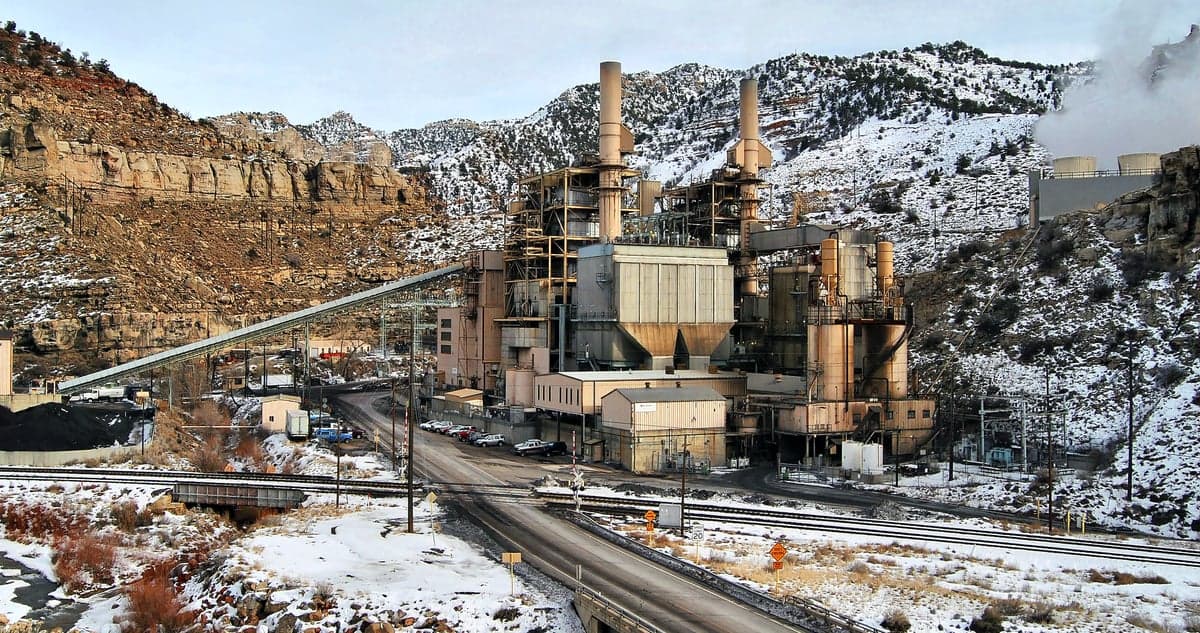
The railroad was the catalyst, but coal was the magnet. The railroad needed fuel, and the Carbon County coalfields—among the richest bituminous deposits in the West—drew a massive, multi-ethnic labor force between 1880 and 1920. The first major wave was composed of experienced miners from the British Isles—Welsh, English, and Scots—who settled in Helper, the railroad's division point, and in the now largely depopulated mining camps of Castle Gate and Kenilworth. They were followed quickly by Southern and Eastern Europeans: Italians, Greeks, Slavs, and Croats, who clustered in Price and the neighboring town of Wellington. By 1910, Carbon County had one of the highest foreign-born percentages of any county in the interior West, with dozens of languages spoken in the mine boarding houses.
The 1920s and 1930s brought a second wave: Dust Bowl refugees from Oklahoma, Kansas, and Arkansas, who arrived seeking mine work and settled in the unincorporated communities of Spring Glen and Carbonville. These "Okies" were largely Protestant and English-speaking, and their arrival diluted the earlier Southern European Catholic and Orthodox character of the mining towns. The county's population peaked in the 1940s at over 20,000, driven by wartime coal demand. However, the post-war shift to diesel locomotives and natural gas decimated the coal economy; by 1960, the population had fallen to roughly 21,000, and many of the smaller camps—Hiawatha, Sunnyside, and Columbia—began their slow decline into ghost towns.
Modern era (post-1965)
The 1965 Hart-Cellar Act, which abolished national-origin quotas, had almost no direct effect on Carbon County. With a foreign-born population of just 1.1% today, the county remains one of the least immigrant-reliant areas in the United States. The demographic shifts that did occur post-1965 were domestic and internal, driven by the boom-and-bust cycles of the energy industry rather than by international migration.
The most significant change has been the growth of the Hispanic population, which rose from under 5% in 1970 to 13.2% today. This growth was not driven by new international arrivals but by the northward migration of Hispanic families from New Mexico and southern Colorado, many of whom trace their ancestry in the region back to Spanish colonial settlements of the 1700s. These families settled primarily in Price and Helper, where they work in the remaining coal mines, the power plants at Castle Dale (in adjacent Emery County), and the service sector. The Hispanic community is largely U.S.-born, English-dominant, and integrated into the local workforce, rather than forming a distinct enclave.
Domestically, the county has experienced a slow but steady out-migration of younger, college-bound residents, a trend reflected in the low 18.4% college-attainment rate. The coal industry's long-term decline—employment fell from over 2,000 miners in the 1980s to under 500 today—has pushed many younger families to the Wasatch Front cities of Salt Lake City and Provo. In their place, the county has attracted a modest influx of retirees and remote workers drawn by the low cost of housing and the dramatic scenery of the Book Cliffs and the San Rafael Swell. The Asian population (East and Southeast Asian) is negligible at 0.3%, and the Black population is 0.5%, both concentrated almost entirely in Price, the county seat and only real commercial center.
The future
Carbon County's population is projected to remain essentially flat over the next two decades, hovering between 20,000 and 21,000. The county is becoming slightly more Hispanic—the share is expected to reach 16-18% by 2040—but this growth is slow and will not fundamentally alter the county's white-majority character. The East/Southeast Asian and Black populations will likely remain under 1% each, and the Indian-subcontinent population is effectively zero and is not projected to grow given the absence of tech or academic employers that typically attract that demographic.
The more consequential shift is geographic and economic. The historic mining towns of Helper and Price are increasingly becoming bedroom communities for workers commuting to the Uinta Basin oil and gas fields to the north, while the old coal camps like Kenilworth and Castle Gate continue to depopulate. The county is also seeing a slow diversification of its economy into tourism—the Nine Mile Canyon rock art site and the Manti-La Sal National Forest draw visitors—which is bringing a small number of new residents to Wellington and the rural areas south of Price. The cultural identity is shifting from a coal-mining past to a broader "energy and outdoors" identity, but the social fabric remains deeply rooted in the Latter-day Saint and Catholic traditions that have coexisted here for over a century.
For someone moving to Carbon County today, the bottom line is this: you are entering a stable, aging, and culturally homogeneous community where the cost of living is low, the outdoor recreation is exceptional, and the demographic future is one of slow, incremental change rather than transformation. The Hispanic community is growing but assimilating, the white population is stable but aging, and the county's character remains defined by its working-class, resource-extraction history. It is a place where newcomers are welcomed if they respect the local rhythms—and where the next 20 years will look much like the last 20, only with fewer coal trains and more mountain bikers.

* Values derived from national, state, county, city and local statistics and may differ in a specific area. Last updated: 2026-10-23T08:49:36.000Z
Narrative content on this page is AI-generated and may contain mistakes. Verify any details that matter before acting on them.
ReloMaps may earn a commission from affiliate links at no extra cost to you.

