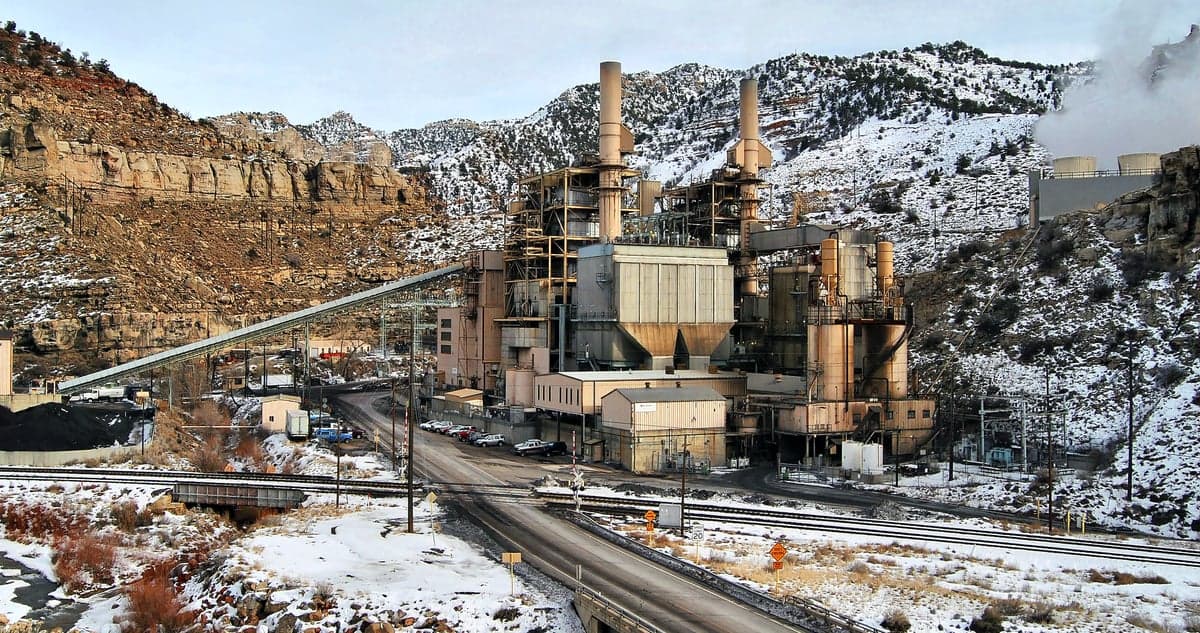
Photo: Wikipedia
Personal Sovereignty in Carbon County
Viable for self-reliance. Generally workable, though some barriers may limit total independence.
What does Personal Sovereignty tell us?
Personal Sovereignty measures your capacity for self-reliance and independence with minimal government friction. Higher scores mean fewer barriers between you and the way you want to live... but it assumes you have the space you need and good neighbors.
What does this tell us?
Personal Sovereignty measures your capacity for self-reliance and independence with minimal government friction. Higher scores mean fewer barriers between you and the way you want to live... but it assumes you have the space you need and good neighbors.
State Policy
Energy independence: Net exporter (108% of energy produced in-state)
Personal Liberty
Homesteading

Personal Liberty Analysis
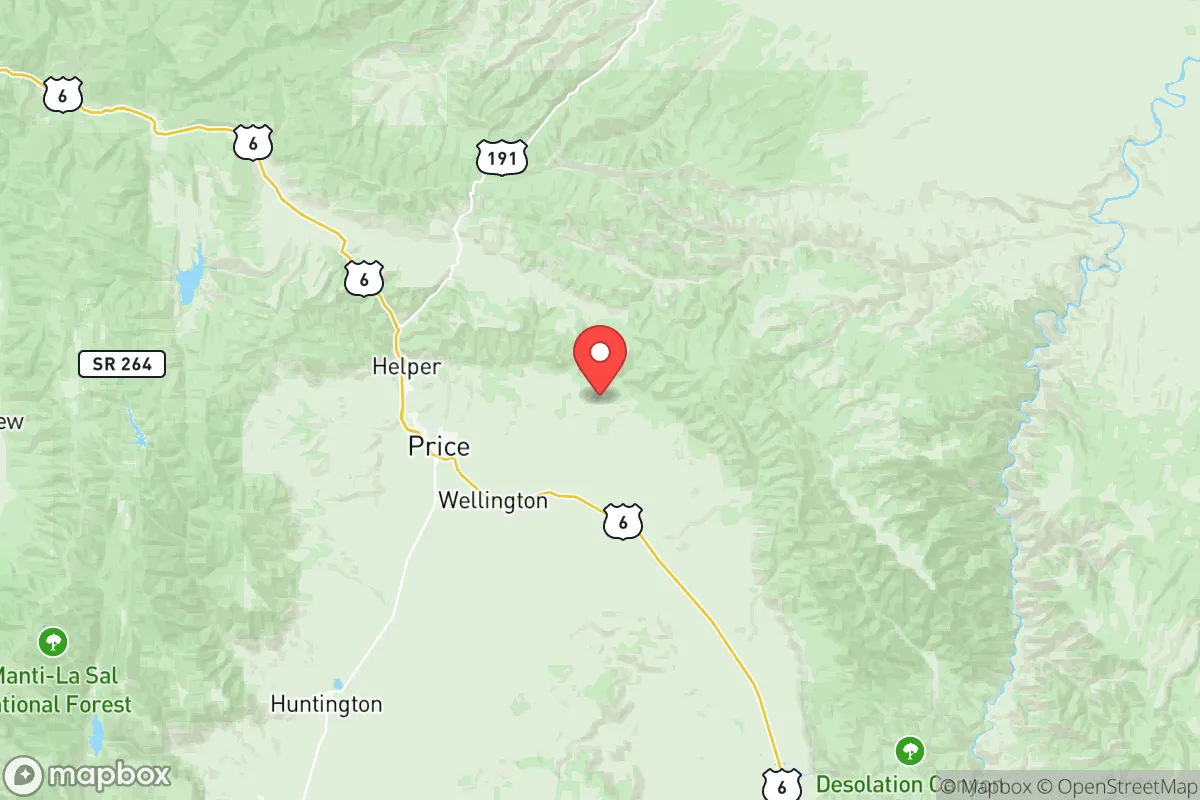
Carbon County, Utah, offers one of the most autonomy-friendly environments in the Intermountain West, combining a light-touch regulatory culture with a deep-rooted tradition of self-reliance. Anchored by the communities of Price and Helper, this eastern Utah county sits in a region where state preemption laws, low property taxes, and a pronounced gun culture create a distinctly hands-off atmosphere compared to the Wasatch Front. For individuals and families weighing personal sovereignty, Carbon County presents a practical, no-frills alternative to the increasingly managed urban corridors of Salt Lake City or Provo.
Tax burden and regulatory posture across Carbon County
Utah’s statewide framework keeps Carbon County’s tax and regulatory load notably light. The state’s property tax system is among the most constrained in the nation, with a constitutional cap that keeps effective rates low — Carbon County’s combined county and municipal rates typically land well under 1% of assessed value, a fraction of what homeowners pay in states like Texas or New York. There is no state income tax on Social Security benefits, and the flat 4.55% individual income tax rate applies uniformly, with no county-level add-ons. Sales tax in Price and Helper hovers around 7.35%, slightly above the state base due to local option levies, but still competitive with national averages.
Regulatory posture varies meaningfully within the county. Price, the county seat and largest city, operates with a pragmatic, small-city permitting process — most residential building permits are issued within days, not months, and there is no countywide zoning overlay that restricts rural property use. Helper, the historic railroad town just north of Price, is even more permissive, with minimal municipal interference in residential projects and a reputation for letting property owners do as they please. By contrast, the unincorporated areas around Wellington and East Carbon fall under county jurisdiction, where zoning is limited to basic health and safety codes, leaving substantial latitude for workshops, accessory structures, and agricultural uses. The county’s planning department operates with a staff of fewer than ten, a structural reality that keeps bureaucratic friction low.
Self-defense and gun law specifics in Carbon County
Utah is a constitutional carry state, and Carbon County embraces that framework without local overlay. Permitless carry is legal for anyone 21 or older — and 18 or older for those on active military duty — meaning no license is required to carry a concealed firearm in Price, Helper, or anywhere else in the county. For those who want reciprocity with other states, a Utah concealed firearm permit is shall-issue, with the county sheriff’s office in Price processing applications typically within 60 days. The state’s preemption statute is absolute: no city or county in Utah, including Carbon, may enact any ordinance regulating the possession, sale, or transfer of firearms, so local governments cannot create the patchwork restrictions seen in states like Colorado or California.
Use-of-force law in Utah is similarly permissive. The state’s "stand your ground" statute, codified in Utah Code 76-2-402, removes any duty to retreat in any place where a person is lawfully present, and provides civil immunity for justified use of force. Castle doctrine protections extend not just to dwellings but to vehicles and occupied structures, a detail that matters in a county where hunting and outdoor recreation are central to daily life. The gun culture here is not performative — it is practical. The Carbon County Sportsman’s Club range outside Price sees regular use, and firearm sales at local FFLs in Helper and Wellington are routine, with no waiting periods beyond the federal background check.
Self-reliance and homesteading viability in Carbon County
Homesteading in Carbon County is not a lifestyle aspiration — it is a lived reality for a significant portion of the population. The county’s rural character means that parcels of 1 to 5 acres outside Price and Helper are readily available in the $30,000 to $80,000 range, with larger tracts of 20 to 40 acres common in the outlying areas near Sunnyside and Kenilworth. County zoning in these unincorporated areas is minimal: no minimum square footage for dwellings, no restrictions on livestock, and no HOA-style covenants that dictate exterior appearance. Off-grid feasibility is genuinely high, with year-round surface water in the Price River drainage and abundant groundwater in the valley floor, though well permits require a modest county application.
Solar viability is a standout feature. Carbon County receives over 300 days of sunshine annually, and the state’s net metering policy through Rocky Mountain Power allows grid-tied systems to offset nearly all consumption. For those seeking full independence, the county’s building department does not require connection to municipal utilities for rural properties — a septic system permit and a well are the only prerequisites. The local culture reinforces this independence: Price’s weekly farmers market and the Helper Farmers Market both feature local producers, and the county’s agricultural extension office in Price offers free classes on canning, livestock management, and water rights. The one constraint to note is water rights — Utah is a prior-appropriation state, so securing a legal water right for irrigation requires due diligence, but the county’s small population means competition for new filings is minimal.
Personal liberties: parental rights, medical autonomy, speech, and property
Utah’s legal framework provides strong protections for personal liberties that resonate with Carbon County residents. Parental rights are explicitly protected under Utah Code 53G-6-802, which requires schools to notify parents of any curriculum involving human sexuality and mandates opt-in consent — a provision that Price and Helper school districts implement without friction. The state’s parental rights statute, passed in 2023, further establishes that parents have the fundamental right to direct their children’s education and healthcare, and Carbon County’s school board has been publicly supportive of these measures.
Medical autonomy is a mixed but generally favorable picture. Utah does not mandate COVID-19 vaccinations for any population, and Carbon County’s health department never imposed mask mandates beyond the brief 2020 state order. The state has enacted protections for conscientious objection to medical procedures, and there is no state-level vaccine passport system. However, Utah does require immunizations for school attendance, with a personal exemption available through a simple online form — a process that local parents report as straightforward. On the property front, Utah’s takings law is among the most protective in the nation, with the 2021 Private Property Protection Act requiring government entities to compensate landowners for any regulatory action that diminishes property value by 20% or more. Carbon County has never invoked eminent domain for private development, and the county commission has a stated policy of opposing any federal land transfer that would restrict local land use.
Free speech protections are robust, with Utah’s constitution providing stronger protections than the federal First Amendment in several areas, including a specific prohibition on prior restraint. The local media environment reflects this — the Sun Advocate in Price and the Helper Journal both operate without editorial interference, and public comment periods at county commission meetings routinely run long, with residents freely challenging staff recommendations.
Relative to other regions of the country, Carbon County ranks in the top tier for personal sovereignty. The combination of constitutional carry, absolute firearm preemption, minimal rural zoning, low property taxes, and explicit statutory protections for parental rights creates an environment where government friction is the exception rather than the rule. Compared to the Wasatch Front’s increasingly urbanized counties, or the heavily regulated coastal states, Carbon County offers a level of personal latitude that is increasingly rare — and for those who value self-reliance as a daily practice, the communities of Price, Helper, Wellington, and East Carbon deliver on that promise without requiring a fight.

* Values derived from national, state, county, city and local statistics and may differ in a specific area. Last updated: 2026-10-23T08:49:36.000Z
Narrative content on this page is AI-generated and may contain mistakes. Verify any details that matter before acting on them.
ReloMaps may earn a commission from affiliate links at no extra cost to you.

