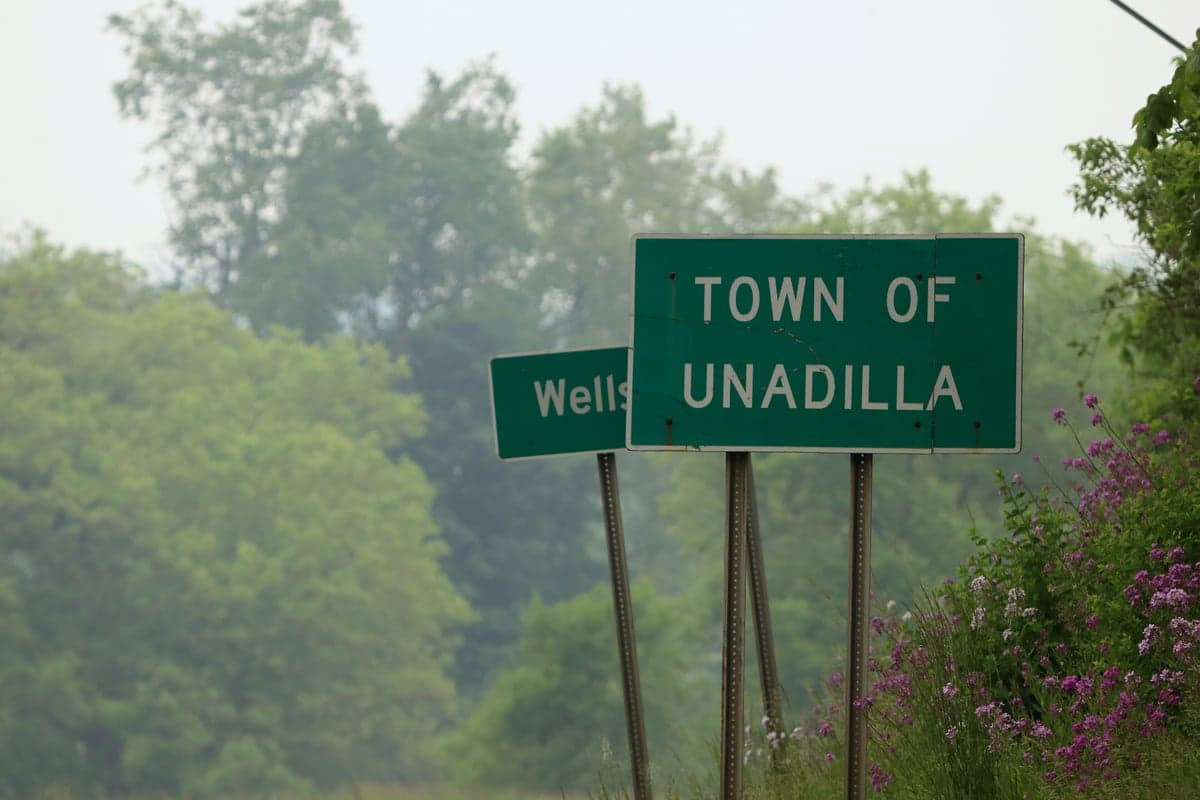
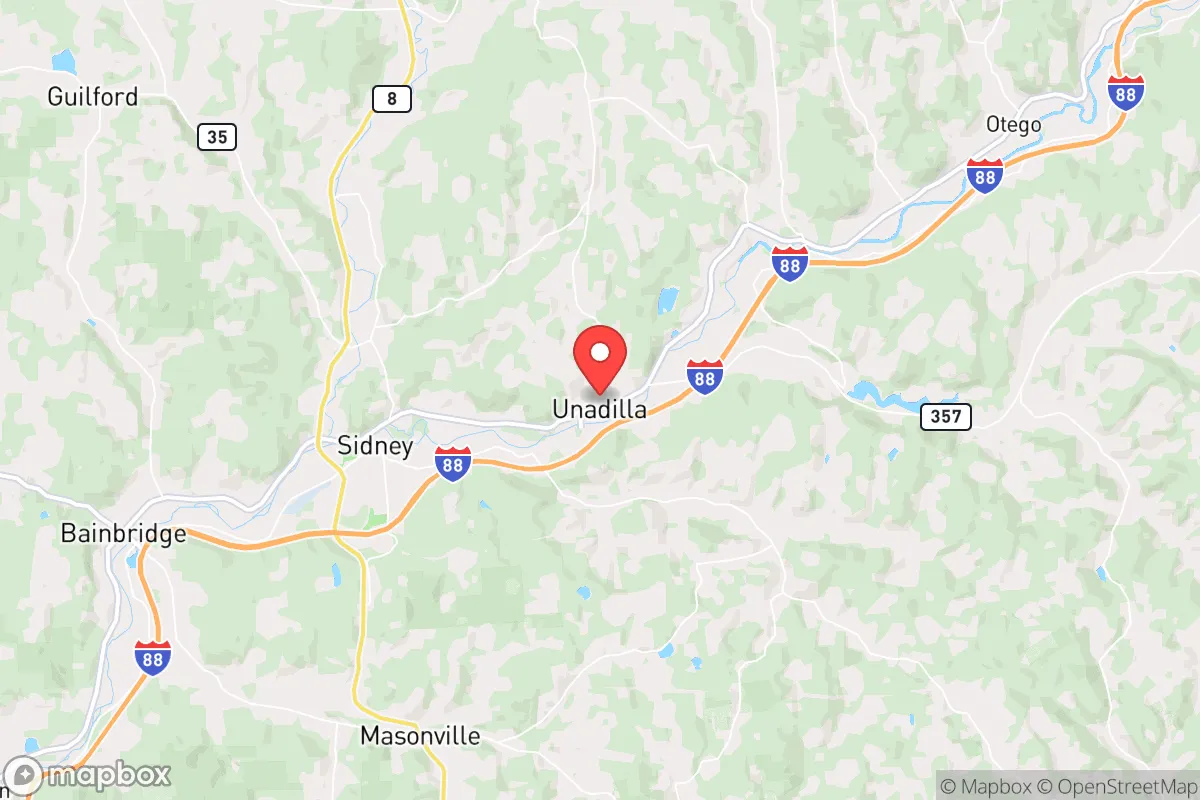
Photo: Wikipedia
Political ClimatePolitical Climate in Unadilla, NY
District shown is the primary district for this city’s centroid. Cities may span multiple districts.
Local Political AnalysisPolitical Analysis of Unadilla, NY
Unadilla, New York, sits in a pocket of the state that feels a world away from the political energy of New York City. The village and its surrounding Otsego County lean slightly Democratic by the numbers—Cook PVI of D+1—but that single point masks a deeply mixed, independent-minded electorate. In practice, Unadilla is a place where a conservative farmer and a liberal artist can be neighbors, and where local elections often turn on personality and road maintenance, not party registration. The trajectory here is subtle: the area is slowly trending more Democratic as second-home owners and remote workers from downstate trickle in, but the change is measured in decades, not election cycles.
How it compares
Compared to New York, NY, Unadilla is a political outlier. The city of New York is a Democratic stronghold with a Cook PVI of D+30 or higher, where Republicans are a distinct minority in most boroughs. Unadilla’s D+1 rating means it’s essentially a swing precinct within a swing county. Drive 20 minutes east to Oneonta, and you’ll find a more liberal college-town vibe, anchored by SUNY Oneonta and Hartwick College. Head 15 miles west to Norwich or 30 miles north to Cooperstown, and the political tone shifts again—Cooperstown leans left due to tourism and the Baseball Hall of Fame, while Norwich is more conservative. Unadilla itself, with its agricultural roots and small-town character, often votes more conservatively than the county average, especially in local races. In the 2024 presidential election, Otsego County went for Biden by about 5 points, but Unadilla’s precincts were closer to a 50-50 split, with some even tipping red. That’s a far cry from the 80-20 margins you’d see in Manhattan.
What this means for residents
For a conservative resident, Unadilla offers a comfortable environment where traditional values are respected, gun rights are generally supported, and you won’t feel out of place flying a Trump flag on your porch. Local government tends to be pragmatic and low-tax, with a focus on infrastructure and public safety rather than social policy. For a liberal resident, the same community is welcoming enough—you’ll find like-minded folks at the library or the farmers market—but you won’t see the same level of progressive activism or city-funded programs you’d get in New York. The practical reality is that both sides can coexist because the issues that dominate city politics—rent control, congestion pricing, sanctuary city status—barely register here. What matters in Unadilla is the school budget, the condition of Route 7, and whether the local diner stays open past 2 PM. That shared focus on daily life keeps the political temperature lower than in the city.
The cultural and policy distinctions between Unadilla and New York, NY are stark. In the city, you have a dense, transit-oriented, 24-hour economy with strict rent regulations, a massive public school system, and a mayor who wields national influence. In Unadilla, you have a village of about 1,000 people, where the biggest employer is the school district or a local manufacturer like Amphenol, and where town board meetings are held in a small room above the fire station. Property taxes in Otsego County are high by national standards—around 2.5% of assessed value—but that’s still lower than many downstate suburbs. The pace of life is slower, the political debates are more personal, and the outcome of a local election can hinge on who shows up to the monthly town hall. For anyone moving from New York City, the biggest adjustment isn’t the politics—it’s realizing that here, your vote really does feel like it counts, because it’s one of only a few hundred.

State Political ClimatePolitical Climate in New York
State Political AnalysisPolitical Environment in the State
New York State has been a reliably blue stronghold for decades, but the political picture is far more nuanced than the statewide vote totals suggest. The Democratic coalition is dominant, powered by New York City and its inner suburbs, but the rest of the state—from the Hudson Valley to the Great Lakes—has been trending redder, creating one of the most dramatic urban-rural divides in the country. Over the last 10-20 years, the state has shifted left on social and economic policy, but that shift has been met with growing conservative resistance in the exurbs and upstate, where many residents feel increasingly disconnected from Albany’s priorities.
Urban vs. rural divide
The political map of New York is essentially a tale of two states. New York City—particularly Manhattan, Brooklyn, and the Bronx—is the engine of Democratic dominance, routinely delivering 70-80% of its vote to Democratic candidates. The inner-ring suburbs of Westchester, Nassau, and Suffolk counties on Long Island have historically been swing areas but have moved left in recent cycles, especially after the Trump era. In contrast, the vast majority of upstate New York—from the Capital Region west to Buffalo and north to the Adirondacks—is now reliably Republican. Counties like Erie (Buffalo), Monroe (Rochester), and Onondaga (Syracuse) are Democratic-leaning only because of their urban cores; the surrounding rural towns vote heavily red. The real flashpoints are the exurbs and small cities: Dutchess County and Orange County in the Hudson Valley have flipped from purple to light red, while Staten Island remains the only NYC borough where Republicans can win local races. This divide means that a conservative moving to, say, Clifton Park or Pittsford will find a very different political environment than someone settling in Brooklyn or Ithaca.
Policy environment
New York’s policy environment is defined by high taxes, strong regulation, and expansive government services. The state has a progressive income tax with rates up to 10.9% for top earners, plus some of the highest property taxes in the nation—especially in the downstate suburbs. The regulatory posture is business-heavy: strict labor laws, a $15 minimum wage that adjusts with inflation, and aggressive environmental mandates like the Climate Leadership and Community Protection Act, which aims for zero-emission electricity by 2040. On education, New York spends more per pupil than almost any other state, but school funding is heavily tied to local property taxes, creating wide disparities between wealthy suburbs and poorer rural districts. Healthcare is dominated by large hospital systems like Northwell Health and NYU Langone, and the state runs its own health insurance exchange under the ACA. Election laws are among the most liberal in the country: no-excuse absentee voting, early voting, automatic voter registration, and same-day registration are all in place. For a conservative relocator, the tax burden and regulatory climate are the biggest practical concerns, while the voting laws and social policies may feel alienating.
Recent policy direction
Albany has moved decisively left in the last five years, with a series of laws that touch nearly every liberty a relocator might weigh. On gun rights, the state passed the Concealed Carry Improvement Act (CCIA) in 2022 after the Bruen Supreme Court decision, which created "sensitive location" restrictions so broad that many upstate counties sued. The law also requires a 16-hour training course and a "good moral character" review for permits. On parental and education rights, the state has expanded "sanctuary" policies for transgender students and mandated LGBTQ-inclusive curricula in public schools, which has sparked fierce debates in conservative districts like Williamson and Orleans County. Speech and privacy are protected by the state constitution, but a 2023 law banned "hateful conduct" on social media platforms, raising free-speech concerns. Medical and bodily autonomy is strongly protected: New York codified abortion rights into law in 2019 and passed a shield law protecting providers who prescribe abortion pills to patients in other states. Property rights are constrained by rent control laws in NYC and some suburbs, and by the state’s aggressive use of eminent domain for development projects. On voting, the state has expanded ballot access to the point where some upstate counties have struggled to staff early voting sites. The overall direction is clear: Albany is prioritizing progressive social policy and government expansion, with little appetite for the tax cuts or deregulation that conservatives favor.
Civil unrest & political movements
New York has a long history of political activism, and recent years have seen both left- and right-wing movements in full force. The 2020 Black Lives Matter protests in NYC were among the largest in the country, and the state responded with police reform mandates that many upstate departments resisted. On the right, the "Second Amendment Sanctuary" movement has spread to dozens of upstate counties, with local sheriffs refusing to enforce parts of the CCIA. Immigration politics are a constant flashpoint: New York City’s "sanctuary city" policy and the state’s "Green Light Law" (which allows undocumented immigrants to get driver’s licenses) have led to legal battles with the federal government. The influx of asylum seekers to NYC since 2022 has strained resources and fueled resentment in both the city and upstate, where some towns have passed resolutions opposing relocation. Election integrity controversies have been relatively muted compared to other states, but the 2020 and 2022 cycles saw lawsuits over mail-in ballot procedures. A small but vocal secession movement exists in upstate counties like Steuben and Tioga, where some residents have proposed breaking away to form a new state. For a new resident, the most visible sign of this tension is the stark difference in political signage and local government priorities between, say, New Paltz (a progressive college town) and Lockport (a conservative small city).
Projection
Over the next 5-10 years, New York’s political trajectory points toward continued polarization. The downstate population is growing slowly or stagnating, while upstate is losing residents, which could further concentrate Democratic power in NYC and its suburbs. However, the exurbs of the Hudson Valley and Long Island are seeing an influx of former city residents who may lean moderate or conservative on taxes and crime, potentially creating more competitive races in those areas. The state’s high cost of living and tax burden are driving some middle-class families to Florida, Texas, and the Carolinas, which could accelerate the demographic shift toward a more liberal, wealthier electorate in the downstate core. Albany is unlikely to reverse course on gun control, abortion rights, or climate policy, but the growing upstate backlash could lead to more local preemption battles and court challenges. For someone moving in now, expect the political environment to remain deeply divided, with the state government continuing to push progressive policies while rural and exurban communities resist. The practical takeaway: if you’re conservative, you’ll find like-minded communities in the exurbs and upstate, but you’ll be fighting an uphill battle at the state level. If you’re liberal, you’ll find a government that largely aligns with your values, but you’ll pay for it in taxes and cost of living.
For a new resident, the bottom line is that New York offers a stark choice: live in a blue city or suburb where the state’s policies are embraced, or live in a red town where you’ll feel like an outlier in state elections but can find local community. The tax burden is real and will hit your wallet, especially if you’re a high earner or a homeowner. The political climate is not for everyone, but if you know what you’re getting into—and you pick your town carefully—you can find a place that fits your values, whether that’s the progressive energy of Buffalo’s Elmwood Village or the conservative quiet of Geneseo’s countryside.
* Values derived from national, state, county, city and local statistics and may differ in a specific area. Last updated: 2026-10-21T11:36:40.000Z
Narrative content on this page is AI-generated and may contain mistakes. Verify any details that matter before acting on them.
ReloMaps may earn a commission from affiliate links at no extra cost to you.

