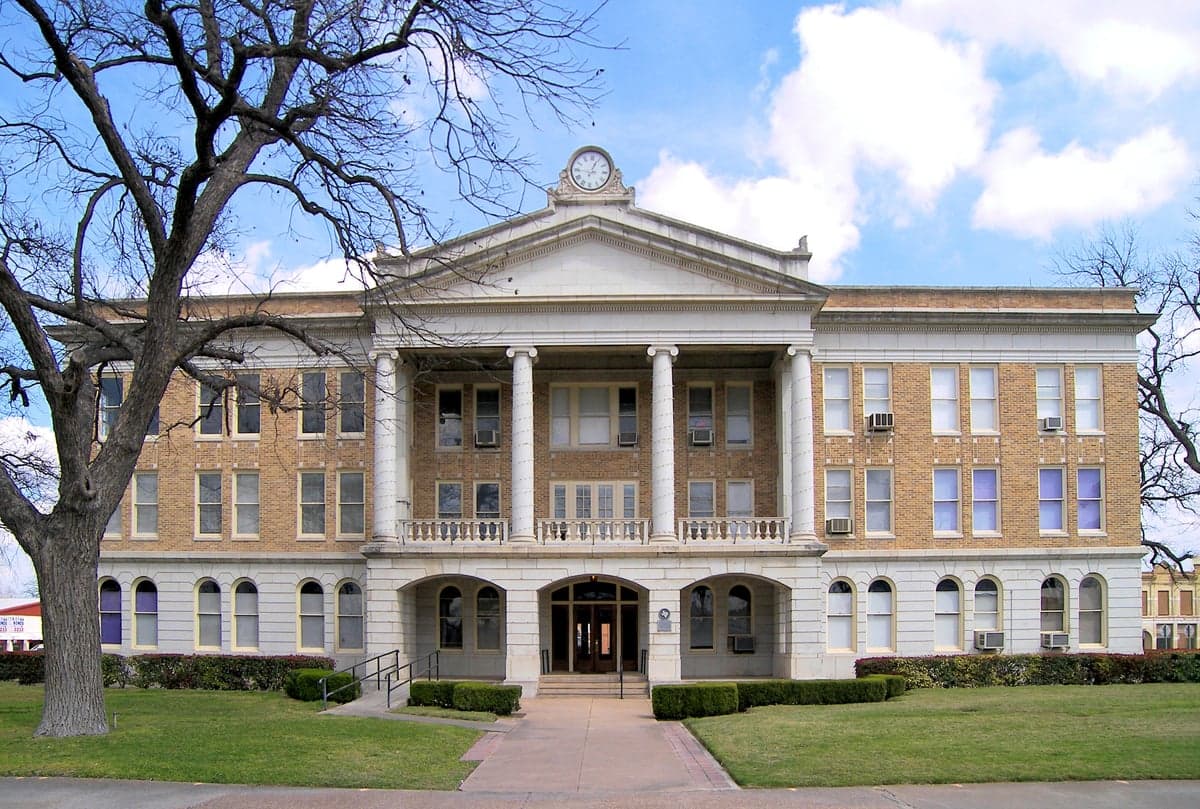
Photo: Wikipedia
Personal Sovereignty in Uvalde County
Strong independent fundamentals that actively favor personal liberty and low regulation.
What does Personal Sovereignty tell us?
Personal Sovereignty measures your capacity for self-reliance and independence with minimal government friction. Higher scores mean fewer barriers between you and the way you want to live... but it assumes you have the space you need and good neighbors.
What does this tell us?
Personal Sovereignty measures your capacity for self-reliance and independence with minimal government friction. Higher scores mean fewer barriers between you and the way you want to live... but it assumes you have the space you need and good neighbors.
State Policy
Energy independence: Net exporter (195% of energy produced in-state)
Personal Liberty
Homesteading

Personal Liberty Analysis
Uvalde County offers one of the more autonomy-friendly environments in Texas, combining the state’s constitutional carry regime with a light-touch county regulatory posture that favors self-reliance over municipal oversight. The county seat, Uvalde, anchors the region, but the unincorporated areas around Concan, Knippa, and Sabinal present distinctly different sovereignty profiles than the city limits. For individuals and families weighing personal freedom against practical constraints, this is a county where the default answer from local government is usually "yes, unless there's a specific reason not to."
Tax burden and regulatory posture across the county
Texas has no state income tax, and Uvalde County keeps the local burden comparatively modest. The county’s total property tax rate hovers around 0.65% to 0.75% of assessed value, which is below the statewide average for rural counties and significantly lighter than suburban rings around San Antonio or Austin. The Uvalde Consolidated Independent School District is the largest single taxing entity, but the overall effective rate remains manageable for landowners. Homestead exemptions in Texas automatically shield at least $40,000 of home value from school taxes, and Uvalde County applies the standard optional exemptions for seniors and disabled residents.
Regulatory posture differs meaningfully between the city of Uvalde and the county’s unincorporated areas. The city enforces standard municipal codes — building permits, zoning districts, and water utility hookups — but the county itself has no county-wide zoning ordinance. In unincorporated areas like Knippa, Sabinal, and the Frio River corridor near Concan, property owners face minimal land-use restrictions. There is no county subdivision regulation beyond state minimums, meaning a landowner can split a parcel, place a manufactured home, or run a small agricultural operation without navigating a planning commission. The city of Uvalde requires permits for structures over 200 square feet, but the county does not issue building permits at all outside city limits. For a relocation audience, the practical takeaway is simple: if you want maximum regulatory freedom, buy outside the Uvalde city limits.
Self-defense law and gun culture in Uvalde County
Texas is a constitutional carry state, and Uvalde County reflects that culture without the friction found in more urbanized counties. Since September 2021, any adult 21 or older who can legally possess a firearm may carry it openly or concealed without a permit. The county sheriff’s office does not maintain a discretionary permit process that could create delays, and there are no county-level restrictions on magazine capacity, firearm types, or ammunition sales. The Uvalde County Sheriff’s Office is generally responsive to concealed carry questions, and local gun shops in Uvalde city proper report steady demand for both self-defense handguns and long guns for hunting.
Use-of-force law in Texas follows the Castle Doctrine and Stand Your Ground statutes. Texas Penal Code 9.32 presumes a reasonable fear of deadly force if an intruder unlawfully enters a home or vehicle, and there is no duty to retreat in any place where a person is lawfully present. Uvalde County juries have historically been sympathetic to self-defense claims, consistent with the broader rural Texas pattern. For families, the practical environment is permissive: no waiting periods, no state-level registration, and no red-flag law on the books as of 2026. The county’s proximity to the border — roughly 60 miles from Del Rio — means some federal checkpoints exist on major highways, but these do not affect legal gun ownership or transport within the county.
Self-reliance and homesteading viability in the Hill Country fringe
Uvalde County sits at the western edge of the Texas Hill Country, and homesteading viability varies sharply by location. Unincorporated parcels in the northern part of the county, particularly around Concan and the Nueces River canyon, offer 5-to-50-acre tracts with limestone soils, live oak cover, and seasonal creek access. These properties are well-suited for rainwater harvesting, solar installation, and small-scale livestock. The county does not require permits for rainwater collection systems, and Texas law explicitly protects the right to harvest rainwater on your own property — a meaningful advantage for off-grid living.
South of Uvalde city, toward Knippa and the county line with Zavala County, the terrain flattens into brush country with more clay soils. Land here is cheaper — often $2,000 to $4,000 per acre versus $5,000 to $8,000 near Concan — but water access is more challenging. Well drilling in the county typically runs $15,000 to $25,000 depending on depth, and the Edwards-Trinity Aquifer provides reliable yields in most areas. The county has no zoning that would prohibit off-grid solar, composting toilets, or alternative building methods like straw bale or rammed earth construction. The main constraint is the Uvalde County Appraisal District’s wildlife or agricultural valuation requirements, which can reduce property taxes by up to 90% if you maintain qualifying ag use — a significant incentive for landowners who run even a small herd or hay operation.
Personal liberties: parental rights, medical autonomy, and property
Texas law provides a robust framework for parental rights, and Uvalde County schools operate within that framework. Parents have statutory authority to opt children out of sex education, and Texas does not require vaccination for school attendance if parents file a conscientious exemption. The Uvalde Consolidated ISD and the smaller Utopia ISD in the county’s northern reaches both follow state curriculum standards, but local school boards in rural Texas tend to be more responsive to parental input than their suburban counterparts. The county has no local ordinances restricting medical choice, and Texas law prohibits local governments from mandating COVID-19 vaccines or masks — a posture that remains in effect through 2026.
Property rights are strongly protected. Texas has no state-level property tax on personal property (vehicles, equipment, livestock), and Uvalde County does not impose a county inventory tax. The county’s approach to enforcement is complaint-driven rather than proactive; code enforcement officers in the city of Uvalde respond to complaints about tall grass or junk vehicles, but the county sheriff’s office does not patrol for aesthetic violations in unincorporated areas. Speech is protected under the Texas Religious Freedom Restoration Act, and the county has no local ordinances restricting signage, political expression, or public assembly beyond state traffic laws. The city of Uvalde does require a permit for parades or large gatherings, but this is standard municipal practice and does not apply to the county’s unincorporated communities.
One notable liberty consideration: Uvalde County is a dry county for alcohol sales in unincorporated areas, though the city of Uvalde allows beer and wine sales with a permit. This reflects a local moral preference rather than a regulatory burden, and it does not restrict private possession or consumption on your own property.
Relative to other Texas regions, Uvalde County ranks high on the personal sovereignty spectrum. It lacks the aggressive municipal regulation found in Austin or San Antonio, the high property tax rates of the Dallas suburbs, and the coastal restrictions of Galveston or Corpus Christi. Compared to neighboring counties like Real or Edwards, Uvalde offers better infrastructure — a regional hospital, multiple grocery stores, and reliable broadband in town — while retaining the unincorporated freedom that makes homesteading viable. For a relocation reader who wants Texas liberty without total isolation, the county’s sweet spot is the northern corridor between Uvalde and Concan, where regulatory touch is lightest and the Hill Country lifestyle is most attainable.

* Values derived from national, state, county, city and local statistics and may differ in a specific area. Last updated: 2026-10-31T04:48:06.000Z
Narrative content on this page is AI-generated and may contain mistakes. Verify any details that matter before acting on them.
ReloMaps may earn a commission from affiliate links at no extra cost to you.

