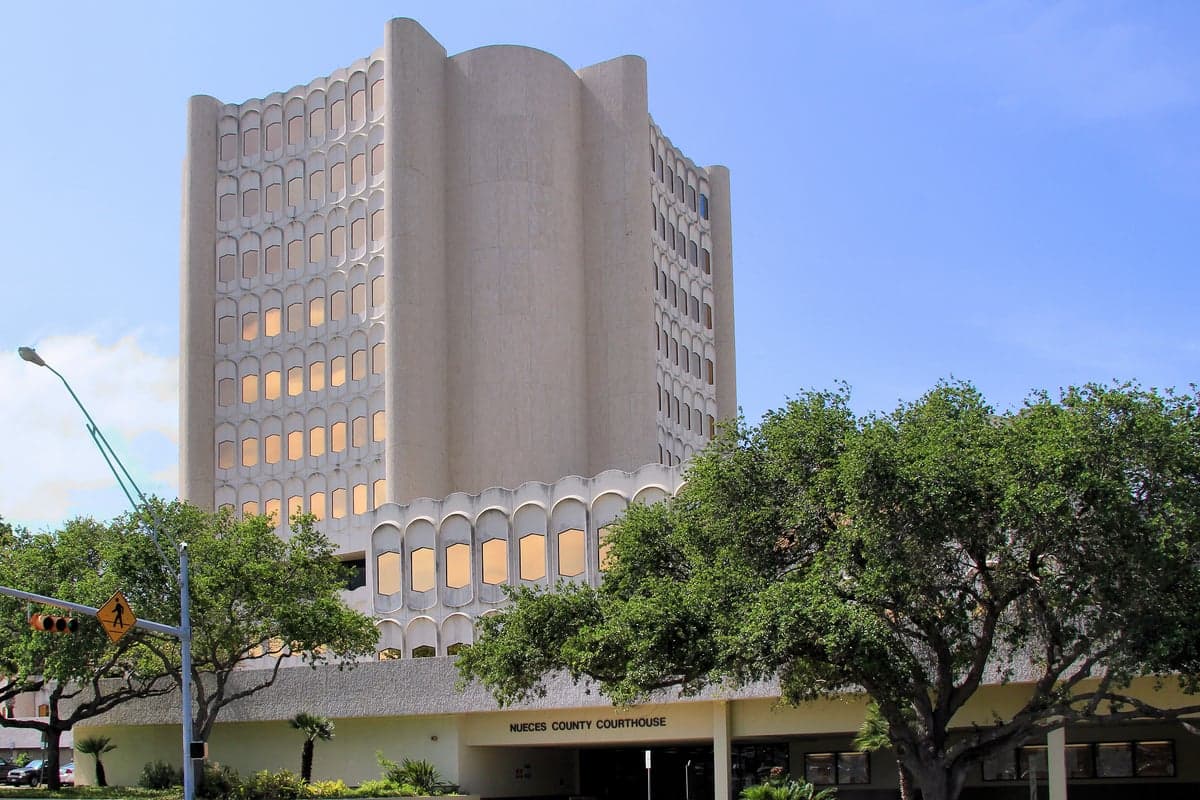
Photo: Wikipedia
Quality of Life in Nueces County
A livable area that tracks near national norms for affordability, walkability, and neighborhood health.
What does Quality of Life tell us?
Quality of Life measures an area by evaluating factors like cost of living, nearby amenities, country club access, airport proximity, socioeconomic signals and neighborhood character. For large states, this is a general average — quality of life can vary dramatically between metro areas, suburbs, and rural communities within the same state.
What does this tell us?
Quality of Life measures an area by evaluating factors like cost of living, nearby amenities, country club access, airport proximity, socioeconomic signals and neighborhood character. For large states, this is a general average — quality of life can vary dramatically between metro areas, suburbs, and rural communities within the same state.
Cost of Living
9% below national average
119%
The Real Cost of Living in Nueces County for 2026
| Tier | Individual | Family (4) |
|---|---|---|
| Survival | $20k | $37k |
| Comfortable | $38k | $56k |
| Luxury | $119k+ | $185k+ |
| Elite (Top 5%) | $141k+ | $218k+ |
Quality-of-Life Analysis
Nueces County offers a broad quality-of-life spectrum anchored by the coastal hub of Corpus Christi, then fanning out into smaller towns and unincorporated rural areas that each carry a distinct character. The county draws a mix of people: professionals and families who want urban amenities and port-related employment in the largest city, retirees and commuters seeking quieter subdivisions in the suburbs, and agricultural or ranching families who prefer the open spaces of the county's western and southern reaches. With a cost-of-living index of 91 — nine points below the national average — the county provides financial breathing room across most of its communities, though the specific trade-offs between convenience, space, and pace vary significantly by location.
Largest town(s) & population centers
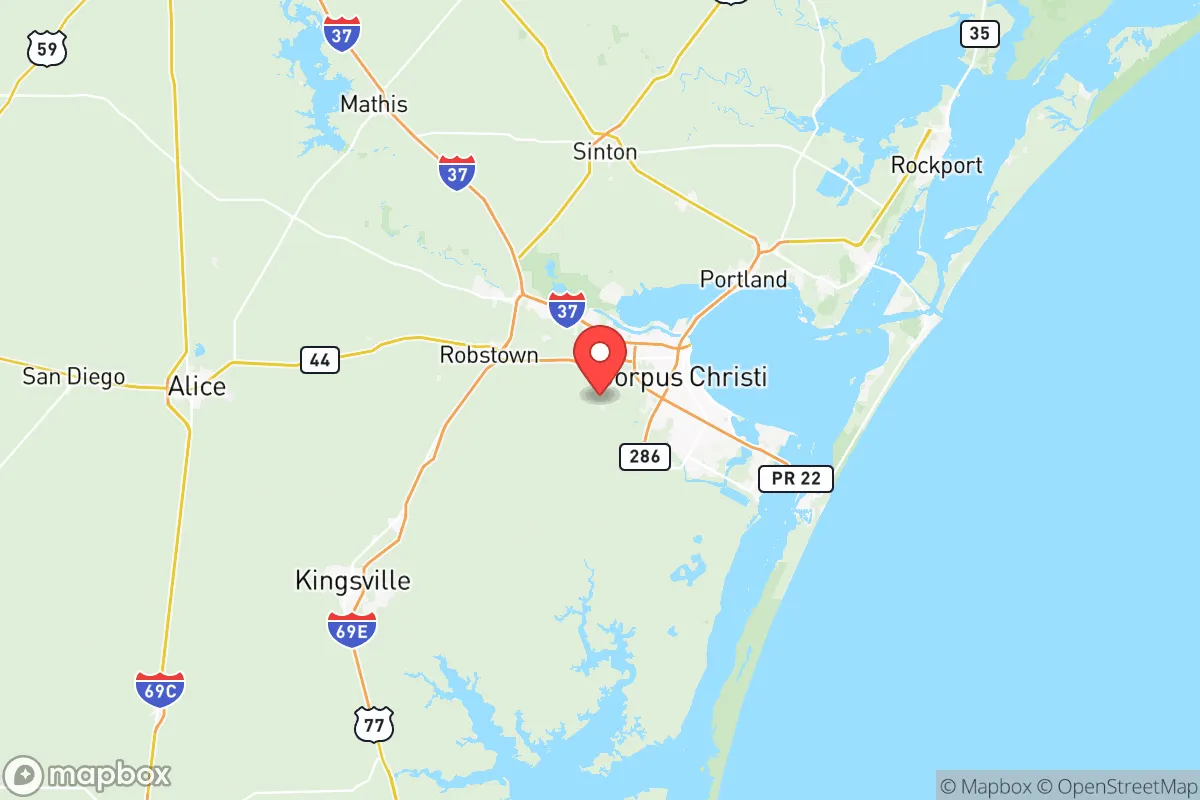
Corpus Christi is the county's dominant population center, home to roughly 320,000 residents and the region's primary employment, retail, and cultural engine. Daily life here revolves around the waterfront: the Port of Corpus Christi is a major economic driver, and the city's Northside and Southside neighborhoods offer distinct experiences. The Southside, anchored by La Palmera mall and the Corpus Christi Medical Center, is the fastest-growing part of the city, with newer subdivisions, chain retail, and a suburban feel. The Northside and downtown areas are older, with a mix of historic homes, the Texas State Aquarium, and the USS Lexington museum drawing visitors. Commute times across the city average about 21 minutes, well below the national norm, making it feasible to live in one part of town and work in another without significant traffic. The city also has a notable military presence from Naval Air Station Corpus Christi, which brings a steady population of service members and defense contractors.
Smaller towns & rural pockets
Outside Corpus Christi, Nueces County contains several smaller communities that offer a quieter, more affordable alternative. Robstown, about 15 miles west of Corpus Christi, is a working-class town of roughly 11,000 residents with deep agricultural roots and a growing industrial base tied to the port and nearby oil-and-gas activity. Port Aransas, located on Mustang Island and accessible via the JFK Causeway, is a coastal resort town that swells with tourists during summer but retains a small year-round population of about 3,000; it offers a beach-oriented lifestyle but comes with higher housing costs and seasonal congestion. Bishop and Driscoll, both small inland towns, are primarily residential communities for people who work in Corpus Christi or in regional agriculture. Unincorporated areas like Petronila and Chapman Ranch represent the county's rural fringe, where land is still used for cotton, grain, and cattle operations, and where residents often live on acreage with few neighbors and minimal services.
Cost & lifestyle range
The cost-of-living spread across Nueces County is meaningful. At the higher end, Port Aransas commands median home values well above the county average of $194,700, often exceeding $400,000 for beachfront or canal-front properties, and median rents above the county's $1,224 figure. The Southside of Corpus Christi is the next most expensive tier, with newer homes in master-planned communities like Bay Area and King's Crossing typically priced between $250,000 and $400,000. At the lower end, Robstown and Bishop offer median home values often below $150,000, and rents can fall under $900 for older units. The rural unincorporated areas offer the lowest land costs, but buyers must factor in well/septic maintenance, longer drives to grocery stores and medical care, and limited internet options in some pockets. Property taxes in Nueces County are relatively high — typical combined rates hover around 2.5% to 3.0% of assessed value — which partially offsets the low purchase prices in the cheaper areas.
The county works best for people who want coastal access without the premium pricing of Galveston or South Padre Island, and who are comfortable with a trade-off: Corpus Christi provides the jobs and amenities, while the smaller towns and rural areas offer space and lower entry costs. Families who prioritize short commutes and school choice tend to cluster in the Southside or in suburban Calallen (an unincorporated area northwest of the city with its own school district), while retirees and second-home buyers gravitate toward Port Aransas. Agricultural workers and those in the oilfield service industry often choose Robstown or the rural pockets for affordability and proximity to work sites. Nueces County is not a place of extremes — neither ultra-wealthy enclaves nor deep rural poverty dominate — but rather a practical, middle-market region where lifestyle is largely determined by how close one wants to be to the coast versus the open country.

Crime in Nueces County
Crime rates similar to the national median for U.S. locations.
Violent CrimeViolent Crime Analysis
Property CrimeProperty Crime Analysis
Crime Analysis
Nueces County, anchored by the city of Corpus Christi, presents a mixed safety picture where violent crime rates are slightly below the national average but property crime remains a persistent concern for residents. With a violent crime rate of 345.1 per 100,000 residents and a property crime rate of 1,794.2 per 100,000, the county's overall risk profile is shaped by the contrast between its urban core and more suburban or rural communities. Understanding where these crimes concentrate and how local law enforcement and judicial policies respond is essential for anyone considering a move to the Coastal Bend region.
Crime in context
Nueces County's violent crime rate of 345.1 per 100,000 sits roughly 10% below the national average of 380 per 100,000, but it is notably higher than the statewide Texas average of approximately 277 per 100,000. This means residents face a greater risk of violent victimization than in many other parts of Texas, though the county is not as dangerous as major urban centers like Houston or Dallas. The property crime rate of 1,794.2 per 100,000 is significantly elevated compared to both the national average (around 1,954) and the Texas average (roughly 2,200), placing Nueces County in a moderate range for property offenses. However, these aggregate numbers mask important differences between communities: Corpus Christi accounts for the vast majority of reported crime, while smaller towns like Port Aransas, Robstown, and Bishop experience substantially lower incident rates. The county's location along major shipping routes and its tourism economy in coastal areas contribute to seasonal fluctuations in theft and burglary.
What residents experience
Daily life in Nueces County involves navigating a reality where property crime—particularly vehicle burglary, theft from construction sites, and package theft—is far more common than violent confrontations. Residents in Corpus Christi neighborhoods such as Calallen, the Island, and the Southside report lower crime incidence, while areas near the downtown corridor and the Westside see higher concentrations of both violent and property offenses. A significant concern for many residents is the local criminal justice system's approach to prosecution and sentencing. Nueces County has seen progressive district attorneys and judges who have implemented policies such as reduced cash bail for certain offenses, diversion programs for repeat property offenders, and a general reluctance to seek maximum sentences. Critics argue these policies have contributed to a revolving-door effect where known offenders are quickly returned to the streets, undermining public confidence and potentially driving up property crime rates. The county's property crime rate, while not the highest in Texas, remains stubbornly elevated compared to more conservative jurisdictions in the state.
Neighborhood-level variation in Nueces County is pronounced and directly tied to both socioeconomic factors and policing strategies. Port Aransas, a coastal tourist destination, maintains very low violent crime rates but experiences seasonal spikes in theft and DUI-related incidents. Robstown and Bishop, smaller inland communities, report crime rates well below the county average, offering safer alternatives for families. In contrast, parts of Corpus Christi's central and west sides see violent crime rates that can double the county average. The county's reliance on a single major law enforcement agency—the Nueces County Sheriff's Office—combined with the Corpus Christi Police Department's resource constraints, means response times and proactive patrol coverage vary significantly by location. For prospective residents, choosing a neighborhood with strong community watch programs and proximity to well-funded police substations can meaningfully reduce personal risk. The overall safety trajectory will depend heavily on whether future judicial elections shift the county toward more traditional law-and-order policies or continue the current progressive approach.
* Values derived from national, state, county, city and local statistics and may differ in a specific area. Last updated: 2026-06-17T15:31:05.000Z
Narrative content on this page is AI-generated and may contain mistakes. Verify any details that matter before acting on them.
ReloMaps may earn a commission from affiliate links at no extra cost to you.

