
Photo: Wikipedia
Personal Sovereignty in Nueces County
Strong independent fundamentals that actively favor personal liberty and low regulation.
What does Personal Sovereignty tell us?
Personal Sovereignty measures your capacity for self-reliance and independence with minimal government friction. Higher scores mean fewer barriers between you and the way you want to live... but it assumes you have the space you need and good neighbors.
What does this tell us?
Personal Sovereignty measures your capacity for self-reliance and independence with minimal government friction. Higher scores mean fewer barriers between you and the way you want to live... but it assumes you have the space you need and good neighbors.
State Policy
Energy independence: Net exporter (220% of energy produced in-state)
Personal Liberty
Homesteading

Personal Liberty Analysis
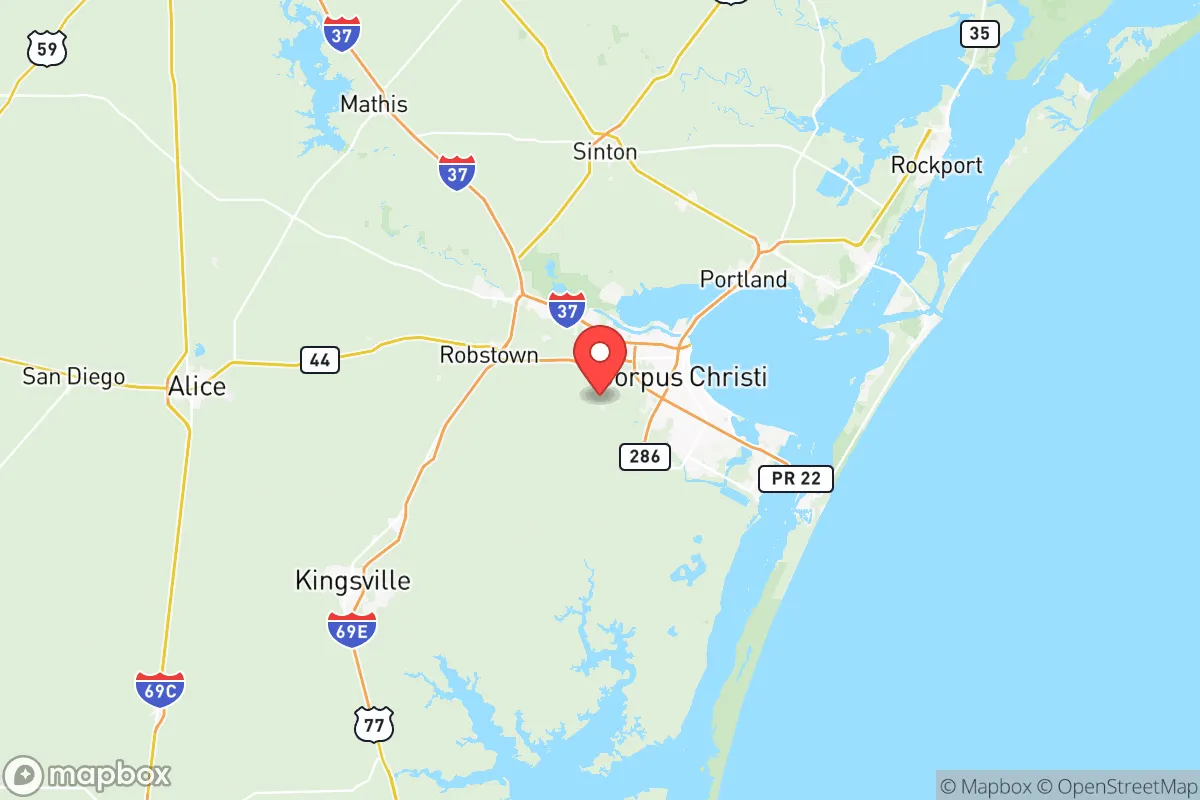
Nueces County, anchored by Corpus Christi, presents a mixed but generally favorable environment for personal sovereignty, where Texas state preemptions on firearms and property rights provide a strong baseline of autonomy, but local municipal codes and coastal development pressures create meaningful variation across the county. The regulatory posture shifts noticeably between the urban core of Corpus Christi, the unincorporated rural stretches near Robstown and Bishop, and the beach-oriented communities of Port Aransas and Padre Island. For a relocation-minded individual or family prioritizing self-reliance, the key is understanding which specific jurisdiction within Nueces County aligns with their definition of personal freedom — because the experience of sovereignty in a Corpus Christi subdivision differs substantially from that on a five-acre tract near Agua Dulce.
Tax burden and regulatory posture across Nueces County
Texas has no state income tax, which anchors the overall tax burden well below high-tax states, but Nueces County's property tax rates are a critical factor for landowners. The combined county and city property tax rate in Corpus Christi typically lands between 2.3% and 2.6% of assessed value, which is moderate by Texas standards but noticeably higher than in neighboring counties like San Patricio or Live Oak. Corpus Christi's city government enforces a relatively active regulatory code, including tree preservation ordinances, stormwater management requirements, and floodplain development restrictions that affect property use — particularly relevant given the county's hurricane exposure. In contrast, unincorporated areas near Robstown and Bishop operate under lighter county-level regulation, with fewer permitting hurdles for accessory structures, fences, and home-based businesses. The county's approach to short-term rentals also varies: Corpus Christi caps and licenses STRs, while unincorporated areas and smaller towns like Port Aransas have their own distinct ordinances, with Port Aransas imposing stricter occupancy limits due to tourism pressure. For a reader seeking minimal regulatory interference, the unincorporated zones west of the Nueces River or near Agua Dulce offer a noticeably lighter touch than the city limits of Corpus Christi.
Self-defense law and gun-friendly culture in the Coastal Bend
Texas's statewide firearm preemptions apply uniformly across Nueces County, meaning local governments cannot ban carry, restrict magazine capacities, or impose waiting periods beyond state law. Nueces County is a "Second Amendment Sanctuary" county, with a 2021 commissioners court resolution affirming opposition to any state or federal infringement on gun rights — a symbolic but culturally significant stance. Permitless carry (constitutional carry) is legal statewide, so no license is required for open or concealed carry by anyone 21 or older who can legally possess a firearm. The practical environment for self-defense is strong: Corpus Christi has multiple indoor and outdoor shooting ranges, including the Corpus Christi Pistol and Rifle Club and the Texas State Rifle Association-affiliated ranges, and gun stores are plentiful along the SPID corridor. However, property owners should note that Corpus Christi's city parks ban firearms by ordinance (though state law may preempt this in practice), and the city's public buildings are posted with 30.06/30.07 signage. In the rural areas around Driscoll and Petronila, gun culture is more embedded in daily life, with fewer posted restrictions and a general expectation of armed self-reliance. For a reader who prioritizes self-defense autonomy, Nueces County offers a solid baseline, but the urban core has more posted restrictions than the rural western half of the county.
Self-reliance and homesteading viability: lot sizes, zoning, and off-grid feasibility
Homesteading and off-grid living are feasible in Nueces County, but the feasibility depends heavily on location and zoning classification. Corpus Christi's minimum lot size in residential zones is typically 5,000 to 7,500 square feet, with strict building codes that require connection to municipal water and sewer — off-grid systems like rainwater catchment and composting toilets are effectively prohibited within city limits. In the county's unincorporated areas, however, minimum lot sizes vary from one acre in some subdivisions to five acres in agricultural zones, and there is no county-wide requirement for municipal utility connection. Areas near Agua Dulce and Banquete offer five-acre and larger parcels where private wells, septic systems, and solar arrays are standard practice. The county does enforce the Texas Residential Construction Commission's building codes for new structures, but enforcement is less aggressive in rural areas. Rainwater harvesting is legal and even incentivized by state law (Texas allows a property tax exemption for rainwater collection systems), and Nueces County does not impose additional restrictions. For a reader seeking true off-grid autonomy, the western and southern unincorporated zones — particularly around Petronila and Bishop — are the most viable, with available land under $10,000 per acre and minimal zoning interference. The coastal areas near Port Aransas are far less homestead-friendly due to flood zone regulations, elevation requirements, and higher land costs.
Personal liberties: parental rights, medical autonomy, speech, and property
Texas state law provides a strong framework for parental rights, including the Texas Parental Rights Act (2023), which affirms that parents have the fundamental right to direct their children's education, healthcare, and moral upbringing. Nueces County school districts — including Corpus Christi ISD, Tuloso-Midway ISD, and London ISD — generally operate within this framework, though parental involvement in curriculum decisions varies by district. Corpus Christi ISD has faced parental pushback on library materials and health education, while smaller districts like London ISD and Bishop CISD tend to be more responsive to conservative parental concerns. Medical autonomy is protected under Texas law, with no state-level vaccine mandates for adults and a 2023 law prohibiting COVID-19 vaccine mandates by private employers in most cases. Nueces County does not have any local health ordinances that exceed state law. Free speech is robustly protected, with no local ordinances restricting political speech or assembly beyond standard time-place-manner regulations. Property rights are strong under Texas's private property rights laws, including the Texas Property Code's protections against eminent domain abuse. Nueces County's appraisal district has a reputation for aggressive property valuations, which can feel like an infringement on property autonomy — homeowners should budget for annual appraisal protests. Overall, the personal liberties environment in Nueces County is solidly pro-autonomy by national standards, with the main friction points being property tax administration and municipal code enforcement in Corpus Christi proper.
Compared to other Texas coastal counties, Nueces County offers a middle ground on personal sovereignty — lighter regulation than Galveston County's beachfront restrictions or Harris County's property tax burden, but heavier than the truly rural counties like Live Oak or McMullen to the west. For a relocation-minded individual or family who values self-defense rights, low state taxes, and the ability to live off-grid on a rural parcel, the western half of Nueces County — particularly around Agua Dulce, Banquete, and Petronila — provides a strong autonomy environment with the added benefit of proximity to Corpus Christi's medical and employment infrastructure. The tradeoff is that the county's urban core and coastal zones impose more restrictions on property use and self-reliance practices. A strategic approach is to target the unincorporated areas west of Interstate 37 for maximum personal sovereignty while maintaining access to the city's resources.

* Values derived from national, state, county, city and local statistics and may differ in a specific area. Last updated: 2026-06-17T15:31:05.000Z
Narrative content on this page is AI-generated and may contain mistakes. Verify any details that matter before acting on them.
ReloMaps may earn a commission from affiliate links at no extra cost to you.

