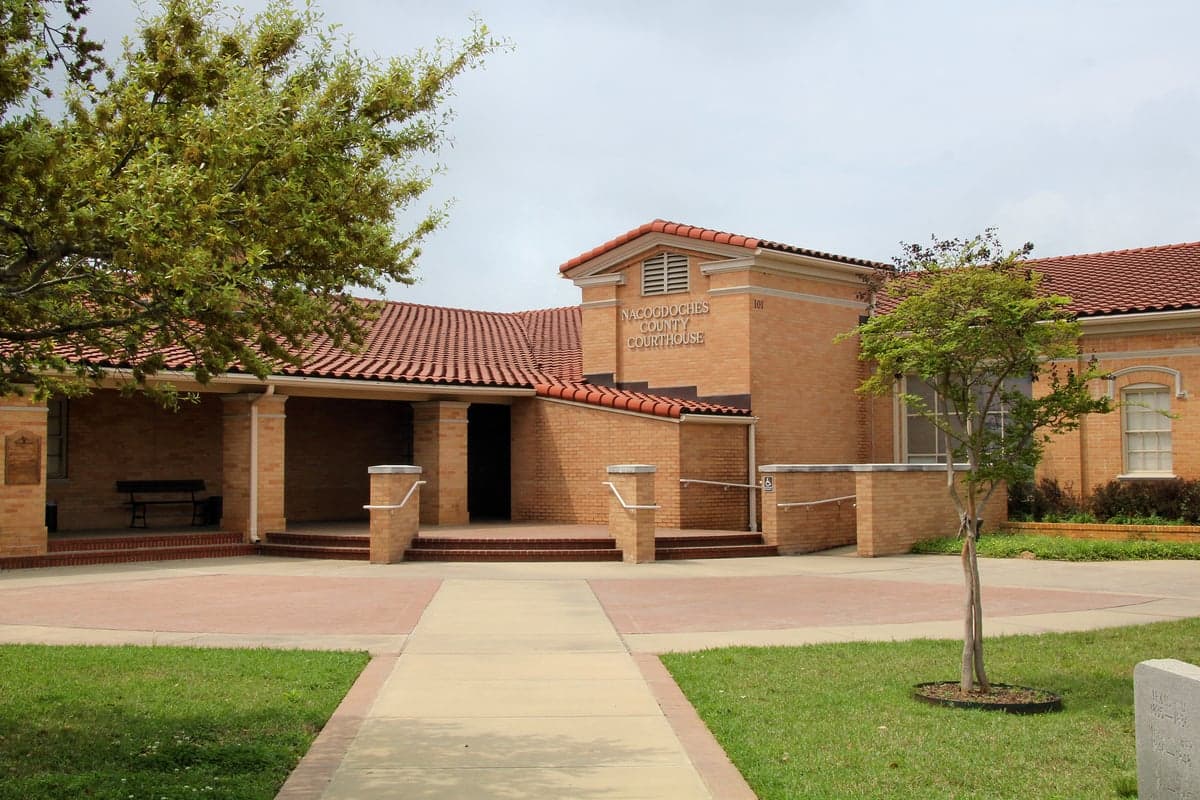
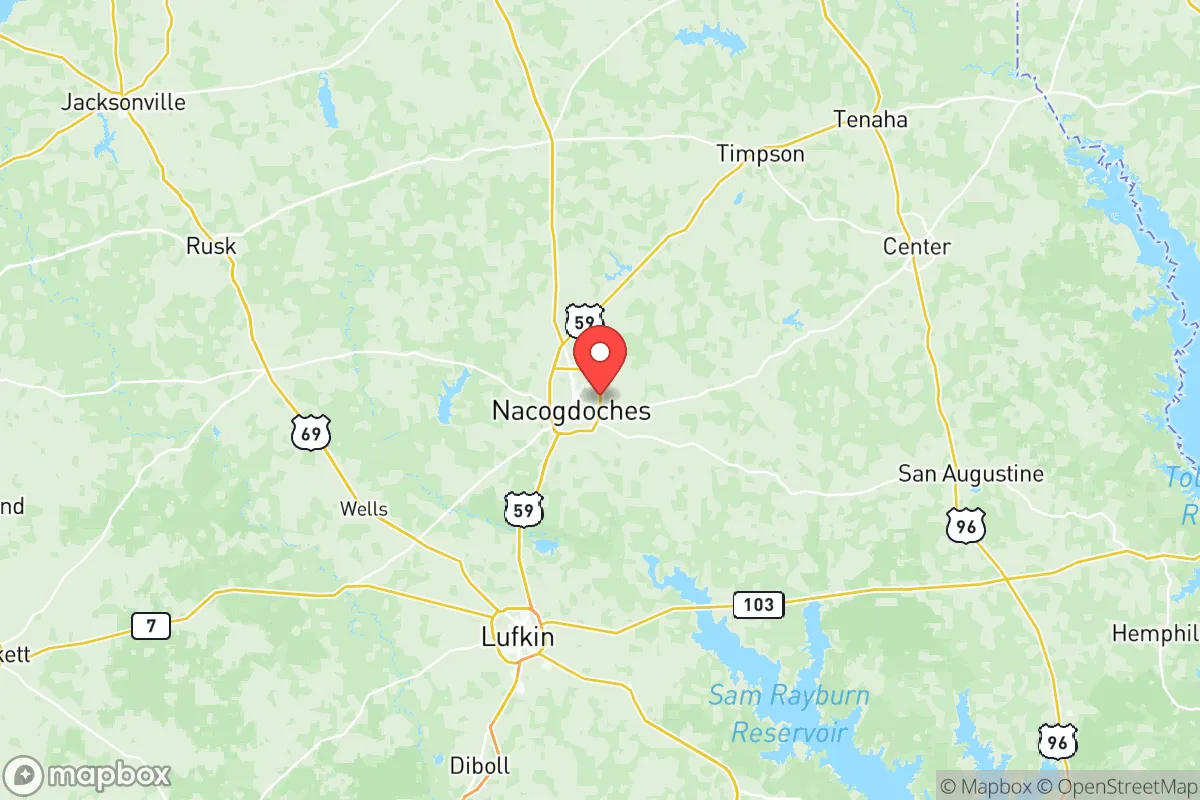
Photo: Wikipedia
Quality of Life in Nacogdoches County
A livable area that tracks near national norms for affordability, walkability, and neighborhood health.
What does Quality of Life tell us?
Quality of Life measures an area by evaluating factors like cost of living, nearby amenities, country club access, airport proximity, socioeconomic signals and neighborhood character. For large states, this is a general average — quality of life can vary dramatically between metro areas, suburbs, and rural communities within the same state.
What does this tell us?
Quality of Life measures an area by evaluating factors like cost of living, nearby amenities, country club access, airport proximity, socioeconomic signals and neighborhood character. For large states, this is a general average — quality of life can vary dramatically between metro areas, suburbs, and rural communities within the same state.
Cost of Living
30% below national average
114%
The Real Cost of Living in Nacogdoches County for 2026
| Tier | Individual | Family (4) |
|---|---|---|
| Survival | $15k | $28k |
| Comfortable | $31k | $45k |
| Luxury | $93k+ | $144k+ |
| Elite (Top 5%) | $128k+ | $198k+ |
Quality-of-Life Analysis
Nacogdoches County offers a spectrum of living environments that range from the historic, walkable core of its county seat to sparsely populated piney woods and farmland, attracting everyone from university faculty and retirees to commuters and homesteaders. The county’s overall cost of living index sits at 70 (30% below the U.S. average), with a median home value of $158,200 and median rent of $923, making it one of the more affordable counties in East Texas. The average commute of just under 20 minutes means that even residents in the most rural pockets can reach Nacogdoches’ amenities quickly, while those working in Lufkin or beyond face a longer but manageable drive.
Largest town(s) & population centers
Nacogdoches is the county’s sole city of significant size, home to roughly 33,000 residents and anchored by Stephen F. Austin State University (SFA). Daily life here revolves around the historic downtown square, the university campus, and a ring of big-box retail along North Street and Loop 224. The city offers a walkable core with independent coffee shops, the Cole Art Center, and the Nacogdoches Railroad Depot, plus a hospital (Nacogdoches Memorial) and a regional airport. Housing stock is a mix of historic Victorian homes near the university, mid-century ranch houses in neighborhoods like Northview, and newer subdivisions on the south and west sides. The university injects a youthful, cultural energy that is absent from the rest of the county, with events like the Texas Blueberry Festival and SFA’s music and theater programs drawing residents from across the region.
Smaller towns & rural pockets
Outside the city limits, the county’s smaller communities offer a quieter, more agrarian pace. Garrison (pop. ~900), in the county’s northern corner, is a tight-knit timber and farming community with its own school district and a handful of local businesses. Chireno (pop. ~400), straddling the Angelina River in the southeast, is a classic East Texas crossroads town with a historic depot and a strong hunting-and-fishing culture. Appleby (pop. ~500), just north of Nacogdoches, is largely a bedroom community of larger lots and mobile homes. Unincorporated areas like Woden, Etoile, and Martinsville are defined by churches, volunteer fire departments, and vast tracts of pine plantation. These pockets lack grocery stores and medical services, forcing residents to drive 15–25 minutes into Nacogdoches for most errands.
Cost & lifestyle range
The cost spread across the county is narrow in absolute terms but meaningful in lifestyle. At the lower end, rural areas like Etoile and Chireno offer land for under $3,000 per acre and older mobile homes or fixer-upper houses for well under $100,000. Rents in these areas are often informal, with many properties rented by word-of-mouth for $700–$800/month. At the higher end, the southwest side of Nacogdoches (near the Nacogdoches Country Club and along Highway 7 toward Lake Nacogdoches) features newer brick homes on 1–5 acres, with values from $250,000 to $400,000. The northwest side near the university has a premium on small historic homes and duplexes, with rents pushing $1,100–$1,300 for a two-bedroom near campus. The county’s property tax rate averages about 1.2%, slightly below the Texas median, which keeps carrying costs low even for the higher-end properties.
The county is best suited for people who value affordability and space over urban amenities and job density. Retirees on fixed incomes, remote workers who need a low cost of living, and families who want land for gardening or livestock will find the rural pockets ideal. University faculty, students, and professionals who want walkability and cultural events will gravitate to Nacogdoches proper. The county’s limited job base outside education, healthcare, and timber means that anyone seeking high-paying corporate roles will likely need to commute to Lufkin (20 minutes west) or Tyler (1 hour north). For those who prize quiet, low taxes, and a strong sense of local identity, Nacogdoches County delivers a genuine East Texas lifestyle at a fraction of the national cost.

Crime in Nacogdoches County
Crime rates similar to the national median for U.S. locations.
Violent CrimeViolent Crime Analysis
Property CrimeProperty Crime Analysis
Crime Analysis
Nacogdoches County, anchored by the historic city of Nacogdoches and including smaller communities like Garrison, Chireno, and Cushing, presents a crime profile that is moderately elevated compared to national benchmarks but significantly lower than Texas's most dangerous urban centers. With a violent crime rate of 345.1 per 100,000 residents and a property crime rate of 1,794.2 per 100,000, the county sits above the national average for violent offenses but below the Texas state average for property crime. The overall safety picture is mixed: residents in outlying towns like Appleby and Woden generally experience fewer incidents, while the city of Nacogdoches itself, home to Stephen F. Austin State University, concentrates the majority of reported crime.
Crime in context
When placed against statewide figures, Nacogdoches County’s violent crime rate of 345.1 per 100K is roughly 15% lower than the Texas average of approximately 410 per 100K, but still well above the national rate of about 380 per 100K. Property crime in the county, at 1,794.2 per 100K, is notably lower than the Texas average of roughly 2,200 per 100K, placing it in a more favorable position relative to larger metro areas like Houston or Dallas. However, the county’s numbers are higher than those found in safer East Texas communities such as Lufkin (Angelina County) or Tyler (Smith County). The contrast is sharp: while Nacogdoches itself sees the bulk of thefts and assaults, the rural precincts around Garrison and Chireno report crime rates closer to 100 per 100K for violent offenses, reflecting the protective effect of low population density and strong community ties.
What residents experience
Daily life in Nacogdoches County varies significantly by location. In the city of Nacogdoches, residents frequently cite property crimes—vehicle break-ins, package thefts, and burglaries—as the most common safety concern, particularly near the university campus and along North Street and South Street corridors. Violent crime, while less frequent, includes aggravated assaults and occasional robberies, often concentrated in the downtown area and near apartment complexes popular with students. The county’s judicial system, overseen by the 145th and 420th Judicial Districts, has seen a shift in recent years toward more progressive sentencing practices, including diversion programs and reduced bond amounts for nonviolent offenders. This approach, while intended to reduce recidivism, has drawn criticism from residents who feel it emboldens repeat property criminals and contributes to a revolving-door effect in the county jail. In contrast, the smaller towns of Cushing and Woden report far fewer incidents, with residents describing a “leave your doors unlocked” atmosphere that stands in stark relief to the city’s more cautious environment.
Neighborhood-level variation
Neighborhood-level safety in Nacogdoches County is sharply divided between the urban core and the rural periphery. Within the city of Nacogdoches, the historic district near the downtown square and the residential areas east of Loop 224 are generally considered safer, while the western side of town—particularly along Highway 59 and the area around the Nacogdoches County Expo Center—sees higher concentrations of reported crime. The unincorporated communities of Garrison and Chireno consistently report the lowest crime rates in the county, with violent crime nearly absent and property crime limited to occasional farm equipment theft. For prospective residents, the safest bets are the rural subdivisions and small towns outside the city limits, where the combination of low population density, strong local sheriff patrols, and conservative judicial oversight in the county’s justice system keeps crime rates well below the county average. The progressive policies of the Nacogdoches city government and its affiliated district courts, however, remain a point of concern for those prioritizing long-term safety and accountability.
* Values derived from national, state, county, city and local statistics and may differ in a specific area. Last updated: 2026-06-20T11:54:18.000Z
Narrative content on this page is AI-generated and may contain mistakes. Verify any details that matter before acting on them.
ReloMaps may earn a commission from affiliate links at no extra cost to you.

