Photo: Wikipedia
Political ClimatePolitical Climate in Howard County
Showing district-level results — no local-only data available.
Local Political AnalysisPolitical Analysis of Howard County
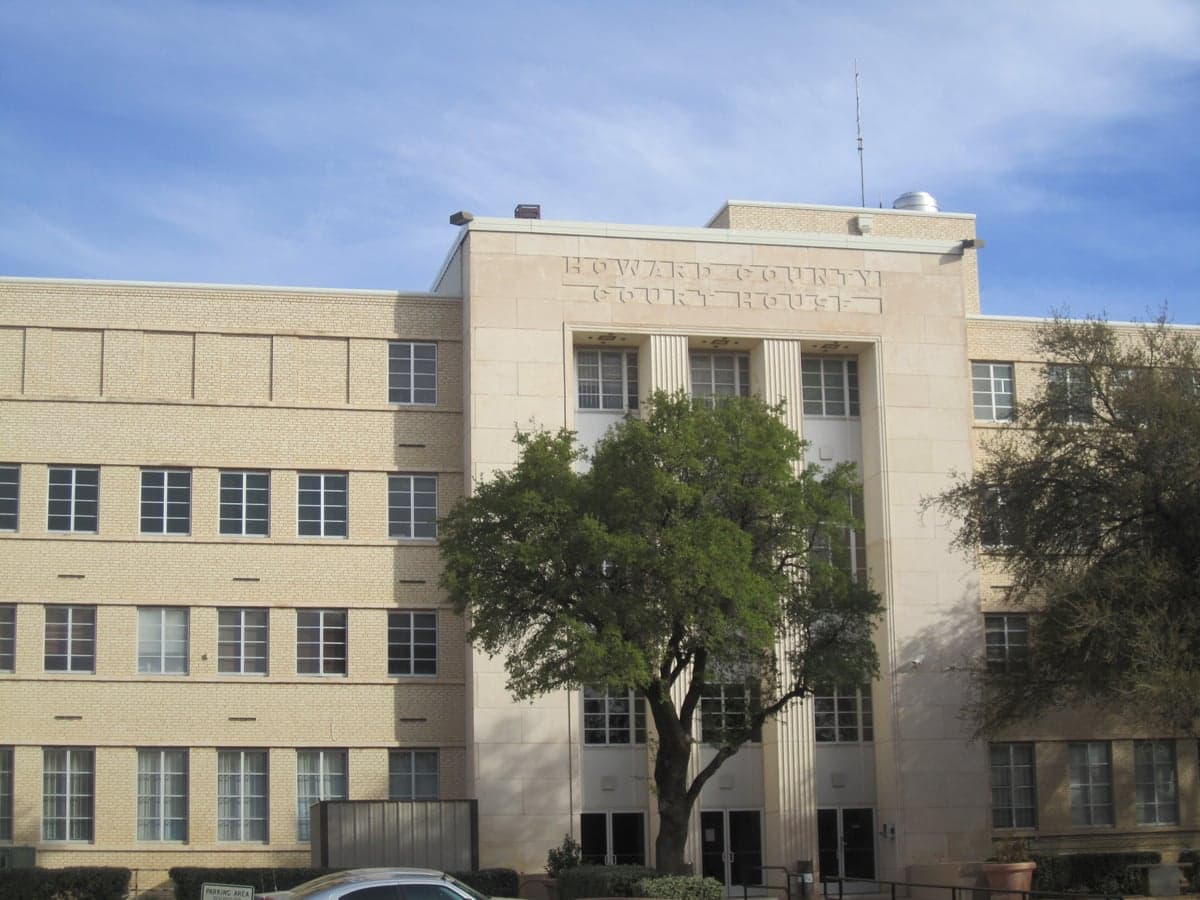
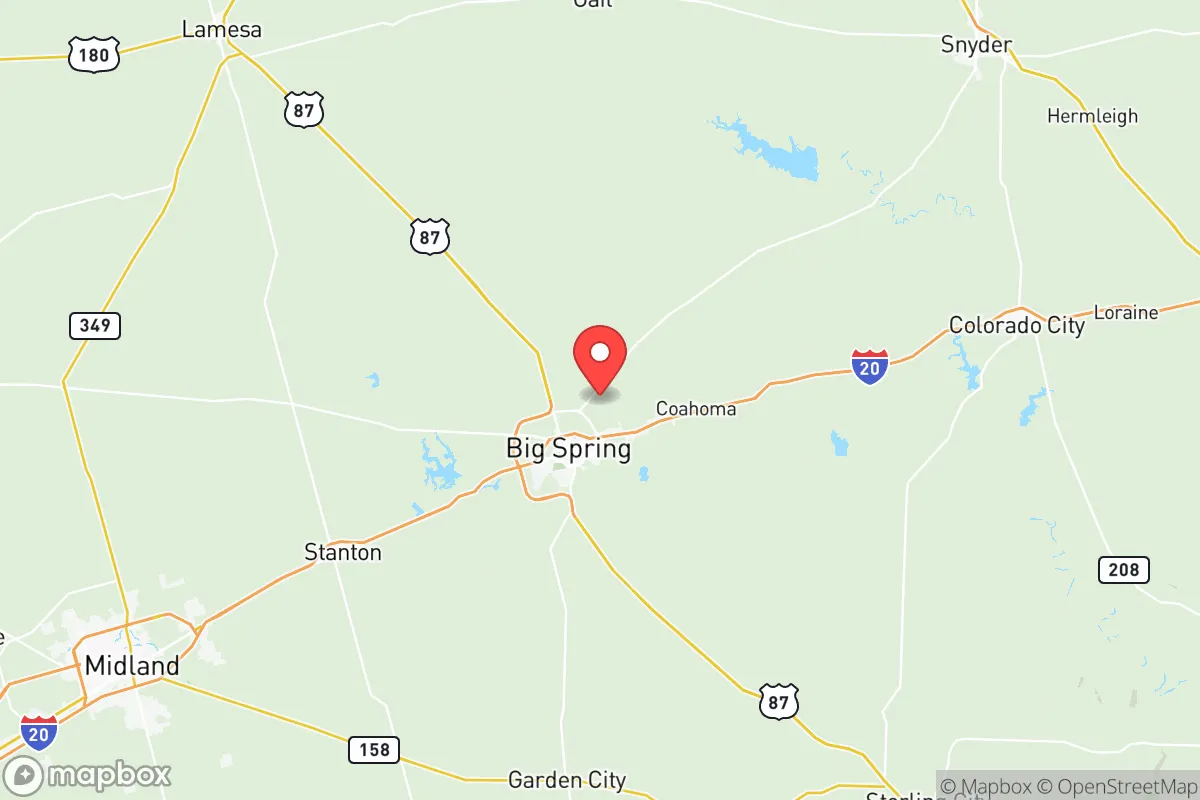
Howard County is one of the most reliably Republican areas in Texas, carrying a Cook Partisan Voting Index (PVI) of R+25 — a full 21 points more conservative than the state as a whole, which sits at R+4. The county hasn't voted for a Democratic presidential candidate since Lyndon B. Johnson's 1964 landslide, and the margins have only widened since the 1990s. In 2024, Donald Trump carried Howard County by roughly 75 points, a number that would have seemed extreme even a decade ago. The political center of gravity is Big Spring, the county seat and largest city, but even there you won't find much of a blue pocket — the precincts around the downtown core and the Texas State Technical College campus are slightly less red, but they still vote Republican by comfortable margins.
How it compares
Compared to Texas as a whole, Howard County is a political outlier in the same way that rural West Texas counties are. The state's R+4 PVI reflects a competitive balance driven by the fast-growing suburbs of Dallas-Fort Worth, Houston, and San Antonio, plus the reliably Democratic strongholds of El Paso and the Rio Grande Valley. Howard County has none of that. The oil and gas economy here — centered on the Permian Basin — creates a natural alignment with conservative energy policy and limited regulation. The only real political variation is between the unincorporated areas and the small towns. Forsan, a community of about 200 people, is the most conservative corner of the county, often voting 85%+ Republican. Coahoma, a bit larger and more working-class, is still deep red but shows slightly more willingness to split tickets in local races. Big Spring itself has a handful of precincts near the hospital and the old air base that occasionally vote for a moderate Democrat in a county commissioner race, but those are the exception, not the rule. There are no swing precincts in the traditional sense — the county hasn't been competitive in a generation.
What this means for residents
For conservative residents, Howard County is about as comfortable as it gets. Local policy reflects the dominant political view: low property taxes, minimal zoning, and a strong law-and-order approach. The county commission and school board races are decided in Republican primaries, and general elections are often uncontested. For liberal residents, the reality is more isolating. There's no organized Democratic party presence to speak of, and progressive viewpoints are rarely represented in local media or public meetings. That said, the county's small population — about 34,000 — means politics doesn't dominate daily life the way it might in a polarized suburb. Most people get along fine regardless of party, and the shared challenges of water scarcity, oil price volatility, and rural healthcare access tend to override partisan divides in practice.
Culturally, Howard County is distinct from the rest of Texas in a few ways. The oil patch mentality is stronger here than in the Hill Country or East Texas — there's a palpable sense that the local economy rises and falls with the price of a barrel, and that shapes everything from school funding to housing construction. The county also has a notable Hispanic population (about 45%), but unlike in South Texas, that demographic hasn't translated into Democratic voting strength; Hispanic voters here lean conservative on energy and social issues. Big Spring's annual "Cowboy Reunion" and the county's strong rodeo culture reinforce a Western, independent identity that feels closer to New Mexico or Oklahoma than to Houston or Dallas. If you're moving here, understand that the politics are baked into the landscape — not hostile, but unmistakably conservative, and unlikely to shift anytime soon.

State Political ClimatePolitical Climate in Texas
State Political AnalysisPolitical Environment in the State
Texas has been a reliably Republican state for the past three decades, with a Cook Partisan Voting Index of R+4, but that label masks a dramatic and ongoing realignment. The dominant coalition is still conservative, anchored by the sprawling suburbs, rural West Texas, and the Panhandle, but the margin of victory has shrunk from double digits in the 2000s to roughly 5.5 points in the 2024 presidential race. Over the last 10-20 years, the state has shifted from a solid red stronghold to a competitive battleground, driven by explosive growth in the urban cores of Houston, Dallas-Fort Worth, Austin, and San Antonio, which have become increasingly Democratic, while the exurbs and small towns have hardened their Republican lean.
Urban vs. rural divide
The political map of Texas is a study in contrasts. The major metro areas—Harris County (Houston), Dallas County, Tarrant County (Fort Worth), Bexar County (San Antonio), and Travis County (Austin)—now vote reliably Democratic, with Travis County delivering over 70% for Democratic presidential candidates. The real story is in the suburbs and exurbs: Collin County (north of Dallas) and Denton County have shifted from solid red to purple, with Collin County voting for Biden in 2020 and only narrowly going for Trump in 2024. Meanwhile, rural counties like Loving, King, and Borden in West Texas routinely give Republicans 90%+ of the vote. The Rio Grande Valley, historically a Democratic stronghold, has seen a notable rightward shift, with Starr County flipping from +60 Democratic in 2012 to nearly even in 2024. The divide isn't just urban vs. rural—it's also about growth: fast-growing suburbs like Frisco, McKinney, and Round Rock are becoming more diverse and politically competitive, while shrinking rural counties are becoming more conservative.
Policy environment
Texas operates under a low-tax, low-service model that is deeply ingrained in its political culture. The state has no personal income tax, relying instead on high property taxes (among the top 10 nationally) and a regressive sales tax. The regulatory posture is business-friendly, with minimal zoning in many cities and a right-to-work law that limits union power. Education policy is a flashpoint: the state funds schools largely through local property taxes, leading to wide disparities between wealthy and poor districts, and the 2023 school voucher debate (Senate Bill 2) failed to pass, though a similar bill is expected in 2025. Healthcare is a major gap—Texas has the highest uninsured rate in the nation at roughly 17%, having refused Medicaid expansion under the ACA. Election laws have tightened: Senate Bill 1 (2021) restricted mail-in voting, added ID requirements, and banned drive-through and 24-hour voting. The state also has a near-total abortion ban (trigger law from 2021, effective 2022) with no exceptions for rape or incest, and a restrictive medical cannabis program limited to low-THC oil.
Recent policy direction
The last five years have seen a sharp rightward turn in state policy across multiple fronts. On gun and self-defense law, Texas passed permitless carry (HB 1927, 2021), allowing most adults to carry a handgun without a license or training. On parental and education rights, the 2023 law HB 900 restricted library materials deemed "sexually explicit" and required parental consent for school health services, while the 2021 "critical race theory" law (HB 3979) limited how race and history can be taught. On speech and privacy, the state passed a social media "deplatforming" law (HB 20, 2021) that bars large platforms from moderating content based on viewpoint—though parts have been blocked in court. On medical and bodily autonomy, the abortion ban is the most restrictive in the nation, and the state has also banned gender-affirming care for minors (SB 14, 2023). On property rights, Texas has strong eminent domain protections but weak rent control laws (preempted by the state). On taxation, the 2023 property tax cut package (SB 2) provided some relief but did not fundamentally change the high-tax structure. On voting and ballot access, the trend is toward restriction, with the 2021 law reducing early voting hours and adding new ID requirements for mail ballots.
Civil unrest & political movements
Texas has been a stage for high-profile political flashpoints. The 2020-2021 period saw large Black Lives Matter protests in Austin, Houston, and Dallas, with Austin's protests lasting months and leading to the city council cutting the police budget by $150 million (later partially restored). On the right, the "Trump Train" convoy incidents on I-35 in 2020 drew national attention, and the "Operation Lone Star" border initiative (launched 2021) has militarized the border region, with state troopers and National Guard deployed to Eagle Pass and El Paso. Immigration politics are visceral: Governor Abbott's busing of migrants to New York, Chicago, and Denver has been a deliberate provocation, and the state's 2023 law SB 4 (currently blocked in court) would allow state and local police to arrest suspected undocumented immigrants. Secession rhetoric has flared within the Texas Nationalist Movement, but it remains a fringe position with no serious political traction. Election integrity controversies have been persistent, with the 2020 and 2022 cycles seeing Republican calls for audits in Harris County, the state's most populous Democratic stronghold. A new resident would notice the heavy police presence at the border, the "Don't Mess with Texas" anti-littering signs that have become cultural shorthand, and the omnipresent political yard signs in suburban neighborhoods.
Projection
Over the next 5-10 years, Texas is likely to become more competitive at the statewide level, but not necessarily more liberal. The key demographic driver is the continued influx of domestic migrants from California and the Northeast—roughly 1,000 people move to Texas per day—who tend to be moderate to conservative on economics but more libertarian on social issues. This is already reshaping the suburbs: Fort Bend County (southwest of Houston) flipped from red to blue between 2012 and 2020, and Williamson County (north of Austin) is trending purple. However, the rural and exurban areas are not shrinking as fast as Democrats hope, and the Hispanic vote, particularly in the Valley, is moving right. The state legislature will remain under Republican control through at least the 2030 redistricting cycle, meaning the policy direction—low taxes, limited social services, and cultural conservatism—will persist. A new resident moving in now should expect a state that is politically volatile, with a growing urban-rural divide, but where the overall policy environment remains distinctly conservative for the foreseeable future.
For a new resident, the bottom line is that Texas offers a low-tax, high-freedom environment in many respects—no income tax, strong gun rights, and a business-friendly climate—but with trade-offs: high property taxes, limited public services, and a political culture that is increasingly polarized. Conservatives will find a state that largely aligns with their values, especially on fiscal and cultural issues, while liberals will find strong urban enclaves in Austin, Houston, Dallas, and San Antonio where they can live comfortably but will have limited influence on state policy. The key is to choose your location carefully: the political reality of Lubbock is very different from that of Austin, and the gap is only widening.
* Values derived from national, state, county, city and local statistics and may differ in a specific area. Last updated: 2026-06-14T23:30:09.000Z
Narrative content on this page is AI-generated and may contain mistakes. Verify any details that matter before acting on them.
ReloMaps may earn a commission from affiliate links at no extra cost to you.

