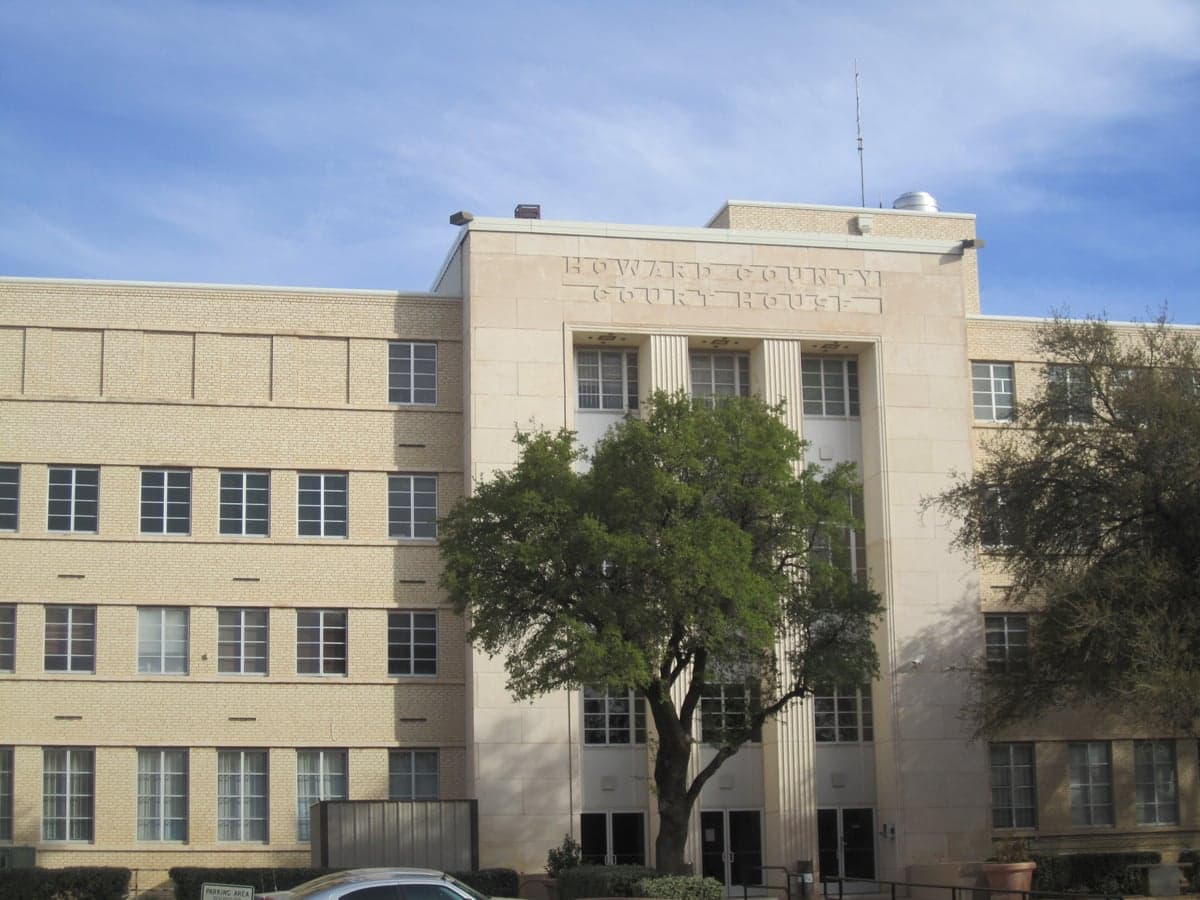
Photo: Wikipedia
Quality of Life in Howard County
A livable area that tracks near national norms for affordability, walkability, and neighborhood health.
What does Quality of Life tell us?
Quality of Life measures an area by evaluating factors like cost of living, nearby amenities, country club access, airport proximity, socioeconomic signals and neighborhood character. For large states, this is a general average — quality of life can vary dramatically between metro areas, suburbs, and rural communities within the same state.
What does this tell us?
Quality of Life measures an area by evaluating factors like cost of living, nearby amenities, country club access, airport proximity, socioeconomic signals and neighborhood character. For large states, this is a general average — quality of life can vary dramatically between metro areas, suburbs, and rural communities within the same state.
Cost of Living
27% below national average
166%
The Real Cost of Living in Howard County for 2026
| Tier | Individual | Family (4) |
|---|---|---|
| Survival | $16k | $30k |
| Comfortable | $29k | $43k |
| Luxury | $120k+ | $187k+ |
| Elite (Top 5%) | $142k+ | $219k+ |
Quality-of-Life Analysis
Howard County, Texas, offers a broad spectrum of living environments, from the regional hub of Big Spring to unincorporated crossroads communities, attracting everyone from oilfield workers and healthcare professionals to retirees seeking low costs and ranchers valuing wide-open spaces. The county’s character shifts noticeably between its primary population center and its sparsely populated rural pockets, with each area presenting a distinct daily rhythm and set of trade-offs. With a cost of living index of 73 — well below the national average of 100 — and a median home value of $150,300, the county provides significant financial breathing room, though the range of amenities narrows sharply as you move away from Big Spring.
Largest town(s) & population centers
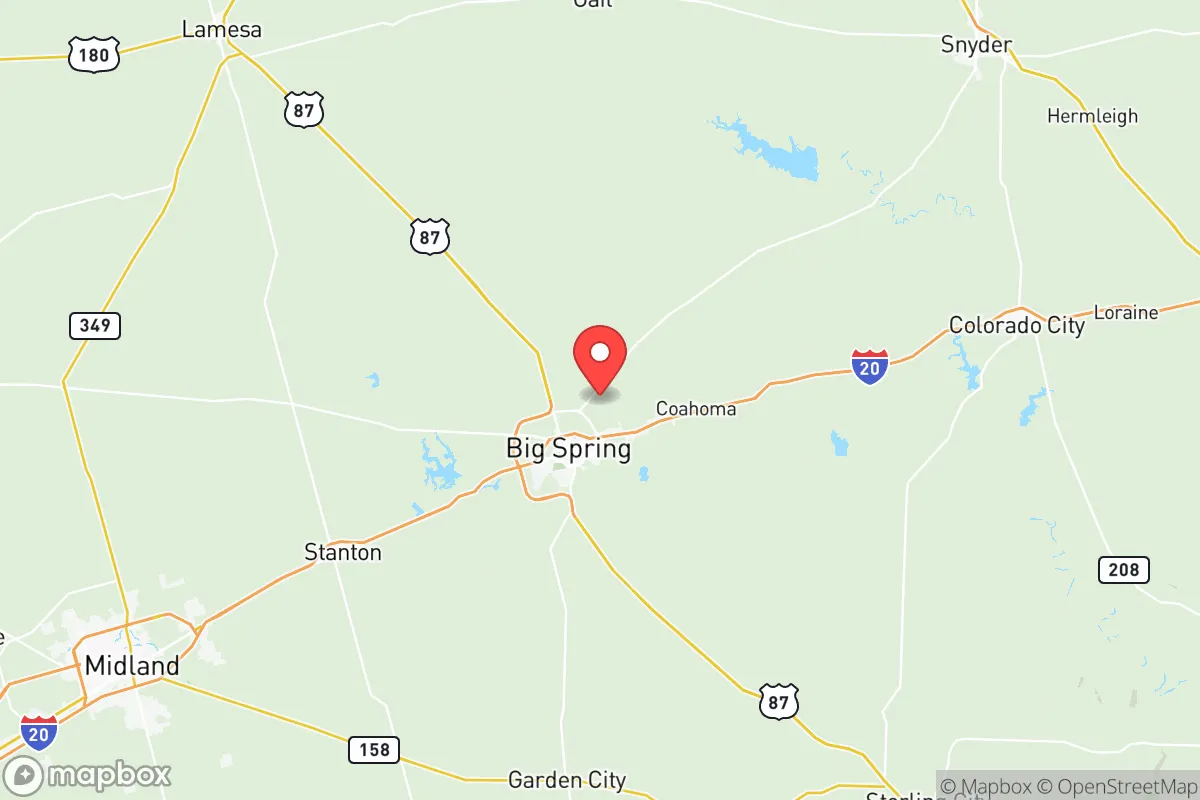
Big Spring is the undisputed economic and social heart of Howard County, home to roughly 27,000 residents and the vast majority of the county’s jobs, retail, and healthcare infrastructure. Daily life here centers around major employers like the Big Spring State Hospital, the federal correctional institution, and numerous oilfield service companies. The town offers a full set of big-box retailers, grocery stores, a regional hospital (Scenic Mountain Medical Center), and a small regional airport. Commute times are notably short — the county average is just over 20 minutes — and most residents can reach work, school, or shopping within a 10- to 15-minute drive. Housing in Big Spring ranges from older, modest homes near downtown to newer subdivisions on the west side, with the median home value of $150,300 making homeownership accessible for first-time buyers and families. The town also hosts Howard College, a community college that provides workforce training and a cultural events calendar.
Smaller towns & rural pockets
Outside of Big Spring, the county’s smaller communities offer a quieter, more isolated lifestyle. Forsan, roughly 15 miles east of Big Spring, is a tight-knit farming and oilfield community with its own independent school district and a handful of local businesses. Coahoma, located about 10 miles west, is another small town centered around its school system and a few convenience-oriented services; many residents commute into Big Spring for work. Further out, the unincorporated area of Vincent and the crossroads community of Knott consist almost entirely of scattered homes, ranches, and agricultural land, with no retail or services beyond a post office or gas station. These rural pockets are home to ranchers, oilfield hands who work on rotating shifts, and retirees who prioritize privacy and land over proximity to amenities. The trade-off is clear: lower property prices per acre and absolute quiet, but a 20- to 30-minute drive to Big Spring for groceries, medical care, or a sit-down restaurant.
Cost & lifestyle range
The cost spread across Howard County is relatively narrow compared to metropolitan areas, but the lifestyle differences are pronounced. At the higher end of the local market, newer subdivisions in west Big Spring (near the hospital and golf course) see home values approaching $250,000–$300,000, with median rents around $993 still well below state averages. These areas offer sidewalks, newer schools, and quick access to retail corridors. At the lower end, older homes in central Big Spring and south-side neighborhoods can be found for under $100,000, and raw land in rural areas like Vincent or southern Howard County sells for $2,000–$5,000 per acre. Rentals in smaller towns are scarce and often tied to oilfield worker housing, with monthly costs sometimes dipping below $700 for a basic two-bedroom. The county’s overall cost of living index of 73 means that a household earning the median county income can afford a comfortable, if modest, lifestyle — but the trade-off for lower costs in rural areas is a near-total lack of public transportation, limited internet options, and no walkable amenities.
Howard County best suits individuals and families who value affordability, short commutes, and a slower pace over urban cultural amenities and career diversity. Oilfield and healthcare workers find stable employment in Big Spring, while ranchers and remote workers are drawn to the low land prices and solitude of the county’s rural stretches. Retirees on fixed incomes can stretch their dollars significantly, especially in the smaller towns, though they must be comfortable with limited healthcare access outside of Big Spring. For anyone seeking a low-cost, low-stress base in West Texas — and willing to drive 30 minutes for a major grocery run — Howard County delivers a clear, if trade-off-laden, quality of life.

Crime in Howard County
Crime rates similar to the national median for U.S. locations.
Violent CrimeViolent Crime Analysis
Property CrimeProperty Crime Analysis
Crime Analysis
Howard County, Texas, reports a violent crime rate of 344.4 per 100,000 residents and a property crime rate of 1,791.9 per 100,000, placing it in a middle tier for safety within the Permian Basin region. The county seat of Big Spring anchors most of the area’s population and corresponding crime activity, while smaller communities like Coahoma, Forsan, and Knott experience significantly fewer incidents. Overall, the county’s crime picture is shaped by its role as an energy-sector hub, with transient oilfield workers and economic cycles influencing both property and violent crime trends.
Crime in context
Howard County’s violent crime rate of 344.4 per 100,000 is roughly 15% higher than the Texas state average of 299 per 100,000, but remains well below the national rate of 380 per 100,000. Property crime in the county, at 1,791.9 per 100,000, sits about 10% above the Texas average of 1,630 per 100,000 and aligns closely with other West Texas oil-patch counties such as Midland and Ector. The 118th Judicial District, which covers Howard County and neighboring Glasscock County, has historically taken a tough-on-crime stance, with District Attorney Hardy Wilkerson pursuing aggressive prosecution for drug trafficking and burglary cases tied to the oilfield workforce. This contrasts sharply with larger metro counties like Harris (Houston) or Dallas, where progressive district attorneys have implemented bail reform and diversion programs that critics argue have contributed to rising recidivism and emboldened property crime rings.
What residents experience
Residents in Big Spring report that property crime—particularly vehicle burglaries and theft of catalytic converters—is the most common safety concern, often concentrated near the Interstate 20 corridor and the industrial zones around the Big Spring Refinery. The Big Spring Police Department has responded with targeted patrols and a neighborhood watch network that covers the downtown historic district and the residential areas near Comanche Trail Park. In Coahoma and Forsan, residents describe a markedly different reality: violent crime is rare, and most calls involve minor theft or trespassing on agricultural land. The Howard County Sheriff’s Office, led by Sheriff Stan Parker, maintains a visible presence in these outlying communities, and response times in rural areas average 12-15 minutes—faster than many comparable West Texas counties. For families considering relocation, the public school districts in Coahoma and Forsan are frequently cited as safer environments, with fewer incidents reported on campus compared to Big Spring ISD.
Neighborhood-level variation
Safety varies noticeably within Howard County’s boundaries. The eastern side of Big Spring, near the old air base and the industrial park, sees higher rates of drug-related arrests and aggravated assaults, while the western neighborhoods around the Howard County Junior College campus and the golf course are quieter. Knott, a small unincorporated community, reports virtually no violent crime and only occasional property theft, making it the safest pocket in the county. Conversely, the area along Highway 87 south of Big Spring, where oilfield man camps and temporary housing are concentrated, experiences periodic spikes in assault and DUI incidents. The county’s judicial approach remains conservative: judges in the 118th District regularly impose maximum sentences for repeat offenders, and the county’s bond practices are among the strictest in the Permian Basin. For prospective residents, choosing a home in Coahoma, Forsan, or western Big Spring offers the most favorable safety profile, while the I-20 corridor and industrial zones warrant extra caution, especially after dark.
* Values derived from national, state, county, city and local statistics and may differ in a specific area. Last updated: 2026-06-14T23:30:09.000Z
Narrative content on this page is AI-generated and may contain mistakes. Verify any details that matter before acting on them.
ReloMaps may earn a commission from affiliate links at no extra cost to you.

