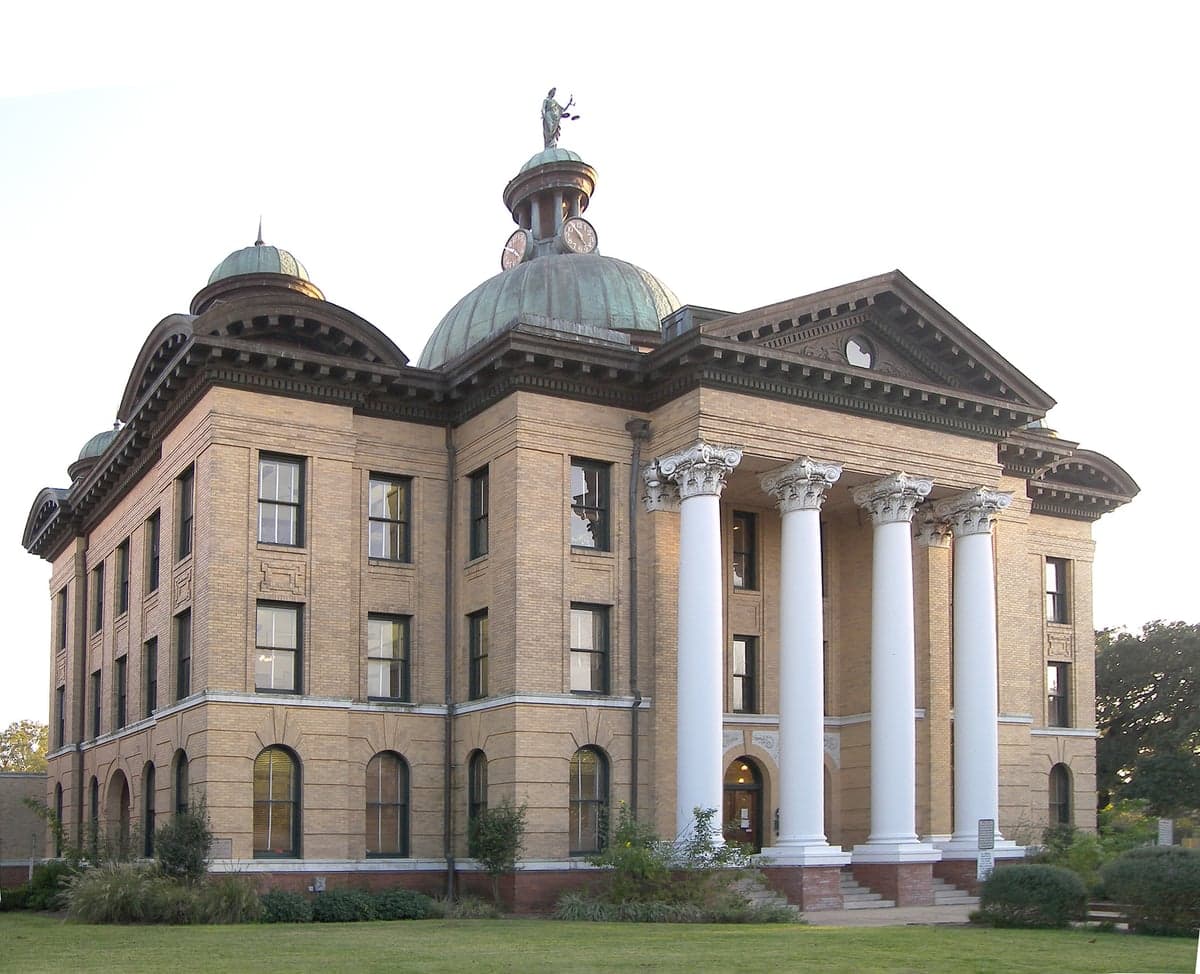
Photo: Wikipedia
Political ClimatePolitical Climate in Fort Bend County
Showing district-level results — no local-only data available.
Local Political AnalysisPolitical Analysis of Fort Bend County
Fort Bend County has undergone one of the most dramatic political shifts in Texas over the past decade, transforming from a reliably Republican stronghold into a competitive battleground that now leans Democratic in most elections. While the Cook Partisan Voting Index (PVI) still lists the county at R+9, that number is based on older data and doesn't capture the rapid leftward movement driven by explosive population growth and demographic change. In the 2024 presidential election, Fort Bend County voted for the Democratic candidate by a margin of roughly 3 points, a stark contrast to the statewide Texas PVI of R+4 and a clear signal that the county is now a genuine swing area with a Democratic lean in high-turnout races.
How it compares
Fort Bend County's political trajectory is far more progressive than Texas as a whole, and the gap is widening. The state's R+4 PVI reflects a solidly red Texas, but Fort Bend's actual voting behavior in recent cycles has been 7 to 10 points more Democratic than the state average. This divergence is most visible in the county's northern and eastern suburbs. Sugar Land and Missouri City have become reliably blue, with precincts in the Telfair and Riverstone neighborhoods routinely delivering 60-65% Democratic margins. Meanwhile, Katy and Fulshear in the western part of the county remain more conservative, though even there, Democratic performance has crept up from the mid-30s in 2016 to the low 40s by 2024. The true swing precincts are in Richmond and Rosenberg, where fast-growing subdivisions like Pecan Grove and the Brazos Town Center area see races decided by 2-4 points. In contrast, rural Texas counties outside the Houston metro area often vote 70-80% Republican, making Fort Bend an outlier that looks more like a suburban Atlanta or Dallas county than the rest of Texas.
What this means for residents
For conservative residents, the shift means they can no longer take local elections for granted. County commissioner races, school board seats, and judicial positions that were once safely Republican are now genuinely competitive, with both parties investing heavily in ground game and mail-in ballot operations. Conservative voters in Katy and Fulshear still feel well-represented by their state legislators and county commissioners, but they've had to adjust to a county government that is more evenly split. For liberal residents, the change has been empowering. Democratic voters in Sugar Land and Missouri City now see their values reflected in county-level policy, from increased funding for public transit to more inclusive diversity initiatives in schools. The practical effect is that both sides need to show up: turnout in off-year elections has surged, with 2023 municipal races seeing 35% participation, double the rate from a decade ago. Neither party can coast, which keeps local politics responsive and engaged.
Culturally, Fort Bend County stands apart from much of Texas in its embrace of diversity as a political force. The county is one of the most ethnically diverse in the nation, with no single racial or ethnic group holding a majority. This has produced a politics that is less about traditional Texas wedge issues like oil and gas regulation and more about school funding, property taxes, and infrastructure. The county's Republican Party has moderated on social issues to stay competitive, while the Democratic Party has focused on coalition-building across Asian American, African American, and Hispanic communities. The result is a political climate that feels more pragmatic and less polarized than the state's rural or deep-red suburban areas, with both parties forced to talk about traffic relief on Grand Parkway and flood mitigation along the Brazos River rather than culture war flashpoints. It's a different kind of Texas politics, and it's only going to become more influential as the county's population heads toward 1 million.

State Political ClimatePolitical Climate in Texas
State Political AnalysisPolitical Environment in the State
Texas has been a solidly Republican state for over two decades, carrying a Cook Partisan Voting Index of R+4, but the story on the ground is far more nuanced than that label suggests. The dominant coalition remains a mix of rural conservatives, evangelical Christians, and suburban business owners who have powered GOP victories statewide since the 1990s. Over the last 10-20 years, however, the state has shifted from a deep-red monolith to a competitive battleground, driven by explosive growth in metro areas like Austin, Dallas-Fort Worth, and Houston that have introduced more diverse, younger, and often left-leaning voters into the mix.
Urban vs. rural divide
The political geography of Texas is stark: the state’s major metros—Austin (Travis County), Dallas (Dallas County), Houston (Harris County), San Antonio (Bexar County), and El Paso (El Paso County)—anchor the Democratic base, while vast rural stretches in West Texas, the Panhandle, and East Texas reliably vote Republican. The 2020 election crystallized this split: Harris County, home to Houston, alone delivered over 1.1 million votes for Joe Biden, effectively canceling out the GOP margins from dozens of smaller counties. The reddest rural strongholds include the Lubbock area (Lubbock County voted +26 R in 2024) and the Amarillo region (Potter County at +17 R), where agriculture and oil-and-gas dominate the economy. Critically, the fast-growing exurbs and suburban counties just outside the big cities—like Collin County (north of Dallas) and Comal County (north of San Antonio)—are the real political battlegrounds. They were once reliably red but are drifting purple as new transplants from blue states arrive, demanding a political balance that both sides must negotiate.
Policy environment
Texas’s policy environment is defined by a low-tax, low-services model. There is no state income tax, and the state relies heavily on property taxes and sales taxes, which can surprise new arrivals accustomed to income tax deductions. The regulatory posture is generally pro-business, with limited zoning in many areas and minimal labor protections—a "right-to-work" state with no state-level minimum wage above the federal $7.25. Education policy is decentralized: local school districts control curricula, but the state has implemented school choice via vouchers in 2023 (HB 3), allowing public money to follow students to private or charter schools. Healthcare remains a flashpoint: Texas opted out of Medicaid expansion, leaving roughly 1.5 million adults in a coverage gap. Election laws are among the strictest in the nation—SB 1 (2021) tightened ID requirements, banned drive-thru voting, limited drop-box hours, and restricted mail-in ballot access, changes that both supporters and critics view as partisan maneuvers affecting turnout in urban counties.
Recent policy direction
Recent legislation signals a clear conservative tilt across multiple fronts. On gun rights, Texas is a constitutional carry state (2021, HB 1927), allowing permitless carry of handguns. Parental rights were strengthened via HB 900 (2023), which requires school libraries to review books for "sexually explicit" content and bans certain materials—a law popular with conservative parents and fiercely opposed by civil liberties groups. On speech and privacy, SB 82 (2023) abolished local COVID-19 mask and vaccine mandates. Medical and bodily autonomy was sharply restricted: Texas effectively banned nearly all abortions after six weeks via SB 8 (2021) and then enacted a near-total ban (no exceptions for rape or incest) after the Dobbs decision, with HB 1280 (2021). Property rights were bolstered through the Texas Property Tax Relief Act (2023), which cut school property taxes, but this is offset by rising appraisals in hot markets like Austin, where home values have doubled in five years. Voting access remains a flashpoint: early voting hours were standardized, but limits on Sunday hours (the "souls to the polls" tradition) remain controversial. The overall direction is toward expanding individual liberty in economic and self-defense matters while restricting autonomy on reproductive and local public-health decisions.
Civil unrest & political movements
Texas has been a staging ground for high-profile political flashpoints. In 2021, the "Texas Martyr" movement—a series of local secessionist rallies, especially in rural counties near Marfa—gained attention, though it remains fringe. The border crisis has been a constant: Operation Lone Star, launched in 2021, deployed state troopers and National Guard to the Rio Grande, resulting in submerged buoys and razor wire that sparked legal battles with the Biden administration and protests from immigrant-rights groups. In El Paso, a blue city in the reddest of border regions, a 2023 protest over migrant conditions drew thousands. On the left, the Texas Educators' Union and Texas Organizing Project have pushed back on school vouchers and voting restrictions, holding regular rallies at the Capitol in 2023 and 2024. On the right, the Texas GOP convention in 2022 saw calls for an "end" to the "lie" of the 2020 election, though that rhetoric has cooled. A new resident in Austin or Houston will occasionally see dueling caravans on the highways—pro-choice and pro-life groups often clash on weekends near the Capitol. These protests are real but rarely violent; they’re more like a constant political weather system, especially during legislative sessions.
Projection
Over the next 5-10 years, Texas’s political trajectory points toward continued competitiveness. Net in-migration of about 300,000 people annually—mostly from California, New York, and Illinois—tilts the electorate younger and more ethnically diverse. The suburbs around Dallas-Fort Worth and Houston will likely turn from solid red to purple. The GOP will hold the legislature through gerrymandering through 2030, but statewide races are tightening: in 2024, Senator Ted Cruz’s margin over Allred in Dallas County was just 4 points, and the presidential race in Texas was closer than expected. The rural-urban polarization will deepen: expect rural counties (like the Panhandle around Lubbock) to become even more Republican as white evangelicals vote their values, while metro areas grow more Democratic. A new resident moving in now should expect to live in a state that remains Republican-controlled at the state level but where local politics—especially in the big cities—will be solidly left-leaning. The next decade will see a tug-of-war over abortion, school vouchers, and property taxes, with the GOP’s grip gradually weakening but not truly threatened until the 2030 census.
For someone moving to Texas, here’s the practical reality: you’ll enjoy low taxes and a business-friendly environment, especially if you’re a freelancer or own a small business. You’ll also navigate a state that is deeply divided—your county commissioner may be a Trump loyalist, while your city council in Austin or El Paso will be progressive. You’ll need to adapt to a place where property taxes can shock you (expect 2-3% of home value annually), where your child’s school may have abundant prayer at football games but limited mental health services, and where you can carry a concealed firearm without a permit but cannot legally obtain an abortion after six weeks. Political conversations are a daily reality—Texans are proud and vocal. The best advice: choose your home county wisely, because the political character of the local government, school board, and police practices will vary dramatically from Collin County to Travis County. Texas gives you lots of choices, but it also demands you pick a side.
* Values derived from national, state, county, city and local statistics and may differ in a specific area. Last updated: 2026-07-02T01:14:49.000Z
Narrative content on this page is AI-generated and may contain mistakes. Verify any details that matter before acting on them.
ReloMaps may earn a commission from affiliate links at no extra cost to you.

