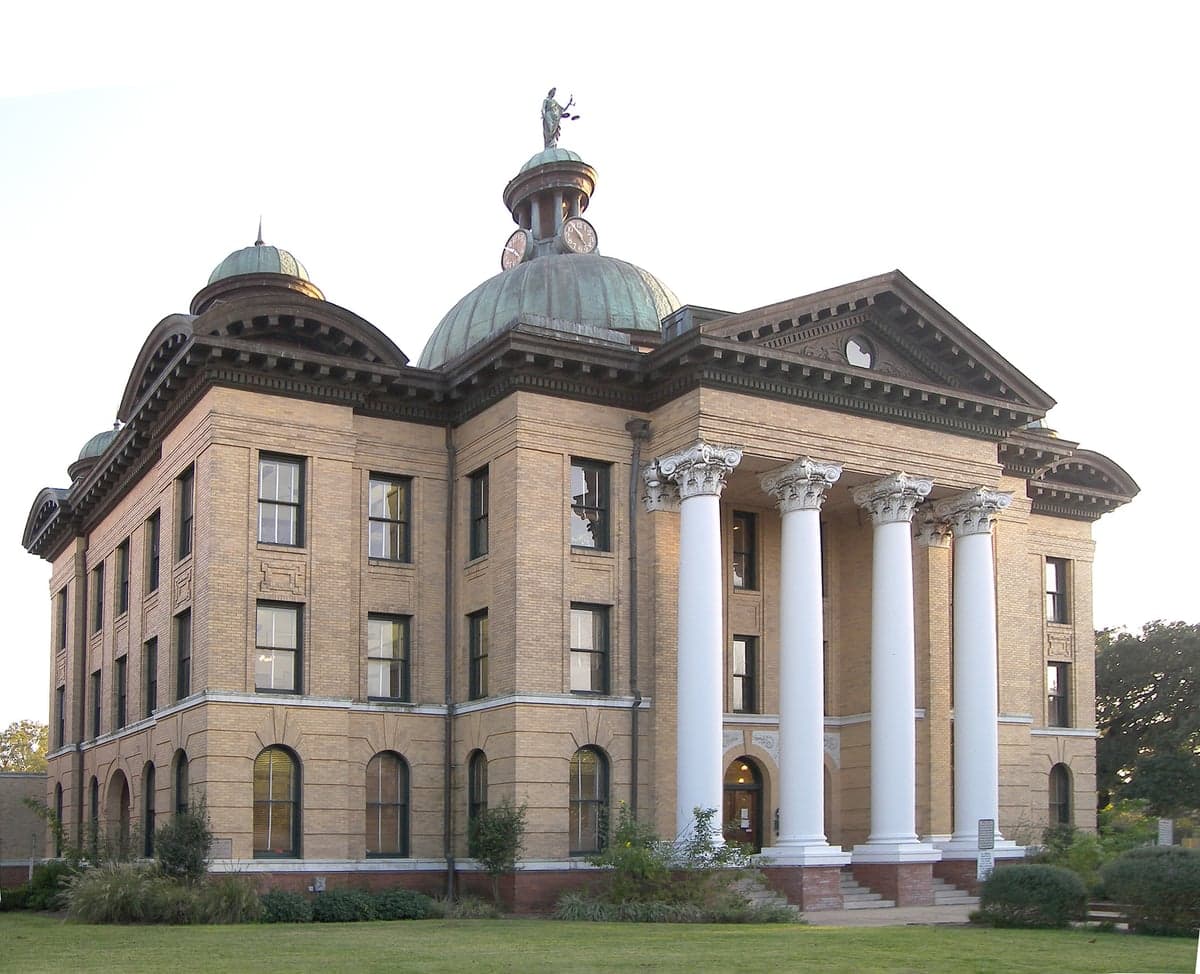
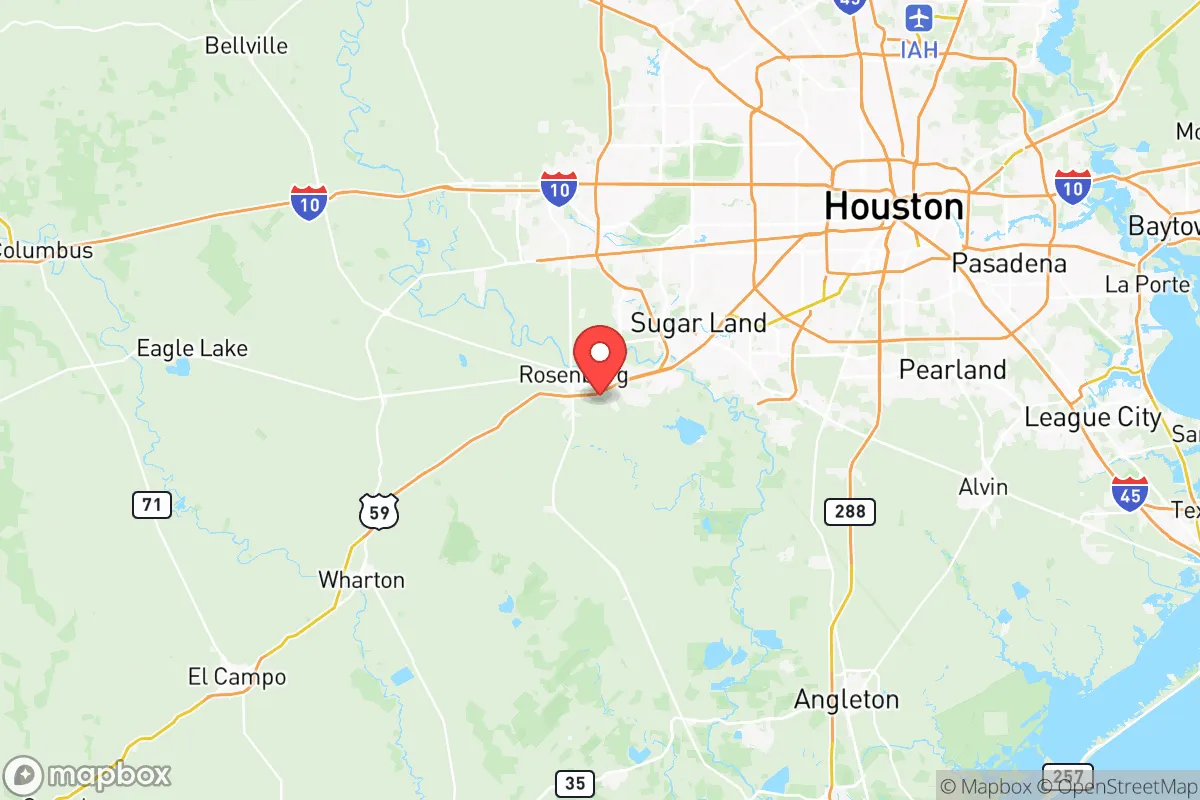
Photo: Wikipedia
Demographics of Fort Bend County
Affluence Level in Fort Bend County
A middle-class area roughly in line with national averages across income, home values, education, and employment.
People of Fort Bend County
Fort Bend County, Texas, is one of the most ethnically diverse counties in the United States, home to roughly 860,000 residents where no single racial or ethnic group holds a majority. The county’s population is 29.8% White, 24.5% Hispanic, 20.3% Black, 11.1% Indian (subcontinent), and 10.6% East/Southeast Asian, with 49.3% of adults holding a college degree. This diversity is not a recent accident but the product of distinct waves of settlement—from plantation-era slavery to post-1965 immigration—that have layered new communities atop old ones, creating a suburban landscape defined by master-planned subdivisions, strong school systems, and a rapidly evolving cultural identity.
Settlement & growth (pre-1960)
Before European contact, the area now known as Fort Bend County was inhabited by the Karankawa and Atakapa peoples, who lived along the Gulf Coast and the Brazos River. Spanish explorers passed through in the 16th century, but no permanent Spanish settlement took root here. The region became part of Stephen F. Austin’s colony under Mexican rule in the 1820s, drawing Anglo-American settlers from the southern United States who were granted land for cotton plantations. The county was formally created in 1837 and named for a blockhouse fort built on a bend of the Brazos River.
The defining pre-1960 population wave was the forced migration of enslaved African Americans, who by 1860 made up a majority of the county’s residents. Cotton plantations along the Brazos, particularly around Richmond and Rosenberg, relied on enslaved labor. After emancipation, many freedmen remained in the area as sharecroppers or tenant farmers, establishing communities such as Kendleton and Pleak. The post-Reconstruction period saw the arrival of German and Czech immigrants, who settled in farming communities like Needville and Fulshear, drawn by cheap land and railroad access. These groups remained relatively small, and the county stayed overwhelmingly rural and agricultural through the early 20th century.
The Great Migration brought a second wave of Black residents from the Deep South to Fort Bend County between 1940 and 1960, seeking work in the expanding oil and petrochemical industries along the Houston Ship Channel. However, the county’s population remained under 40,000 as late as 1950, with Richmond as the seat and Rosenberg as the only other incorporated town of note. Suburban development was still decades away.
Modern era (post-1965)
The 1965 Hart-Cellar Act fundamentally reshaped Fort Bend County. The law eliminated national-origin quotas, opening the door to immigration from Asia, Africa, and Latin America. At the same time, Houston’s booming energy and medical sectors created demand for skilled professionals, and the completion of the Sam Houston Tollway and U.S. Highway 59 made Fort Bend’s undeveloped prairie accessible to commuters. The result was a demographic transformation unlike almost any other American county.
The first major post-1965 group to arrive were East/Southeast Asian immigrants, particularly Chinese and Vietnamese professionals who settled in Sugar Land and Missouri City in the 1970s and 1980s. Sugar Land’s master-planned communities—built on the former Imperial Sugar Company land—offered affordable new homes and top-rated schools, drawing engineers, doctors, and tech workers. By 1990, Sugar Land was already one of the most Asian-American suburbs in Texas. A second wave of Indian (subcontinent) immigrants began arriving in the 1990s, also drawn by the technology and healthcare sectors. Today, Indian communities are heavily concentrated in Sugar Land and Katy, with the county’s 11.1% Indian share among the highest in the nation. East/Southeast Asian residents (10.6%) are also concentrated in these same suburbs, with significant Vietnamese and Chinese populations in Missouri City and Stafford.
Hispanic growth accelerated after 1990, driven by both immigration from Mexico and Central America and domestic migration from other Texas cities. Hispanic residents now make up 24.5% of the county, with large communities in Rosenberg, Richmond, and the uncolonized areas of eastern Fort Bend. The Black population, 20.3% of the county, is concentrated in Missouri City and Fresno, reflecting both the historic Black settlements and newer middle-class suburban migration from Houston’s Third Ward. The White share has fallen from over 70% in 1980 to 29.8% today, as the county has become a magnet for college-educated professionals of all backgrounds.
Domestic migration from the Rust Belt and California has also been significant since 2000. Fort Bend County’s housing stock—dominated by large, affordable single-family homes in master-planned communities like Sienna (in Missouri City) and Riverstone (in Sugar Land)—has attracted families from the Northeast, Midwest, and West Coast seeking lower costs and better schools. The county’s 49.3% college-educated rate reflects this influx of professionals.
The future
Fort Bend County is projected to become even more diverse in the next 10–20 years. The White share is expected to continue declining as the Hispanic and Asian populations grow through both immigration and higher birth rates. The Indian and East/Southeast Asian communities are likely to expand further, particularly in the western parts of the county around Fulshear and Katy, where new master-planned developments are under construction. The Hispanic population is growing fastest in the eastern and southern portions of the county, including Rosenberg and Needville, where housing is more affordable.
The county’s cultural identity is evolving from a historically Black-and-White Southern rural area into a polyglot suburban powerhouse where no group dominates. This is visible in the school systems—Fort Bend ISD, the largest district, offers bilingual programs in Spanish, Vietnamese, and Mandarin—and in the proliferation of ethnic grocery stores, temples, and mosques. The key challenge ahead is economic integration: while the northern suburbs (Sugar Land, Katy) are among the wealthiest in Texas, the southern and eastern parts of the county have higher poverty rates and older housing stock. The county’s future depends on whether growth spreads evenly or concentrates in the already-affluent enclaves.
For someone moving in now, Fort Bend County offers a rare combination of high educational attainment, extreme diversity, and relatively affordable housing compared to coastal metros. The county is becoming a self-contained suburban region—less a bedroom community for Houston and more a destination in its own right, with its own job centers, cultural institutions, and identity. The people of Fort Bend County are not a single story but a mosaic of many, and that mosaic is only becoming more intricate.

* Values derived from national, state, county, city and local statistics and may differ in a specific area. Last updated: 2026-07-02T01:14:49.000Z
Narrative content on this page is AI-generated and may contain mistakes. Verify any details that matter before acting on them.
ReloMaps may earn a commission from affiliate links at no extra cost to you.

