
Photo: Wikipedia
Personal Sovereignty in Fort Bend County
Strong independent fundamentals that actively favor personal liberty and low regulation.
What does Personal Sovereignty tell us?
Personal Sovereignty measures your capacity for self-reliance and independence with minimal government friction. Higher scores mean fewer barriers between you and the way you want to live... but it assumes you have the space you need and good neighbors.
What does this tell us?
Personal Sovereignty measures your capacity for self-reliance and independence with minimal government friction. Higher scores mean fewer barriers between you and the way you want to live... but it assumes you have the space you need and good neighbors.
State Policy
Energy independence: Net exporter (220% of energy produced in-state)
Personal Liberty
Homesteading

Personal Liberty Analysis
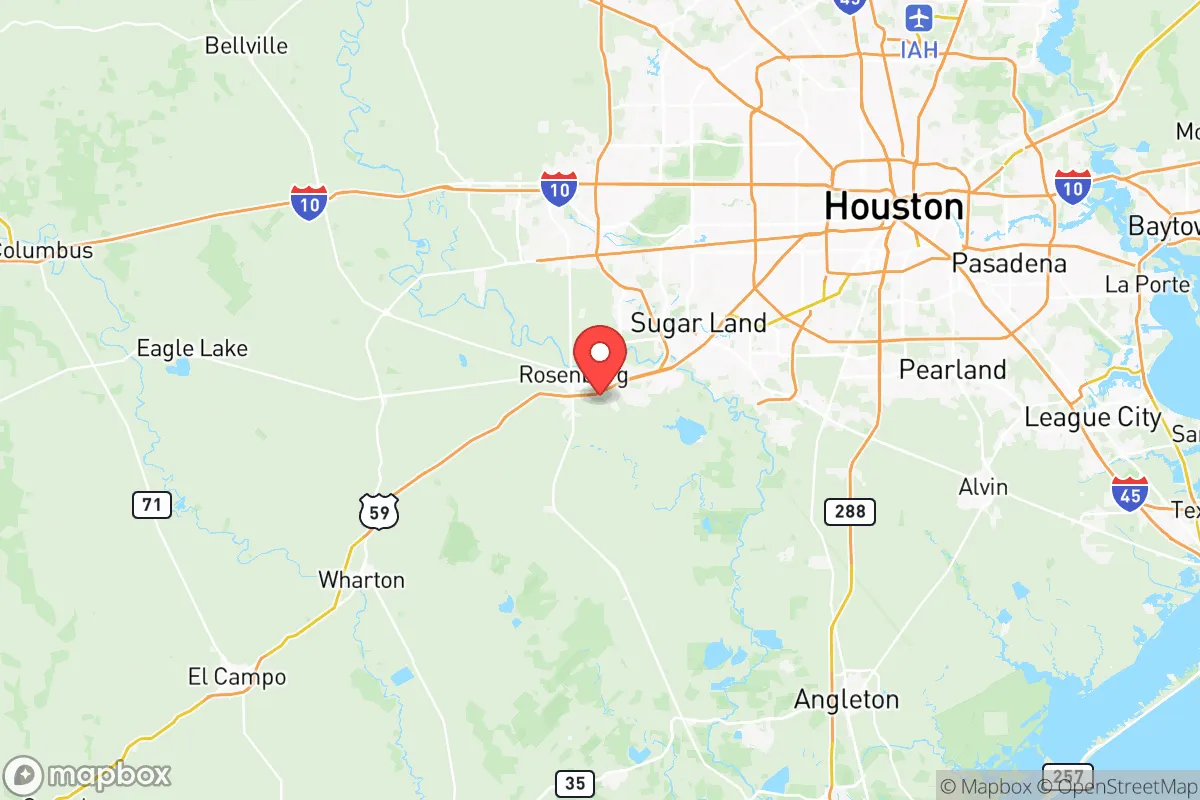
Fort Bend County, Texas, offers a personal sovereignty environment that is notably stronger than what residents would encounter in many coastal or interior blue-state metros, yet it is not as libertarian or lightly regulated as more rural Texas counties to the west and north. The county’s rapid suburban growth—fueled by its position within the Greater Houston metropolitan area—has created a mixed landscape where state-level preemptions protect core liberties (gun rights, property rights, low taxes) but local municipal and homeowners’ association (HOA) rules gradually tighten the reins as communities densify. For a relocation-conscious reader prioritizing individual autonomy, the key distinction lies within the county: cities like Richmond and Rosenberg retain a more permissive, self-reliant character, while Sugar Land and Missouri City lean toward managed suburban compliance. Fulshear and Katy (which straddles Harris and Fort Bend counties) represent a middle ground, with newer master-planned communities offering space but also strict covenants.
Tax burden and regulatory posture in Fort Bend County
Texas’s absence of a state income tax directly benefits Fort Bend County residents, who keep 100% of their earned wages. The trade-off is a property tax system that, while capped by the state’s 10% appraisal increase limit (with voter-approval rate rollback options), still produces meaningful bills. Fort Bend County’s total property tax rate hovers around 2.1% to 2.4% of assessed value, depending on the specific city and school district—this is middle-of-the-pack for Texas metros and notably lower than the high-tax suburbs of New York or California. The regulatory posture is light-touch at the county level: there is no countywide building code beyond state minimums for unincorporated areas, no business license requirement for most small enterprises, and no zoning overlay outside incorporated city limits. This means that in unincorporated pockets near Needville or Pleak, residents can run a side business from a home workshop, keep livestock, or build a metal shop without municipal permit delays. However, once you are inside city limits—especially in Sugar Land or Missouri City—you encounter aggressive code enforcement for fence height, front-yard parking, and signage. The county also imposes a sales tax rate of 8.25% (state + county + city), which is the legal maximum in Texas; though unavoidable, it funds roads and law enforcement without the need for additional fees.
Self-defense law and gun rights specifics in the county
Gun owners in Fort Bend County benefit fully from Texas’s permitless carry (constitutional carry) law, which allows any legal resident 21 or older to carry a handgun openly or concealed without a license. No county-specific restrictions exist that would override state preemption; the sheriff’s office in Richmond is routinely supportive of Second Amendment rights and issues license-to-carry (LTC) permits on a shall-issue basis. There are no county-level firearm magazine bans, waiting periods, or assault weapon restrictions. However, practical limits emerge in the county’s denser suburbs: Sugar Land and Missouri City have municipal parks that, while not banning carry outright, post signage restricting firearms in certain recreation centers and sports complexes (via state TPC 30.06/30.07 signage rules). CCW holders must also navigate private property restrictions in the many master-planned communities—HOAs in Katy and Fulshear sometimes prohibit discharging firearms on common grounds, though home-based carry is generally unrestricted. For target shooting, public ranges exist near Rosenberg and Pleak, but suburban sprawl has pushed most outdoor ranges farther west into rural Austin County. Stand your ground and castle doctrine laws apply statewide, providing robust self-defense protections—and Fort Bend County’s district attorney’s office (as of 2026) has not prosecuted self-defense claims aggressively. Overall, while you enjoy maximal gun liberty by national standards, the practical experience is more constrained in the front-yard-heavy suburbs than in the county’s rural southern end near Needville or Fairchilds.
Self-reliance and homesteading viability: lot sizes, zoning, and off-grid feasibility
Homesteading viability in Fort Bend County varies dramatically by location due to zoning and lot-size minimums. The county’s unincorporated areas—especially around Needville, Pleak, and Fairchilds—offer the best prospects for self-reliance. Minimum lot sizes in these rural zones are typically 1 to 5 acres, and no county permit is required for a small chicken coop, a rainwater catchment system (legal under Texas water law, though a permit is needed for 1,000+ gallon tanks), or a vegetable garden. Off-grid feasibility is moderate: solar panels are allowed with minimal permitting in unincorporated areas, and composting toilets are permissible if connected to a septic system (county health department approval required). However, off-grid living that involves forgoing the electric grid entirely is complicated by utility easements in subdivisions; many newer subdivisions in Fulshear and Katy require grid connection as part of the deed covenants. In the western part of the county near Rosenberg, some older subdivision lots sit on half-acre parcels where residents keep goats and horses without HOA pushback. The county has no outright ban on food forests or front-yard vegetable gardens, though cities like Sugar Land regulate “noxious weeds” and enforce tall-grass ordinances that limit unmanicured homestead aesthetics. For a full-drainage, self-sufficient property—with a well, septic, and no HOA—your best bet is an unincorporated tract of 5+ acres near Needville or Pleak, where property taxes also run lower than suburban averages due to agricultural valuation exemptions (if you keep livestock or timber). Do note that mortgage lenders in the area may require utilities be “available,” but this does not always force connection.
Personal liberties in Fort Bend County: parental rights, medical autonomy, speech, and property
Parental rights in Fort Bend County align with Texas’s conservative statutory framework: parents have broad authority over a child’s education, medical consent, and religious upbringing. The county’s school districts—such as Lamar CISD and Fort Bend ISD—operate under state law that permits parent-initiated opt-outs for sex education (abstinence-based curriculum) and certain health screenings. Medical autonomy, including vaccine choice, remains largely a matter of individual parental decision; no county-level vaccine mandates exist, and Texas law prohibits public schools from requiring COVID-19 vaccinations. However, hospitals in Sugar Land and Missouri City follow standard medical protocols that may require care that some libertarian-leaning families resist—for example, routine newborn vitamin K shots and eye ointment are mandatory unless parents obtain a waiver. Speech is fully protected under the First Amendment, and the county has one of the more diverse, active public comment cultures in the Houston metro—as of 2026, there are no local prior-restraint policies beyond typical time/place restrictions at commissioner’s court meetings. Property rights are robust under Texas law, but the county’s explosive growth has led to more frequent use of eminent domain for road expansions (e.g., Grand Parkway toll road extensions in the Katy/Fulshear corridor). Property owners in those areas have successfully organized to negotiate higher compensation. Short-term rental regulation remains light in unincorporated areas; Rosenberg and Needville allow STRs with minimal registration, while Sugar Land has banned them in residential zones entirely. In sum, a resident who values parental control and property freedom will feel at home in the county’s less incorporated areas, but suburban cities like Sugar Land and Missouri City impose more restrictions than the county’s rural fringes.
Compared to other rapidly growing Texas counties (e.g., Williamson, Collin, or Montgomery), Fort Bend County presents a moderate-to-strong personal sovereignty profile. Its rural south—Needville and Pleak—offers a genuinely low-tax, low-regulation, gun-friendly, and off-grid-viable environment. Its suburban north—Sugar Land and Missouri City—pulls toward a more managed, HOA-governed lifestyle typical of high-growth Sunbelt metros. For the relocation reader who values maximum autonomy, the key decision is not whether to move to Fort Bend County, but which part of it—the county’s internal diversity means you can select a city that matches your tolerance for rules, or buy land in the unincorporated stretches that few other Houston-adjacent options can match for self-reliance potential. The state’s constitutional protections for gun rights, property rights, and parental authority create a strong floor across the county, but local municipalities add variance upward from there. If you want the Houston job market and minimal interference, aim for unincorporated acreage near Needville or Pleak.

* Values derived from national, state, county, city and local statistics and may differ in a specific area. Last updated: 2026-07-02T01:14:49.000Z
Narrative content on this page is AI-generated and may contain mistakes. Verify any details that matter before acting on them.
ReloMaps may earn a commission from affiliate links at no extra cost to you.

