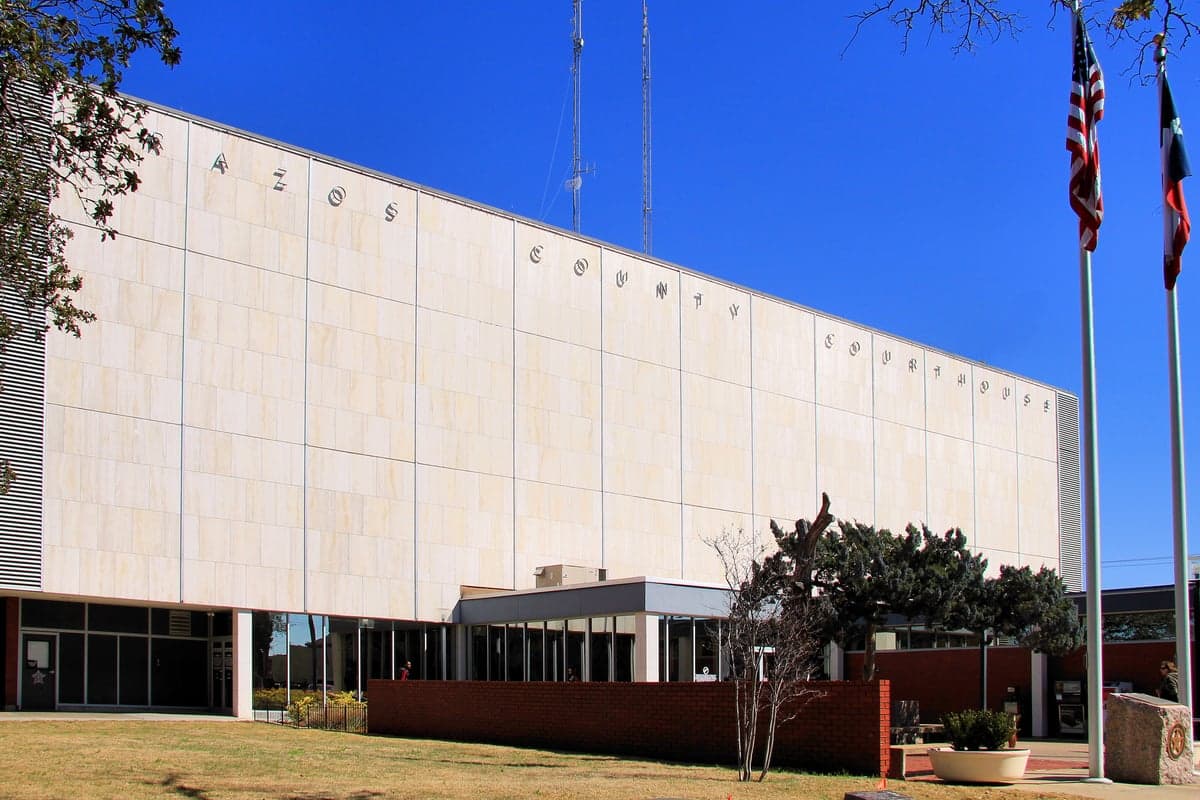
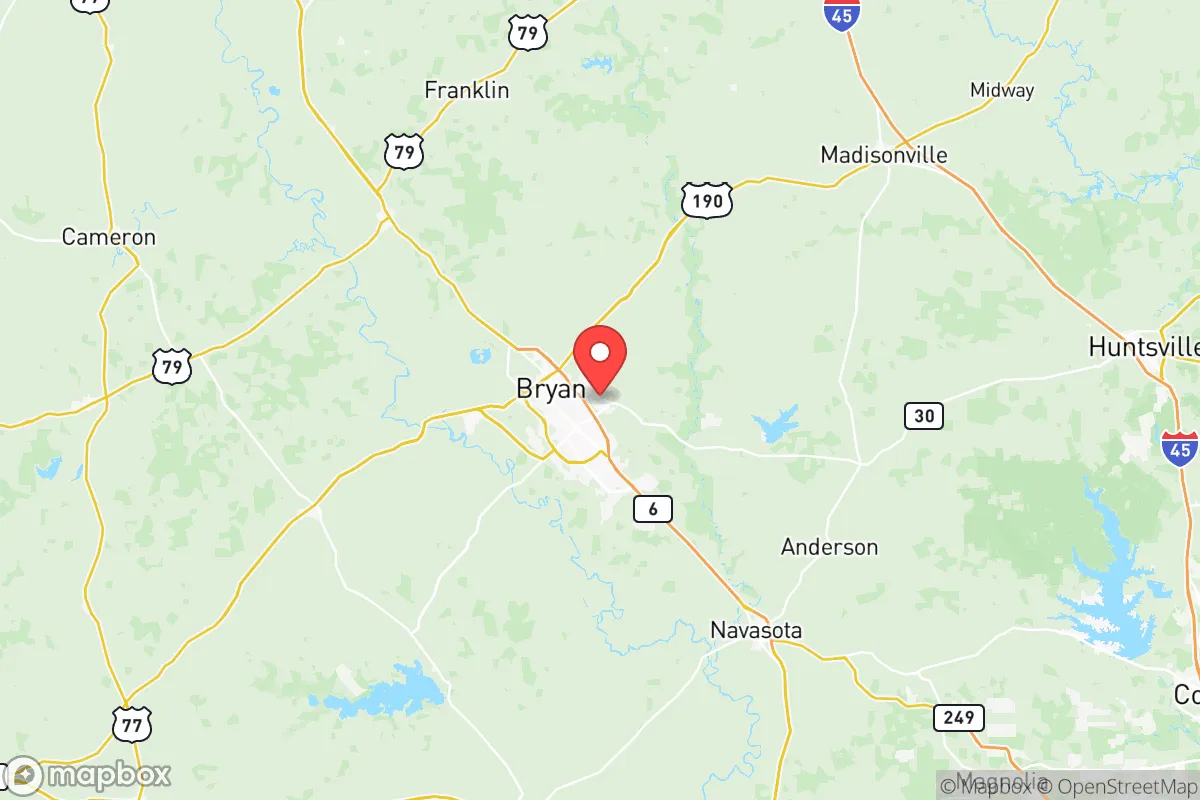
Photo: Wikipedia
Quality of Life in Brazos County
A livable area that tracks near national norms for affordability, walkability, and neighborhood health.
What does Quality of Life tell us?
Quality of Life measures an area by evaluating factors like cost of living, nearby amenities, country club access, airport proximity, socioeconomic signals and neighborhood character. For large states, this is a general average — quality of life can vary dramatically between metro areas, suburbs, and rural communities within the same state.
What does this tell us?
Quality of Life measures an area by evaluating factors like cost of living, nearby amenities, country club access, airport proximity, socioeconomic signals and neighborhood character. For large states, this is a general average — quality of life can vary dramatically between metro areas, suburbs, and rural communities within the same state.
Cost of Living
73%
The Real Cost of Living in Brazos County for 2026
| Tier | Individual | Family (4) |
|---|---|---|
| Survival | $19k | $35k |
| Comfortable | $54k | $80k |
| Luxury | $105k+ | $163k+ |
| Elite (Top 5%) | $155k+ | $240k+ |
Quality-of-Life Analysis
Brazos County offers a quality-of-life spectrum that ranges from the dense, amenity-rich college town of Bryan-College Station to quiet unincorporated crossroads and working farms, drawing everyone from university faculty and students to rural families seeking land and lower taxes. The county’s character is defined by this tension between the fast-growing, research-driven Bryan-College Station metro and the surrounding agricultural and bedroom communities that retain a slower, more independent pace. With a cost-of-living index at exactly the national average of 100, a median home value of $279,700, and a median rent of $1,160, the county provides a relatively affordable entry point into Texas’s booming I-35 corridor, though the price gap between the urban core and the rural fringe is significant.
Largest town(s) & population centers
Bryan and College Station are the county’s twin anchors, together housing roughly 85% of the county’s population. Daily life here revolves around Texas A&M University, which employs over 13,000 people and drives a robust service and tech economy. College Station skews younger and more transient, with a high concentration of students and recent graduates living in apartments and new subdivisions near the campus and the Century Square mixed-use district. Bryan, the older of the two, has undergone a downtown revitalization centered on Main Street and Lake Walk Town Center, attracting families and professionals who want walkable dining and events without the student-heavy vibe. Both cities offer strong public schools—College Station ISD and Bryan ISD—and the average commute of just 18.5 minutes is among the shortest for a metro area its size, making errands and school drop-offs quick. The trade-off is that housing in the most desirable neighborhoods near the university or downtown Bryan can push well above the county median, with newer four-bedroom homes in South College Station often listing above $400,000.
Smaller towns & rural pockets
Outside the Bryan-College Station bubble, the county opens into a patchwork of small communities and unincorporated areas. Millican, a tiny town on the county’s southern edge, retains a rural crossroads character with a population under 300 and no stoplights. Kurten, northeast of Bryan, is a census-designated place of roughly 400 residents known for its volunteer fire department and proximity to Lake Bryan, a popular recreation spot for fishing and camping. Wixon Valley, a small incorporated city of about 250 people, sits between Bryan and Kurten and offers larger lots with a semi-rural feel while still being within a 15-minute drive to Bryan’s grocery stores and hospitals. These areas lack the retail density and nightlife of the metro core but provide lower property taxes, more land per dollar, and a quieter lifestyle. The unincorporated community of Wellborn, just south of College Station, is a mix of older homes and new subdivisions that serves as a bedroom community for university staff who want to avoid city ordinances and HOA fees.
Cost & lifestyle range
The cost-of-living spread across Brazos County is wide. At the high end, College Station’s 77845 zip code (south of Highway 6) features newer master-planned communities like Miramont and Southwood, where median home values exceed $400,000 and HOAs maintain golf courses, pools, and walking trails. At the low end, rural areas near Millican and Kurten offer older homes on acreage for under $200,000, though buyers should budget for well and septic maintenance and longer drives to services. Renters see a similar split: a one-bedroom apartment near Texas A&M’s campus averages $1,200–$1,400, while a similar unit in north Bryan or near Bryan’s East Side can be found for $850–$950. The county’s median rent of $1,160 sits right in the middle, reflecting this urban-rural divide. Amenities also diverge: College Station residents have access to George Bush Presidential Library, multiple farmers’ markets, and a robust bus system (The District), while rural residents rely on personal vehicles and drive 20–30 minutes for major shopping or healthcare.
Brazos County works best for people who want the energy and job density of a major university town but also value the option of a quiet, land-based lifestyle just a few miles away. Young professionals and families who prioritize short commutes and strong schools will gravitate toward Bryan-College Station’s core, while retirees, hobby farmers, and remote workers seeking lower housing costs and more privacy will find the county’s rural pockets—Millican, Kurten, Wixon Valley—a practical and affordable alternative. The county’s balanced COL index and 18.5-minute average commute make it a rare Texas county where urban and rural living coexist within a single, manageable geography.

Crime in Brazos County
Crime rates similar to the national median for U.S. locations.
Violent CrimeViolent Crime Analysis
Property CrimeProperty Crime Analysis
Crime Analysis
Brazos County, home to College Station and Bryan, reports a violent crime rate of 345.1 per 100,000 residents and a property crime rate of 1,794.2 per 100,000 — figures that place the county above the national average for violent offenses but slightly below the Texas state average for property crime. The presence of Texas A&M University, a major economic and population driver, shapes the county’s safety profile, with student-heavy areas experiencing distinct crime patterns compared to more residential or rural pockets. While the county is not among the most dangerous in Texas, residents in certain neighborhoods face elevated risks, particularly from theft and aggravated assault.
Crime in context
Brazos County’s violent crime rate of 345.1 per 100,000 is roughly 15% higher than the national median of about 300 per 100,000, but it falls below the Texas state average of approximately 450 per 100,000. Property crime, at 1,794.2 per 100,000, is notably lower than the Texas average of roughly 2,200 per 100,000, placing the county in a more favorable position for theft and burglary. Compared to other Texas counties of similar size, Brazos ranks near the middle for violent crime — safer than counties like McLennan (Waco) or Smith (Tyler), but riskier than Williamson County (Georgetown) or Fort Bend County (Sugar Land). The county’s crime index is heavily influenced by the College Station-Bryan metro area, which accounts for the vast majority of reported offenses.
What residents experience
Residents in Brazos County most frequently encounter property crimes — larceny-theft, vehicle break-ins, and burglary — particularly in areas with high foot traffic and transient populations. The College Station neighborhoods near Texas A&M’s campus, including the Northgate entertainment district and student housing complexes along University Drive, report elevated rates of theft and alcohol-related assaults. Bryan, the county’s older urban core, sees higher concentrations of aggravated assault and drug-related offenses, especially in the Eastside and downtown corridors. In contrast, unincorporated areas like Wellborn and Kurten experience far lower crime rates, with property crime being the primary concern. The county’s District Attorney’s Office, which operates under a conservative-leaning judicial philosophy, has historically pursued aggressive prosecution for violent offenses, but progressive reforms in recent years — including diversion programs for low-level drug offenders — have drawn criticism from some residents who argue they reduce accountability. Travis County (Austin) and Harris County (Houston) are often cited as cautionary examples where liberal district attorneys have been linked to rising recidivism and softer sentencing, though Brazos County has not adopted policies as lenient as those jurisdictions.
Neighborhood-level variation
Crime in Brazos County is not evenly distributed. The College Station zip code 77840, which encompasses the university and surrounding student housing, accounts for a disproportionate share of property crime — nearly 40% of all larcenies in the county occur here. Bryan’s 77803 zip code, covering older residential and commercial areas, reports the highest violent crime rates, with aggravated assault and robbery incidents roughly double the county average. Safer enclaves include South College Station (77845), a newer suburban area with master-planned communities and lower population density, and the rural communities of Snook and Millican, where crime is negligible. For families and retirees, the Wellborn area offers a balance of proximity to amenities and low crime, while downtown Bryan has seen revitalization efforts that have reduced some property crime but not eliminated gang-related violence. Prospective residents should research specific neighborhoods and consult local crime maps, as block-level variation can be significant even within a single zip code.
* Values derived from national, state, county, city and local statistics and may differ in a specific area. Last updated: 2026-06-27T07:09:24.000Z
Narrative content on this page is AI-generated and may contain mistakes. Verify any details that matter before acting on them.
ReloMaps may earn a commission from affiliate links at no extra cost to you.

