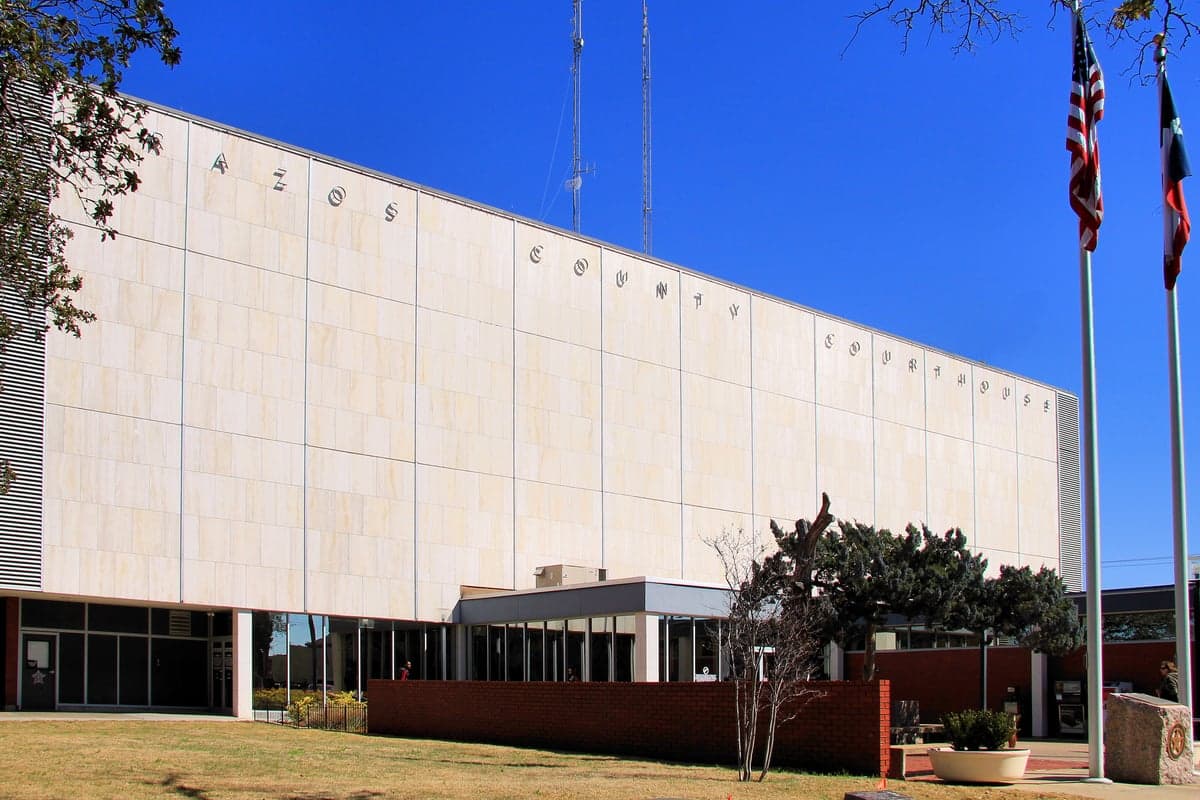
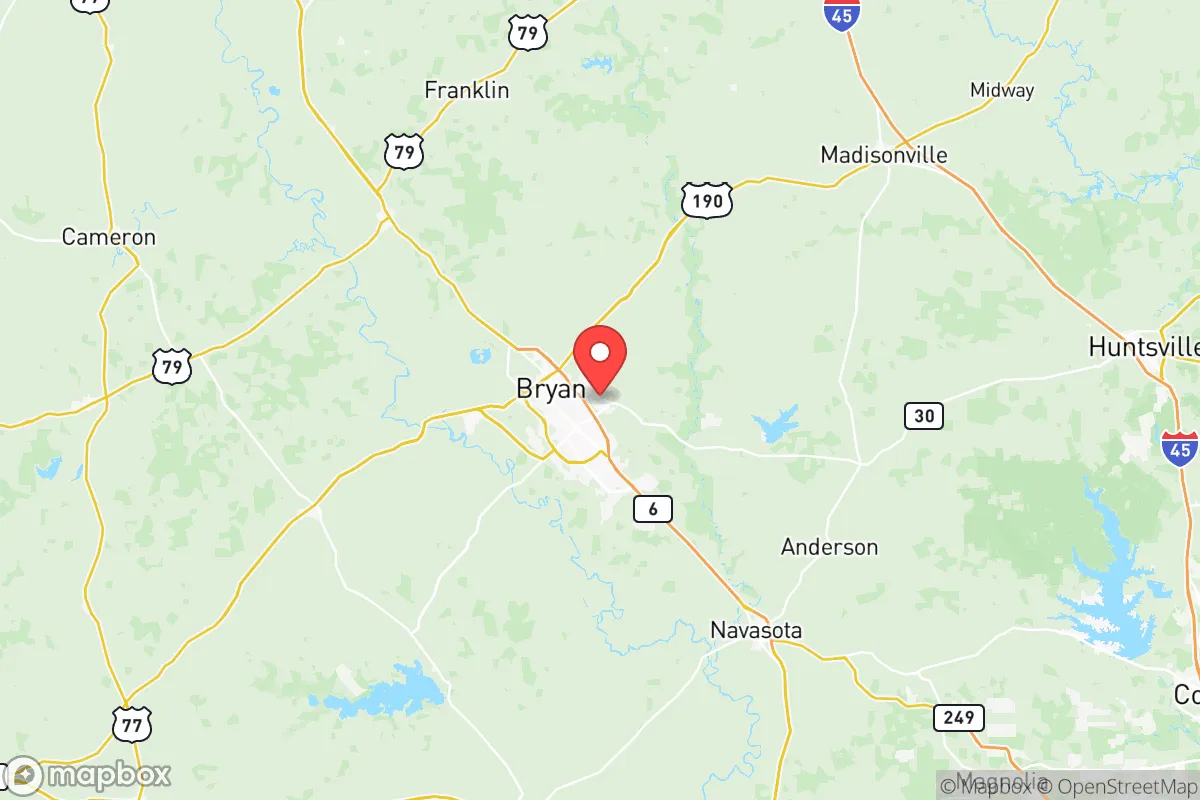
Photo: Wikipedia
Political ClimatePolitical Climate in Brazos County
Showing district-level results — no local-only data available.
Local Political AnalysisPolitical Analysis of Brazos County
Brazos County, home to College Station and Bryan, is a reliably Republican area with a Cook PVI of R+12, making it significantly more conservative than Texas as a whole, which sits at R+4. The county has voted for the GOP presidential candidate in every election since 2000, though the margin has tightened slightly in recent cycles as the population has grown and diversified. The political center of gravity is heavily influenced by Texas A&M University, which brings a mix of traditional conservative values and a younger, more moderate-to-liberal student population that can shift precinct-level results in unpredictable ways.
How it compares
Brazos County’s R+12 rating is a full 8 points more Republican than the state’s R+4, which means it leans harder right than places like Tarrant County (Fort Worth) or Montgomery County (north of Houston). Within the county, the political landscape is far from uniform. College Station is the most politically mixed area: precincts near the Texas A&M campus, especially around University Drive and Wellborn Road, often vote Democratic by narrow margins, driven by student turnout and younger faculty. In contrast, Bryan—the county’s older, more working-class city—tends to vote more consistently Republican, particularly in precincts east of Highway 6 and south of Villa Maria Road. The unincorporated areas and smaller towns like Millican and Kurten are deeply red, often delivering 70-80% of the vote for GOP candidates. The swing precincts are mostly in central College Station, where the balance between student renters and long-term homeowners can flip a precinct from blue to red depending on the election year.
What this means for residents
For conservative residents, Brazos County is a comfortable environment where Republican candidates are almost guaranteed to win local offices, from county commissioner to district judge. The county GOP is active and well-organized, with regular meetings and a strong presence in school board and city council races. For liberal residents, the political reality is more nuanced: while they are a clear minority in countywide elections, they have found footholds in College Station’s city council and the Bryan school board, where nonpartisan races sometimes favor moderate candidates. Statewide issues like abortion access and gun laws are debated here with the same intensity as in the rest of Texas, but local policy tends to reflect the county’s conservative lean—for example, the county has not pursued sanctuary city policies and has maintained a pro-business, low-regulation approach to development. The presence of a major university means that progressive voices are not silenced, but they rarely win countywide office.
Culturally, Brazos County is a mix of Aggie traditions, Southern hospitality, and a growing diversity from the university’s international student body and the region’s expanding healthcare and tech sectors. The county’s politics are less about flashy culture wars and more about practical governance—roads, schools, and economic development—though national issues do seep into local conversations, especially during presidential years. The trajectory is toward a slow purple shift, driven by in-migration from more liberal parts of Texas and the country, but the R+12 rating is likely to hold for the near future given the county’s deep-rooted conservative base and the fact that even the university’s student body leans center-right compared to peers at UT Austin or Rice. For anyone moving here, the political climate is stable and predictable: you’ll find plenty of like-minded neighbors whether you’re on the right or the left, but the county’s official direction will remain Republican for the foreseeable future.

State Political ClimatePolitical Climate in Texas
State Political AnalysisPolitical Environment in the State
Texas has been a reliably Republican state for the past three decades, with a Cook Partisan Voting Index of R+4, but the political reality on the ground is far more nuanced than a single number suggests. The state’s dominant coalition has historically been built on suburban conservatives, rural voters, and business interests, but explosive population growth—driven by domestic migration from blue states and a booming Hispanic population—has shifted the ground beneath that coalition. Over the last 10-20 years, the Republican margin has shrunk from double digits to single digits, and Democrats have made serious inroads in the fast-growing suburbs and major metros, even as rural and exurban areas have hardened their Republican allegiance.
Urban vs. rural divide
The political map of Texas is a story of three distinct landscapes. The major metros—Houston, Dallas-Fort Worth, San Antonio, and Austin—are the engines of Democratic growth. Austin and El Paso are solidly blue, with Travis County and El Paso County routinely delivering 70%+ margins for Democrats. The suburban rings around these cities, places like Collin County (north of Dallas) and Fort Bend County (southwest of Houston), have flipped from reliably red to purple or even blue in recent cycles. Meanwhile, rural and small-town Texas—the Panhandle, West Texas, and much of East Texas—remains deeply Republican, often voting 75-80% for GOP candidates. The Rio Grande Valley along the southern border, once a Democratic stronghold, has shifted rightward in recent elections, with counties like Starr and Hidalgo moving 20+ points toward Republicans since 2016. This urban-rural split is the defining political fault line in Texas today.
Policy environment
Texas has no state income tax, which is the single most concrete policy lever attracting relocators from high-tax states. The trade-off is higher property taxes and sales taxes, which can be a shock for newcomers. The state’s regulatory posture is famously business-friendly: minimal zoning in many cities, right-to-work laws, and a tort reform system that caps noneconomic damages in medical malpractice cases. On education, Texas funds schools primarily through local property taxes, leading to wide disparities between wealthy and poor districts; the state has also passed school choice legislation, including education savings accounts, in recent sessions. Healthcare policy is notably limited: Texas did not expand Medicaid under the Affordable Care Act, leaving roughly 1.5 million uninsured residents. Election laws have tightened in recent years, with stricter voter ID requirements, limits on drive-through and 24-hour voting, and new restrictions on mail-in ballot applications. The state also has a permitless carry law for handguns, one of the most permissive gun regimes in the country.
Recent policy direction
The last several legislative sessions have pushed Texas decisively in a conservative direction across multiple fronts. On gun and self-defense law, the 2021 permitless carry law (HB 1927) allows most adults to carry a handgun without a license or training, and the state has also passed "stand your ground" and castle doctrine protections. On parental and education rights, the 2023 law (HB 900) restricts sexually explicit content in school libraries and requires parental consent for library materials, while a separate law (SB 14) bans gender-transition care for minors. On speech and privacy, the state has passed a law (HB 20) that prohibits social media platforms from moderating content based on viewpoint, though it is currently tied up in court. On medical and bodily autonomy, Texas has one of the strictest abortion bans in the nation (SB 8, the "Heartbeat Act," and the trigger law that bans abortion from conception), with no exceptions for rape or incest. On property rights, the state has strengthened eminent domain protections for landowners and passed laws limiting local government authority to regulate short-term rentals. On taxation, the 2023 session delivered a major property tax cut package (SB 2 and SB 3) that raised the homestead exemption and compressed school tax rates. On voting and ballot access, the 2021 law (SB 1) banned 24-hour and drive-through voting, imposed new ID requirements for mail ballots, and gave partisan poll watchers more access to polling places.
Civil unrest & political movements
Texas has seen its share of political flashpoints in recent years. The 2020 and 2021 protests over police brutality and racial justice were particularly intense in Austin and Houston, with the Austin City Council cutting the police budget by a third before later restoring much of it. Immigration politics are a constant source of tension: the state has bused thousands of migrants to Democratic-led cities like New York and Chicago, and Governor Greg Abbott’s Operation Lone Star has deployed state troopers and National Guard to the border, leading to legal battles with the Biden administration over razor wire and river barriers. The "secession" or "Texit" movement, while loud on social media and among some Republican activists, has no serious political traction—polls consistently show a majority of Texans oppose leaving the Union. Election integrity remains a live issue: the 2020 and 2022 cycles saw intense scrutiny of Harris County’s election administration, leading to the state taking over the county’s elections in 2023. A new resident would notice the ubiquity of political signage, the frequency of campaign mailers, and the general intensity of political engagement, especially in swing suburbs like Williamson County (north of Austin) and Tarrant County (Fort Worth).
Projection
Over the next 5-10 years, Texas is likely to continue its slow drift toward competitiveness, but a Democratic takeover of statewide office remains a long shot. The demographic trends are clear: the state is becoming more urban, more diverse, and more educated, all of which tend to benefit Democrats. The suburbs of Dallas, Houston, and Austin are filling with out-of-state transplants who bring more moderate or liberal politics. However, the Republican Party has responded by tightening election laws, gerrymandering congressional and state legislative districts aggressively, and leaning into cultural issues that resonate with rural and exurban voters. The result is a state that will likely remain under Republican control at the statewide level for the foreseeable future, but with a shrinking margin and a more volatile political landscape. A relocator moving in now should expect to find a state where conservative policy is the default, but where the political conversation is increasingly shaped by the tension between a growing, diverse urban population and a shrinking but politically powerful rural base.
For a new resident, the bottom line is that Texas offers a genuinely conservative policy environment—low taxes, light regulation, strong gun rights, and a culture of personal liberty—but the political climate is not monolithic. If you live in Austin or Houston, you will encounter a liberal urban culture that is increasingly at odds with state policy. If you settle in Lubbock or Tyler, you will find a deeply conservative community that aligns closely with the state government. The key is to choose your location carefully, because in Texas, the political reality of your daily life depends heavily on which part of the state you call home.
* Values derived from national, state, county, city and local statistics and may differ in a specific area. Last updated: 2026-06-27T07:09:24.000Z
Narrative content on this page is AI-generated and may contain mistakes. Verify any details that matter before acting on them.
ReloMaps may earn a commission from affiliate links at no extra cost to you.

