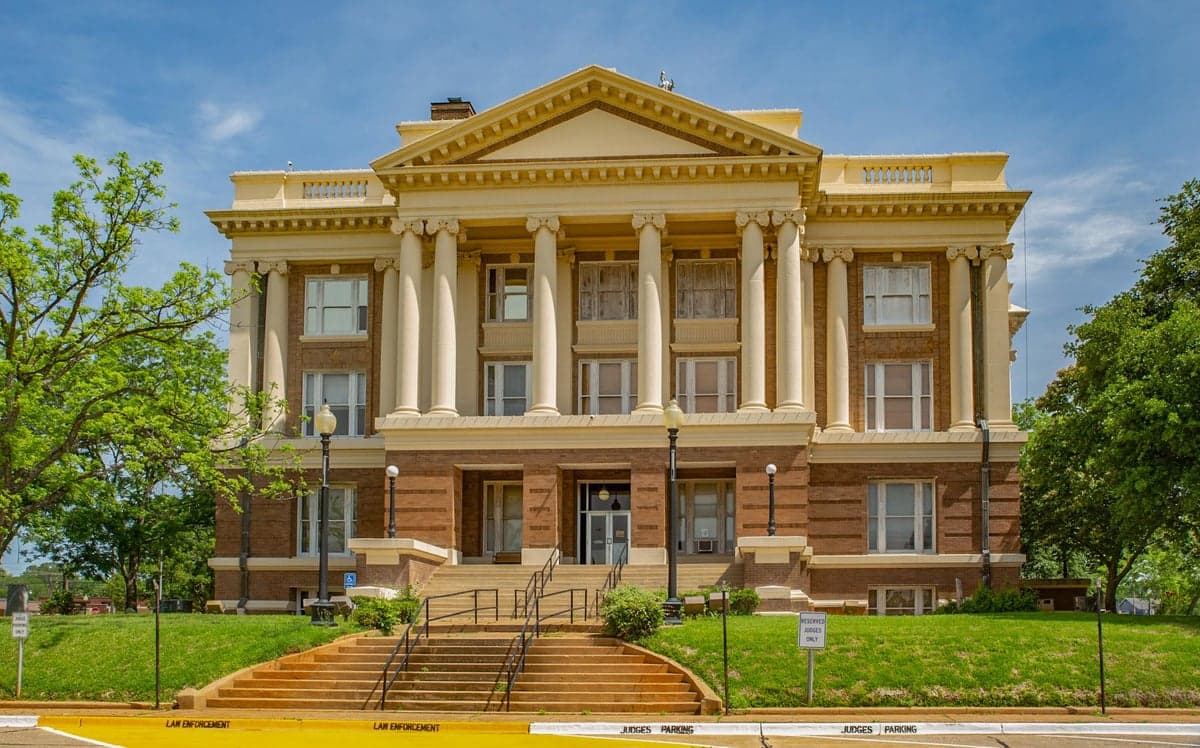
Photo: Wikipedia
Political ClimatePolitical Climate in Anderson County
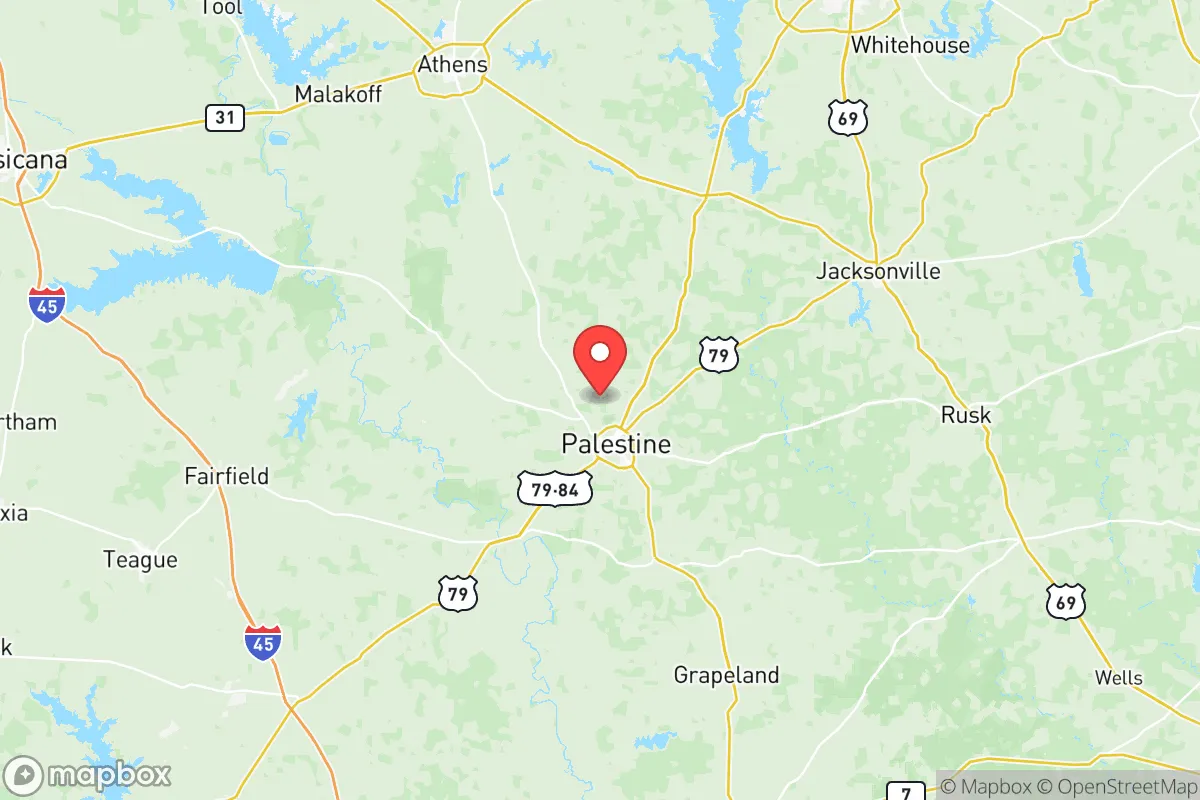
Showing district-level results — no local-only data available.
Local Political AnalysisPolitical Analysis of Anderson County
Anderson County is a reliably Republican stronghold in East Texas, with a Cook Partisan Voting Index (PVI) of R+14 that makes it significantly more conservative than the state of Texas as a whole, which sits at R+4. This isn't a recent shift; the county has voted for the GOP presidential candidate by wide margins for decades, and local offices are almost entirely held by Republicans. The real political story here isn't about whether the county will flip, but about the subtle shades of red you'll find across its towns and precincts.
How it compares
The R+14 rating puts Anderson County in the top tier of Texas's most conservative counties, far to the right of the state's overall R+4 lean. To put that in perspective, while Texas statewide races are competitive enough that Democrats can win in places like Dallas or Houston, Anderson County is a lock for Republicans. The county's political DNA is rooted in its rural character, strong evangelical presence, and a local economy tied to agriculture, timber, and the Texas Department of Criminal Justice (which operates several units here). This creates a political environment where conservative social and fiscal views are the baseline, not the exception. Even the county's largest city, Palestine, votes reliably red, though it's the most moderate part of the county. The rural precincts around Elkhart, Frankston, and Cayuga are where the GOP margins are highest, often exceeding 80% in presidential elections. There are no real "blue" towns, but the precincts around the Palestine city limits and the Texas State Technical College campus show slightly more competitive numbers, often with 35-40% Democratic votes. These are the swing precincts, but they're still a long way from being purple.
What this means for residents
For conservative residents, Anderson County is a comfortable place to live politically. Local government, school boards, and law enforcement are all aligned with their values. You'll find that issues like property rights, Second Amendment protections, and limited government are taken seriously by local officials. For liberal residents, the reality is different. While you won't face open hostility, you'll be in a clear minority. Political conversations at the coffee shop or church potluck will almost always lean right. That said, the county isn't a monolith. The presence of the prison system brings in a diverse workforce, and Palestine has a small but active Democratic club. The key is that political affiliation rarely defines social life here; people are neighborly regardless of who they voted for. The real friction points tend to be around growth and development—whether to allow more housing, how to manage the influx of people from Houston (about 90 minutes south), and how to balance economic development with the county's rural character.
Culturally, Anderson County stands apart from the state's urban centers in a few notable ways. The county is deeply rooted in its history, from the Texas State Railroad to the historic downtown square in Palestine. There's a strong sense of local identity that doesn't always align with the fast-paced changes in Dallas or Austin. Policy-wise, you'll see this in the county's approach to land use—very few zoning regulations, a strong preference for private property rights, and a general skepticism of state or federal mandates. The county also has a notable number of residents who work in the oil and gas industry, particularly around the Cayuga field, which reinforces the pro-energy, pro-business political culture. For anyone moving here, the political climate is straightforward: it's a deeply conservative area that values tradition, self-reliance, and community, and that's unlikely to change in the near future.

State Political ClimatePolitical Climate in Texas
State Political AnalysisPolitical Environment in the State
Texas is a solidly Republican state with a Cook Partisan Voting Index of R+4, meaning it leans about four points more conservative than the national average in presidential elections. Over the past 10-20 years, the state has shifted from a deep-red stronghold to a more competitive battleground, driven by explosive population growth in the urban crescent from Dallas-Fort Worth down through Austin to San Antonio and Houston. While Republicans still control every statewide office and both legislative chambers, the margin of victory has narrowed: Donald Trump won Texas by 9 points in 2016 and just under 6 points in 2020, and Democrats have flipped several suburban congressional districts and state house seats in the last two cycles.
Urban vs. rural divide
The political map of Texas is a tale of three landscapes. The major metros — Houston, Dallas, San Antonio, and especially Austin — are Democratic strongholds. Austin's Travis County gave Biden 71% of the vote in 2020, while Harris County (Houston) and Dallas County both went blue by double digits. Meanwhile, the vast rural and exurban expanses of West Texas, the Panhandle, and East Texas are overwhelmingly Republican. Lubbock, Midland, and Tyler routinely vote 70-80% Republican. The real action is in the suburbs: counties like Collin (north of Dallas), Denton, and Fort Bend (southwest of Houston) have shifted dramatically toward Democrats over the past decade, though they still lean red overall. Bexar County (San Antonio) flipped blue in 2016 and has stayed there, while El Paso remains a reliably Democratic outpost in the far west. The growing Hispanic electorate, particularly in the Rio Grande Valley, has shown some movement toward Republicans in recent cycles, but the region still votes Democratic overall.
Policy environment
Texas operates under a conservative policy framework that has been largely stable for decades. There is no state income tax — the state relies on a high property tax system and a 6.25% state sales tax (local options can push it over 8%). The regulatory posture is famously business-friendly: no state-level occupational licensing for many professions, weak environmental regulations, and a right-to-work law that prohibits union security agreements. On education, Texas uses a school finance system that relies heavily on local property taxes, leading to wide disparities between wealthy and poor districts. The state has a school voucher-like program through the Texas Education Agency's "school choice" initiatives, though full voucher legislation has stalled in the House. Healthcare policy is marked by the state's refusal to expand Medicaid under the Affordable Care Act, leaving roughly 18% of Texans uninsured — the highest rate in the nation. Election laws have been tightened: the 2021 Senate Bill 1 restricted mail-in voting, added ID requirements, and banned 24-hour and drive-through voting. Abortion is effectively banned after the 2021 "heartbeat" law (SB 8) and the 2022 trigger law that took effect after Dobbs, with no exceptions for rape or incest.
Recent policy direction
The last five years have seen Texas move decisively in a conservative direction on multiple fronts. On gun rights, the state enacted permitless carry (HB 1927) in 2021, allowing most adults to carry a handgun without a license or training. On parental rights and education, the 2023 "Parental Bill of Rights" (HB 900) restricted what books can be in school libraries and required parental consent for student health services. The state also banned diversity, equity, and inclusion programs at public universities (SB 17) and prohibited transgender athletes from competing on school teams matching their gender identity (HB 25). On speech and privacy, Texas passed a law (HB 20) in 2021 that bars social media platforms from moderating content based on viewpoint, though it's been tied up in court. Property rights remain strong: there is no statewide zoning, and the state has a robust eminent domain compensation framework. On voting, the 2021 election law (SB 1) added new ID requirements for mail ballots, banned drop boxes, and made it a crime for election officials to send unsolicited mail-in ballot applications. The overall direction is toward expanding individual liberties on guns and education while restricting access to abortion and tightening election procedures.
Civil unrest & political movements
Texas has seen significant political activism from both sides in recent years. The 2020 Black Lives Matter protests in Austin, Houston, and Dallas were among the largest in the country, with Austin alone seeing over 50 consecutive nights of demonstrations. The state's response included the 2021 law (HB 1) that increased penalties for rioting and created a new crime of "obstructing a highway" during a protest. On the right, the "Texas Nationalist Movement" has gained some visibility, pushing for a referendum on secession, though it remains a fringe position with no serious legislative support. Immigration politics are a constant flashpoint: Governor Greg Abbott's Operation Lone Star has deployed state troopers and National Guard to the border, bused migrants to Democratic-led cities, and installed razor wire along the Rio Grande. The state has also passed laws (SB 4 in 2017, HB 20 in 2023) that allow local law enforcement to enforce federal immigration laws, though these have faced legal challenges. Election integrity remains a hot-button issue: the 2020 election saw Trump's campaign file multiple lawsuits in Texas, and the 2021 law was explicitly framed as a response to "voter fraud" concerns, though no widespread fraud was ever documented. A new resident would notice the political polarization in yard signs, bumper stickers, and local news coverage, but daily life is generally civil — the state's famous "Texas nice" culture still holds in most interactions.
Projection
Over the next 5-10 years, Texas is likely to become more competitive at the statewide level but remain Republican-leaning. The key demographic driver is the continued influx of domestic migrants — roughly 1,000 people move to Texas every day — many of whom come from blue states like California and New York. These newcomers tend to be more moderate or liberal, especially in the suburbs, which will continue to shift left. However, the state's Hispanic population, which is growing faster than any other group, is not uniformly Democratic; recent elections have shown significant movement toward Republicans, particularly among working-class Hispanic voters in the Rio Grande Valley and along the border. The Republican Party's hold on the legislature is secure for the near term due to gerrymandered maps, but the statewide margins will likely continue to narrow. A Democrat could plausibly win a Senate seat or even the governorship within a decade if the party can turn out its urban base while making inroads in the suburbs. For a new resident, this means the political environment will remain conservative but increasingly contested, with more competitive elections and a growing diversity of political voices.
For someone moving to Texas, the practical takeaway is that you'll be living in a state that is firmly Republican in its governance but increasingly purple in its electorate. Conservative residents will find a policy environment that aligns with their values on taxes, guns, education, and regulation, while liberal residents will face a state government that is actively hostile to their priorities on abortion, voting access, and social policy. The urban centers offer a blue oasis with progressive local governments, but state law often preempts local ordinances. The key is to choose your location wisely: Austin, Houston, Dallas, and San Antonio provide liberal-friendly environments, while Lubbock, Midland, Tyler, and the suburbs of Fort Worth are more reliably conservative. The state's trajectory suggests that the political tensions will only intensify, but for most residents, the day-to-day experience is one of economic opportunity and relative freedom from state interference in personal and professional life.
* Values derived from national, state, county, city and local statistics and may differ in a specific area. Last updated: 2026-06-27T21:06:56.000Z
Narrative content on this page is AI-generated and may contain mistakes. Verify any details that matter before acting on them.
ReloMaps may earn a commission from affiliate links at no extra cost to you.

