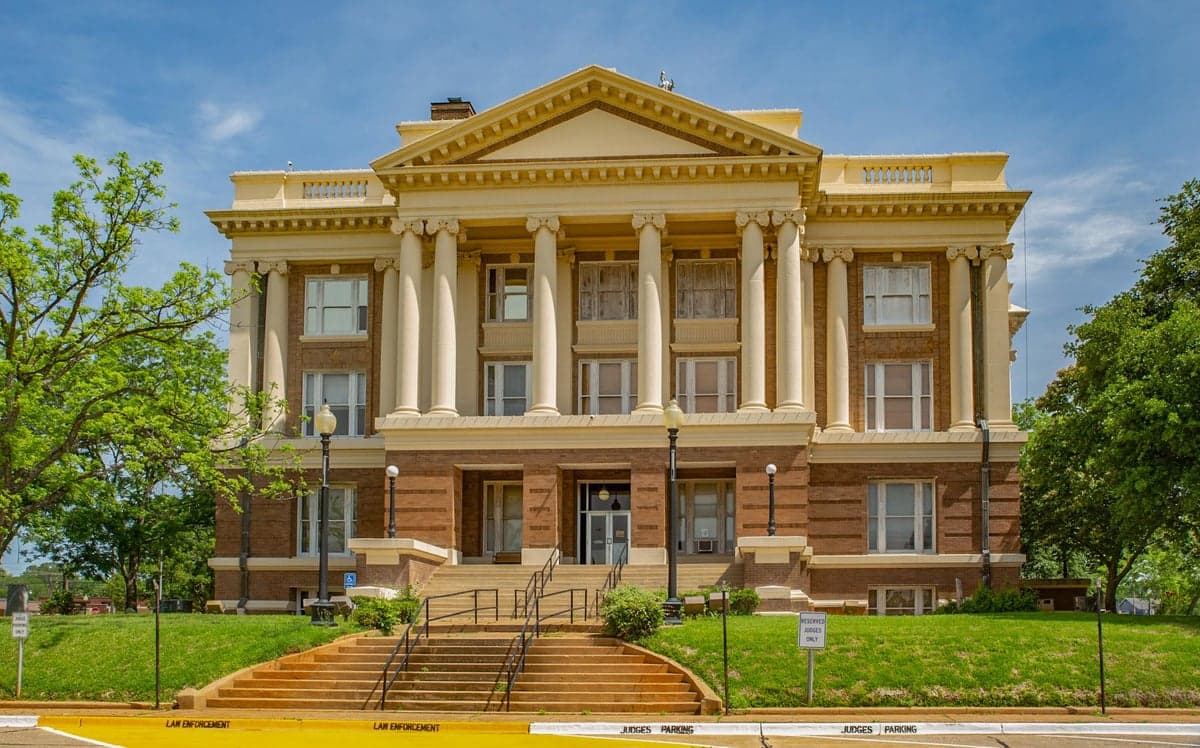
Photo: Wikipedia
Personal Sovereignty in Anderson County
Strong independent fundamentals that actively favor personal liberty and low regulation.
What does Personal Sovereignty tell us?
Personal Sovereignty measures your capacity for self-reliance and independence with minimal government friction. Higher scores mean fewer barriers between you and the way you want to live... but it assumes you have the space you need and good neighbors.
What does this tell us?
Personal Sovereignty measures your capacity for self-reliance and independence with minimal government friction. Higher scores mean fewer barriers between you and the way you want to live... but it assumes you have the space you need and good neighbors.
State Policy
Energy independence: Net exporter (220% of energy produced in-state)
Personal Liberty
Homesteading

Personal Liberty Analysis
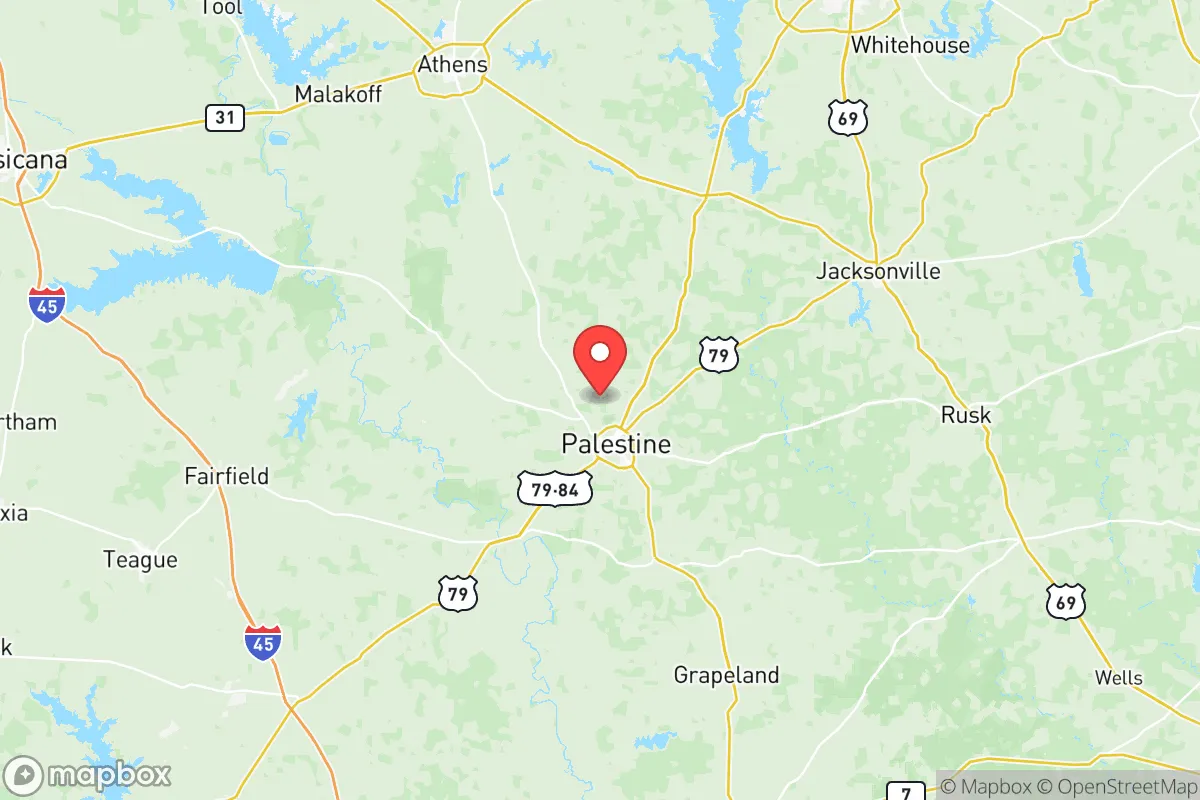
Anderson County, Texas, offers a notably high degree of personal sovereignty, characterized by a light regulatory touch, strong gun rights, and a culture of self-reliance that is more pronounced than in the state’s urban centers. While Texas itself is a freedom-oriented state, Anderson County’s rural character and local governance amplify this autonomy, making it a viable option for individuals and families seeking to minimize government intrusion in daily life. The county seat, Palestine, serves as the primary hub, but the autonomy environment varies noticeably between the more developed areas around Palestine and the unincorporated communities like Elkhart, Frankston, and Cayuga.
Tax burden and regulatory posture in Anderson County
Anderson County’s tax burden is moderate by Texas standards, with no state income tax and a property tax rate that is competitive with surrounding rural counties. The total effective property tax rate in the county hovers around 1.3% to 1.5% of assessed value, depending on the specific school district and city jurisdiction. Palestine’s city tax adds roughly 0.5%, while unincorporated areas like Elkhart or Frankston have lower overall rates. The regulatory posture is distinctly light-touch: there is no county-wide zoning ordinance, meaning property use is largely unrestricted outside of city limits. This is a critical advantage for those seeking to operate a home-based business, keep livestock, or build without extensive permitting. In Palestine, the city enforces basic building codes and subdivision regulations, but these are far less onerous than in larger Texas metros. The county’s approach to business regulation is similarly hands-off, with no special county-level occupational licensing beyond state requirements, making it easier to start a small enterprise or trade.
Self-defense and gun law specifics in Anderson County
Anderson County is a strong Second Amendment area, with local law enforcement and the county sheriff’s office consistently supporting constitutional carry, which has been state law since 2021. The county is a permitless carry jurisdiction, meaning any law-abiding adult 21 or older can carry a handgun openly or concealed without a license. The sheriff’s office in Palestine is known for issuing licenses to carry (LTC) efficiently for those who still choose to obtain one, and there are no county-level restrictions on firearm ownership, magazine capacity, or ammunition types. Gun ranges and firearm retailers are present in Palestine and the surrounding area, with the Palestine Gun Club offering a public range. The county’s rural nature means that discharging a firearm on private property is generally permitted, provided it is done safely and not within city limits where noise ordinances may apply. In unincorporated areas like Cayuga or Tennessee Colony, residents routinely shoot on their own land without legal friction, reflecting a culture where self-defense and firearm proficiency are normalized.
Self-reliance and homesteading viability in Anderson County
Homesteading and off-grid living are highly viable in Anderson County, particularly outside of Palestine’s city limits. Minimum lot sizes in unincorporated areas are not strictly regulated, allowing for acreage purchases as small as one acre for a homestead, though larger parcels of 5 to 20 acres are common and affordable. The county’s zoning absence means that keeping chickens, goats, or even larger livestock is unrestricted on most rural properties. Off-grid feasibility is strong: while the county does not mandate connection to municipal water or sewer, well drilling and septic system installation are straightforward, with the county health department providing clear permitting. Solar panel installation is unregulated at the county level, and many residents in areas like Frankston and Elkhart rely on solar arrays and rainwater collection. The Texas Commission on Environmental Quality (TCEQ) does require permits for certain rainwater catchment systems, but enforcement is minimal for personal use. The county’s agricultural exemption for property taxes further incentivizes homesteading, reducing the tax burden on land used for farming or ranching, even on small parcels.
Personal liberties in Anderson County
Personal liberties in Anderson County are broadly protected, with a strong emphasis on parental rights, medical autonomy, and property rights. Parental rights are respected in the Palestine Independent School District and other local districts, with school boards generally deferring to parents on medical decisions and curriculum concerns. Medical autonomy is supported by the county’s lack of local health mandates; during the COVID-19 pandemic, Anderson County did not impose mask or vaccine mandates, and the sheriff’s office publicly stated it would not enforce state-level emergency orders deemed overreaching. Freedom of speech is robust, with no local ordinances restricting public expression beyond state nuisance laws. Property rights are particularly strong: the county does not have a comprehensive sign ordinance, allowing residents to post political or commercial signs freely on their own land. In unincorporated areas, there are no noise ordinances beyond state-level disturbance laws, and no restrictions on vehicle types or storage on private property. This contrasts with more regulated cities like Austin or Dallas, where homeowners’ associations and city codes can limit personal expression and property use.
Overall, Anderson County offers a level of personal sovereignty that is above the Texas average, especially for those willing to live outside of Palestine’s city limits. The combination of no county zoning, constitutional carry, low property taxes, and a culture of self-reliance makes it a strong candidate for individuals and families prioritizing autonomy. Compared to more regulated areas in the state, such as Travis County or Harris County, Anderson County provides a significantly lighter regulatory touch, though it is not as extreme as some West Texas counties with even fewer services. For a freedom-oriented relocator, the county strikes a practical balance between access to basic services in Palestine and the unencumbered lifestyle available in its rural communities like Elkhart, Frankston, and Cayuga.

* Values derived from national, state, county, city and local statistics and may differ in a specific area. Last updated: 2026-06-27T21:06:56.000Z
Narrative content on this page is AI-generated and may contain mistakes. Verify any details that matter before acting on them.
ReloMaps may earn a commission from affiliate links at no extra cost to you.

