Photo: Wikipedia
Political ClimatePolitical Climate in Washington County
Showing district-level results — no local-only data available.
Local Political AnalysisPolitical Analysis of Washington County
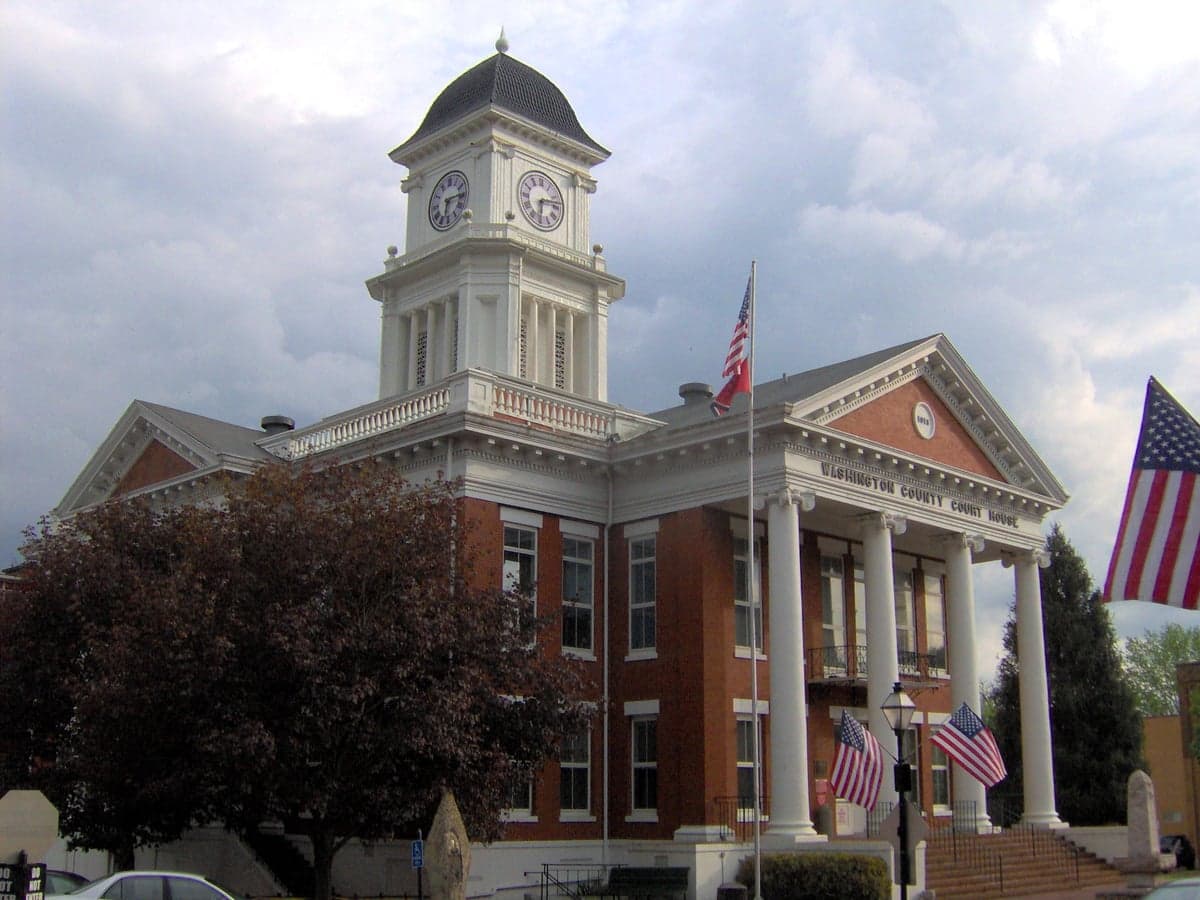
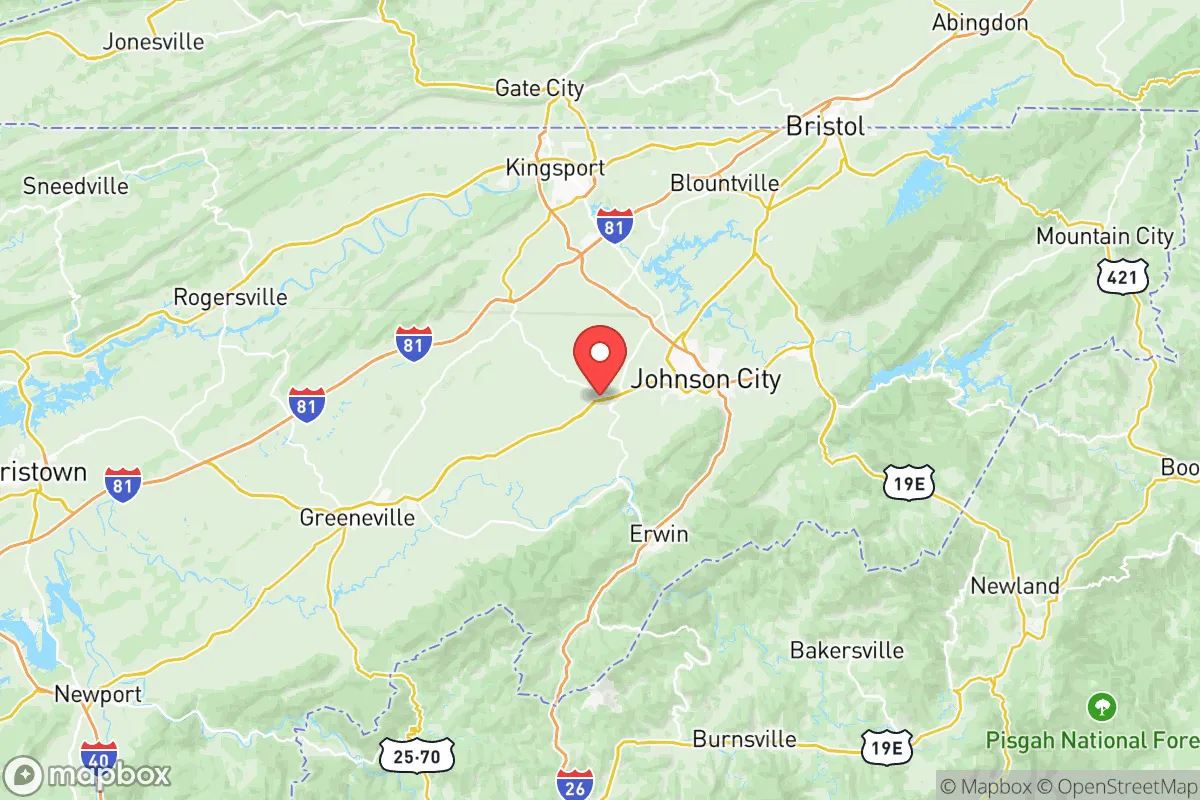
Washington County, Tennessee, is one of the most reliably Republican strongholds in the state, carrying a Cook Partisan Voting Index (PVI) of R+29 — more than double the statewide Tennessee PVI of R+13. That means the county is roughly 16 points more conservative than the state average, and in presidential elections, Republican candidates routinely win here by 30 to 40 points. The county has been trending redder for decades, driven by the growth of exurban subdivisions around Johnson City and the steady outflow of moderate Democrats who once held sway in the old industrial and tobacco-farming precincts. While the city of Johnson City itself shows some blue-leaning pockets — particularly around East Tennessee State University and the downtown historic district — the surrounding towns like Jonesborough, Gray, and Telford are deeply conservative, and the rural precincts along the Cherokee National Forest border vote Republican by margins that can exceed 70 percent.
How it compares
To understand just how conservative Washington County is, compare it to the rest of Tennessee. The state as a whole is already solidly red at R+13, but Washington County's R+29 puts it in the same league as the most Republican counties in the Upper South — places like Sevier County (R+32) or Blount County (R+28). Within the Tri-Cities region, Washington County is actually the most Republican of the three core counties; Sullivan County (Bristol) sits at R+27, and Carter County (Elizabethton) is R+28. The difference is partly demographic: Washington County has a larger college-educated population and a more diverse economy anchored by healthcare and education, which creates a small but meaningful liberal bloc in Johnson City. In the 2024 presidential primary, for example, precincts in the ETSU area and the Tree Streets neighborhood voted for Nikki Haley over Donald Trump, while every other precinct in the county went for Trump by wide margins. That kind of internal split is rare in Tennessee outside of Davidson and Shelby counties.
What this means for residents
For conservative residents, the political climate is deeply comfortable. Local offices — county commission, school board, and most municipal councils — are held by Republicans, and policy debates tend to focus on tax rates, development regulations, and school funding rather than ideological battles over social issues. The county's Republican primary is often the de facto general election, and voter turnout in those primaries is high, especially in the rural precincts. For liberal residents, the picture is more mixed. Johnson City provides a visible counterweight: the city council has a Democratic member, and the ETSU campus is a hub for progressive activism, including climate and reproductive rights groups. But outside the city limits, liberal viewpoints are a distinct minority, and Democratic candidates rarely break 35 percent countywide. That said, the political culture is generally civil — people disagree without the hostility seen in more polarized metro areas — and there's a strong tradition of localism that values personal relationships over party labels.
One cultural distinction worth noting is Washington County's relationship with the Tennessee Valley Authority and the region's Appalachian heritage. There's a deep skepticism of federal overreach that crosses party lines, and local politicians — even the most conservative — often advocate for expanded broadband, rural healthcare funding, and infrastructure projects that require federal support. That pragmatic streak means the county's politics are less ideological than the R+29 number might suggest. In practice, a conservative resident will find their values reflected in local governance and school policy, while a liberal resident will find a small but resilient community of like-minded neighbors in Johnson City and a political system that, while lopsided, is generally respectful and accessible. The trajectory is toward continued Republican dominance, but the growing college-town influence in Johnson City could slowly moderate the county's edge over the next decade.

State Political ClimatePolitical Climate in Tennessee
State Political AnalysisPolitical Environment in the State
Tennessee is a solidly Republican state with a Cook PVI of R+13, meaning it votes about 13 points more Republican than the national average. Over the past 20 years, the state has shifted decisively rightward, driven by the realignment of rural and exurban voters and the in-migration of conservatives from bluer states, though the major metro cores of Nashville, Memphis, and Knoxville remain Democratic strongholds. The dominant coalition is a mix of rural traditionalists, suburban fiscal conservatives, and a growing population of culturally conservative transplants, particularly in the fast-growing Middle Tennessee region.
Urban vs. rural divide
The political map of Tennessee is a textbook study in the urban-rural split. Davidson County (Nashville) and Shelby County (Memphis) are the state's two deep-blue anchors, consistently delivering 60-70% of their votes to Democratic candidates. Nashville's explosive growth has actually deepened its Democratic lean, as younger professionals and creatives flood in. Knox County (Knoxville) and Hamilton County (Chattanooga) are more competitive but have trended right in recent cycles, with Knoxville's suburbs pulling the county red. The real engine of the state's Republican dominance is the vast rural and exurban territory in between. Williamson County, just south of Nashville, is one of the wealthiest and most reliably Republican counties in the nation, while Rutherford County (Murfreesboro) has flipped from purple to solid red as it has grown. Out west, Madison County (Jackson) and Washington County (Johnson City) in the east anchor their respective regions as conservative strongholds. The divide isn't subtle: drive 20 minutes outside any city center, and the yard signs and local politics shift dramatically.
Policy environment
Tennessee's policy environment is defined by its absence of a state income tax—only interest and dividends are taxed, and that's being phased out by 2029. The state relies on a high sales tax (7% base, plus local add-ons that can push it near 10%) and relatively low property taxes. The regulatory posture is broadly business-friendly, with right-to-work laws and weak union influence. On education, the state has embraced school choice aggressively, with a robust charter school sector in Memphis and Nashville and a new universal school voucher program passed in 2023. Healthcare policy is marked by the state's refusal to expand Medicaid under the ACA, leaving a coverage gap for low-income adults. Election laws have tightened in recent years: voter ID requirements are strict, early voting is available but not universal by mail, and the state purges inactive voters regularly.
Recent policy direction
The last five years have seen Tennessee move decisively in a conservative direction across multiple fronts. On gun and self-defense law, the state enacted permitless carry in 2021, allowing any law-abiding adult 21 or older to carry a handgun without a permit. On parental and education rights, the 2022 "Don't Say Gay" style law restricts classroom discussion of sexual orientation and gender identity in elementary school, and a 2023 law requires public school libraries to remove "obscene" or "harmful" materials or face funding cuts. On medical and bodily autonomy, Tennessee passed one of the nation's most restrictive abortion bans in 2020, with no exceptions for rape or incest, only to protect the life of the mother. On property rights, the state has strengthened eminent domain protections and resisted local rent control ordinances. On voting and ballot access, the state has made it a felony for election officials to send unsolicited absentee ballot applications. The overall direction is toward maximizing individual liberty in economic and self-defense matters while restricting it on social and medical issues.
Civil unrest & political movements
Tennessee has seen its share of political flashpoints. The 2023 Nashville Covenant School shooting sparked massive protests at the state capitol, with thousands of demonstrators demanding gun control measures, leading to the expulsion of two Democratic state representatives who joined protesters on the House floor. The 2020 protests in Memphis and Nashville following George Floyd's murder were large and occasionally destructive, with property damage in downtown Nashville. On the right, the state has been a hotbed of school board activism over curriculum and library books, particularly in Williamson and Rutherford counties. Immigration politics have been relatively quiet compared to border states, but local sheriffs in rural counties have publicly pledged cooperation with ICE. There is no serious secessionist movement, but "constitutional sheriff" rhetoric appears in some rural counties. Election integrity controversies have been minimal, with no major fraud cases, though the state's 2020 audit found no significant irregularities.
Projection
Over the next 5-10 years, Tennessee is likely to become more Republican at the state level, even as its major cities grow bluer. The in-migration pattern is self-reinforcing: conservatives from California, Illinois, and New York are moving to the Nashville suburbs and the Smoky Mountain region, while the urban cores attract a more liberal demographic. The state's Republican supermajority is unlikely to be threatened, but internal GOP fights over school funding, Medicaid expansion, and the pace of social conservatism may intensify. The biggest wild card is Nashville's continued growth: if Davidson County's population share rises enough, it could eventually make statewide races more competitive, but that's a 20-year horizon, not a 10-year one. For now, expect more of the same: lower taxes, expanded school choice, tighter abortion restrictions, and a business climate that prioritizes growth over regulation.
For a new resident, the bottom line is straightforward: if you're a conservative, you'll find a state government that largely shares your values and is actively legislating them. If you're a liberal, you'll find vibrant blue cities where you can live comfortably, but you'll have little influence on state policy and may find certain state laws frustrating. The practical takeaway is that Tennessee offers a clear choice: pick your county carefully, because the political experience in Nashville versus a town like Crossville or Dyersburg is night and day, and that divide is only getting sharper.
* Values derived from national, state, county, city and local statistics and may differ in a specific area. Last updated: 2026-07-12T03:40:16.000Z
Narrative content on this page is AI-generated and may contain mistakes. Verify any details that matter before acting on them.
ReloMaps may earn a commission from affiliate links at no extra cost to you.

