
Photo: Wikipedia
Personal Sovereignty in Washington County
Viable for self-reliance. Generally workable, though some barriers may limit total independence.
What does Personal Sovereignty tell us?
Personal Sovereignty measures your capacity for self-reliance and independence with minimal government friction. Higher scores mean fewer barriers between you and the way you want to live... but it assumes you have the space you need and good neighbors.
What does this tell us?
Personal Sovereignty measures your capacity for self-reliance and independence with minimal government friction. Higher scores mean fewer barriers between you and the way you want to live... but it assumes you have the space you need and good neighbors.
State Policy
Energy independence: Importer (25% of energy produced in-state)
Personal Liberty
Homesteading

Personal Liberty Analysis
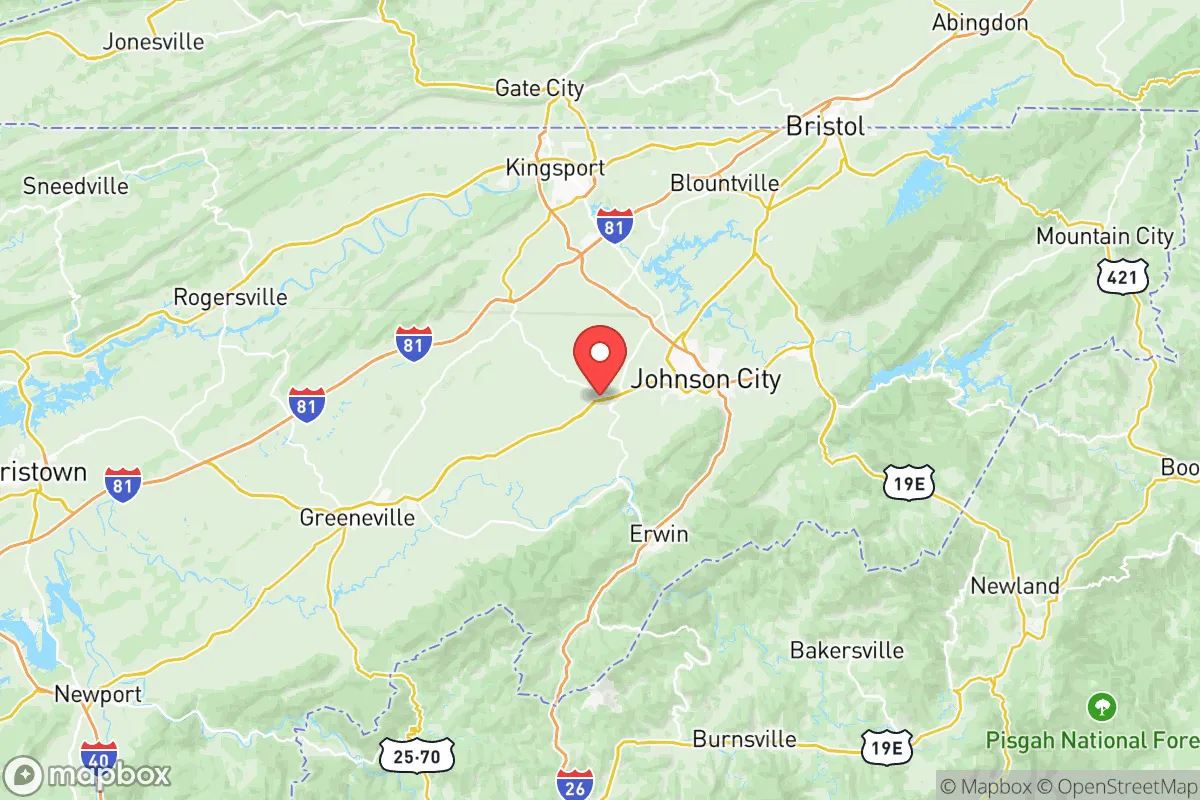
Washington County, Tennessee, offers a notably high degree of personal sovereignty, grounded in Tennessee’s strong right-to-work laws, absence of a state income tax, and broad preemption of local gun ordinances. The county’s regulatory environment leans light-touch, particularly outside the urban core of Johnson City, where zoning and permitting requirements are minimal. For individuals and families prioritizing autonomy over government oversight, the area presents a compelling balance of rural independence and access to regional services, though the degree of freedom varies significantly between the city limits of Johnson City and the unincorporated communities like Jonesborough, Gray, and Telford.
Tax burden and regulatory posture in Washington County
Tennessee’s lack of a state income tax is the cornerstone of its tax-friendly posture, and Washington County adds a relatively moderate property tax rate — roughly $2.30 per $100 of assessed value for the county, with Johnson City and Jonesborough adding their own municipal levies. The regulatory posture is generally permissive: there is no county-wide building code in unincorporated areas, though Johnson City and Jonesborough enforce standard International Building Codes. Business licensing is straightforward, with no county-level business tax for most sole proprietors, and Tennessee’s right-to-work law ensures no forced union membership. The state’s limited government philosophy extends to land use — the county has no comprehensive zoning ordinance outside municipal limits, meaning property owners in areas like Gray and Telford can operate home-based businesses, keep livestock, or build structures without the layers of approval common in more regulated states.
Self-defense and gun law specifics in Washington County
Tennessee is a constitutional carry state, meaning no permit is required to carry a handgun, openly or concealed, for anyone 21 or older who can legally possess a firearm. Washington County’s sheriff, as of 2026, maintains a pro-2A stance, and the county issues enhanced carry permits for reciprocity with other states. State law preempts local governments from enacting their own gun ordinances, so Johnson City, Jonesborough, and all unincorporated areas have uniform firearm laws — no local bans on magazine capacity, no waiting periods, and no additional registration. Stand-your-ground and castle doctrine laws are fully in effect, with no duty to retreat in any place where a person is lawfully present. The practical result is that a resident in Telford or Gray can carry a firearm without government permission, and self-defense claims are evaluated under some of the most protective statutes in the Southeast.
Self-reliance and homesteading viability across Washington County
Homesteading viability varies sharply by location within the county. Unincorporated areas like Telford, Gray, and the rural stretches near the Cherokee National Forest offer parcels of 1 to 10 acres commonly available for $15,000–$40,000 per acre, with no county zoning restricting agricultural use, livestock, or accessory structures. Off-grid feasibility is high in these areas: rainwater catchment is legal, composting toilets are permitted under state law, and there are no county-level restrictions on solar panel installation or small-scale wind turbines. However, within Johnson City and Jonesborough, city ordinances require connection to municipal water and sewer where available, and building permits are enforced. The county’s agricultural extension office actively supports small-scale farming, and the local farmers’ markets in Jonesborough and Johnson City provide outlets for homegrown produce. For those seeking true self-reliance, the rural northern and eastern parts of the county — around the Watauga River valley — offer the most permissive environment.
Personal liberties in Washington County: parental rights, medical autonomy, and property
Tennessee law strongly protects parental rights, including the right to direct a child’s education, medical care, and religious upbringing. Washington County’s school board has maintained a conservative approach to curriculum transparency, and homeschooling is straightforward — parents need only submit a notice of intent and maintain basic attendance records, with no standardized testing requirements for most families. Medical autonomy is more constrained: Tennessee has not expanded Medicaid, and the state imposes some of the strictest abortion laws in the country, but for the audience of this analysis, the state’s resistance to vaccine mandates and its broad religious exemption laws are more relevant. Property rights are robust — Tennessee’s eminent domain laws are limited to public use, and the county’s lack of zoning in unincorporated areas means few restrictions on how owners use their land. Free speech is protected under Tennessee’s broad anti-SLAPP statute, and the county’s political climate, particularly in Jonesborough and rural precincts, is strongly supportive of individual expression against government overreach.
Overall, Washington County ranks among the more sovereignty-friendly areas in the Upper South, offering a combination of no income tax, constitutional carry, minimal land-use regulation outside city limits, and strong parental rights that places it well ahead of most Mid-Atlantic or West Coast jurisdictions. The primary trade-off is location: residents who choose Johnson City gain urban amenities but accept more municipal oversight, while those in Telford, Gray, or the Watauga River valley enjoy near-total autonomy over their property and daily lives. For a relocation audience that values personal freedom as a top criterion, the county’s rural and small-town precincts deliver a level of self-determination that is increasingly rare in the United States.

* Values derived from national, state, county, city and local statistics and may differ in a specific area. Last updated: 2026-07-12T03:40:16.000Z
Narrative content on this page is AI-generated and may contain mistakes. Verify any details that matter before acting on them.
ReloMaps may earn a commission from affiliate links at no extra cost to you.

