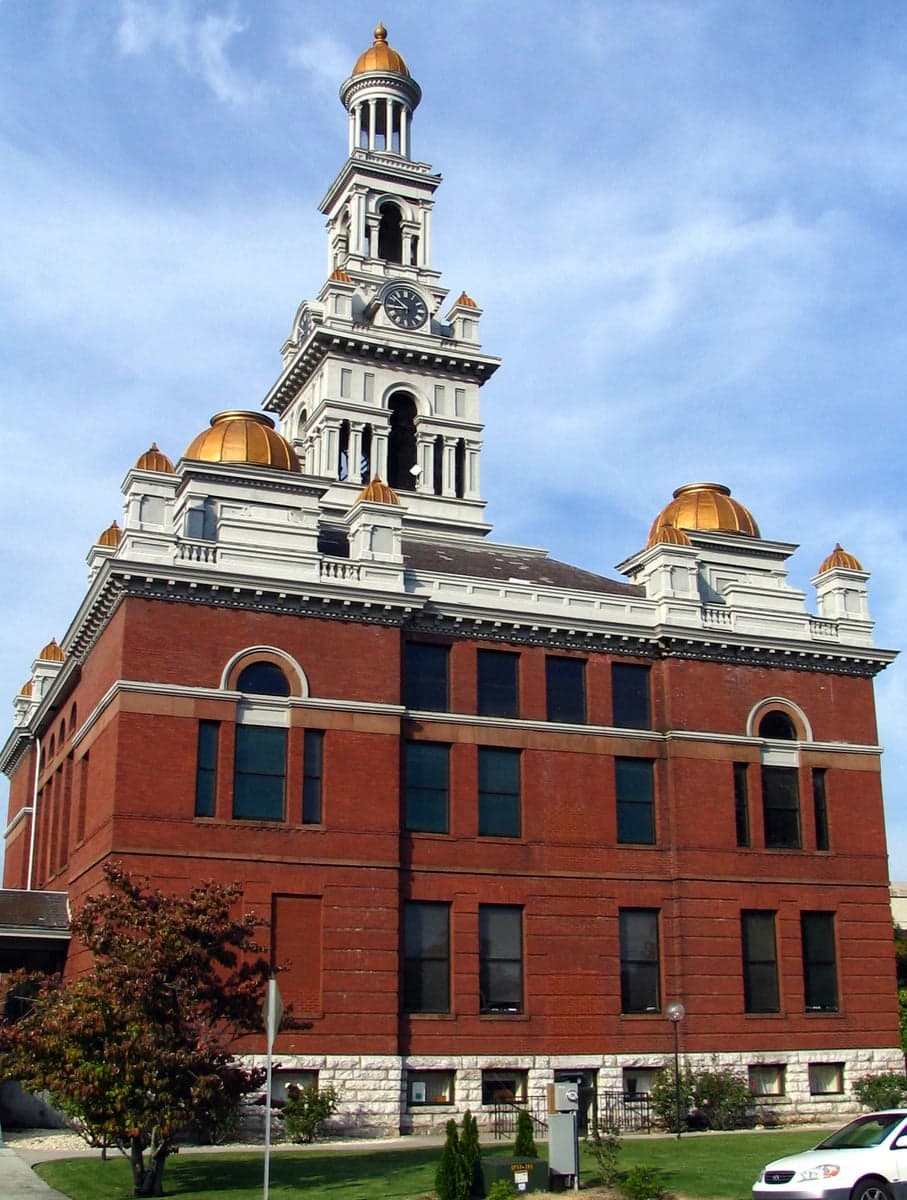
Photo: Wikipedia
Political ClimatePolitical Climate in Sevier County
Showing district-level results — no local-only data available.
Local Political AnalysisPolitical Analysis of Sevier County
Sevier County is one of the most reliably Republican counties in Tennessee, with a Cook Partisan Voting Index (PVI) of R+29 — meaning it votes about 29 points more Republican than the national average. That’s more than double the statewide Tennessee PVI of R+13, and it places Sevier County firmly in the top tier of GOP strongholds east of the Mississippi. The county hasn’t voted for a Democratic presidential candidate since 1960, and in 2024 Donald Trump carried it with roughly 78% of the vote. The political trajectory here has been steadily rightward for decades, driven by a mix of native conservative culture, an influx of retirees and second-home owners from other red states, and a tourism economy that tends to attract workers who lean libertarian on taxes and regulation.
How it compares to Tennessee as a whole
Statewide, Tennessee is solidly red at R+13, but Sevier County’s R+29 puts it in a different league. For context, the state’s bluest county (Davidson, home to Nashville) is D+18, while Sevier is nearly twice as far to the right as Davidson is to the left. Within Sevier County itself, there’s meaningful variation. Gatlinburg and Pigeon Forge — the tourism corridor — tend to be slightly less conservative than the rest of the county, with some precincts in downtown Gatlinburg occasionally hitting 60-65% Republican instead of the 75-80% seen in rural areas. Sevierville is more mixed: the city itself leans red but has a handful of precincts near the college and hospital that are more purple, sometimes breaking 55-60% Republican. The truly deep-red territory is in the unincorporated areas — Pittman Center, Wears Valley, and the Bluff Mountain precincts — where Republican votes often top 85%. There are no precincts in Sevier County that consistently vote Democratic; the closest thing to a swing area is the Sevierville 4 precinct near the county line, which occasionally dips to 52-55% Republican in local races.
What this means for residents
For conservative residents, Sevier County is about as comfortable as it gets. Local government is uniformly Republican, tax policy is aggressively pro-business (no county property tax increase since 2017), and social issues like gun rights and abortion restrictions are non-controversial. The county commission and school board have not seen a contested Democratic primary in over a decade. For liberal residents, the reality is more isolating. There’s no organized Democratic party infrastructure to speak of — the county party meets irregularly and rarely fields candidates. Socially, progressive views on climate, development, or tourism regulation are often dismissed in public forums. That said, the tourism economy means the area is more transient than its politics suggest; many service workers and hospitality managers come from more liberal areas and keep their politics private. Gatlinburg and Pigeon Forge are the most tolerant spots for non-conservatives, simply because the workforce is so diverse.
Culturally, Sevier County stands apart from the rest of Tennessee in a few ways. The tourism industry dominates everything — the county sees over 14 million visitors a year, which has created a unique political dynamic where local officials are unusually sensitive to business interests and less focused on the culture-war issues that dominate state politics. You’ll hear more debate about short-term rental regulations and parking fees than about school curriculum or mask mandates. The county also has a strong independent streak: it was one of the first in Tennessee to pass a resolution opposing federal land-use restrictions in the Smokies, and it has repeatedly rejected state-level efforts to impose uniform alcohol sales rules, preferring its own permissive tourism-friendly laws. For anyone moving here, the key takeaway is that Sevier County is not just red — it’s a specific shade of red shaped by tourism, mountains, and a deep skepticism of both federal and state overreach.

State Political ClimatePolitical Climate in Tennessee
State Political AnalysisPolitical Environment in the State
Tennessee is a solidly Republican state with a Cook PVI of R+13, meaning it typically votes about 13 points more Republican than the national average. Over the past 20 years, the state has shifted decisively rightward, driven by the exurban growth around Nashville and the steady conservatism of its vast rural and small-town regions, while the three major metro cores—Nashville, Memphis, and Knoxville—remain Democratic-leaning islands in a deep red sea.
Urban vs. rural divide
The political map of Tennessee is a textbook study in the urban-rural split. Nashville (Davidson County) is the state's most reliably Democratic stronghold, voting for Joe Biden by over 30 points in 2020, powered by a growing professional class, a large creative economy, and a significant African American population. Memphis (Shelby County) is similarly Democratic, driven by its majority-Black electorate and long-standing union and civil rights traditions. Knoxville (Knox County) is more of a purple-to-light-blue city, but the surrounding suburbs and exurbs are deeply conservative. The real Republican engine is the sprawling suburban and exurban ring around Nashville—places like Williamson County (the wealthiest county in Tennessee, voting over 60% Republican), Rutherford County, and Wilson County—which have seen explosive population growth from conservative-leaning migrants. Rural West Tennessee, the Cumberland Plateau, and East Tennessee's mountain counties are among the most Republican in the nation, with many precincts routinely delivering 80%+ margins for GOP candidates.
Policy environment
Tennessee's policy environment is aggressively conservative. The state has no state income tax on wages, relying instead on a high sales tax (7% state rate, plus local add-ons that can push it above 9.75%) and relatively low property taxes. The regulatory posture is business-friendly, with a right-to-work law and minimal labor protections. Education policy has shifted sharply toward school choice: the state expanded its Education Savings Account program in 2023 to cover all counties, and charter schools are widespread. Healthcare is a major point of contention—Tennessee has not expanded Medicaid under the Affordable Care Act, leaving roughly 300,000 low-income adults in the coverage gap. Election laws have tightened: the state enacted a strict voter ID law, limited early voting days, and in 2023 passed a law making it a crime for election officials to proactively mail absentee ballot applications. Abortion is effectively banned after six weeks (the "heartbeat" law), with no exceptions for rape or incest, following the trigger law that took effect after Dobbs.
Recent policy direction
The last five years have seen Tennessee accelerate its conservative policy agenda across multiple fronts. On gun and self-defense law, the state enacted permitless carry in 2021, allowing any adult 21 or older to carry a handgun without a permit. On parental and education rights, the 2022 "Don't Say Gay" law (HB 800) restricts classroom discussion of sexual orientation and gender identity in K-8, and a 2023 law requires schools to notify parents of any changes in a student's mental or physical health. On speech and privacy, the state passed a law in 2023 requiring age verification for adult websites and mandating that social media platforms verify ages for minors. On medical and bodily autonomy, the near-total abortion ban is the most significant change, but the state has also restricted gender-affirming care for minors (2023). On property rights, Tennessee has a strong eminent domain protection law, but local zoning battles—especially around short-term rentals in Nashville—remain heated. On taxation, the state has been gradually phasing out the Hall Tax (a tax on dividend and interest income), with full repeal effective in 2022. On voting and ballot access, the state has moved to restrict third-party ballot access and has purged inactive voters from rolls, a policy that drew a federal lawsuit in 2023.
Civil unrest & political movements
Tennessee has seen its share of political flashpoints. Nashville was the site of large-scale Black Lives Matter protests in 2020, including a notable confrontation at the state capitol. In 2023, the expulsion of two Black Democratic state representatives (Justin Jones and Justin Pearson) for leading a gun control protest on the House floor after the Covenant School shooting drew national attention and sparked ongoing protests at the capitol. Immigration politics are less visible here than in border states, but in 2024, the legislature passed a bill requiring local law enforcement to cooperate with federal immigration authorities, and several counties have declared themselves "Second Amendment sanctuaries." Election integrity controversies have been relatively muted compared to states like Georgia or Arizona, but the 2020 election saw Trump's legal team file a lawsuit in Tennessee (dismissed), and the state has since tightened election procedures. Secession or nullification rhetoric is rare but not absent—a 2021 resolution affirming the state's right to nullify federal laws passed the state Senate but died in the House. The most visible political movement is the growing school choice and parental rights activism, which has become a dominant force in local school board elections, particularly in Williamson and Rutherford counties.
Projection
Over the next 5-10 years, Tennessee is likely to become even more Republican, driven by two forces: continued in-migration of conservative-leaning families from California, Illinois, and New York into the Nashville exurbs, and the ongoing rural-to-urban population shift that dilutes the Democratic vote in Memphis and Nashville. The state's Democratic Party is structurally weak, with little bench and declining voter registration. However, Nashville's continued growth could make Davidson County a more potent Democratic base, and the city's liberal politics may create more friction with the state legislature—expect more preemption battles over local ordinances on housing, environmental policy, and LGBTQ rights. The biggest wild card is whether the state's restrictive abortion ban and education policies will deter some of the younger, more moderate professionals who have been moving to Nashville. If that migration slows, the state's political trajectory could plateau rather than accelerate rightward.
For a new resident, the bottom line is straightforward: if you're conservative, you'll find a state government that is actively enacting your priorities and a social environment that largely shares your values. If you're liberal, you'll find strong communities in Nashville, Memphis, and parts of Knoxville, but you'll be living under a state government that is actively hostile to many of your policy preferences, and you'll have limited ability to change that at the ballot box. The practical takeaway is that Tennessee is a state where your local experience varies dramatically by county—your daily life in Williamson County will feel very different from one in Davidson County—but the state-level political direction is clear and unlikely to shift anytime soon.
* Values derived from national, state, county, city and local statistics and may differ in a specific area. Last updated: 2026-06-28T01:12:39.000Z
Narrative content on this page is AI-generated and may contain mistakes. Verify any details that matter before acting on them.
ReloMaps may earn a commission from affiliate links at no extra cost to you.

