
Photo: Wikipedia
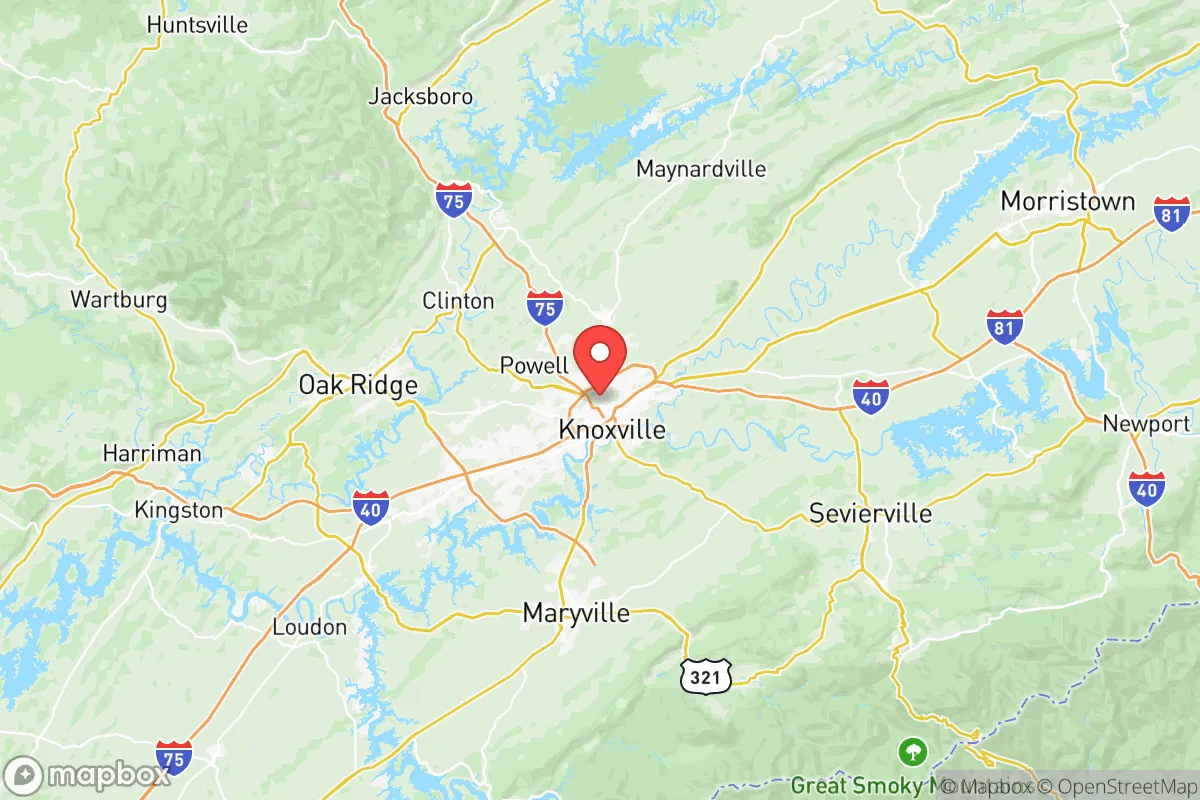
Strategic Assessment of Knox County
Meaningful friction. Expect exposure to either population pressure, blast zones, or natural disaster risk. Consider buying a retreat property.
What does the Strategic Assessment tell us?
Our Strategic Assessment grades tactical survivability of an area. Major population centers, military targets, fallout zones, natural disasters, and border exposure all drive risk — lower exposure means a more defensible position in a crisis.
This is heavily inspired by Joel Skousen's Strategic Relocation book. Highly recommended you checkout the book ($)What does this tell us?
Our Strategic Assessment grades tactical survivability of an area. Major population centers, military targets, fallout zones, natural disasters, and border exposure all drive risk — lower exposure means a more defensible position in a crisis.
This is heavily inspired by Joel Skousen's Strategic Relocation book. Highly recommended you checkout the book ($)Strategic Pillars

Key Distances
Strategic Assessment Analysis
Knox County, Tennessee, presents a surprisingly strong case for relocation when viewed through a resilience and preparedness lens, balancing the conveniences of a mid-sized metro with genuine geographic buffers against large-scale disruptions. Home to roughly 500,000 people centered on Knoxville, the county and its surrounding region offer a rare combination of deep freshwater resources, defensible terrain, and distance from the highest-risk national targets—all while maintaining access to jobs, healthcare, and supply chains. For a single individual or family thinking seriously about disaster readiness and self-sufficiency, Knox County sits in a strategic sweet spot: close enough to infrastructure to avoid rural isolation, yet far enough from the most volatile zones to buy critical time and options.
Geographic position and natural advantages for long-term stability
Knox County’s geography is its first layer of resilience. Nestled in the Tennessee Valley between the Great Smoky Mountains to the east and the Cumberland Plateau to the west, the area is naturally sheltered from the direct path of Atlantic hurricanes and the worst of Midwestern tornado alleys. The region’s terrain is rolling hills and ridges—not impassable mountains—offering defensible high ground and natural chokepoints without the logistical nightmare of remote, roadless property. The Tennessee River and its tributaries, including the French Broad and Holston Rivers, converge near downtown Knoxville, creating a massive, reliable freshwater system. The Tennessee Valley Authority (TVA) operates multiple dams in the immediate vicinity, including Fort Loudoun Dam directly in Knox County and Watts Bar Dam just south in Rhea County. These provide not just flood control (a real but manageable risk) but also a decentralized, hydro-dominated power grid that is harder to take offline than a single coastal plant. For a relocator, this means you are never more than a few miles from living water, and the local power supply is tied to a hardened, regionally managed system rather than a fragile interstate grid.
Risks, exposures, and proximity to fallout-relevant landmarks
No location is without exposure, and Knox County’s risks are worth weighing carefully. The most significant man-made threat comes from two major infrastructure sites: the Oak Ridge National Laboratory (ORNL) in adjacent Anderson County, roughly 20 miles west of downtown Knoxville, and the Watts Bar Nuclear Plant in Spring City, about 50 miles southwest. Oak Ridge is a Department of Energy nuclear complex dating back to the Manhattan Project, handling research and materials that, while heavily guarded, make it a potential target in a major conflict or sabotage scenario. Watts Bar is a functioning commercial nuclear reactor. A direct strike or catastrophic accident at either site would put parts of Knox County within a dangerous fallout plume, depending on wind direction. That said, prevailing winds in East Tennessee blow primarily from the southwest to the northeast, meaning most Knox County residents are actually upwind or crosswind of these sites under average conditions, which is a distinct advantage over living downwind of, say, Houston’s refinery corridor or the Savannah River Site. Natural hazards are modest by comparison: the region faces occasional ice storms, the rare tornado (typically EF-1 or EF-2 intensity, less frequent than in the Deep South), and localized flash flooding in low-lying areas near creeks and riverbanks. Earthquakes are negligible. For a relocator, the realistic risk picture is one where you can plan for the unlikely but don't need to constantly brace for the inevitable.
Practical resilience for a relocator: food, water, energy, and defensibility
This is where Knox County shines for a preparedness-minded household. Water abundance is the single strongest argument for this area. The county draws from the Tennessee River system, which has never experienced a sustained drought severe enough to threaten municipal supply in modern history. Most homes with well water tap into the Valley aquifer, which yields reliably at moderate depths. Surface water is everywhere, meaning rainwater catchment and filtration are highly feasible. Food resilience is also solid: the surrounding counties—Blount, Loudon, Jefferson, and Sevier—have rich agricultural soil and a long growing season (typically April through October). You can drive 20 minutes from downtown Knoxville and be at a working farm selling meat, eggs, or produce. The Knoxville Farmers’ Market and multiple CSA networks operate year-round, and the area has a strong culture of gardening, hunting, and small-scale livestock, even within county limits. Energy is handled by TVA, which provides some of the lowest electricity rates in the Southeast. The grid includes hydro, coal, natural gas, and nuclear, so it’s diversified. Solar potential is decent (though not desert-level), and a growing number of local installers understand off-grid or battery-backed systems.
Defensibility is layered. Knox County itself is a suburban-to-urban mix, not a fortress, but the terrain offers options: the ridges around Farragut, Hardin Valley, and the foothills near the county's eastern edge provide natural observation points and limited access. For someone seeking a more isolated property, areas north of the county line in Union County or south toward Tellico Lake offer quiet, defensible acreage while staying within 45 minutes of Knoxville’s hospitals and supply centers. The local community is generally welcoming to prepared-minded people; there are active ham radio clubs, prepper-oriented church groups, and a strong tradition of volunteer fire departments. Crime in the rural edges of the county is low, and the Knox County Sheriff’s Office is well-funded and responsive, which adds a layer of everyday security. The biggest practical challenge is a lack of extreme weather hardening in older housing stock, but that’s fixable with modest retrofitting.
The overall strategic picture for Knox County is one of a well-located, resource-rich hub that avoids the worst exposures while retaining connectivity. You are not hidden away, but you are also not in the crosshairs. The area offers a realistic balance: enough population and infrastructure to sustain modern life, but enough natural buffer and regional character to weather disruptions that would cripple coastal cities or plains-dependent settlements. The presence of Oak Ridge and Watts Bar is a real but manageable risk—one that, on balance, is outweighed by the water, power, and supply-chain advantages they also bring. For a relocator who values self-sufficiency without total isolation, Knox County earns a strong strategic recommendation, provided you choose your specific neighborhood with terrain and egress routes in mind.

* Values derived from national, state, county, city and local statistics and may differ in a specific area. Last updated: 2026-06-29T22:44:32.000Z
Narrative content on this page is AI-generated and may contain mistakes. Verify any details that matter before acting on them.
ReloMaps may earn a commission from affiliate links at no extra cost to you.

