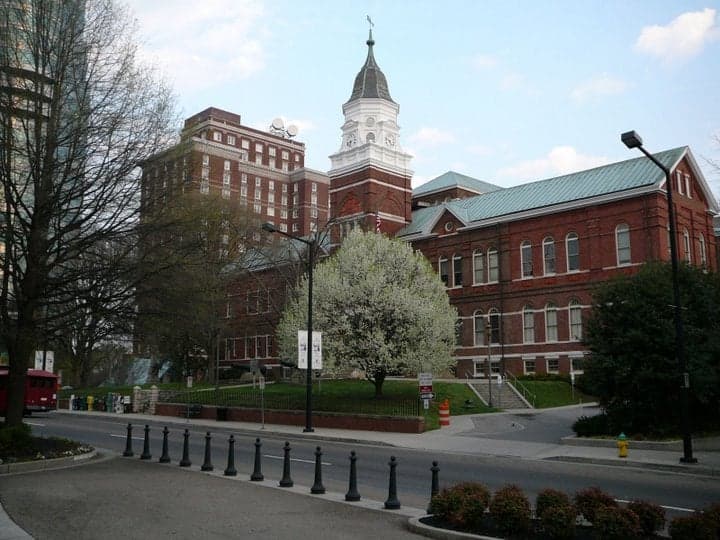
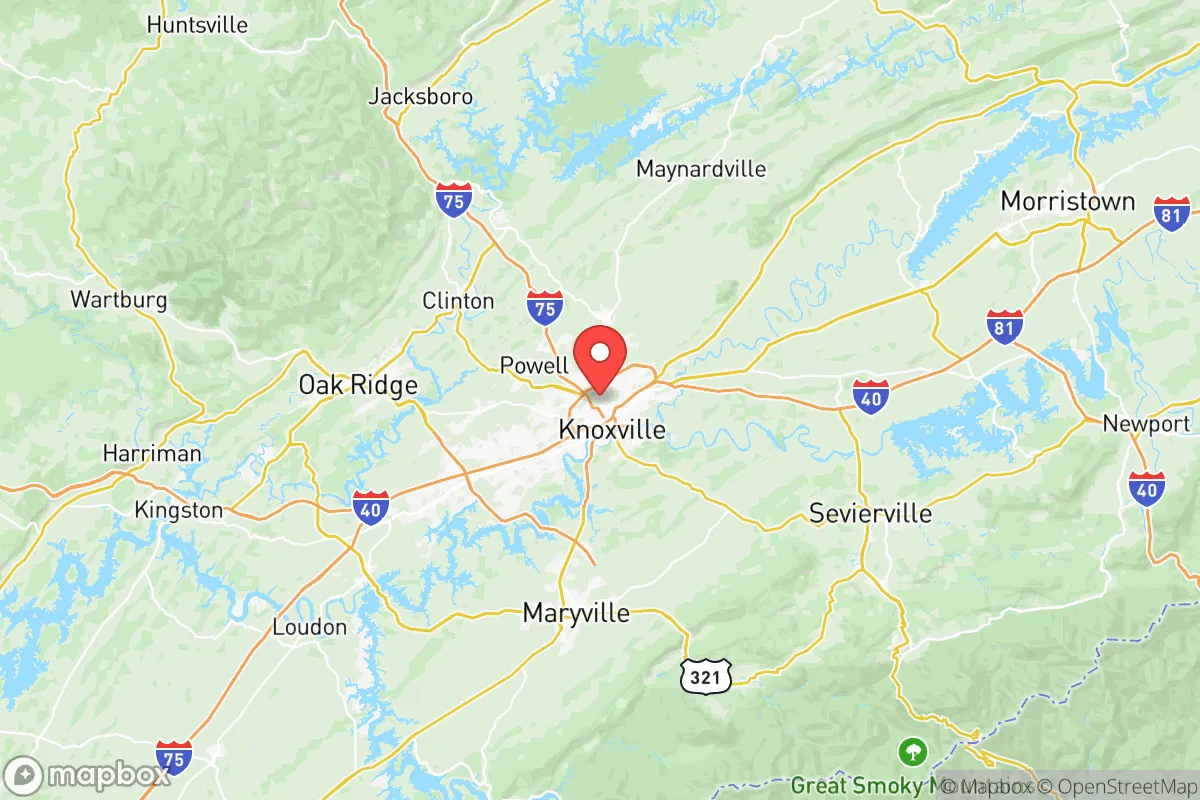
Photo: Wikipedia
Quality of Life in Knox County
A livable area that tracks near national norms for affordability, walkability, and neighborhood health.
What does Quality of Life tell us?
Quality of Life measures an area by evaluating factors like cost of living, nearby amenities, country club access, airport proximity, socioeconomic signals and neighborhood character. For large states, this is a general average — quality of life can vary dramatically between metro areas, suburbs, and rural communities within the same state.
What does this tell us?
Quality of Life measures an area by evaluating factors like cost of living, nearby amenities, country club access, airport proximity, socioeconomic signals and neighborhood character. For large states, this is a general average — quality of life can vary dramatically between metro areas, suburbs, and rural communities within the same state.
Cost of Living
1% above national average
90%
The Real Cost of Living in Knox County for 2026
| Tier | Individual | Family (4) |
|---|---|---|
| Survival | $19k | $35k |
| Comfortable | $54k | $80k |
| Luxury | $129k+ | $201k+ |
| Elite (Top 5%) | $169k+ | $262k+ |
Quality-of-Life Analysis
Knox County, Tennessee, offers a spectrum of quality-of-life options that spans from the dense, walkable urban core of Knoxville to quiet lakeside communities and rural farmland in the county’s outer reaches. This diversity attracts everyone from young professionals and university affiliates seeking city energy to retirees and families looking for more space and a slower pace. The county’s cost of living sits slightly above the national average (Cost of Living Index: 101), while the median home value of $279,700 and median rent of $1,180 reflect the varying price points across its distinct areas.
Largest town(s) & population centers
Knoxville is the dominant population center, anchoring the county with a vibrant downtown, the University of Tennessee campus, and a strong employment base in healthcare, education, and technology. Day-to-day life in Knoxville revolves around its walkable Market Square and Gay Street corridor, where residents enjoy a steady calendar of festivals, concerts, and farmers’ markets. The city’s average commute of 22 minutes is notably shorter than many comparably sized metros, allowing workers to live close to job centers like the Medical District or the West Knoxville commercial corridor. Suburbs such as Farragut and Hardin Valley function as bedroom communities with excellent public schools and large retail hubs, attracting families who want suburban convenience without leaving the county. These areas lean more expensive—Farragut’s median home value exceeds $400,000—and pack most of the county’s shopping, dining, and healthcare amenities.
Smaller towns & rural pockets
Beyond the Knoxville orbit, a handful of smaller towns preserve a distinctly different character. Powell, northeast of the city, combines a historic main street with newer subdivisions and is popular for its access to the Knoxville city limits without the urban price tag. Concord, set along the shores of Fort Loudoun Lake, offers a lake-oriented lifestyle with boat ramps and waterfront parks, drawing residents who prioritize recreation over nightlife. Further out, Corryton and Mascot are unincorporated communities where farmland and wooded lots dominate; here, properties often sit on acreage, and commute times stretch closer to 30 minutes. The Gibbs area, straddling the county’s eastern boundary, remains predominantly rural with scattered subdivisions and agriculture, appealing to those who value privacy and land over proximity to stores and services.
Cost & lifestyle range
The cost of living gap between Knox County’s high- and low-cost areas is substantial. At the upper end, Farragut and Hardin Valley average home prices well above the county median, with rentals frequently exceeding $1,500 per month—reflecting the premium for top-rated schools and extensive retail. In contrast, parts of south Knoxville, including neighborhoods near the city’s edge or along Chapman Highway, offer median home values closer to $230,000 and rents below $1,000, drawing first-time buyers and renters willing to trade some neighborhood polish for affordability. Rural communities like Strawberry Plains and Shooks Gap sit at the lowest end of the spectrum: land is cheaper, property taxes are lower, but residents drive 30+ minutes for groceries and routine services. Amenities follow a similar gradient—dense urban pockets offer walkable access to restaurants and entertainment, while outer areas trade that convenience for larger lots, lower crime rates, and more direct access to lakes and hiking trails at House Mountain State Park or Seven Islands State Birding Park.
The residents who thrive most in Knox County are those comfortable making deliberate trade-offs between urban energy and rural tranquility. The county works well for remote workers who want city amenities on the weekends but affordability and space during the week, as well as for families who prioritize school quality in Farragut or Hardin Valley over the walkability of Knoxville’s core. Retirees and lake enthusiasts find their niche in Concord or along the Holston River, while agricultural families and land-seekers settle into Gibbs or Mascot. The county’s strength lies in its ability to serve all these groups within a single, relatively compact geography—no part of Knox County is more than a 45-minute drive from downtown Knoxville, meaning residents can shift their lifestyle preference without leaving the region entirely.

Crime in Knox County
Higher crime rates than 58% of comparable U.S. locations.
Violent CrimeViolent Crime Analysis
Property CrimeProperty Crime Analysis
Crime Analysis
Knox County, Tennessee, presents a mixed safety picture where the overall crime rate exceeds both state and national averages, driven primarily by property crime in the urban core of Knoxville. The county's violent crime rate of 495.2 per 100,000 residents is roughly 30% higher than the national average, while property crime at 1,650.8 per 100,000 sits notably above the Tennessee state average. Residents and prospective movers should understand that safety varies dramatically between Knoxville's downtown districts and the surrounding suburban towns, with progressive judicial policies in the city contributing to recidivism concerns.
Crime in context
Knox County's violent crime rate of 495.2 per 100,000 is significantly elevated compared to the national benchmark of roughly 380 per 100,000, and property crime at 1,650.8 per 100,000 exceeds the Tennessee state average of approximately 1,400 per 100,000. These figures place Knox County among the higher-crime jurisdictions in East Tennessee, though the county remains safer than Tennessee's most dangerous metros like Memphis and Nashville. The disparity is largely driven by Knoxville's urban neighborhoods, where concentrated poverty and progressive district attorney policies have contributed to property crime rates that are nearly double those found in the county's safer suburbs. Knox County's District Attorney General, Charme Allen, has maintained a generally tough-on-crime stance, but the Knoxville city government's emphasis on alternative sentencing and reduced incarceration for nonviolent offenders has drawn criticism from public safety advocates who argue these approaches fail to deter repeat property criminals.
What residents experience
Daily life in Knox County depends heavily on where one lives. Residents of Farragut and Hardin Valley experience crime rates roughly 60% lower than the county average, with violent crime in Farragut running below 200 per 100,000 and property crime under 800 per 100,000. These western suburbs benefit from their own police departments and a more conservative judicial climate that prioritizes victim rights and offender accountability. In contrast, neighborhoods in downtown Knoxville, Mechanicsville, and parts of South Knoxville see violent crime rates exceeding 700 per 100,000, with property crime spiking above 2,200 per 100,000. The Knoxville Police Department has struggled with staffing shortages, and the city's progressive criminal justice reforms—including reduced cash bail for property offenders and diversion programs that avoid jail time—have been linked to higher recidivism rates among repeat burglary and theft suspects. Residents in these areas report frequent package thefts, vehicle break-ins, and occasional armed robberies, particularly near the University of Tennessee campus and along the Chapman Highway corridor.
Neighborhood-level variation and what it means for you
The safety divide in Knox County is stark and predictable. Farragut, Hardin Valley, and Powell consistently rank among the safest communities, with Farragut's violent crime rate of 180 per 100,000 making it one of the safest suburbs in East Tennessee. These areas benefit from well-funded police departments, active neighborhood watch programs, and a judicial system that prioritizes public safety over offender rehabilitation. Conversely, downtown Knoxville, Lonsdale, and Western Heights experience the highest crime concentrations, with property crime rates exceeding 2,500 per 100,000 in some census tracts. The Knox County Sheriff's Office has noted that the majority of property crimes are committed by repeat offenders who cycle through the justice system under progressive policies that emphasize treatment over incarceration. For families and professionals considering relocation, the data strongly suggests choosing a suburban municipality with its own police force rather than unincorporated county areas or Knoxville city limits, where the combination of urban density and lenient judicial philosophy creates elevated risk. Prospective residents should review crime maps for specific streets and consult local police department reports, as safety can change dramatically within a single mile in this county.
* Values derived from national, state, county, city and local statistics and may differ in a specific area. Last updated: 2026-06-29T22:44:32.000Z
Narrative content on this page is AI-generated and may contain mistakes. Verify any details that matter before acting on them.
ReloMaps may earn a commission from affiliate links at no extra cost to you.

