Photo: Wikipedia
Demographics of Knox County
Affluence Level in Knox County
A middle-class area roughly in line with national averages across income, home values, education, and employment.
People of Knox County
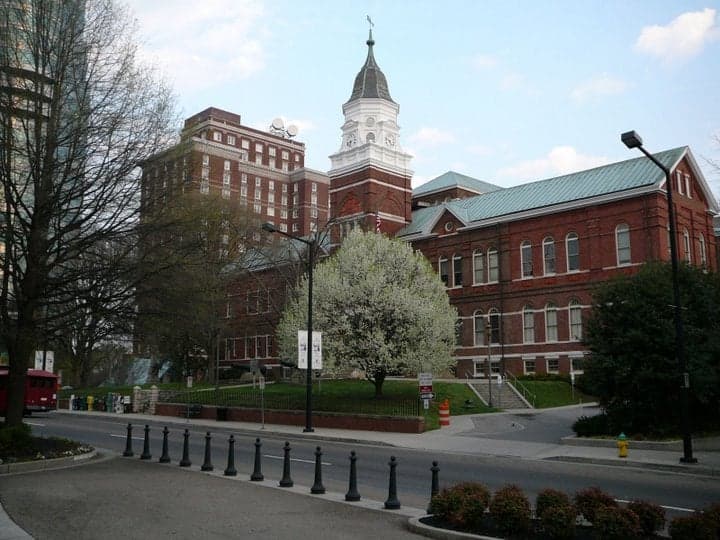
Knox County, Tennessee, is home to 487,401 residents who form the urban core of a historically Appalachian region that has steadily suburbanized and diversified. The population is 79.6% white, 8.0% Black, 6.1% Hispanic, 1.4% East/Southeast Asian, and 0.8% Indian, with only 3.6% foreign-born — a figure well below the national average, reflecting the area's deep-rooted native-born character. The county's identity is shaped by its role as the home of the University of Tennessee, a growing tech and healthcare economy, and a political culture that leans conservative but is moderated by the college town influence of Knoxville. Residents describe the area as a place where Southern tradition meets Sun Belt growth, with a cost of living that remains attractive to domestic migrants from the Midwest and Northeast.
Settlement & growth (pre-1960)
Before European settlement, the land that became Knox County was occupied by the Cherokee Nation, who used the Tennessee River valley for hunting and agriculture. The Cherokee had established towns such as Chota and Tanasi (the namesake of the state) to the south, but the Knox County area itself was largely a hunting ground and buffer zone between Cherokee and Shawnee territories. French fur traders passed through as early as the 1700s, but no permanent European settlement occurred until after the American Revolution.
The first wave of permanent settlers arrived in the 1780s and 1790s, overwhelmingly Scots-Irish and English migrants from Virginia and North Carolina. These were families who had exhausted land in the Piedmont and followed the Great Valley of the Appalachians through the Cumberland Gap. They were granted land under the North Carolina land grant system, and they founded Knoxville in 1791 on a site chosen by territorial governor William Blount. The Scots-Irish brought a fiercely independent, Presbyterian-influenced culture that emphasized self-reliance and local governance — traits that still color the county's political identity. By 1800, Knoxville was the capital of the Southwest Territory and later the first capital of Tennessee.
Through the 19th century, the population grew steadily but remained overwhelmingly native-born and of British Isles descent. German immigrants arrived in modest numbers after 1840, settling in Fountain City (now a neighborhood of Knoxville) and the rural areas around Corryton and Mascot, where they worked as farmers and merchants. A small but significant Irish population, mostly Catholic, came during the 1850s to labor on the railroad and in the city's early factories. By 1860, Knox County had roughly 22,000 residents, and enslaved African Americans made up about 20% of the population — a proportion that would decline after Emancipation as many freed people left the region for industrial jobs in the North.
The post-Civil War period brought slow industrialization. Knoxville became a hub for marble quarrying, iron production, and textile mills, drawing rural white Appalachians from surrounding counties into the city. The African American population concentrated in neighborhoods like Mechanicsville and East Knoxville, where churches and small businesses anchored the community. The early 20th century saw a small influx of Italian and Greek immigrants, who settled in Old City and Fourth and Gill neighborhoods, opening grocery stores, restaurants, and shoe repair shops. The Tennessee Valley Authority (TVA), established in 1933, brought a wave of engineers and construction workers to Knoxville, many of whom stayed permanently. World War II and the Manhattan Project's Oak Ridge facility, just 20 miles west, drew additional technical workers and their families to the county's western suburbs.
Modern era (post-1965)
The 1965 Hart-Cellar Act had a modest impact on Knox County compared to major metropolitan areas, but it did open the door to new immigrant communities. The most visible change has been the growth of the Hispanic population, which rose from under 1% in 1990 to 6.1% today. This community is primarily Mexican and Central American, drawn by construction, landscaping, and food processing jobs. The largest concentrations are in South Knoxville and the Powell area, where Hispanic-owned tiendas, taquerias, and churches have become neighborhood fixtures.
The East/Southeast Asian community (1.4% of the population) grew primarily after 1980, driven by the University of Tennessee's graduate programs and the medical and engineering sectors. Korean families, many connected to the university or to the nearby Y-12 National Security Complex, settled in West Knoxville around Kingston Pike. A smaller Vietnamese population, many of whom arrived as refugees after 1975, concentrated in North Knoxville near the intersection of Broadway and I-640. The Indian community (0.8%) is more recent, largely post-2000, and is heavily professional — doctors at the University of Tennessee Medical Center, engineers at Oak Ridge, and faculty at UT. They are dispersed across Farragut and Hardin Valley, with no single ethnic enclave.
Domestic migration has reshaped the county far more than immigration. Since the 1990s, Knox County has been a destination for Rust Belt retirees and remote workers from Ohio, Michigan, and Illinois, drawn by lower taxes, milder winters, and the Great Smoky Mountains. The suburban explosion has been dramatic: Farragut grew from a rural crossroads to a planned community of 25,000; Hardin Valley transformed from farmland into a bedroom community with new schools and strip malls; and Powell and Corryton have seen steady infill development. The African American population, which was 12% in 1980, has declined to 8.0% as Black families have moved to Atlanta, Nashville, and Charlotte for better job opportunities, while the white population has been replenished by in-migration from outside the South.
The future
Knox County is becoming more diverse, but slowly. The Hispanic share is projected to reach 8-9% by 2035, driven by both immigration and higher birth rates. The East/Southeast Asian and Indian populations will continue to grow as the University of Tennessee and Oak Ridge National Laboratory recruit internationally, but they will remain small in absolute terms — likely reaching 2-3% combined. The Black population share is expected to hold steady or decline slightly, as out-migration to larger Southern metros continues. The white population will remain the overwhelming majority but will become less Southern in character, as newcomers from the Midwest and Northeast dilute traditional Appalachian cultural markers.
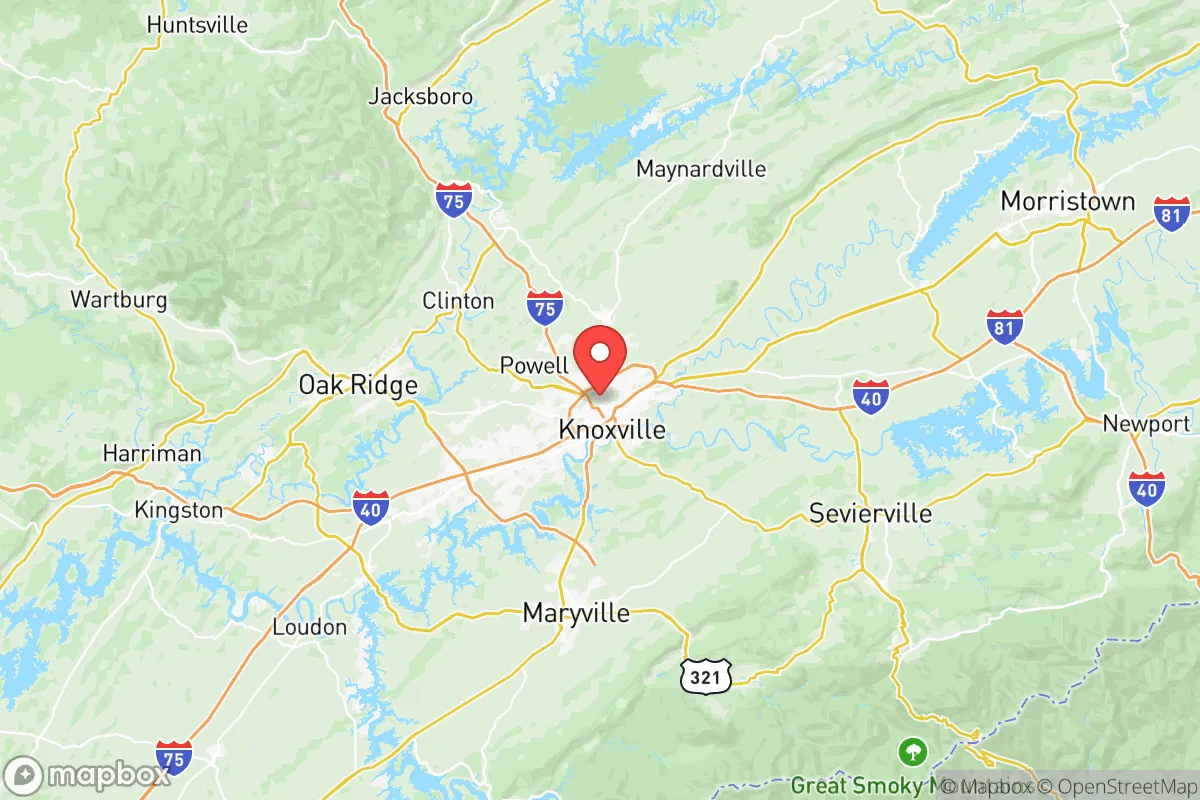
Geographically, growth will concentrate in West Knox County (Farragut, Hardin Valley, and the area around I-40/I-140) and in the northern corridor along I-75 toward Powell and beyond. The urban core of Knoxville will see infill development and some gentrification, particularly in the Old City and South Knoxville waterfront areas, but the county's identity will remain predominantly suburban and car-dependent. The cultural tension between the old Appalachian-rooted population and the new Sun Belt transplants will persist, but the county's conservative political leanings are likely to moderate slightly as college-educated professionals from blue states continue to arrive.
For someone moving to Knox County now, the bottom line is this: you are joining a region that is growing, suburbanizing, and slowly diversifying, but that remains fundamentally white, native-born, and culturally Southern. The schools in Farragut and Hardin Valley are strong, the cost of living is reasonable, and the outdoor amenities are world-class. But the county's social and political character is still shaped by its Scots-Irish and Appalachian roots — expect a place that values self-reliance, church community, and a slower pace of life, even as the strip malls and subdivisions multiply along the interstate corridors.

* Values derived from national, state, county, city and local statistics and may differ in a specific area. Last updated: 2026-06-29T22:44:32.000Z
Narrative content on this page is AI-generated and may contain mistakes. Verify any details that matter before acting on them.
ReloMaps may earn a commission from affiliate links at no extra cost to you.

