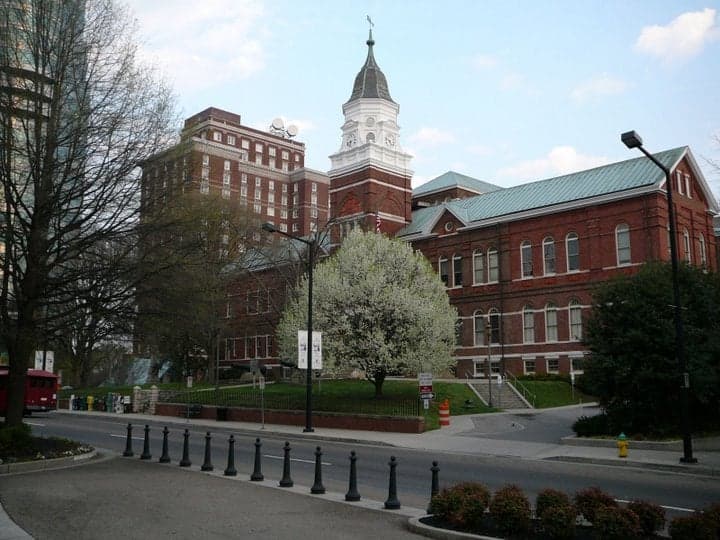
Photo: Wikipedia
Personal Sovereignty in Knox County
Viable for self-reliance. Generally workable, though some barriers may limit total independence.
What does Personal Sovereignty tell us?
Personal Sovereignty measures your capacity for self-reliance and independence with minimal government friction. Higher scores mean fewer barriers between you and the way you want to live... but it assumes you have the space you need and good neighbors.
What does this tell us?
Personal Sovereignty measures your capacity for self-reliance and independence with minimal government friction. Higher scores mean fewer barriers between you and the way you want to live... but it assumes you have the space you need and good neighbors.
State Policy
Energy independence: Importer (25% of energy produced in-state)
Personal Liberty
Homesteading

Personal Liberty Analysis
Knox County, Tennessee, offers a notably high degree of personal sovereignty, anchored in Tennessee’s strong state-level preemption laws and a local culture that values self-reliance. The county strikes a balance between the urban amenities of Knoxville and the more libertarian-leaning rural areas, giving residents a range of autonomy depending on where they choose to settle. For individuals and families who prioritize minimal government interference in their daily lives, Knox County presents a compelling option within the broader Southeast, though the specific experience varies between the city of Knoxville and its surrounding communities like Farragut, Powell, and Hardin Valley.
Tax burden and regulatory posture in Knox County
Tennessee’s lack of a state income tax is the cornerstone of its low-tax appeal, and Knox County adds a relatively moderate property tax rate to this foundation. The county’s combined property tax rate (county plus city of Knoxville) sits around $2.73 per $100 of assessed value, while unincorporated areas and towns like Farragut have slightly different rates but remain competitive. Sales tax is high at 9.25% in Knox County (state + local), but this is a consumption tax that allows residents to control their own burden. The regulatory environment is generally light-touch compared to states like California or New York. Knox County does not impose county-level business licensing requirements beyond state mandates, and zoning is largely permissive in unincorporated areas. However, within the Knoxville city limits, zoning becomes more restrictive, particularly in historic districts and high-density zones. For a business owner or homeowner seeking minimal red tape, the unincorporated areas of the county — such as parts of Corryton and Mascot — offer the most freedom, while Farragut and West Knoxville have more planned development codes.
Self-defense and gun law specifics in Knox County
Tennessee is a constitutional carry state, meaning anyone 21 or older who can legally possess a firearm may carry it openly or concealed without a permit. Knox County fully aligns with this framework, and local law enforcement does not enforce any additional restrictions beyond state law. The county has no local ordinances banning firearms in parks or public buildings beyond what state law allows. For those who want a permit for reciprocity with other states, the Knox County Sheriff’s Office issues enhanced handgun carry permits efficiently, with typical processing times under 90 days. Stand-your-ground laws are in effect, and there is no duty to retreat in any place where a person has a legal right to be. The gun culture is strong and visible, with multiple indoor and outdoor shooting ranges in the area, including the Knoxville Rifle and Pistol Club and the Coal Creek Armory. In rural parts of the county like Gibbs and parts of Karns, target shooting on private property is common and generally accepted, though residents should check local noise ordinances if they are near subdivisions.
Self-reliance and homesteading viability in Knox County
Homesteading and self-reliance are viable in Knox County, but the feasibility depends heavily on location. In unincorporated areas, lot sizes can be as small as one acre for a single-family home, but many properties in the rural parts of the county — such as Corryton, Mascot, and parts of Strawberry Plains — offer 5 to 20+ acre parcels where raising livestock and growing substantial gardens are practical. Knox County zoning allows for backyard chickens in most residential zones, though roosters are prohibited in subdivisions. Beekeeping is allowed with minimal restrictions. Off-grid living is legally possible but practically challenging: the county requires a septic system permit and a building permit for any permanent structure, and there is no explicit prohibition on solar panels or rainwater collection, though rainwater collection is limited to non-potable uses under state law. The Tennessee Valley Authority (TVA) is the primary electricity provider, and disconnecting from the grid entirely is not prohibited, but financing a home without a utility connection can be difficult. For those seeking the most homestead-friendly environment, the areas east of Knoxville in Mascot and south of the Tennessee River in parts of South Knox County offer the best combination of affordable land, permissive zoning, and rural character.
Personal liberties in Knox County: parental rights, medical autonomy, speech, and property
Tennessee has strong protections for parental rights, including a 2023 law that requires schools to notify parents of any changes in a student’s health or well-being. Knox County Schools generally follows state law, and the school board has been active in debates over curriculum transparency and library materials, reflecting a community that values parental oversight. Medical autonomy is more restricted: Tennessee has not expanded Medicaid, and the state has some of the strictest abortion laws in the country, with a near-total ban. For those who prioritize medical freedom, this may be a positive or negative depending on personal views. Free speech is robustly protected, and Knoxville has a history of active public discourse, including regular protests and rallies on the Market Square and at the Tennessee Theatre. Property rights are strong, with no county-level rent control and relatively straightforward subdivision and development processes in unincorporated areas. Eminent domain is rarely used aggressively in Knox County compared to other regions. The overall environment is one where an individual’s ability to make decisions about their family, property, and speech is respected, with the primary limitations coming from state-level health regulations rather than local overreach.
Compared to other areas in the Southeast, Knox County offers a solid middle ground of personal sovereignty — less restrictive than urban centers like Nashville or Atlanta, but more regulated than deeply rural counties in East Tennessee like Union or Grainger. For a family or individual who values low taxes, strong gun rights, and the ability to live a self-reliant lifestyle while still having access to a mid-sized city’s amenities, Knox County is a strong choice. The key is choosing the right location within the county: the city of Knoxville offers convenience but more regulation, while communities like Corryton, Mascot, and parts of South Knox County provide the space and freedom for a more independent way of life.

* Values derived from national, state, county, city and local statistics and may differ in a specific area. Last updated: 2026-06-29T22:44:32.000Z
Narrative content on this page is AI-generated and may contain mistakes. Verify any details that matter before acting on them.
ReloMaps may earn a commission from affiliate links at no extra cost to you.

