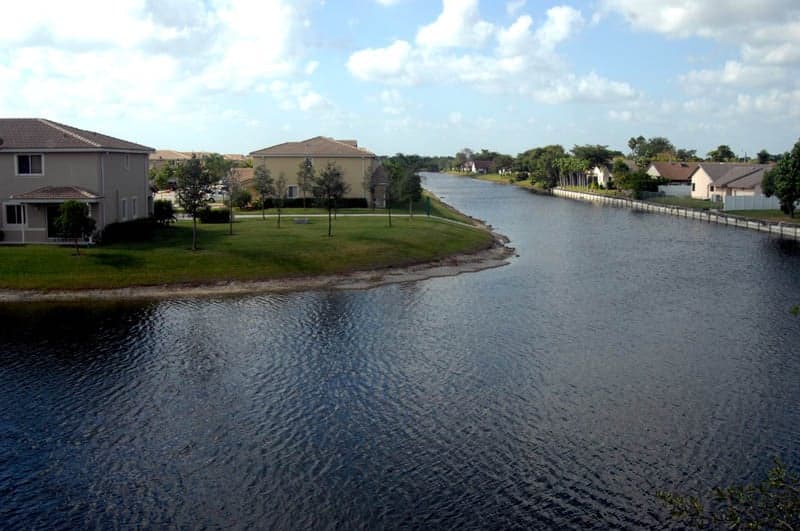
Photo: Wikipedia
Political ClimatePolitical Climate in Tamarac, FL
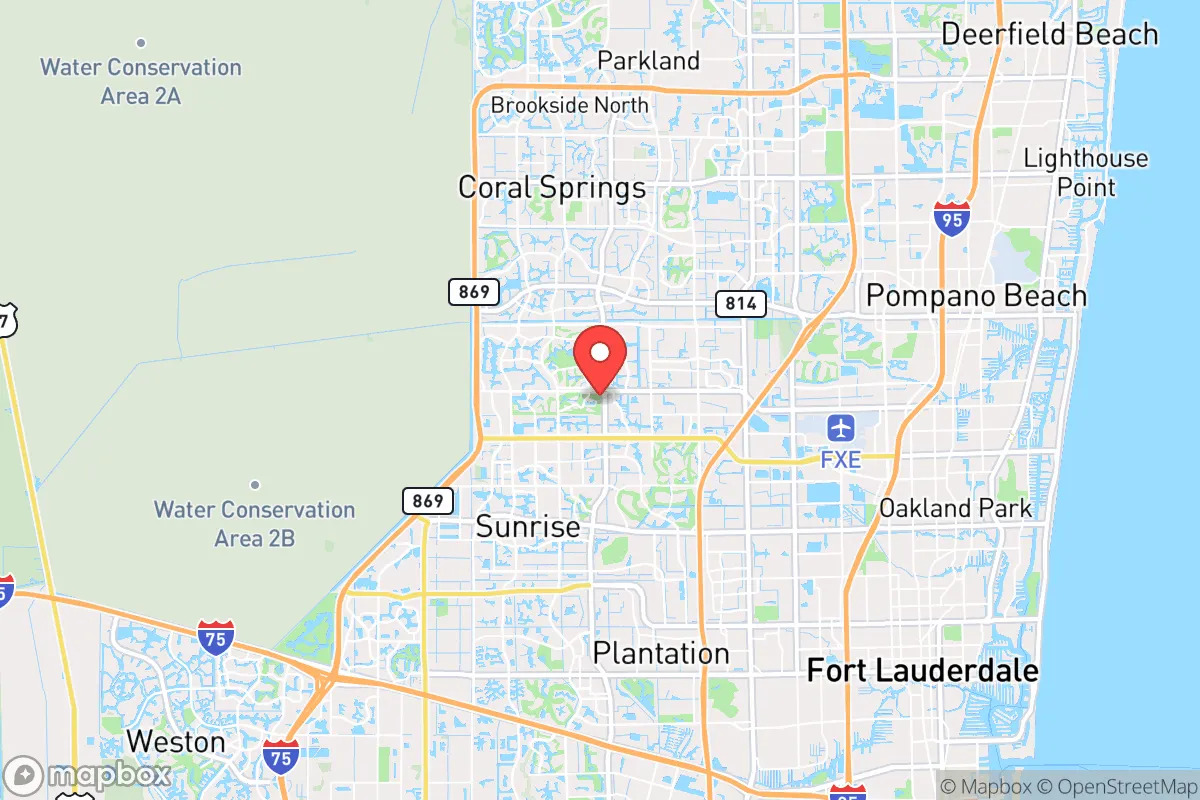
District shown is the primary district for this city’s centroid. Cities may span multiple districts.
Local Political AnalysisPolitical Analysis of Tamarac, FL
Tamarac is a deep blue stronghold, and it’s been that way for a while. The Cook PVI sits at D+22, meaning it votes about 22 points more Democratic than the national average, and that number isn’t budging. If you look at the last few presidential cycles, Tamarac has gone solidly for the Democratic candidate, and local elections tend to follow the same script. The trajectory here is pretty clear: the city is getting older, more diverse, and more reliant on government services, which tends to lock in that leftward lean for the foreseeable future.
How it compares
To really get a feel for Tamarac’s politics, you have to look at the neighbors. Head west a few miles to Parkland or Coral Springs, and you’ll find a much more balanced mix—those areas have a strong conservative presence, especially in local school board and city council races. North Lauderdale and Lauderhill are similar to Tamarac in their Democratic dominance, but the real contrast is with places like Margate or Coconut Creek, where you still see a healthy number of Republican signs during election season. Tamarac, though, is consistently one of the most reliably blue spots in Broward County. It’s not unusual to see a city commission race where every candidate runs on a progressive platform, and the idea of a conservative voice getting a seat feels like a long shot.
What this means for residents
For someone who values personal freedom and limited government, Tamarac can feel a bit suffocating. The city council has a track record of passing ordinances that expand government reach into daily life—think strict rental regulations, noise complaints that get enforced aggressively, and a general willingness to use code enforcement as a tool for social engineering. Property taxes are on the higher side, and there’s a constant push for new fees and assessments to fund programs that many residents didn’t ask for. The school board, which is also heavily Democratic, has embraced progressive curriculum changes and diversity initiatives that some parents find intrusive. If you’re the type who believes the government should stay out of your backyard and your kid’s classroom, Tamarac’s political climate is going to rub you the wrong way.
There’s also a cultural shift happening that’s worth noting. Tamarac has a large retiree population, and for years that meant a more moderate, “live and let live” vibe. But as younger families move in and the city’s demographics change, the political energy is shifting toward more activist, progressive policies. You see it in the push for “equity” initiatives in city hiring, the emphasis on environmental regulations that go beyond state requirements, and the general attitude that government should be a problem-solver for every issue. It’s a far cry from the Tamarac of the 1990s, where the focus was on keeping taxes low and streets safe. The long-term outlook is more of the same—a city that’s comfortable with big government and not particularly interested in hearing from residents who want a different path.

State Political ClimatePolitical Climate in Florida
State Political AnalysisPolitical Environment in the State
Florida is a solidly Republican state that has shifted rightward over the past two decades, but it’s not a monolith—it’s a battleground of transplants, retirees, and young families who’ve reshaped its politics. The state voted for Donald Trump by roughly 3 points in 2020 and by a wider margin in 2024, with Republicans now holding supermajorities in both legislative chambers and the governor’s mansion. The real story is the migration-driven realignment: millions of new residents from blue states have actually pushed Florida right, not left, as many of them fled high taxes and lockdowns in places like New York and California.
Urban vs. rural divide
The political map is stark. Miami-Dade County, once a Democratic stronghold, flipped hard—Trump won it in 2024 after losing it in 2020, driven by Cuban-American and Venezuelan voters who despise socialism. Orlando (Orange County) and Tampa (Hillsborough County) remain blue-leaning, but their suburbs are bleeding Democratic support. Jacksonville (Duval County) is a perennial swing county that’s trending redder. The rural Panhandle—places like Panama City and Pensacola—is deep red, while the Gainesville area (Alachua County) is a liberal island thanks to the University of Florida. The Fort Myers and Naples corridor (Lee and Collier counties) is reliably conservative, fueled by retirees who value low taxes and gun rights. The divide isn’t just urban vs. rural—it’s also coastal vs. inland, with the Atlantic coast from West Palm Beach north to Daytona Beach showing pockets of purple that are slowly turning red.
Policy environment
Florida’s policy environment is a conservative’s dream, and it’s been engineered that way. There’s no state income tax, a constitutional cap on property tax increases (Save Our Homes), and a right-to-work law that keeps unions weak. The Parental Rights in Education Act (HB 1557, the “Don’t Say Gay” law) restricts classroom instruction on sexual orientation and gender identity through third grade, and it’s been expanded to all grades. School choice is massive: the Family Empowerment Scholarship and Florida Tax Credit Scholarship let parents use state funds for private or homeschool, with over 1 million students now on some form of school choice. Election laws tightened after 2020—SB 90 limited drop boxes, required ID for mail ballots, and banned ballot harvesting. Gun laws are permissive: permitless carry (constitutional carry) passed in 2023, and there’s no waiting period for long guns. Medical marijuana is legal, but recreational remains illegal—though a 2024 ballot initiative fell short of the 60% threshold. The state also banned COVID-19 vaccine mandates for private employers and schools, and Governor DeSantis suspended elected officials who defied state law on mask mandates.
Trajectory & freedom
Florida is becoming more free in almost every measurable way, especially compared to the Northeast and West Coast. The Live Local Act (2023) preempted local zoning to fast-track affordable housing, but it also protected property rights by limiting rent control. The Individual Freedom Act (the “Stop WOKE Act”) banned mandatory diversity training and critical race theory in schools and workplaces—though parts were blocked by courts, the intent is clear. On medical freedom, SB 252 (2023) banned mRNA vaccine mandates for government employees and contractors, and HB 7 (2022) prohibited employers from requiring COVID-19 vaccines without broad exemptions. The Florida Freedom Fund was created to help residents sue local governments that overstep. The trajectory is toward less government interference in daily life, but there’s a trade-off: the state has aggressively preempted local control on everything from mask mandates to rental regulations, which some see as a loss of local freedom. For a new resident, the bottom line is that Florida is actively expanding personal liberty—especially for parents, gun owners, and taxpayers—while centralizing power in Tallahassee to prevent cities from imposing progressive policies.
Civil unrest & political movements
Florida has seen its share of flashpoints, but they’re less about street violence and more about political theater. The 2020 protests in Miami, Tampa, and Jacksonville were relatively small compared to Portland or Seattle, and the state quickly banned “defunding the police” and created a new crime of “mob intimidation.” The DeSantis administration’s feud with Disney over the Parental Rights Act led to the dissolution of the Reedy Creek Improvement District—a clear message that corporations can’t override state policy. Immigration is a live wire: the SB 1718 (2023) law requires hospitals to ask about immigration status, bans local “sanctuary” policies, and mandates E-Verify for employers. This has led to some labor shortages in agriculture and construction, but it’s popular with the base. Election integrity remains a hot topic—the state created the Office of Election Crimes and Security in 2022, and there have been high-profile arrests for voter fraud. You won’t see daily protests, but you’ll hear constant debate about “woke” ideology in schools, immigration enforcement, and the role of government in health decisions. The political movements are organized: the Florida Parental Rights Alliance and Moms for Liberty chapters are active in school board meetings, while progressive groups like Florida Rising focus on voter registration in urban areas.
Projection
Over the next 5-10 years, Florida will likely continue its rightward drift, but with some caveats. The in-migration from blue states is slowing as housing costs rise—Miami and Tampa are no longer cheap. The demographic wave of conservative-leaning retirees is being joined by younger families who want school choice and low taxes, but also by remote workers who bring more moderate views. The 2026 governor’s race will be a test: if DeSantis’s successor is a hardline conservative, the state stays the course; if a moderate Republican wins, expect some softening on issues like medical marijuana and property insurance reform. The biggest wild card is climate change—rising insurance premiums and hurricane risks could drive out some coastal residents, potentially shifting the political balance inland. For a new resident, expect Florida to remain a red state with a strong conservative policy framework, but with growing internal debates about affordability, environmental regulation, and the limits of state preemption. The freedom trajectory is likely to hold, but it will be tested by demographic change and economic pressures.
For a conservative-leaning individual or parent moving to Florida, the practical takeaway is this: you’ll find a state that respects your right to keep your money, raise your kids without government interference, and own firearms without a permission slip. The schools are increasingly choice-driven, the taxes are low, and the political leadership is actively pushing back against progressive overreach. But don’t expect a libertarian paradise—the state is still heavily regulated in areas like property insurance and homeowners associations, and the cost of living is rising fast in desirable metros. If you’re looking for a place where your values are reflected in state law and your personal freedoms are expanding, Florida is one of the best bets in the country right now. Just be ready for the heat—both the weather and the political intensity.
* Values derived from national, state, county, city and local statistics and may differ in a specific area. Last updated: 2026-05-03T20:22:27.000Z
Narrative content on this page is AI-generated and may contain mistakes. Verify any details that matter before acting on them.
ReloMaps may earn a commission from affiliate links at no extra cost to you.

