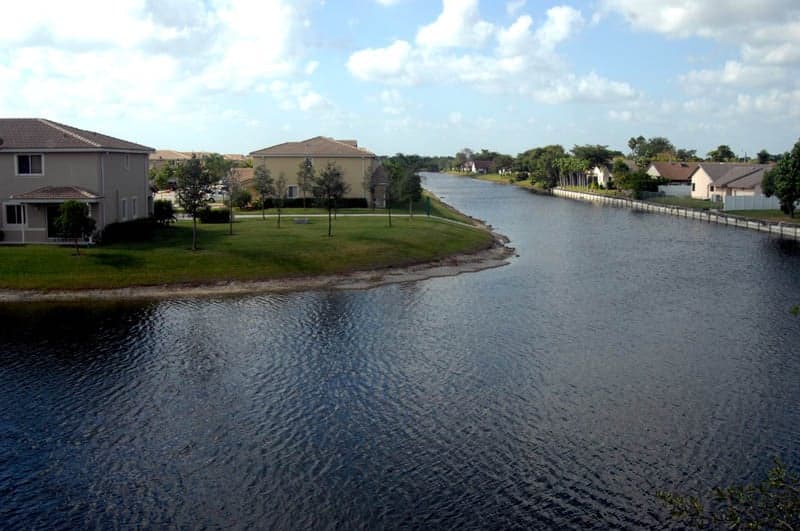
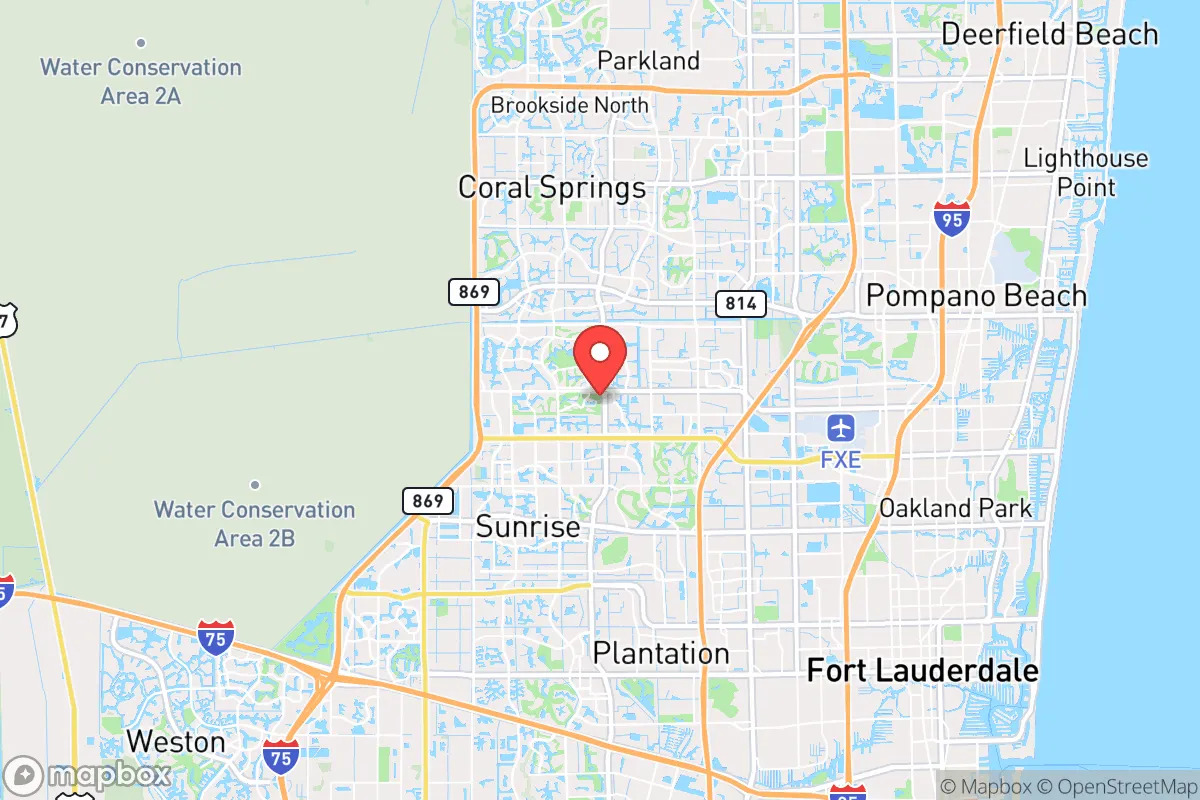
Photo: Wikipedia
Personal Sovereignty in Tamarac, FL
Viable for self-reliance. Generally workable, though some barriers may limit total independence.
What does Personal Sovereignty tell us?
Personal Sovereignty measures your capacity for self-reliance and independence with minimal government friction. Higher scores mean fewer barriers between you and the way you want to live... but it assumes you have the space you need and good neighbors.
What does this tell us?
Personal Sovereignty measures your capacity for self-reliance and independence with minimal government friction. Higher scores mean fewer barriers between you and the way you want to live... but it assumes you have the space you need and good neighbors.
State Policy
Energy independence: Importer (10% of energy produced in-state)
Personal Liberty
Homesteading

Personal Liberty Analysis
Tamarac, Florida, offers a mixed bag for those prioritizing personal sovereignty. While the city itself operates within the broader framework of Broward County and Florida state law, the environment for autonomy is shaped more by state-level protections than local initiatives. For a survivalist or prepper mindset, the key question is whether Tamarac provides the legal and practical space to live life on your own terms, free from excessive government overreach. The answer is nuanced: Florida’s strong preemption laws shield residents from many local infringements, but Tamarac’s dense suburban character and local ordinances impose real constraints on self-reliance and off-grid living.
Tax burden and regulatory posture in Tamarac and Broward County
Florida’s lack of a state income tax is a major win for personal financial sovereignty, allowing residents to keep more of what they earn. In Tamarac, the combined property tax rate (including city, county, school district, and special districts) typically falls around 2.1% to 2.3% of assessed value, which is moderate for Broward County but higher than many rural Florida counties. The city’s regulatory posture leans toward the bureaucratic side: building permits, zoning variances, and code enforcement are actively managed, and the city has a reputation for strict enforcement of property maintenance codes. For someone wanting to build a workshop, install solar panels, or keep livestock, the local regulatory environment can be a hurdle. Broward County’s overall regulatory climate is more interventionist than the state average, with additional layers of environmental and land-use rules. While Florida’s state-level preemption laws prevent local governments from enacting their own wage, rent control, or firearm ordinances, Tamarac still imposes its own rules on noise, parking, and property appearance that can feel like micromanagement to those accustomed to rural freedom.
Self-defense and gun law specifics in Tamarac and Florida
Florida is a strong “shall-issue” state for concealed carry, and as of 2023, permitless (constitutional) carry is legal for anyone 21 or older who can legally possess a firearm. Tamarac itself has no local gun ordinances that exceed state law, thanks to Florida’s preemption statute (F.S. 790.33), which prohibits cities from regulating firearms. This means you can carry openly or concealed without a permit in most public spaces, though private property owners (including businesses) can ban firearms. The city’s police department is generally professional and not known for aggressive enforcement of minor firearm-related infractions. However, Broward County’s political climate is more liberal than the state average, and local officials have occasionally pushed for “safe storage” or “red flag” measures—though these have been largely blocked by state preemption. For a prepper, the key takeaway is that your right to keep and bear arms is well-protected at the state level, and Tamarac’s local government cannot legally infringe on that. Stand-your-ground and castle doctrine laws apply statewide, giving you broad legal latitude to defend your home and person without a duty to retreat.
Self-reliance and homesteading viability in Tamarac
For those seeking true self-reliance, Tamarac presents significant challenges. The city is a densely developed suburb with typical lot sizes ranging from 5,000 to 8,000 square feet (roughly 1/8 to 1/5 of an acre). Zoning is primarily residential single-family (RS-3, RS-4, etc.), which prohibits agricultural uses, livestock (chickens are allowed with restrictions, but no goats, pigs, or larger animals), and most commercial activity on residential property. Off-grid living is effectively impossible: the city requires connection to municipal water and sewer, and solar panels are allowed but must comply with HOA rules (where applicable) and building codes. Rainwater collection is legal but limited by state law to 2,500 gallons per property without a permit. Homesteading in the traditional sense—growing most of your own food, keeping animals, and generating your own power—is not feasible here. For a prepper, Tamarac is better suited as a base for stockpiling supplies and building community networks rather than achieving true self-sufficiency. The nearby Everglades Agricultural Area (about 30 minutes west) offers more land and fewer restrictions, but that’s not Tamarac itself.
Personal liberties in Tamarac: parental rights, medical autonomy, speech, and property
Florida has become a national battleground for personal liberties, and Tamarac residents benefit from several state-level protections. Parental rights in education are explicitly protected under the Parental Rights in Education Act (HB 1557), which prohibits school districts from withholding information about a child’s well-being from parents and restricts classroom instruction on gender identity and sexual orientation in early grades. This applies to Broward County Public Schools, which serves Tamarac. Medical autonomy is more complex: Florida has banned COVID-19 vaccine mandates for most employers and schools, and Governor DeSantis signed a law prohibiting mRNA vaccine mandates altogether. However, the state has also restricted certain medical procedures for minors (e.g., gender transition treatments), which some view as protecting children and others as government overreach. Free speech is robustly protected under the Florida Constitution and state law, which preempts local “hate speech” or “misinformation” ordinances. Property rights are strong: Florida’s “Property Rights” amendment (Article X, Section 6) requires just compensation for any regulatory taking, and the state has a strong homestead exemption that protects primary residences from creditors. In Tamarac, local zoning and HOA rules can still limit what you do with your property, but the state provides a solid legal foundation against outright confiscation or overreach.
Overall, Tamarac offers a moderate level of personal sovereignty compared to other South Florida suburbs. The state’s preemption laws and constitutional protections provide a strong baseline for gun rights, speech, and parental control, but the city’s dense suburban character and local regulatory environment limit self-reliance and off-grid living. For a prepper or survivalist, Tamarac is a reasonable choice if you prioritize legal protections over physical self-sufficiency—you can stockpile, train, and organize without fear of local government interference, but you won’t be able to live off the land or go fully off-grid. Compared to rural areas in the Florida Panhandle or central Florida, Tamarac scores lower on autonomy; compared to cities like New York or San Francisco, it’s a fortress of liberty. The bottom line: if you value state-level legal shields and are willing to accept suburban constraints, Tamarac can work. If you need wide-open spaces and minimal local oversight, look farther north or west.

* Values derived from national, state, county, city and local statistics and may differ in a specific area. Last updated: 2026-05-03T20:22:27.000Z
Narrative content on this page is AI-generated and may contain mistakes. Verify any details that matter before acting on them.
ReloMaps may earn a commission from affiliate links at no extra cost to you.

